Work or organs: inside Myanmar's slave camps


A student from Yekaterinburg managed to escape from captivity
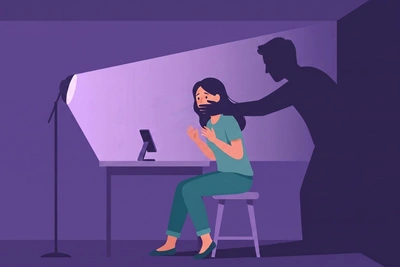
A 21-year-old student, Madina, from Yekaterinburg, who managed to escape from scammers in Myanmar, has returned to Russia. These camps are entire cities with a full-fledged slave system, from which not everyone can escape. According to volunteers, in captivity Madina was starved and beaten, and other girls died before her eyes.
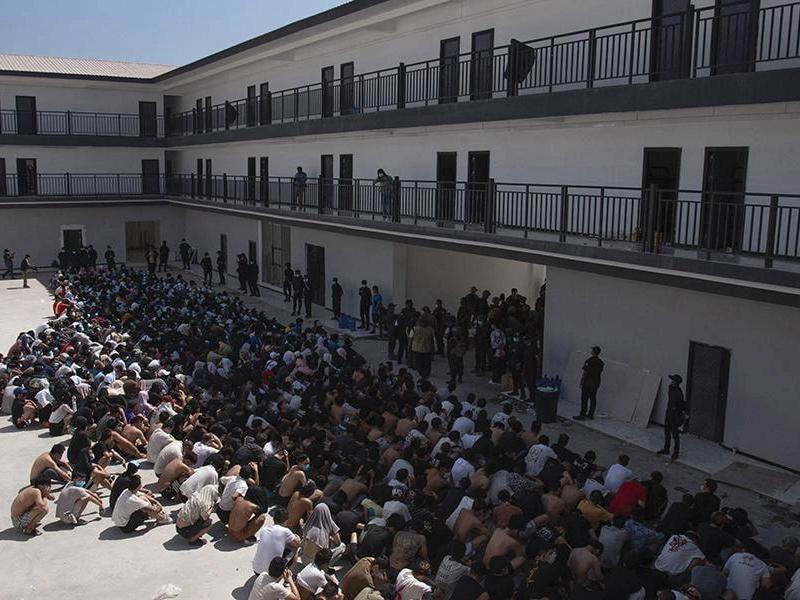
In Myanmar, where entire slave cities have sprung up, there may be 100,000–120,000 victims of slave traders.
The work of scam «farms» does not stop, and millions of people continue to fall into the hands of fraudsters. We tell you what hides behind seemingly harmless job offers and what goes on in these camps.
Journalists filmed the student at the airport
How do people fall into slavery?
The girl is now safe
According to various data, there may be 100,000–120,000 victims in slave cities on the territory of Myanmar. Most are from Vietnam, India, and Sri Lanka, but there are also people from former Soviet countries.
Victims are offered a simple, high-paying job (for example, as a model or in telemarketing with a salary of $5,000) in Thailand. Usually, knowledge of English is enough to get «hired»; those responding to a model vacancy also need a more or less model-like appearance. The plane ticket to Bangkok is paid by the «employer.»
After that, people fly to Thailand, board a bus, and go to the «office.» No one even suspects that they will soon be in a completely different country, even when they are transferred to boats to be taken to the other shore.
What goes on in the scam parks?
The parks are entire cities with all the necessary infrastructure. And, by and large, the hired workers are not really deceived. It«s all in the details. Telemarketing specialists in call centers also talk to clients on the phone, but they are not selling goods and services — they are extorting money.
Models trade on their faces, fleecing unfortunate men willing to pay for online love. And they are paid money too. But they can only spend it within the city, and the local «authorities» set prices so high that their income is not enough even to live from paycheck to paycheck.
In addition, captives live 20–30 to a room with multi-tiered bunks, and working conditions are far from those described in the job posting. For poor work, failure to meet targets, and other offenses, the «employer» may beat or even maim a subordinate.
Furthermore, victims claim that «black transplantology» is practiced in such parks. If a person works poorly, they are sold for organs.
How do captives manage to escape?
The park management offers to buy freedom for $10,000–15,000. But usually none of those who have fallen into call centers have that kind of money. In addition, upon release, the victim also faces 60 days in prison — for overstaying the visa-free regime.
Some female captives took advantage of the fact that they could not be beaten: an ideal appearance is important for modeling work, and so many calls were placed that sending labor to sick leave would mean serious problems. Therefore, the girls could afford strikes, refused to work, and as a result were taken to a military field camp.
Armed men put tired captives into boats and smuggle them across the border, so upon arrival in Thailand, they are detained by border guards and sent to custody for illegal border crossing. All that remains is to wait for a miracle.
Sometimes hostages reach out to human rights activists via the internet: they are not restricted in access. But people are unable to reveal their whereabouts, and there are a huge number of such locations in Myanmar, so rescue takes many months.
Having received the necessary information, Myanmar«s diplomats contact a »private volunteer military organization,« whose representatives wait until they have at least 20 people to rescue, enter the required territory with machine guns, and take people away. But only those who are on the list. After that, they end up in a center for victims of human trafficking, from there — to an immigration prison, and then, after about a month, to Bangkok.
After being freed, hostages usually do not want to talk about what happened to them: they fear that society will blame them for what happened.
The student did not tell her family about what happened to her in Myanmar. Read what Madina«s mother said.
We previously told the story of another Russian woman freed from a labor camp in Myanmar. The girl fell for an offer of easy money in Thailand and ended up in one of the so-called call centers.