Tomsk veteran turns 100, shares longevity secret

On the porch of a typical Stalin-era building on Pushkin Street in Tomsk is a red star-shaped plaque. In one of the apartments lives a true legend — a Great Patriotic War veteran who once liberated a European city from the Nazis, and this year he celebrated his 100th birthday. A journalist from NGS70.RU visited the centenarian and spoke with him about war, peace, and of course, the secrets of longevity.
At the apartment door, we were greeted by the veteran«s granddaughter — Mashenka, as he affectionately calls her. “Grandpa has been waiting for you,” she said.
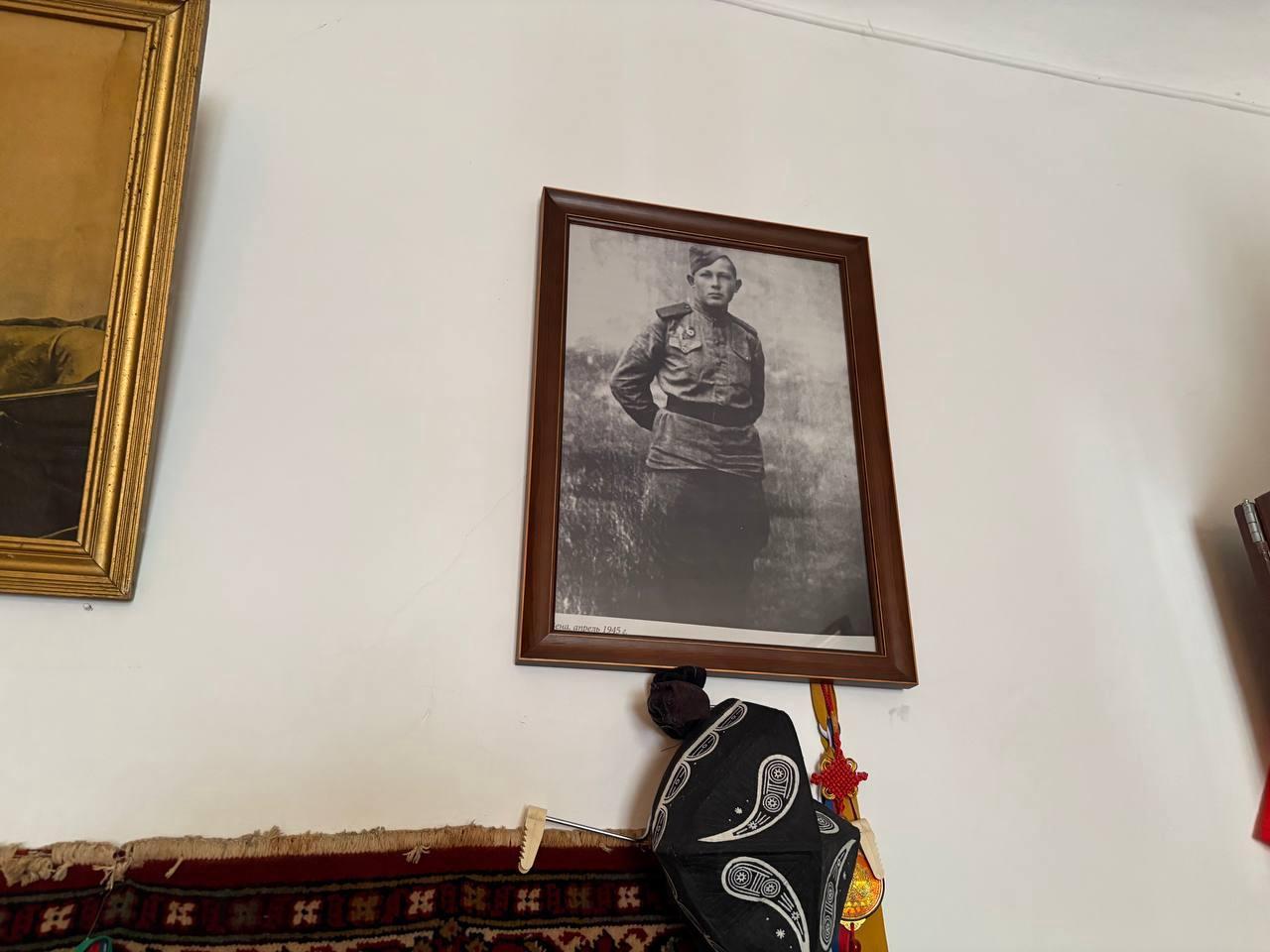
At a round table in the center of a large room, wearing a white shirt and trousers, sits the centenarian. On every wall of his bedroom hang photographs. Some pictures show a young man in military uniform, others a gray-haired man. In all the photos is the same person — Fyodor Timofeyevich Bondarenko, who this year celebrated his centenary.
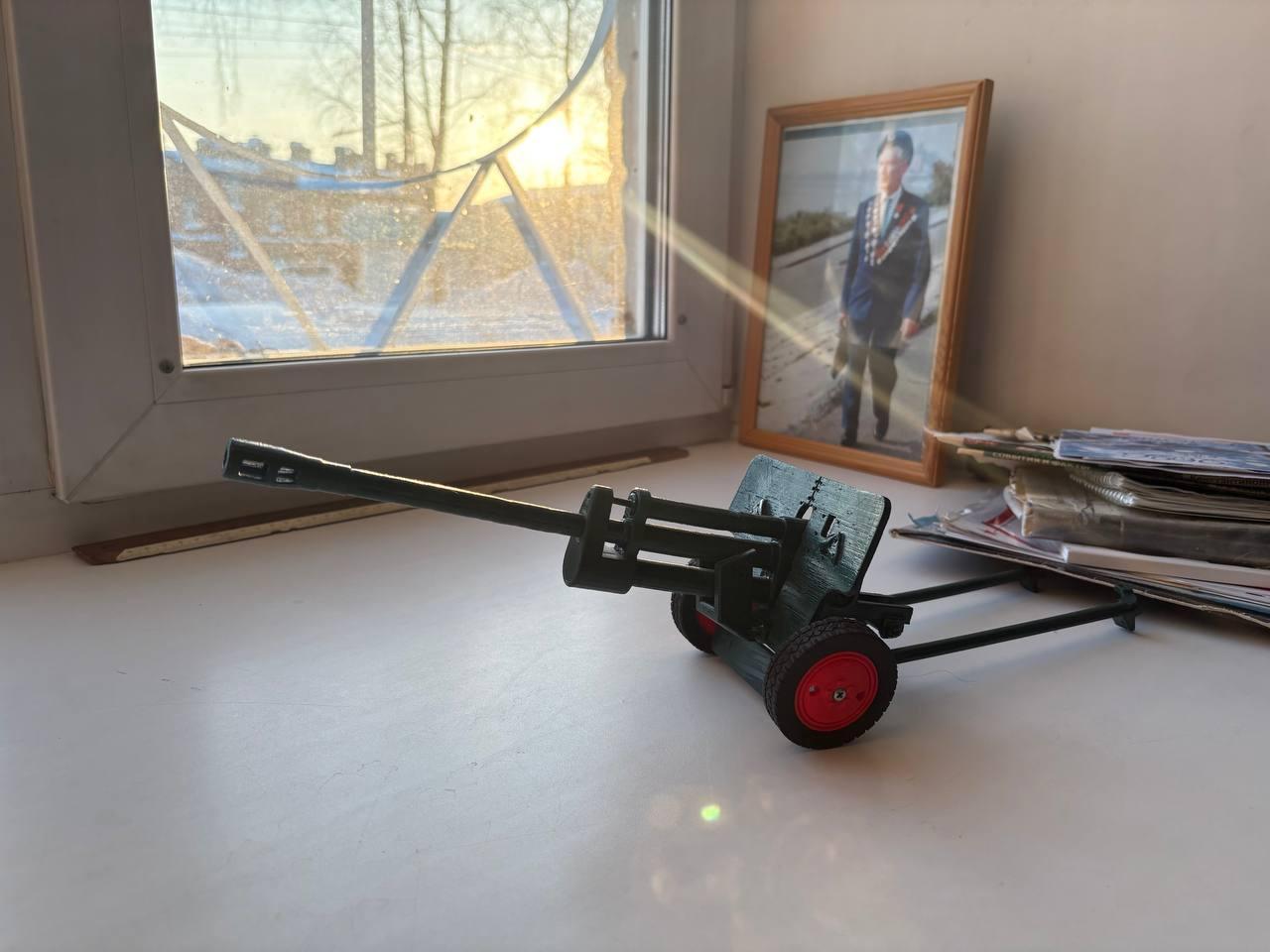
Despite being 100 years old, he continues to meet with schoolchildren and students, and even finds the strength to stroll along a small alley near his home.
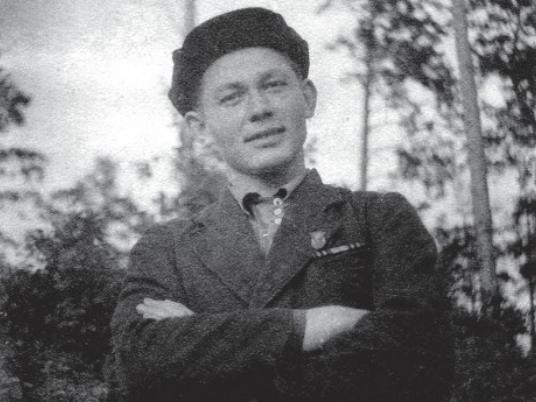
— I calculated that on average I hold more than 250 meetings a year. Soon I’ll catch up with the number of days in a year, — laughs Fyodor Timofeyevich.
“Dad, War”
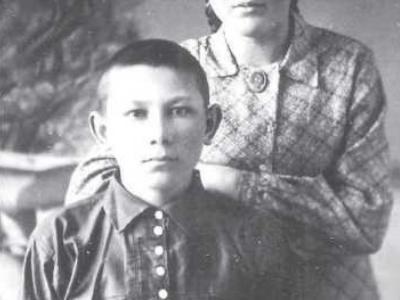
Fyodor Timofeyevich was born on 12 January 1926 in the small village of Apolikha near Novosibirsk. In 1930, his father was sent to fish on the Ob River in the Kargasoksky District of Tomsk Oblast. There Bondarenko spent his entire childhood and attended school.
— We had a large family — 12 people. Life later scattered us all in different directions. There are also relatives in Ukraine. My mother said she was born in Kharkiv, but how my father dragged her to Siberia, I don’t know. Where my father is from, I don’t know either, and somehow I never asked him about it, — recalls the veteran.
In elementary school Bondarenko did not like studying, but with age he began to understand why it was important. Therefore, he finished fourth grade with straight A’s, and at 14 he proudly bore the title of Voroshilov Sharpshooter.
In those years, according to the veteran, not only boys but also girls wanted to learn to shoot. The latter dreamed of mastering the skill to go hunting, which half of the Kargasoksky District then engaged in.
The war began when Fyodor Timofeyevich was only 15. The veteran remembers that day with tears in his eyes:
— I told my father then: “Dad, war,” he asked: “Who?” I told him Germany. He said: “Oh, the Germans again. Oh, son, this will last a long time. If Germany is involved, then it will be for a long time.” All the youth in those years rushed to join the army. They wanted to get a rifle to shoot everyone. Not only boys wanted this, but also girls.
“They are sending you to war. Whether you will return or not is unknown”
In the first years of the war, Bondarenko worked with his father at “Goslov” (state fishing artel) to provide fresh fish for soldiers at the front. In April 1944, he finished 9th grade, picked up his certificate from school, and that same day — with his fresh report card in hand — went to the military enlistment office:
— That day you couldn’t drop a needle in there. There were two chairs in the room: on one they shaved recruits, and on the other they asked where you studied and were baptized.
The next day, on the steamship “Karl Marx,” the former schoolboy was sent to the front. Here is how he remembers that day:
— I came to board. I had no right to be late, and neither did anyone else. For us Siberians, for the boys, the army was a sacred duty. At 4 a.m. we approached the pier. The whole of Kargasok was already up. The first whistle [of the steamer] — long and drawn-out. So that all of Kargasok — both new and old — knew that the steamer was preparing to leave for the front. The second whistle — on the shore there was already a puddle of tears. Grandmothers, mothers, brothers, sisters — nothing but tears. They are sending you to war. Whether you will return or not is unknown. And we on board the steamer are happy, singing songs. And then the third whistle, the last one — the anchor and gangway are raised. A few more farewell whistles, and we sailed off.
The steamer with new recruits docked in Novosibirsk, where a train to the training rifle regiment in Achinsk awaited the young men. In training, the future soldiers studied a lot, slept little, and ate poorly, but the boy raised in the taiga endured it easily.
There, the green but educated Bondarenko was made an artilleryman of anti-tank guns. His task was to repel enemy attacks, shoot tanks and other self-propelled guns on the battlefield. There he also learned to parachute and fly a balloon.
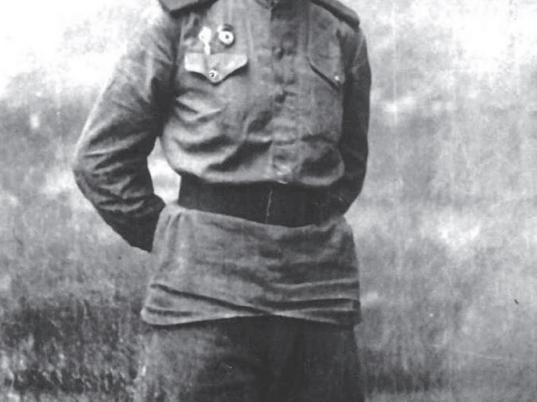
In December 1944, he took the military oath, and in January 1945, a military echelon of a dozen cars set off for Hungary, from where Soviet soldiers began to advance towards the occupied Austrian capital.
“Do you have horns on your head?”
Only weeks remained until the end of the Great Patriotic War. German soldiers realized the war was practically lost. By the time the Soviet army arrived in Vienna, they had further strengthened the defenses and even spread a rumor that the troops had come not to liberate the city but to destroy it.
On 9 April 1945, the Soviet government issued a statement: “Soviet soldiers entered the city not for destruction and bloodshed, but for protection.” And on 14 April, Vienna was liberated. The city buzzed that day! Austrian and Soviet flags flew on houses. And so that the whole country and Hitler himself could see it, a huge red cloth was raised on a balloon over the local parliament building.
Everyone understood that the war was about to end, but Soviet soldiers continued to guard Vienna’s plants and factories. First of all — from the Austrians themselves, who could steal them and blame “Russian Ivan.”
Locals carefully watched the exotic Russians at guard posts, not just looking at them but trying to find horns and tails on their bodies (literally).
That day — 1 May 1945 — Fyodor Timofeyevich and his fellow soldier were ordered to draw a festive poster: “Long live May Day!” To do that, they first needed to make “paint” — from tooth powder and milk. And if finding powder was not so difficult, finding a surviving goat or cow during the war was a task of the highest difficulty.
Luck was on their side that day, so they came across a small house where an elderly Austrian woman and her goat lived. They exchanged a jar of goat’s milk for the paint for a bag of sugar.
On the way back, they saw a high mountain, a church, and someone watching them very closely from there:
— Such a height, like our Voskresenskaya Hill. At the very top of this hill stands some kind of temple, and you can see someone in a white kerchief peering around the corner. I say: “Senior sergeant, look, there must be nuns there. Have you seen nuns?” He says: “No,” so I suggested we go and have a look.
The soldiers first tried to enter the church through the main entrance, but the oak door was locked. So they decided to try the side entrance. And indeed, almost under the dome, several nuns were hiding:
— We look at them, and they look at us. One of the girls asked: “Do you have horns on your head?” I take off my cap and show that there is nothing underneath. She didn’t believe me and wanted to check if there was anything at all on my head that looked like horns. She came up, stroked the top of my head, and again nothing. She smiled and laughed, realizing that we were not devils at all, but people just like them.
“I don’t drink, don’t smoke, don’t swear, and I love young people”
Literally on the second day after returning home from the war, Fyodor Timofeyevich came to Tomsk to enroll in the local polytechnic university to become an engineer. He was refused admission because with only a 9th-grade education they could not even allow him to take the entrance exams. The then-rector did not make an exception: “I cannot break the law, you understand,” he told Bondarenko.
— I went out onto the university porch. It was early morning. People were already getting up, walking around the city. A soldier walks by, we greeted each other. He asks me: “Why the long face?” I explained that they didn’t want to take me to study. He says: “Well, come with us to the machine-building technical school,” — recalls the veteran.
There he also had to take an exam, but the teacher did not want to listen to his answers on the subject. He asked the young soldier to tell about his front-line life, the horrors of war, and the joy of victory.
First he was a student at the Tomsk Machine-Building Technical School (TMT), and after graduation — a teacher. His work record has only two entries: being hired at TMT and being dismissed upon retirement.
It was hard to resist asking the 100-year-old about his secrets of longevity. The advice, as it turned out, was extremely simple: