St. Petersburg Honors Leningrad Siege Liberation Day
On January 27, 1944, 82 years ago, residents of Leningrad heard on the radio a message from the Military Council of the Leningrad Front about the end of the blockade. In honor of this event, a salute was fired from 324 guns, giving 24 salvos.
Doctors in Besieged Leningrad
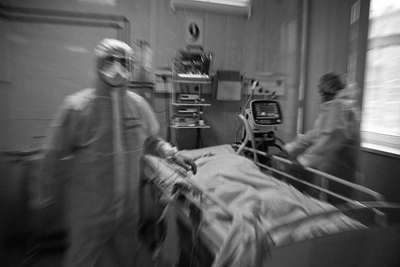
At the beginning of 1941, there were 4,414 doctors working in city medical institutions, and a year later their number decreased to 3,198. The city had 22 research institutes, and four medical and pharmaceutical universities continued to train personnel. Despite hunger, cold, and shelling, doctors held scientific conferences in unheated rooms by candlelight. During the siege, hospitals and clinics were hit 567 times by enemy aircraft and artillery, resulting in the loss of over 37,000 beds.
«In conditions of shortage of medicines and dressing materials, doctors got tens of thousands of sick and wounded back on their feet and prevented epidemics,» notes the St. Petersburg health committee.
Railway and Cat Defenders
Railway workers ensured the evacuation of the population from Finland Station and the delivery of food via Lake Ladoga. A separate story is connected with cats: in the besieged city, almost none were left, which led to an invasion of rats. The rodents destroyed food supplies, household items, museum exhibits, and even attacked people. To combat them, trains with cats arrived in Leningrad from different regions of the country—about 5,000 animals in total.
Bridges That Withstood Fire
Employees of Lenmosttrest (now St. Petersburg State Budgetary Institution «Mostotrest») restored destroyed crossings under bombings and shelling. Work was carried out around the clock to maintain transport links. Traces of enemy shells can still be seen on Liteyny, Voznesensky, Alarchin, Leshtukov, Borovoy, Yekateringofsky, Gutuevsky, and Anichkov bridges. Troitsky Bridge, closed for two years after being hit by a bomb, reopened in 1944. Palace Bridge was restored in just one day. A special act of resilience was the decision to build a new Exchange Bridge (then Builders« Bridge) in 1943, even before the complete lifting of the blockade. This symbol of hope was opened in 1960.
Tram as a Symbol of Life
On April 15, 1942, a tram returned to the streets of Leningrad after a long break. Its ringing was perceived by many residents as a harbinger of the coming Victory.
Program of Memorial Events
On January 27, numerous events are planned in St. Petersburg:
- From 10:00 to 12:00 and from 19:00 to 22:00, the Rostral Columns will be lit.
- On the evenings of January 27 and 28, Palace, Troitsky, and Betancur bridges will receive illumination in the colors of the Leningrad Victory ribbon.
- At 9:30 on Nevsky Prospekt, 14, a solemn and mournful rally will begin with the laying of flowers at the memorial plaque «To the Heroism and Courage of Leningraders».
- At 11:00, flowers will be laid at Piskaryovskoye and Serafimovskoye cemeteries, at the Monument to the Heroic Defenders of Leningrad and other memorial sites.
- On the same day, in the new premises of the Museum of the Defense and Siege of Leningrad in Solyanoy Gorodok, the exhibition «After the Victory. Leningrad» will open.
- At 21:00 near the Peter and Paul Fortress, a salute from 12 D-44 guns and 12 fireworks installations will be fired, giving 30 salvos.
Visit of Vladimir Putin
Russian President Vladimir Putin arrived in St. Petersburg for two days, on January 26 and 27. On the eve of the memorial date, he held a meeting with the city«s governor Alexander Beglov.
City«s Preparation for Memorial Events
In anticipation of the anniversary, city services conducted enhanced cleaning of memorial areas. Approaches to steles, obelisks, DOTs, and other objects related to the blockade were put in order. Employees of garden and park enterprises cleared paths in the squares on Ploshchad Voinskoy Slavy, in Yegorovsky Square, General Seleznev and Matsievich Square, on Prospekt Slavy at the monuments to the 3rd Frunzenskaya Division of the People«s Militia and Marshal Zhukov. Work was also carried out at the »Primorsky« memorial complex, in Anfisin Garden, Daniel Granin Garden, Baltic Garden, at the monument to the defenders of Leningrad on Kommuny Street, and along the Rzhevsky Corridor route. Special attention was paid to Piskaryovskoye and Serafimovskoye cemeteries, Nevsky Prospekt at house 14, and the Museum of the Defense and Siege of Leningrad.