Born of the Sea: The Viking Age

Vikings were not a single people—this is a collective name for Scandinavian warriors, traders, and explorers who spoke Old Norse. They were united by a harsh homeland, shared mythology, and, above all, a thirst for a better life. From the 8th to the 11th century, their campaigns defined an entire era in European history, known as the Viking Age. Today, we see them not only as raiders but also as pioneers whose ships reached the shores of America five centuries before Columbus.
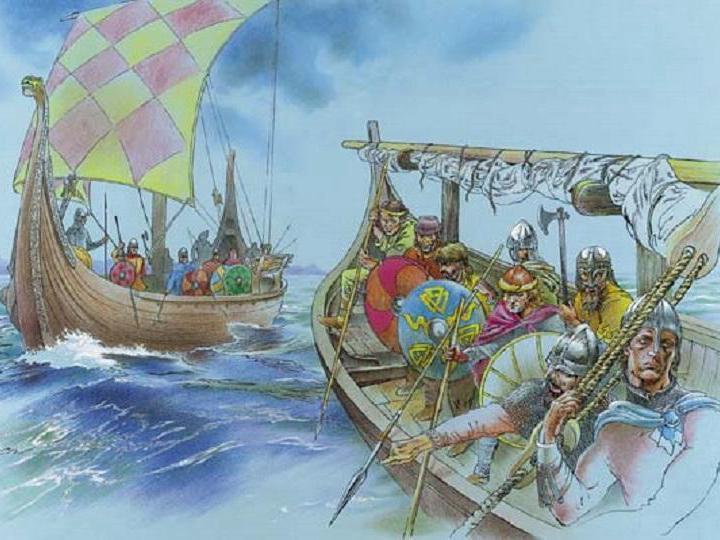
The word «viking» comes from the Old Norse «víkingr,» which means «person from the fjord.» It was in the rugged bays and inlets of Scandinavia that their culture originated. Overpopulation of coastal areas, scarcity of arable land, and a desire for enrichment drove them away from home. Those who could endure hardships set out on expeditions: strong, resilient warriors prepared for battle.
Warrior Code and Faith in Valhalla
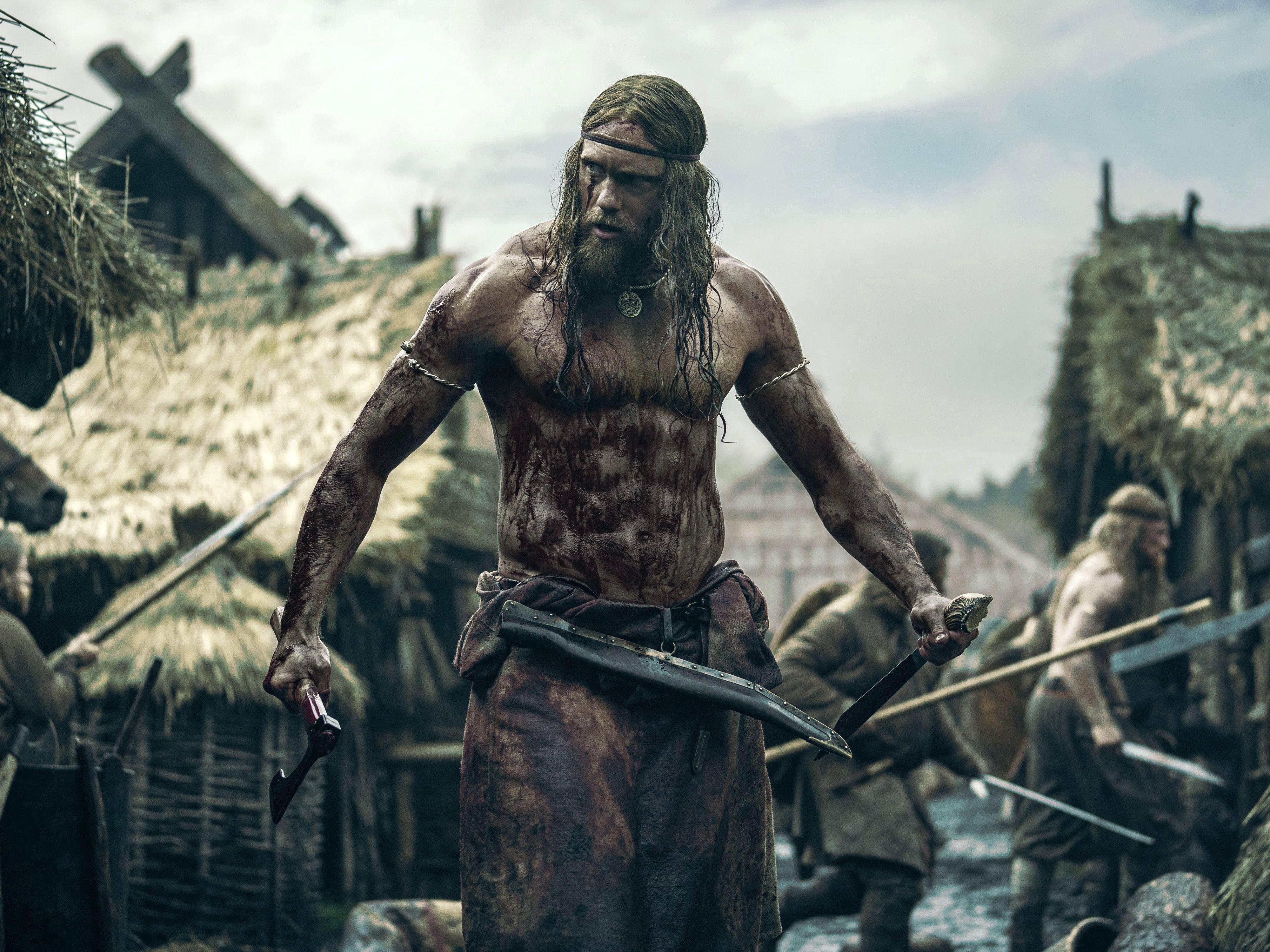
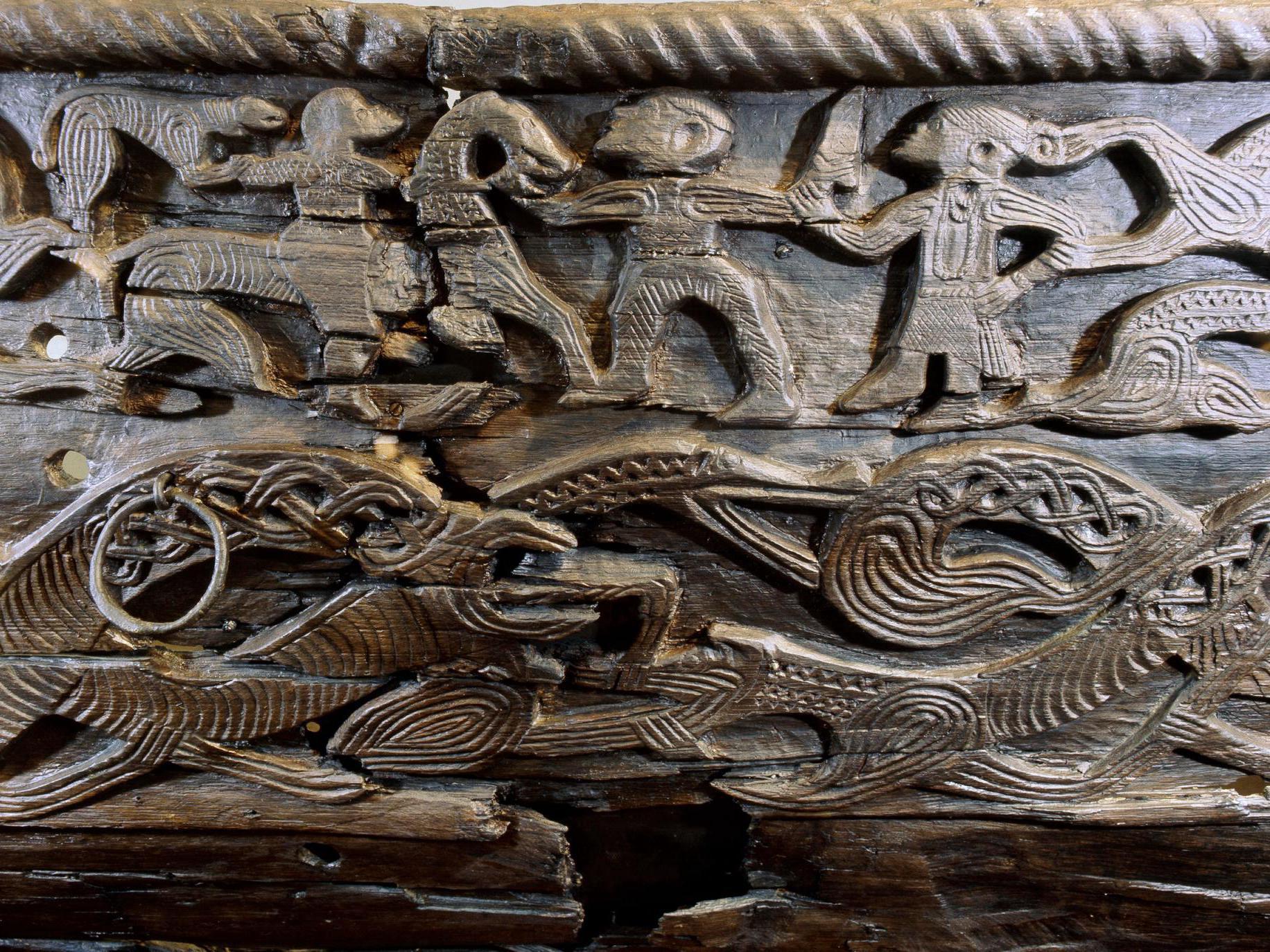
Vikings formed voluntary bands of several hundred men, unquestioningly obeying the leader—the konungr (king). At the core of their worldview lay a pagan religion with a cult of those fallen in battle. The main god was Odin—the Father of All, who took the souls of slain warriors to himself. The most honorable death for a Viking was to die in battle, after which his soul would go to the warriors« paradise, Valhalla. This faith made them fearless and ready for self-sacrifice.
In battle, the standard-bearer carrying the clan«s banner was considered chosen—the banner was attributed magical power. If the enemy gained the upper hand, warriors formed a »shield circle« around the konungr, protecting him at the cost of their own lives. Berserkers earned particular fame—warriors who fell into a battle trance. They attacked without armor, »like madmen, akin to rabid dogs and wolves,« striking terror into the enemy.
Weapons and Tactics
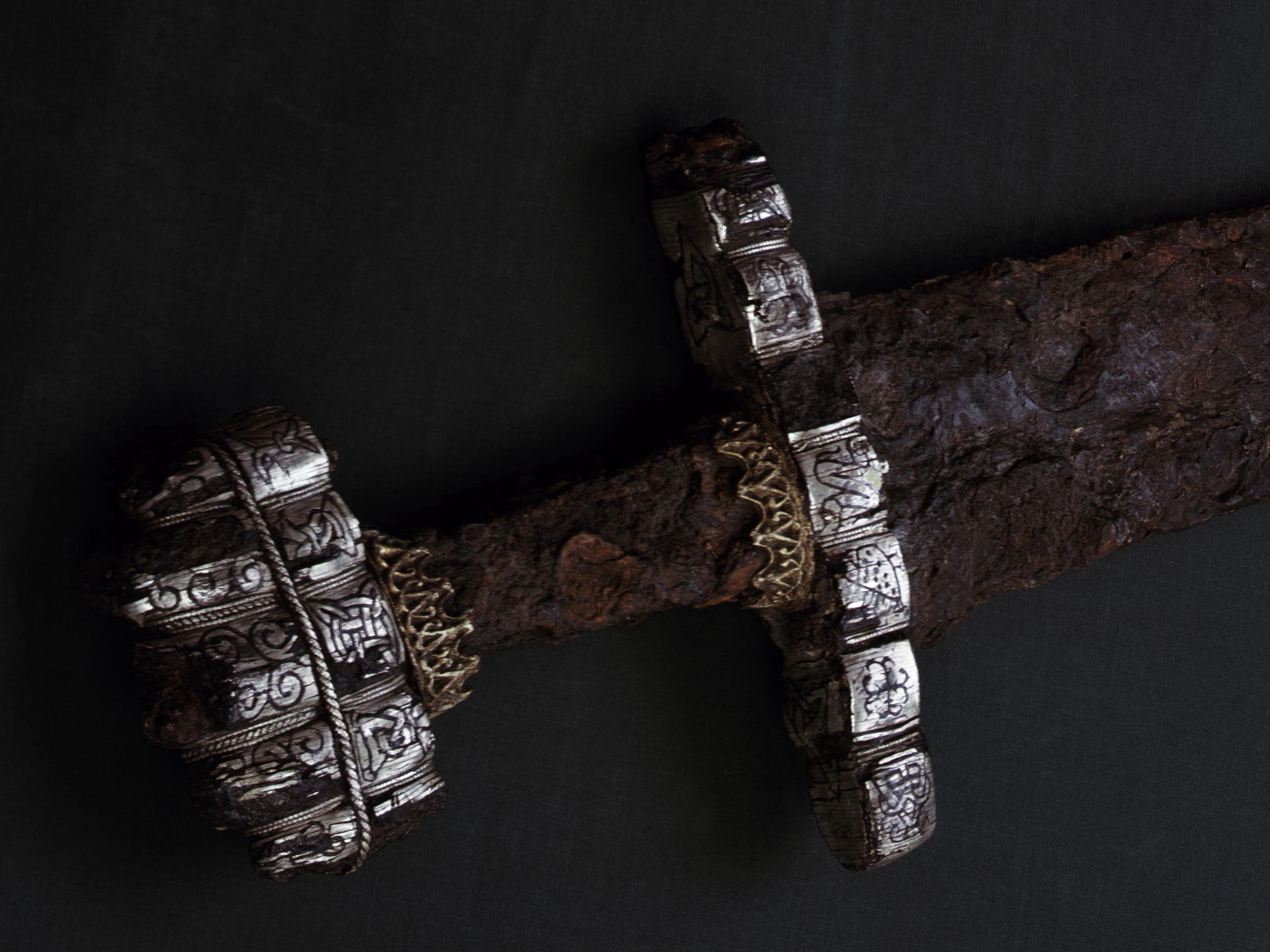
The sword was the main weapon of a noble Viking. It had a guard and pommel that protected the hand, and was often decorated with copper or silver inlays, with the owner«s name sometimes inscribed on the blade. Due to the sword»s weight in prolonged combat, it was sometimes held with both hands, while a shield-bearer deflected blows. One technique involved sliding the sword along the opponent«s shield and cutting off his leg.
Gods, Rituals, and the Transition to Christianity
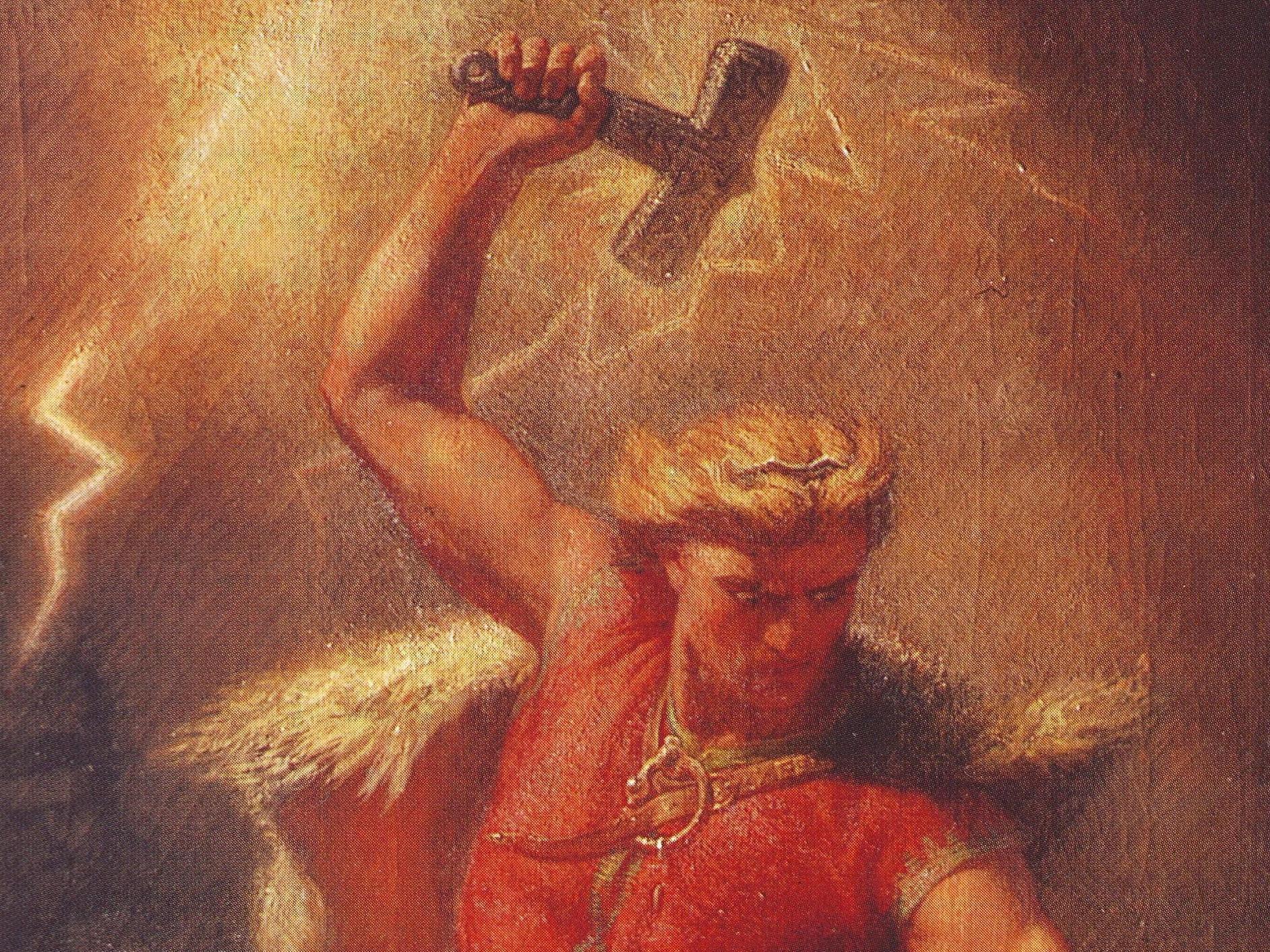
The world of the Vikings was inhabited by the Æsir gods. Odin, the god of wisdom and war; Thor—the thunderer with the hammer Mjölnir, protector of mankind; Freyja—the goddess of love; and Týr—the one-handed god of victory. Sacrifices were made to them, including human ones, and small figurines of deities were kept in homes.
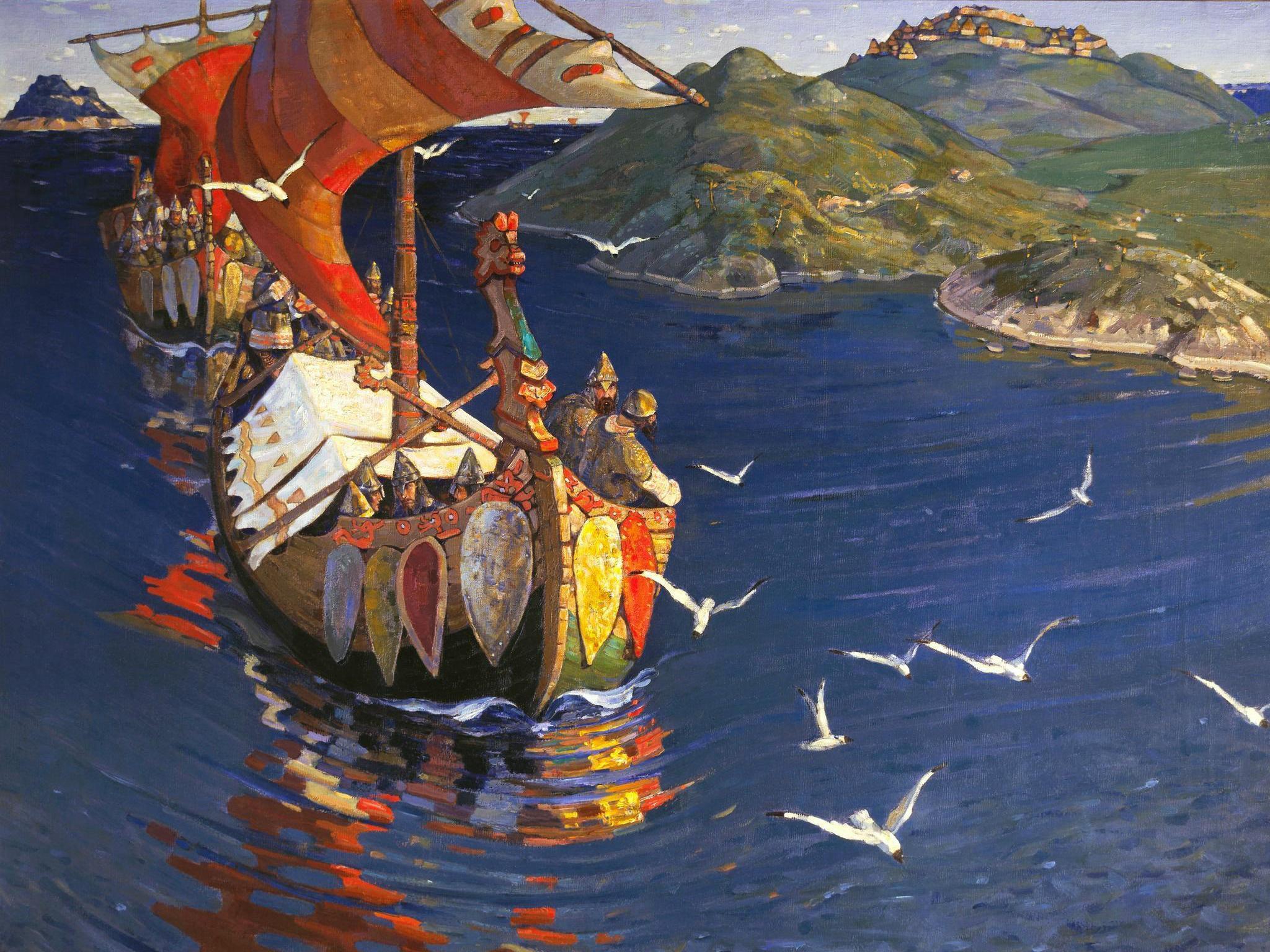
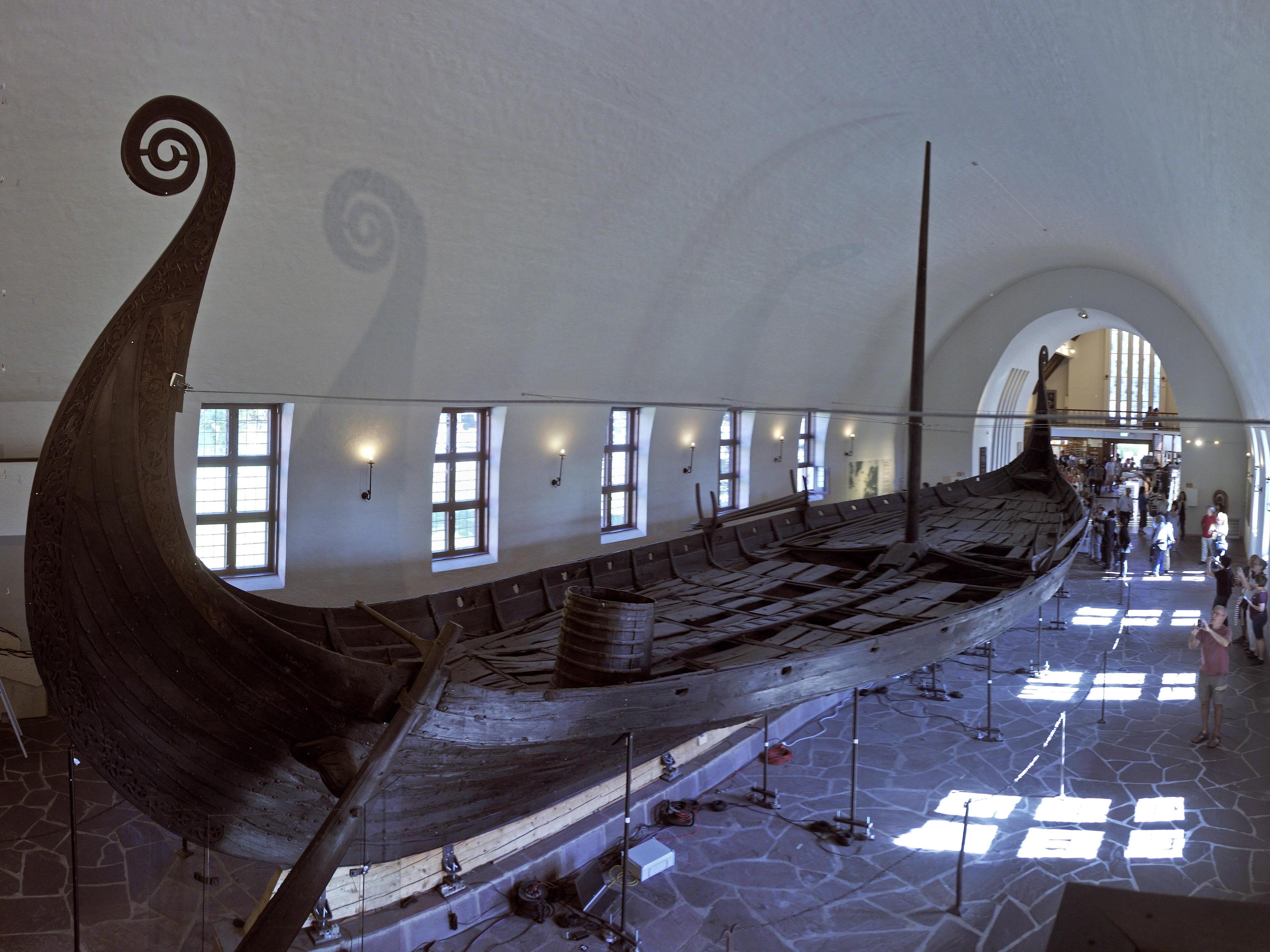
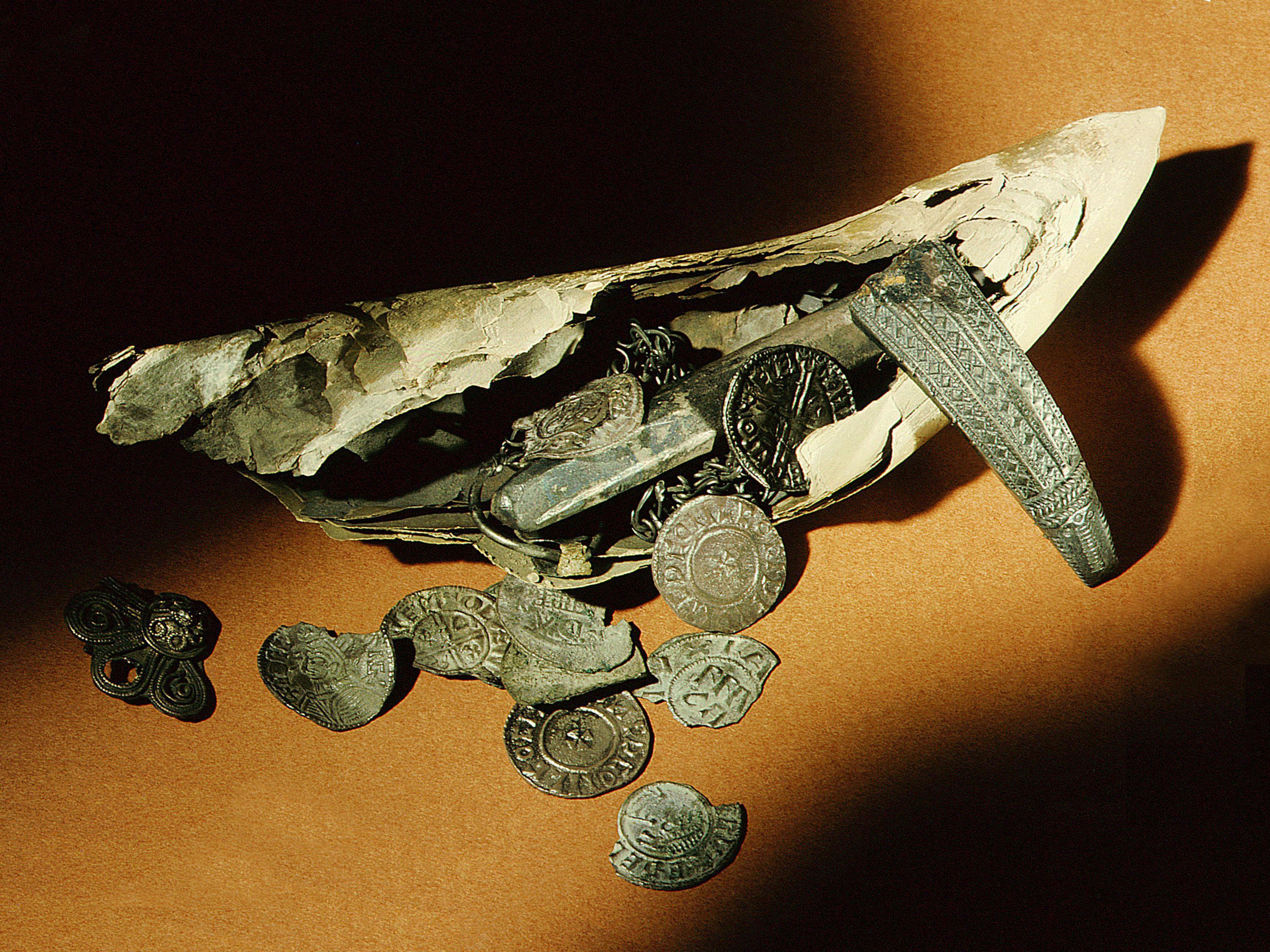
Beliefs were especially vivid in funeral rites. A noble konungr was buried in his ship, with weapons, valuables, food, killed horses, and dogs laid beside him. Sometimes, slave women voluntarily accompanied their master on his final journey, having first taken a pain-relieving drink.
Over time, as they encountered Christian peoples, Vikings began to notice their wealth and influence. Many decided that the Christian God would fulfill their dreams of a better life more quickly. Upon baptism, they often retained allegiance to the old gods, wearing a Thor«s hammer amulet on their chest alongside a cross.
Expansion into Europe and the Mediterranean
On their fast ships, Vikings reached the shores of Spain, Portugal, North Africa, and Italy. They plundered cities, but some settled on conquered lands, founding, for example, the Duchy of Normandy in northern France. The descendant of the Norman duke, William the Conqueror, conquered England in 1066. Others, like the knight Roger, with the Pope«s blessing, united Viking holdings in Sicily and Southern Italy, creating a prosperous kingdom.
Path Westward: Iceland, Greenland, and America
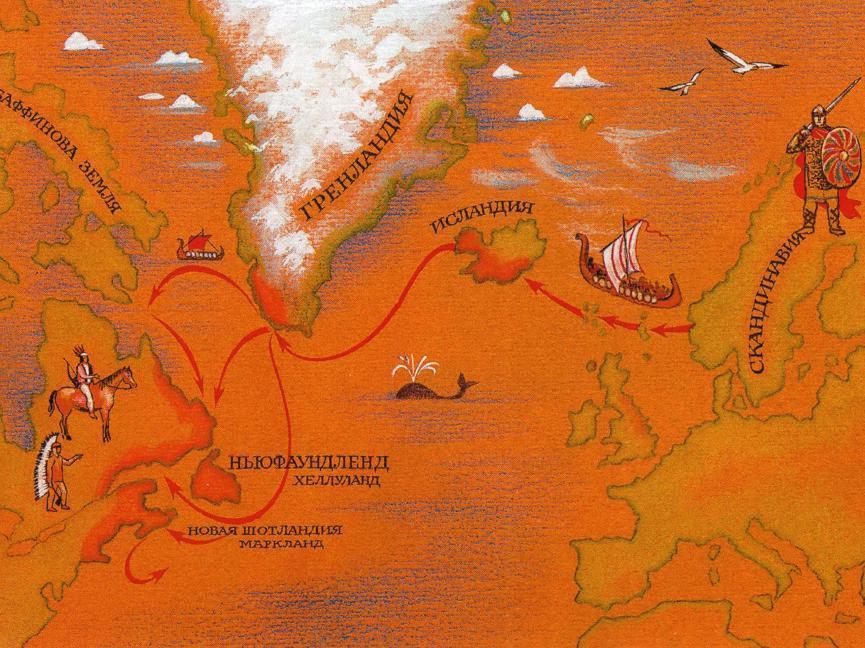
In search of free lands, Vikings colonized Iceland. The first settler, Ingólfr Arnarson, established a farm by a convenient bay where Reykjavík later grew. By 930, about 30,000 Norwegians had moved to the island. Iceland was governed by chieftains at the meetings of the Althing—one of the first prototypes of a parliament.
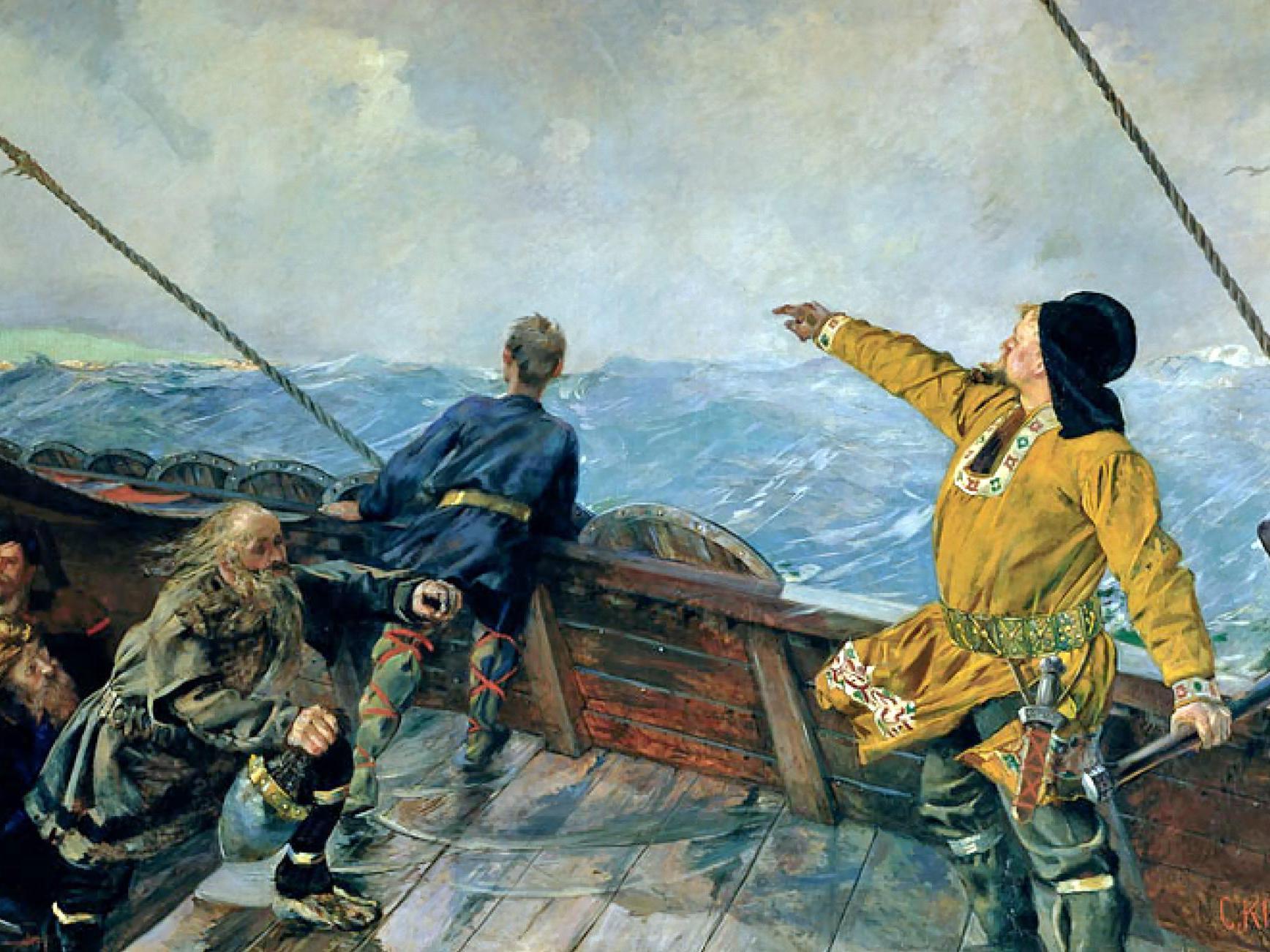
From there, they moved further. Erik the Red discovered and named Greenland, and his son, Leif Erikson, around the year 1000, reached the shores of North America. He landed on Labrador and Newfoundland, and his party, according to sagas, reached places where wild grapes grew—a region named Vinland. Scholars believe this could have been the area around modern-day Boston.
Attempts to establish colonies in Vinland met with resistance from local tribes, whom the Vikings called Skrælings. After several years of conflict, the settlers left America. Later, by the 15th century, Vikings disappeared from Greenland as well, likely due to climate cooling, conflicts with Eskimos, or epidemics.
Varangians and the Birth of Rus«
In the east, Slavs and Khazars knew Vikings as Varangians. The Baltic Sea was then called the Varangian Sea. Along river routes—through the Neva, Lake Ladoga, the Volkhov, the Dnieper—they paved the famous route «from the Varangians to the Greeks,» linking Scandinavia with Byzantium.
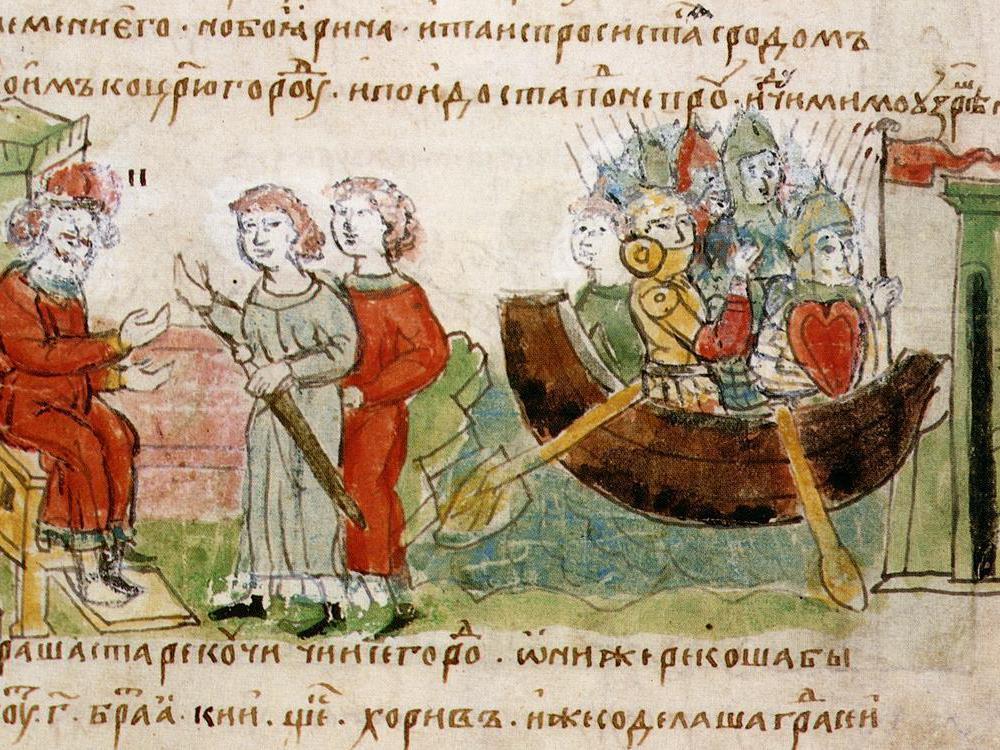
Varangians acted as traders, mercenaries, and warriors. According to the «Primary Chronicle,» in 862, Slavic and Finno-Ugric tribes invited the Varangian konungr Rurik to rule. He settled in Novgorod, founding the Rurik dynasty. After his death, his successor Oleg captured Kiev, uniting northern and southern lands. Thus, in 882, the Old Russian state emerged, where the Varangian druzhina (retinue) became the military support of power.
The Viking Age ended by the 11th century, when Scandinavia Christianized and integrated into the European feudal system. But their legacy lives on: in the genes of descendants, in geographical names, in sagas, and in the undying interest in these brave sailors who forever changed the map of the medieval world.