7-Km Ice Field Discovered in Black Sea
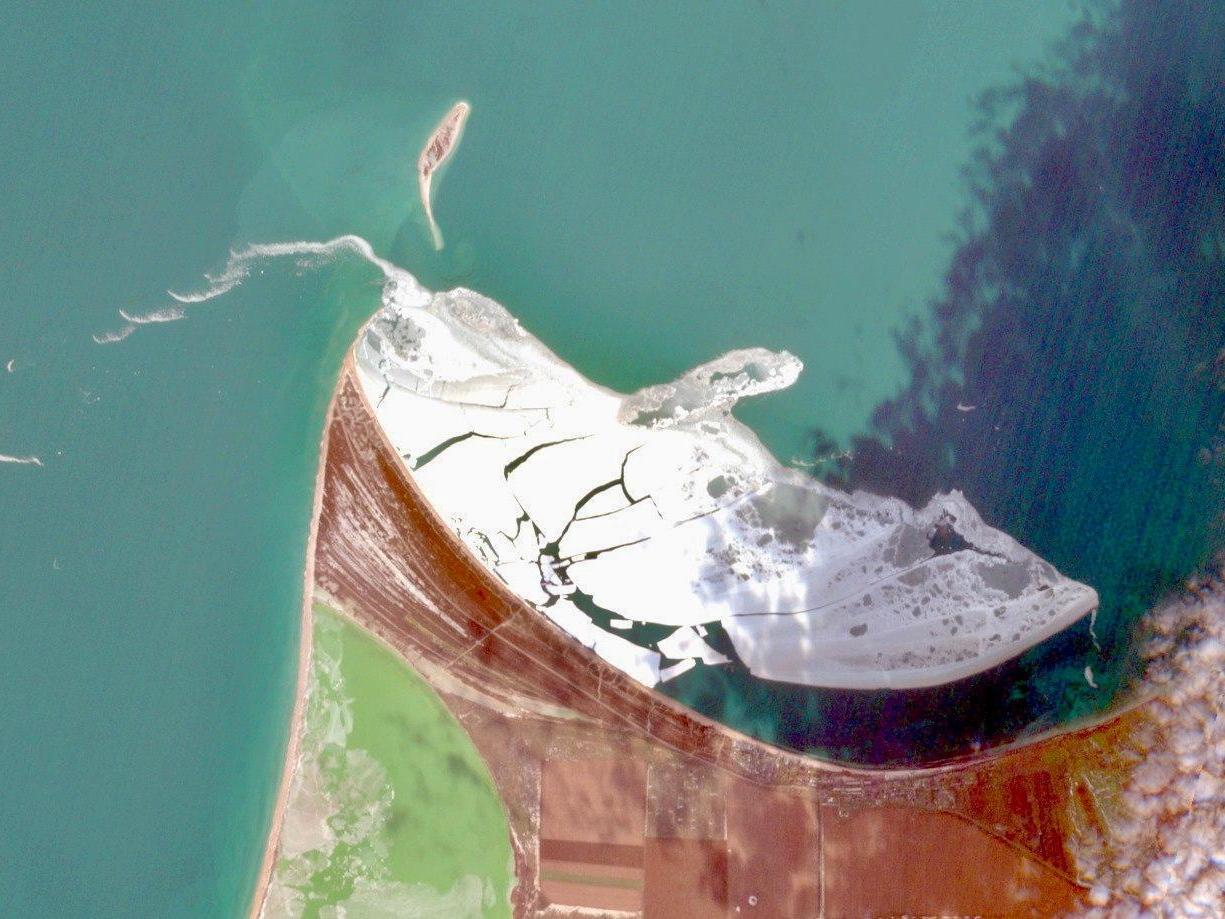

The giant ice mass was discovered near the Bakalskaya Spit and the Maloye Fillofornoye Pole reserve.
Specialists have recorded an atypical phenomenon for southern latitudes in the waters of the Black Sea. Using satellite monitoring, a giant ice field comparable in scale to Arctic landscapes was discovered off the coast of Crimea.
A huge drifting ice mass stretching over seven kilometers was spotted near the state nature reserve «Maloye Fillofornoye Pole» (Small Phyllophora Field). The ice field was found tightly pressed against the Bakalskaya Spit.
Specialists from the Federal State Budgetary Institution «Reserved Crimea» (Zapovedny Krym) explain that technically this is not a «classic» iceberg calved from a glacier, but sea ice formed under the unique conditions of the Karkinit Bay.
How Does This Happen?
The Karkinit Bay acts as a natural «refrigerator» due to two factors:
Shallow waters: the water cools much faster here than in the open sea.
Geography: the bay cuts deep into the land, which facilitates a rapid temperature drop to below-freezing values during prolonged frosts.
Strong northern winds pack the resulting ice slush (shuga) and ice floes into single masses, creating the illusion of northern seas in the south.
Why Is This Important for Ecology?
The appearance of such large ice fields is a rare event and serves as an important climatic indicator.
“Such anomalies help us refine climate models and understand how variable winters affect shelf ecosystems,” the agency notes.
The ice can act as a buffer, protecting the coast from wave erosion. Additionally, ice masses affect water mixing and temperature regimes, which directly impacts the life of marine inhabitants in the protected areas.