Green Aliens: 18 New Plant Species on Lake Baikal

Researchers found 18 new plant species on the Chivyrkuysky Isthmus, many introduced by humans.
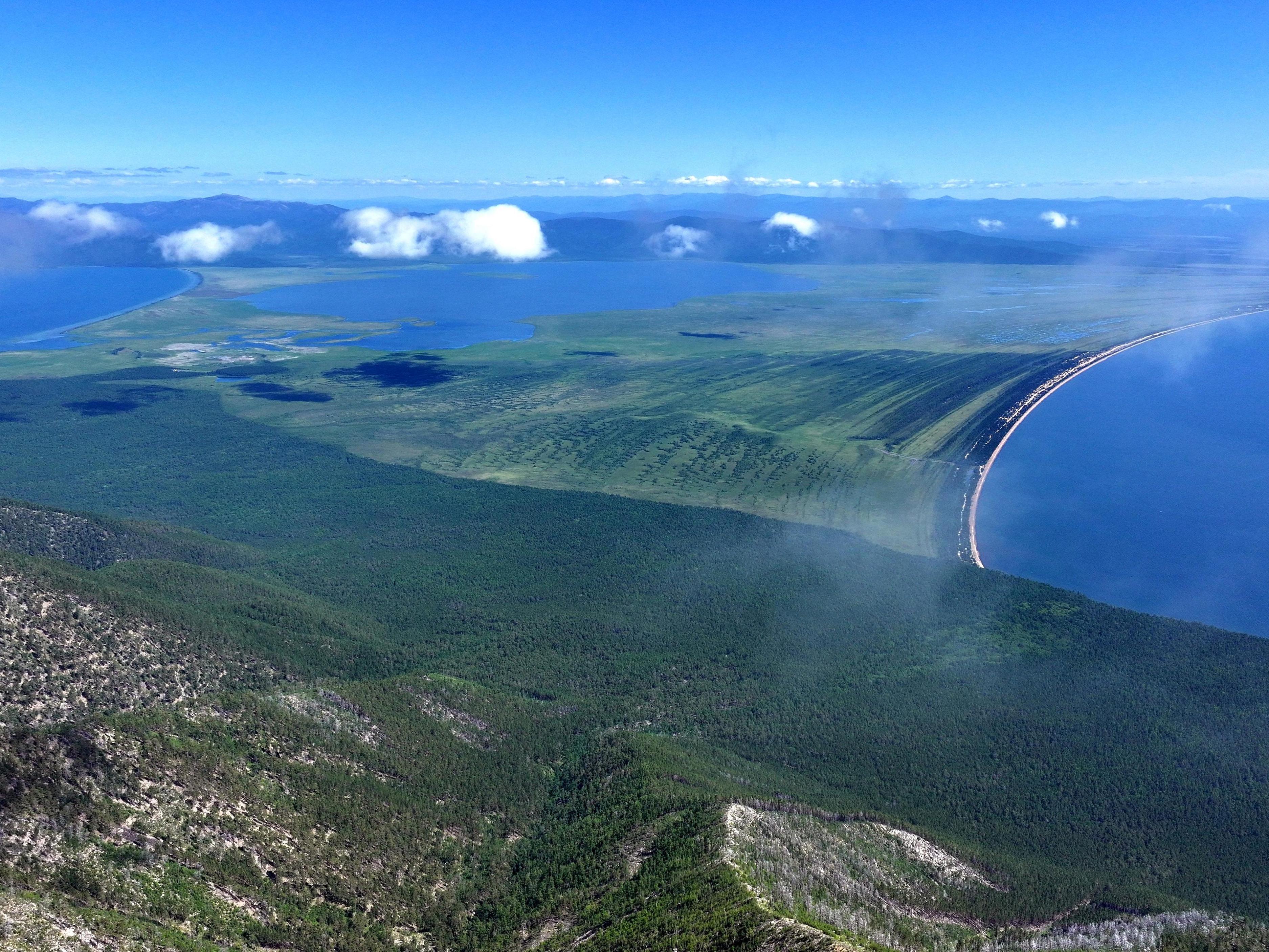
Scientists from the Institute of General and Experimental Biology SB RAS have summarized the results of a large-scale study of the Chivyrkuysky Isthmus, one of Lake Baikal«s most beautiful and fragile areas. They discovered 18 new plant species there, the Lake Baikal Foundation press service reports.
The Chivyrkuysky Isthmus had not been studied in detail since 1991. Only in 2025, as part of the «Care for Baikal» project, were experts able to survey the local flora. For the first time in over 40 years, species were found that had never been recorded there before.
Fieldwork began in June 2025 and was completed by the end of August. The scientists emphasize that this is only the first phase. The project is planned for several years, so research will continue into 2026.
According to the researchers, the picture is both encouraging and alarming. On one hand, the nature of the Chivyrkuysky Isthmus turned out to be richer than expected. On the other, human influence has become more pronounced.
Of the 18 new species, only four are considered native — meaning they could have always grown there, but were not previously studied in detail. Examples include the imitating forget-me-not (Myosotis imitata) and Mongolian milk vetch (Astragalus mongholicus).
The remaining 14 species are adventive or introduced. They have appeared in recent decades primarily due to human activity. Such plants can reach Lake Baikal via machinery, tourists, cargo, or seeds accidentally carried on shoes and clothing.
Scientists call them «green aliens» and warn that invasive species can displace native plants and alter the natural environment.
Among the new finds, researchers highlight six particularly aggressive plants that are spreading actively and could harm the ecosystem. Examples include hemp (Cannabis sativa), creeping thistle (Cirsium arvense), pineapple strawberry (Fragaria × ananassa), and scentless chamomile (Tripleurospermum inodorum).
Three species are considered particularly dangerous for the Far East and should be controlled and gradually eradicated: creeping thistle, Canadian waterweed (Elodea canadensis, also known as water plague), and foxtail barley (Hordeum jubatum).
After all the new discoveries, the total vascular plant flora of the Chivyrkuysky Isthmus has grown to 384 species. Scientists note that despite the absence of a major study for over 30 years, the area has not remained unprotected. Conservation measures were in place on the isthmus, and they have yielded results.
For instance, in 2018, so-called «rest areas» were established in the Zabaikalsky National Park — places where foraging, parking, and camping are prohibited. This helped preserve the vegetation cover.
A key example is the almost-woolly craniocarp (Cherepoplodnik pochti sherstistyy), a rare Red Data Book plant. Its population was relieved of direct anthropogenic impact, noted Oleg Anenkhonov, head of the Laboratory of Floristics and Geobotany.
«Since 2025, two specialized mini-reserves have been established on the isthmus: one for restoring the age structure of the cherepoplodnik population, and another as a reference plot for observations. Currently, the isthmus«s nature is in relatively good condition, but that is no reason for complacency. The growing tourist flow dictates the need for additional conservation measures,» the scientist is convinced.
Researchers emphasize that such work not only helps discover new species but also better understand how Lake Baikal«s nature is changing under the influence of tourism and human activity.
In the future, the study«s results are planned to be used to develop Baikal»s infrastructure carefully and to educate tourists on how to vacation responsibly without damaging the fragile ecosystem.