What remains of Ufa's feared Tabor district
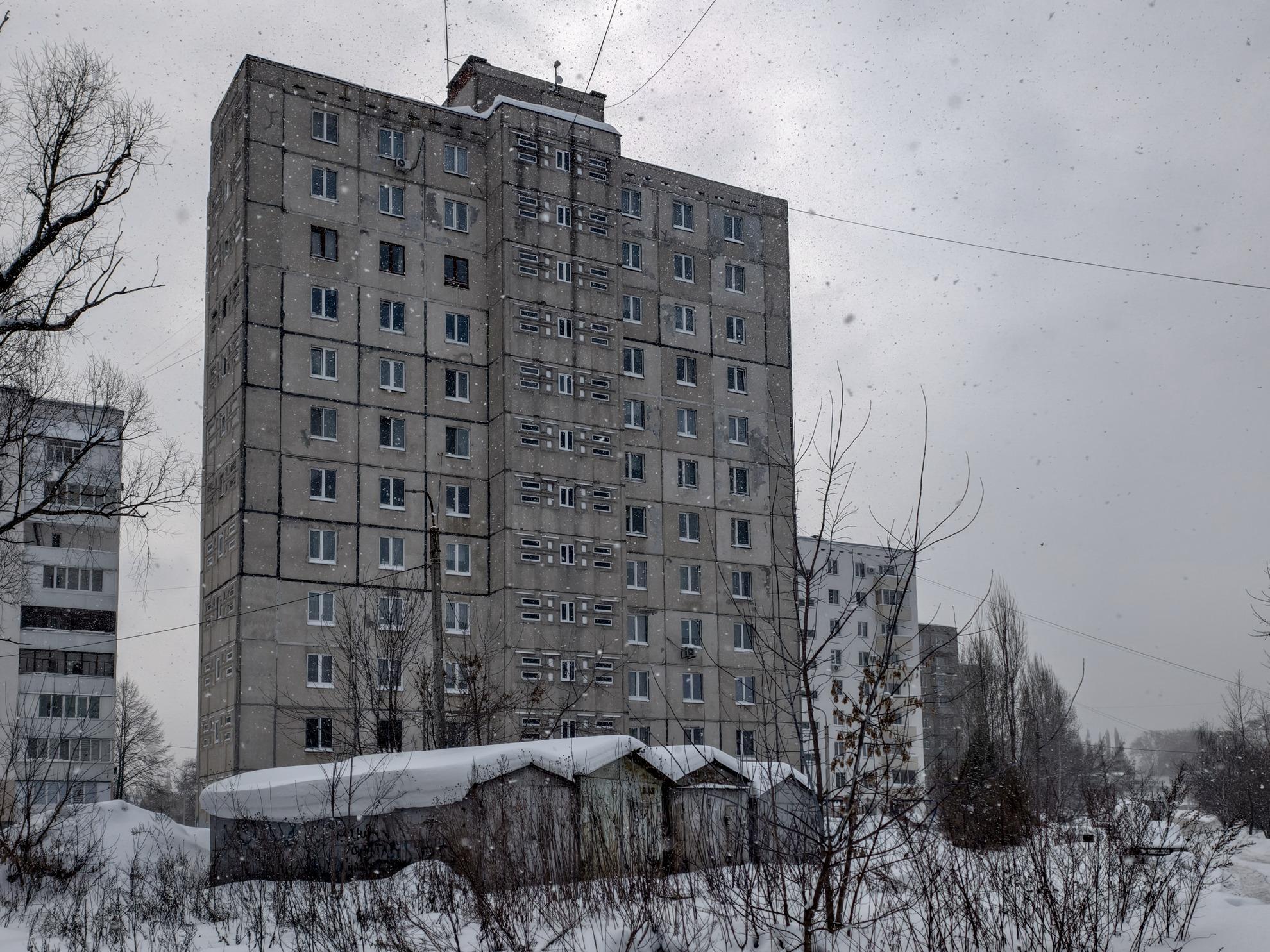

Ufa«s Chernikovka district is shrouded in many legends: for example, about the »Black Square«, where illegal substances were allegedly once traded. On social media, when talking about this area, people recall another one — Tabor. This is, of course, an unofficial name that could have been just a scary story, but it seems the events there were real — and quite frightening, as taxi drivers preferred not to drive there. UFA1.RU took a walk through Tabor in search of traces of Romani civilization.
Where Tabor is located
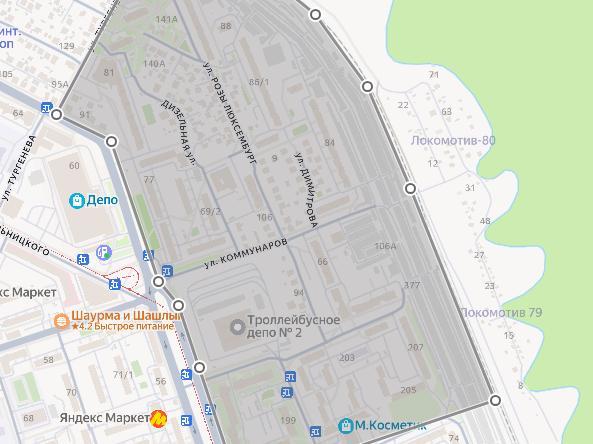
First, let«s try to figure out exactly where Tabor is. We would have considered it a Chernikovka urban legend, but even those who lived in Ufa spoke of »Romani courtyards near Kurochkina Gora (a hill in Ufa)«.
«And who remembers how in the 1980s a whole Romani camp was housed in a local five-story building in Chernikovka near Kurochkina Gora? I remember driving into that courtyard, and there were tons of Romani people. Children swarmed our Moskvich car,» wrote a resident of Telecenter on social media.
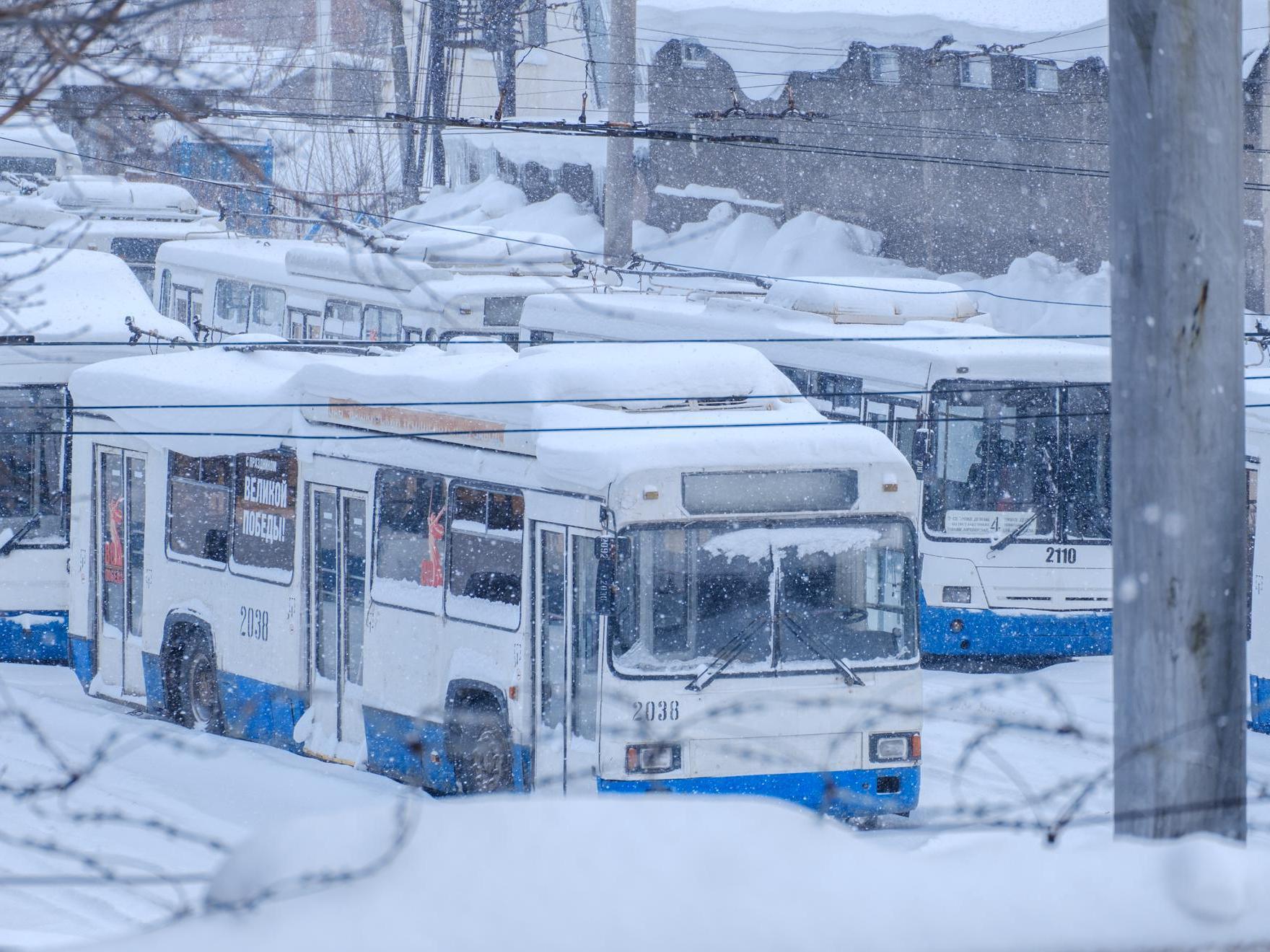
Kurochkina Gora is located near the non-passenger station Shugurovka, in the area of Admiral Ushakov Street. According to other data, Tabor was to be found behind the trolleybus depot, which is on Vologodskaya Street (it is a kilometer from the station).
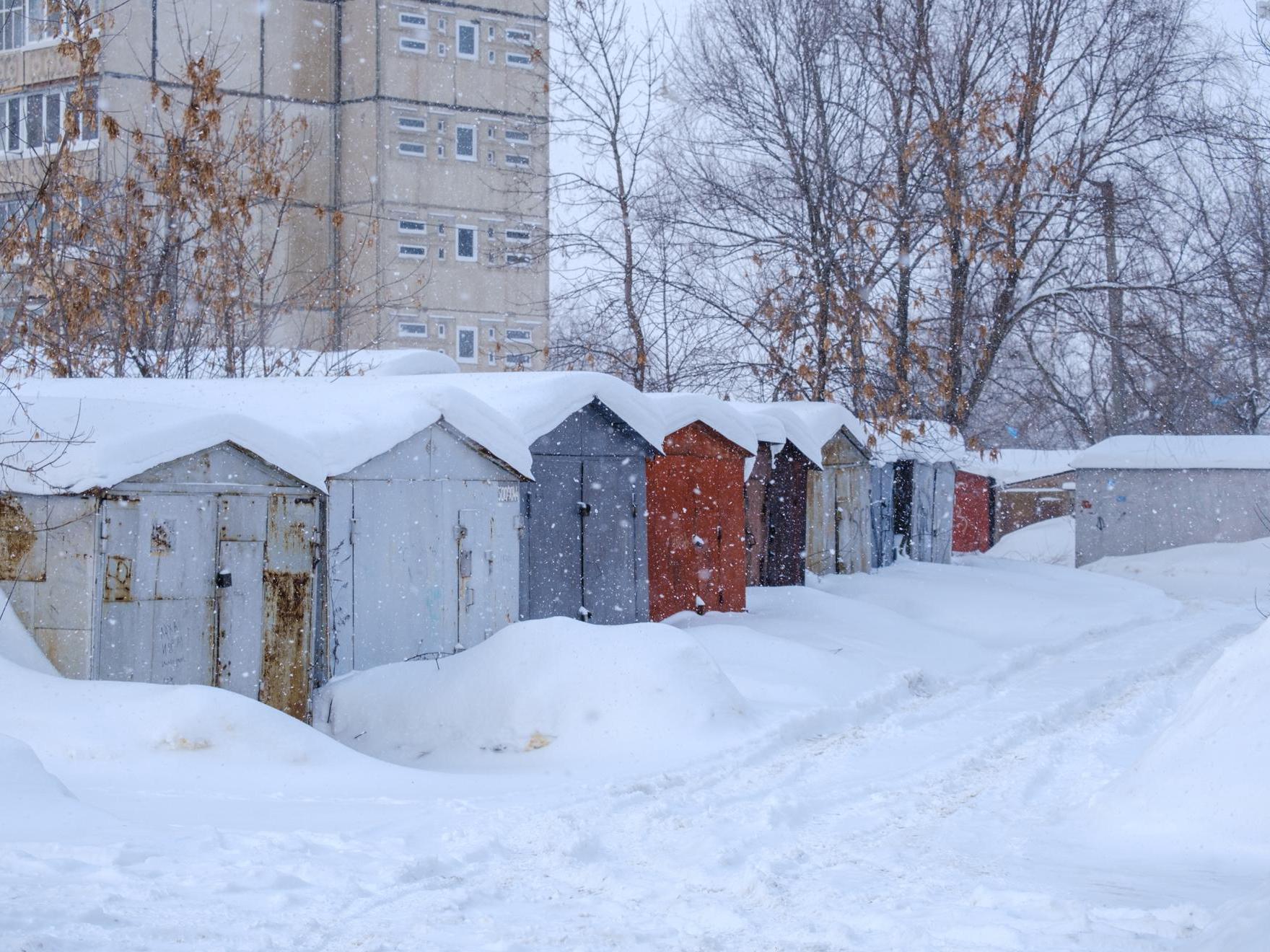
Also mentioned were numerous garages near the railway, where all sorts of wild things happened — allegedly, in the 2000s, dogs even mauled someone there.
There are also memories of «two patrols with machine guns» stationed at the intersection of Vologodskaya and Koltsevaya. This intersection is in the same area.
Thus we define the boundaries: the depot — the Vologodskaya-Koltsevaya intersection — the garages near the railway — the Lopatino microdistrict. This block includes the very same «Black Square». However, according to other evidence, the area with Romani courtyards stretched even further — almost to Perspektivnaya Street, a whole kilometer further.
Hotbed?
The Tabor area really could have been just an urban scary story that children retell to each other from generation to generation.
But here, as with the «Black Square», we are dealing with specific memories.
In 2011 on the LiveJournal platform, a Ufa resident told about Tabor: he called the place a «hotbed of drug dealers», known to all law enforcement agencies of the city. The man said that he worked as a taxi driver in the first half of the 2000s — and drivers often refused to go to almost any address on Ushakov Street.
«I also got to be there. I picked up drug-addict passengers and we went to the address Ushakova, 72. Entering the courtyard cost 50 rubles ($1 at current rates). Children aged 9–12 were running around the yard. The service was at such a level that clients didn«t even get out of the car; the children themselves ran up to the car and offered a choice of »checks« [slang for drug doses]. I was stunned by what I saw,» wrote the Ufa resident.
He says that the Romani families lived «luxuriously» then: supposedly, they always bought the most expensive products in stores, and then they allegedly moved to Maksimovka (however, they say they are not there now either).
«These courtyards are quite a place, I was almost stabbed there in 2006,» stated a commenter.
And here is another memory that a reader of UFA1.RU wrote for the report from the «Black Square».
«We didn«t have any particular crime; drugs were sold by Romani people on Ushakov Street, and because of them taxi drivers did not like to come to us,» states a Ufa resident.
These accounts correlate with the memory of the machine-gun patrols.
«In 2003, when I moved to Ufa, two patrols always stood at the intersection of Koltsevaya and Vologodskaya, with machine guns. I drove by there almost every day, and on Svobody Street, women stood every 15 meters. They were probably earning money for a dose. Those were the times. And overall, life was better than now,» stated another social media user.
All these memories were left in different years on different platforms. So, not such a legend after all, but quite a reality?
Los Chernicagos
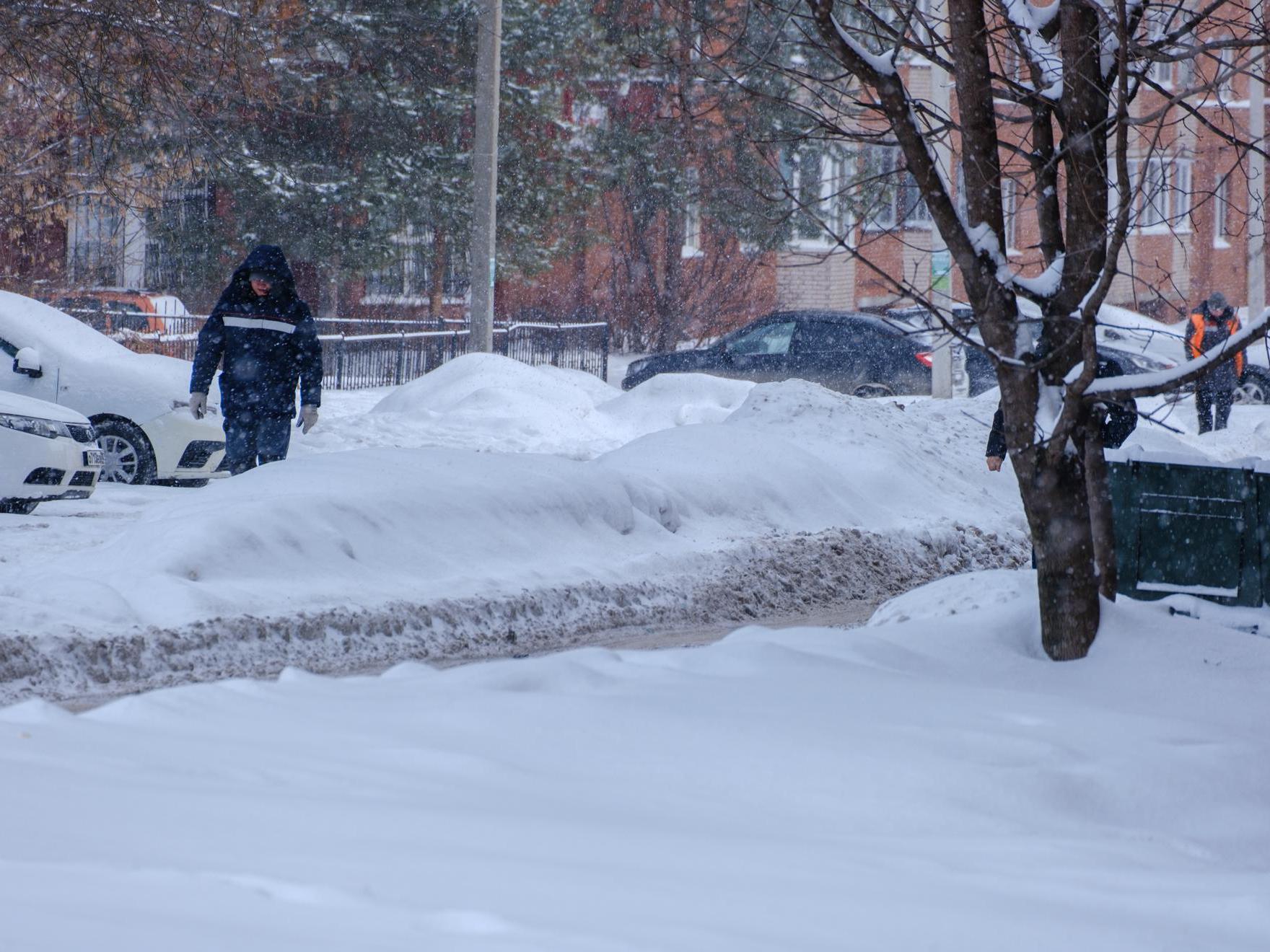
The day we set off to explore Tabor, the weather was not very cold, but windy and snowy.
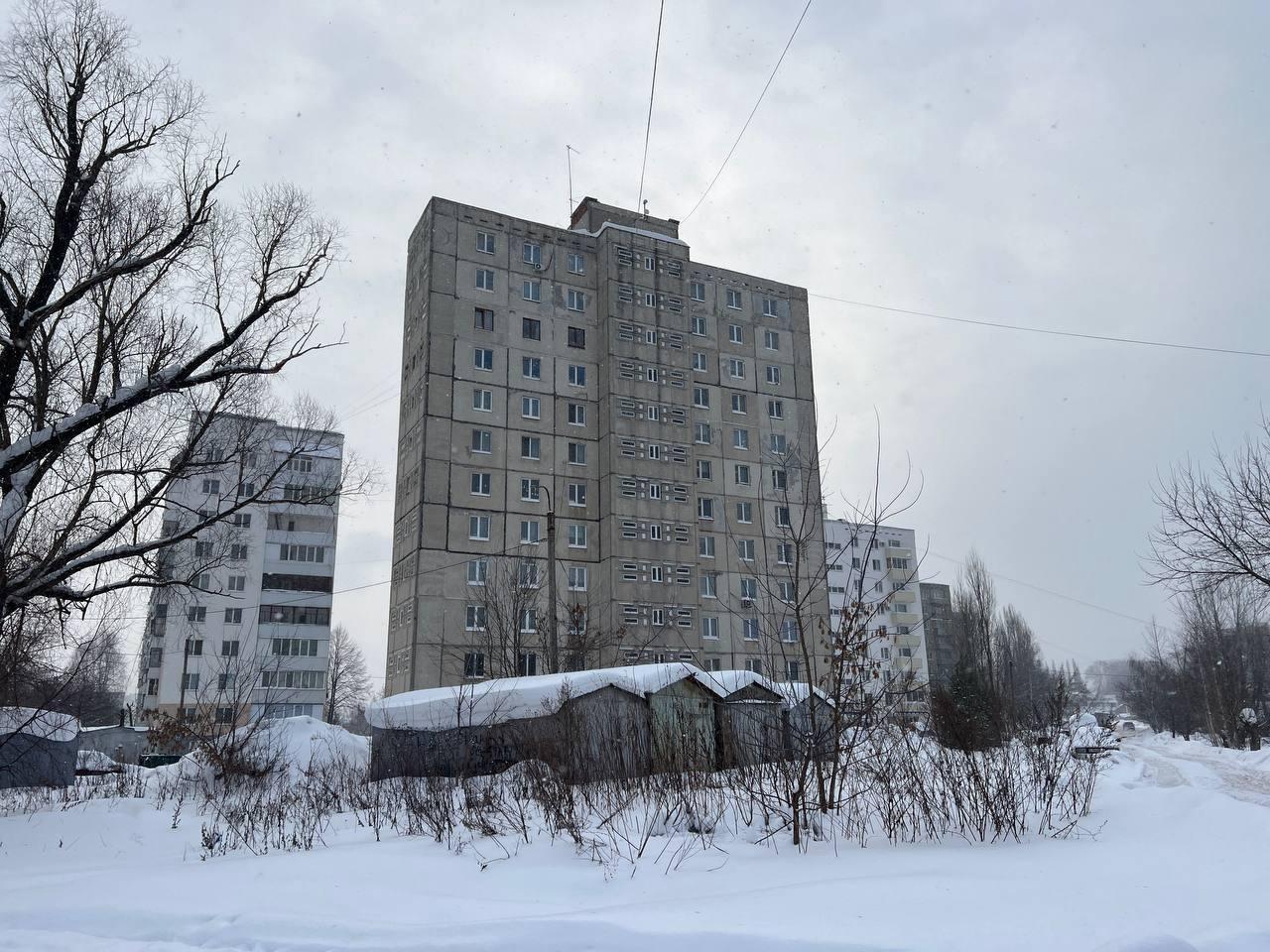
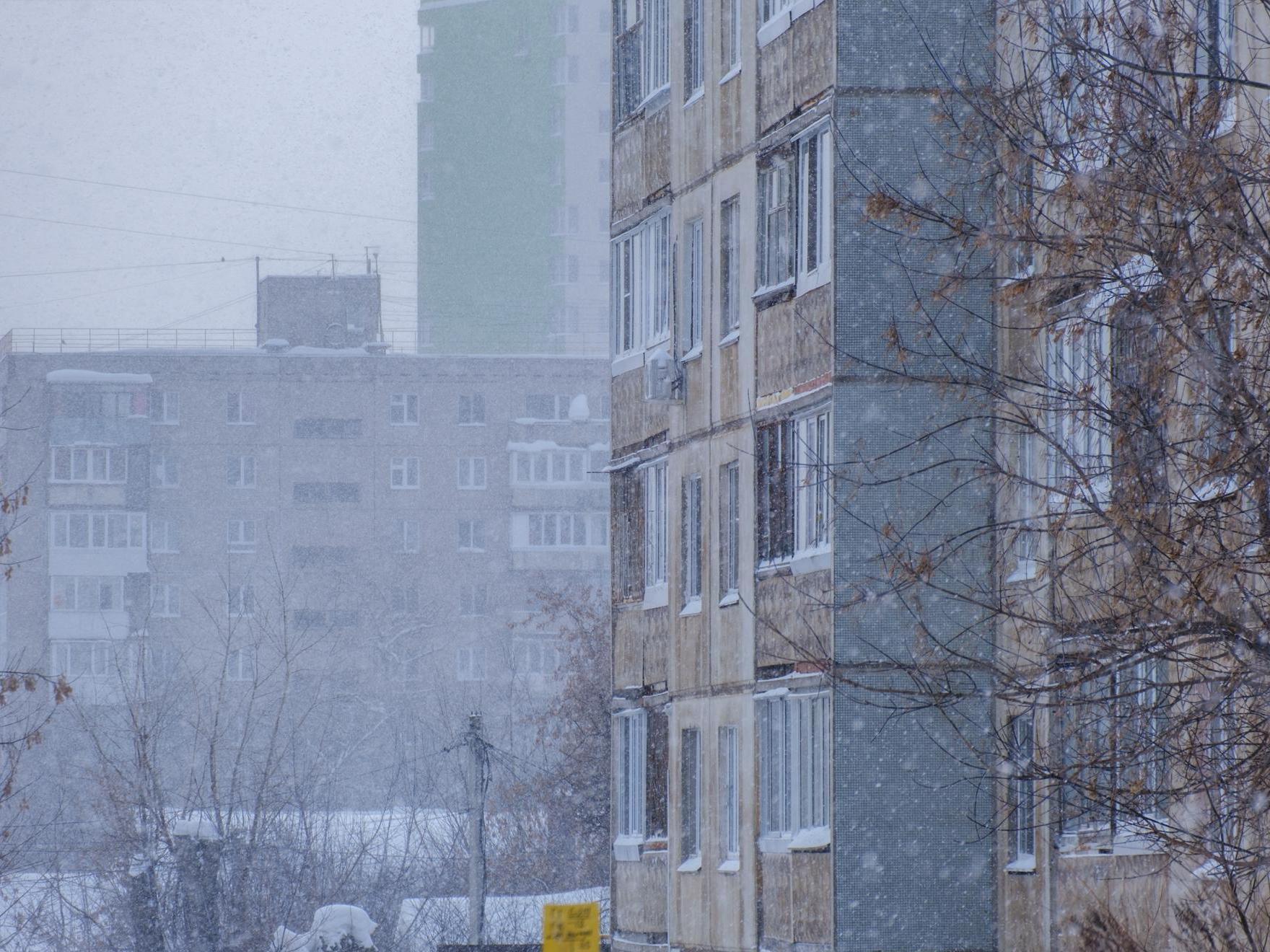
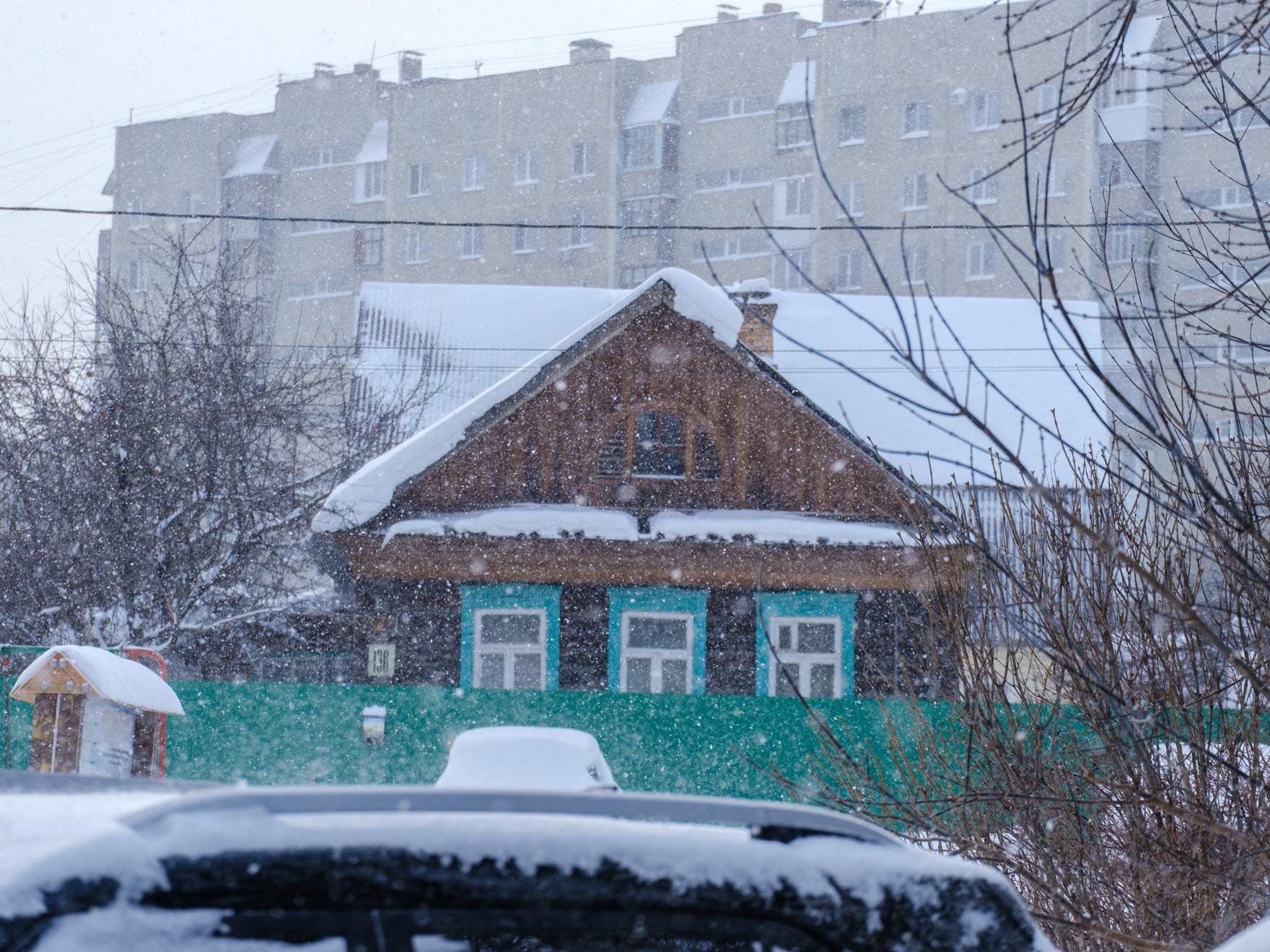
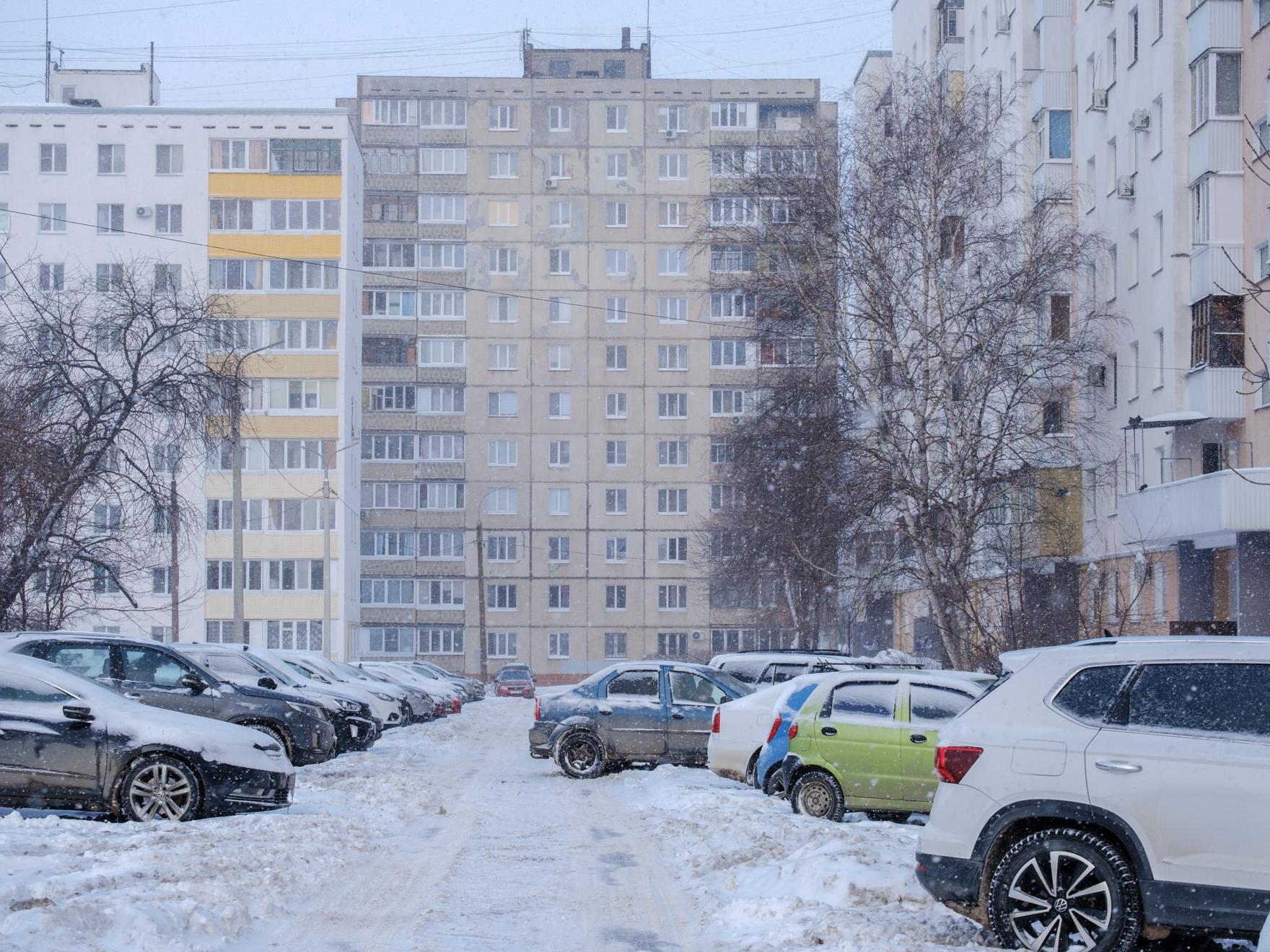
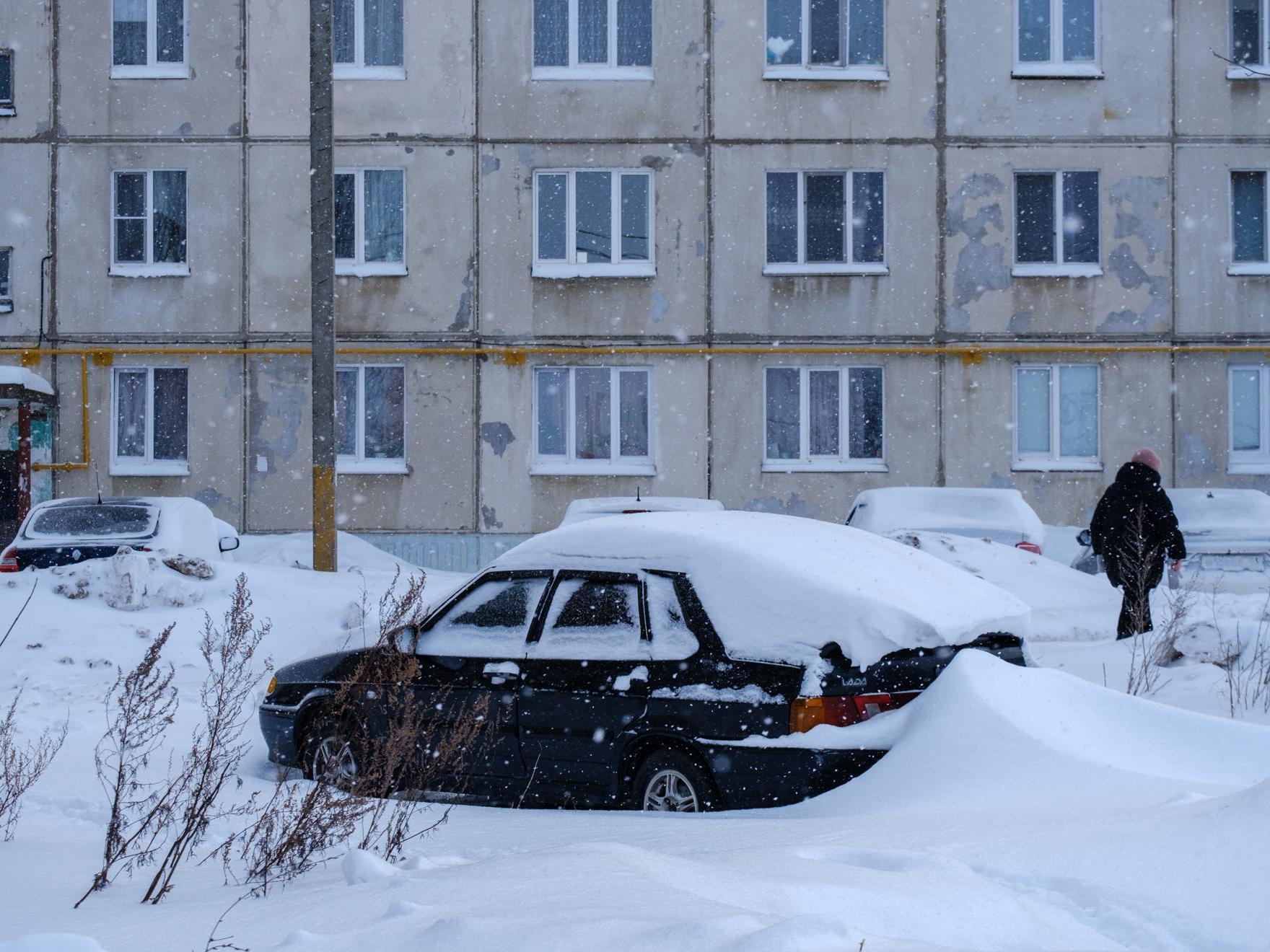
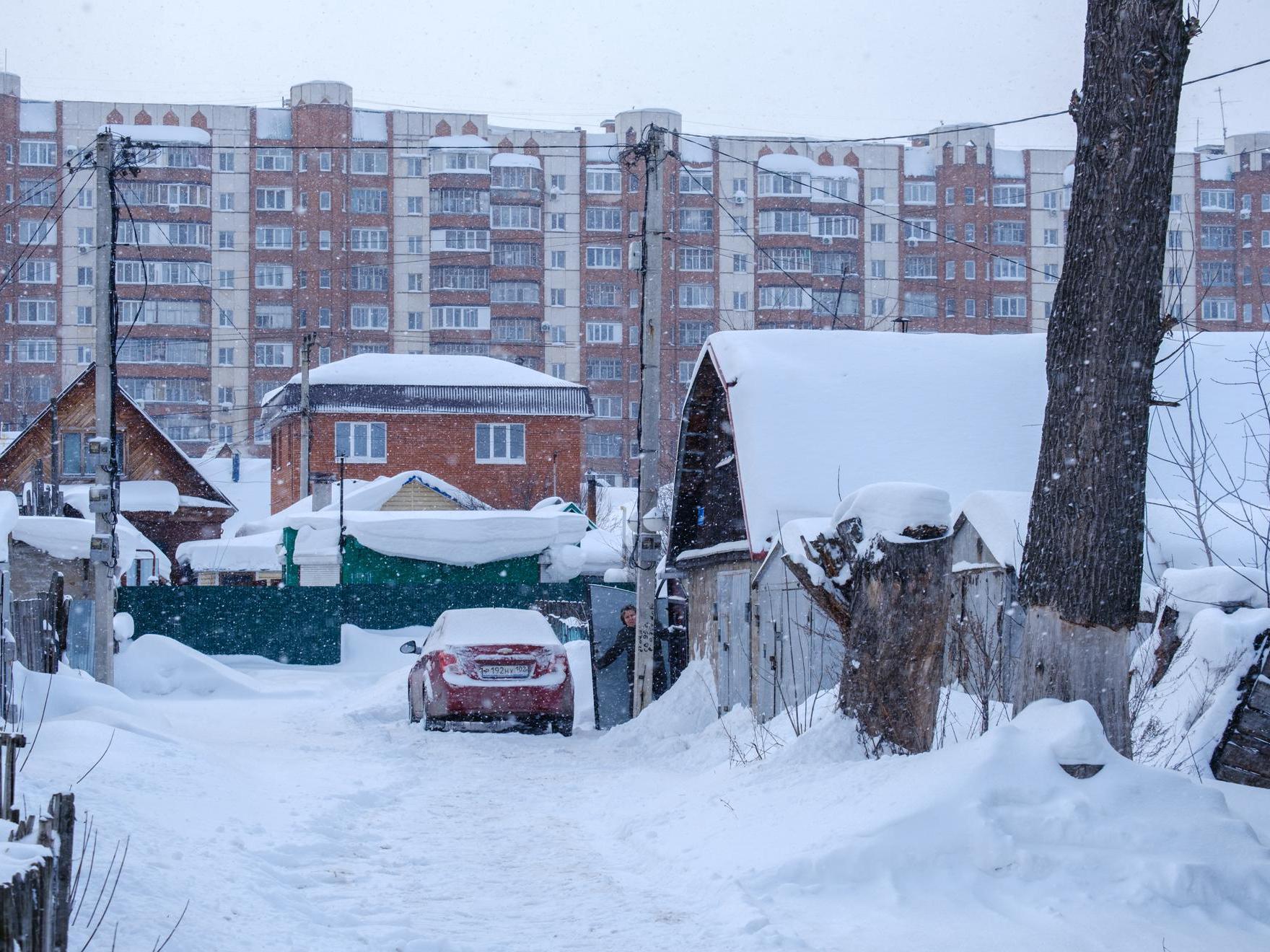
But even in such conditions, the area looked decent: ordinary «Brezhnevki» (typical Soviet apartment blocks), nine stories high, with private houses standing somewhere among them.
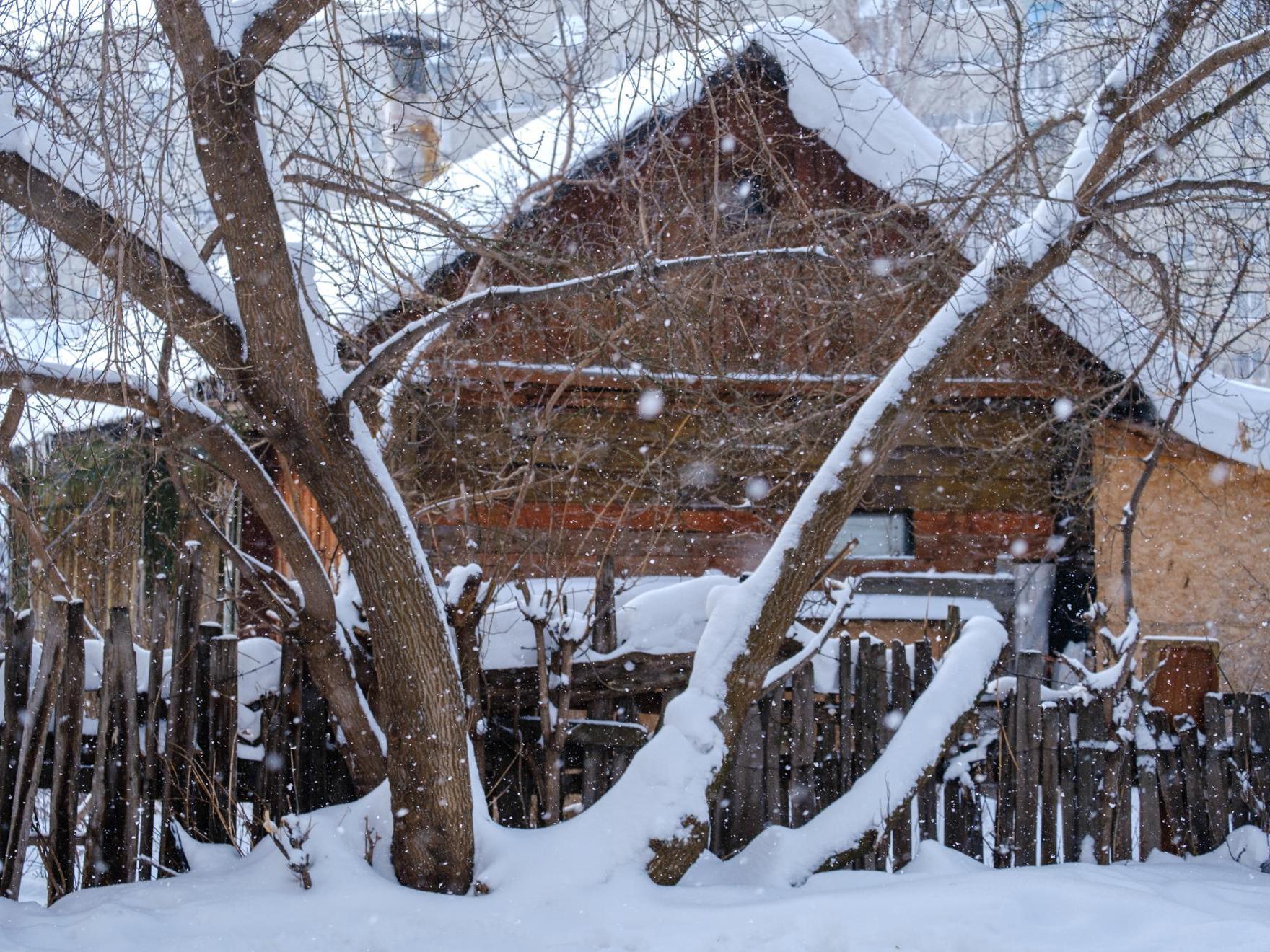
It is indeed strange when you have village houses in your courtyard.
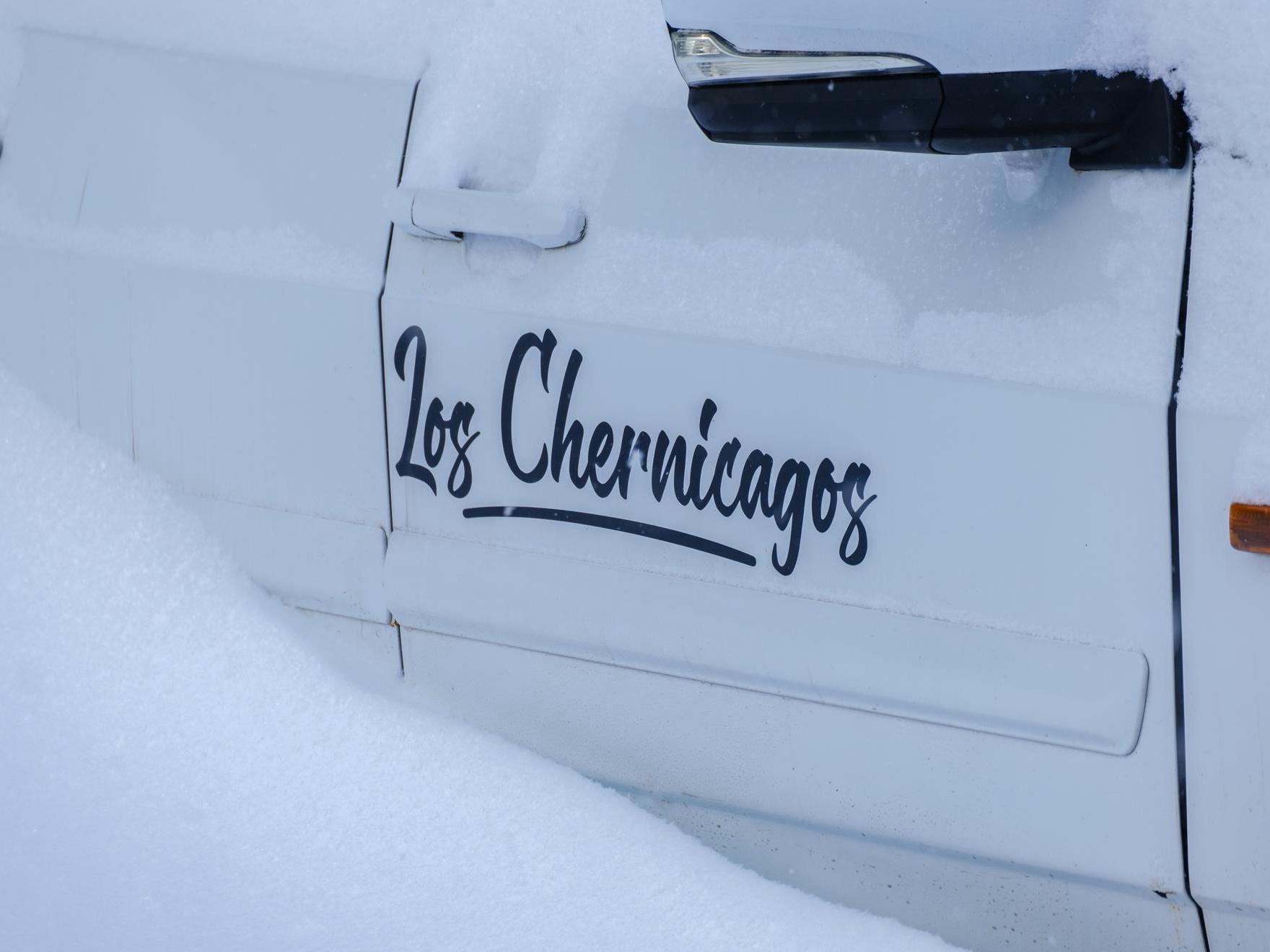
On one of the parked cars, an inscription read: «Los Chernicagos». It could be considered a joke, but Chernikovka is sometimes called «Chicago» — after the city of the same name in the United States. Presumably, this is due to the crime rate in the city on the shores of Lake Michigan: despite all the developed infrastructure, the number of violent crimes there is hardly less than the national average.
In Chicago, there is a high risk of being robbed — 336.4 assaults per 100,000 population. There is also a large number of various gangs that settle scores among themselves. So «Chicago» — «Chernicagos», the analogy is clear. And what does the article «Los» have to do with it? Apparently, just for decoration.
We walked past houses on Rosa Luxemburg and Dizelnaya streets — no hints of «Romani courtyards» were found.
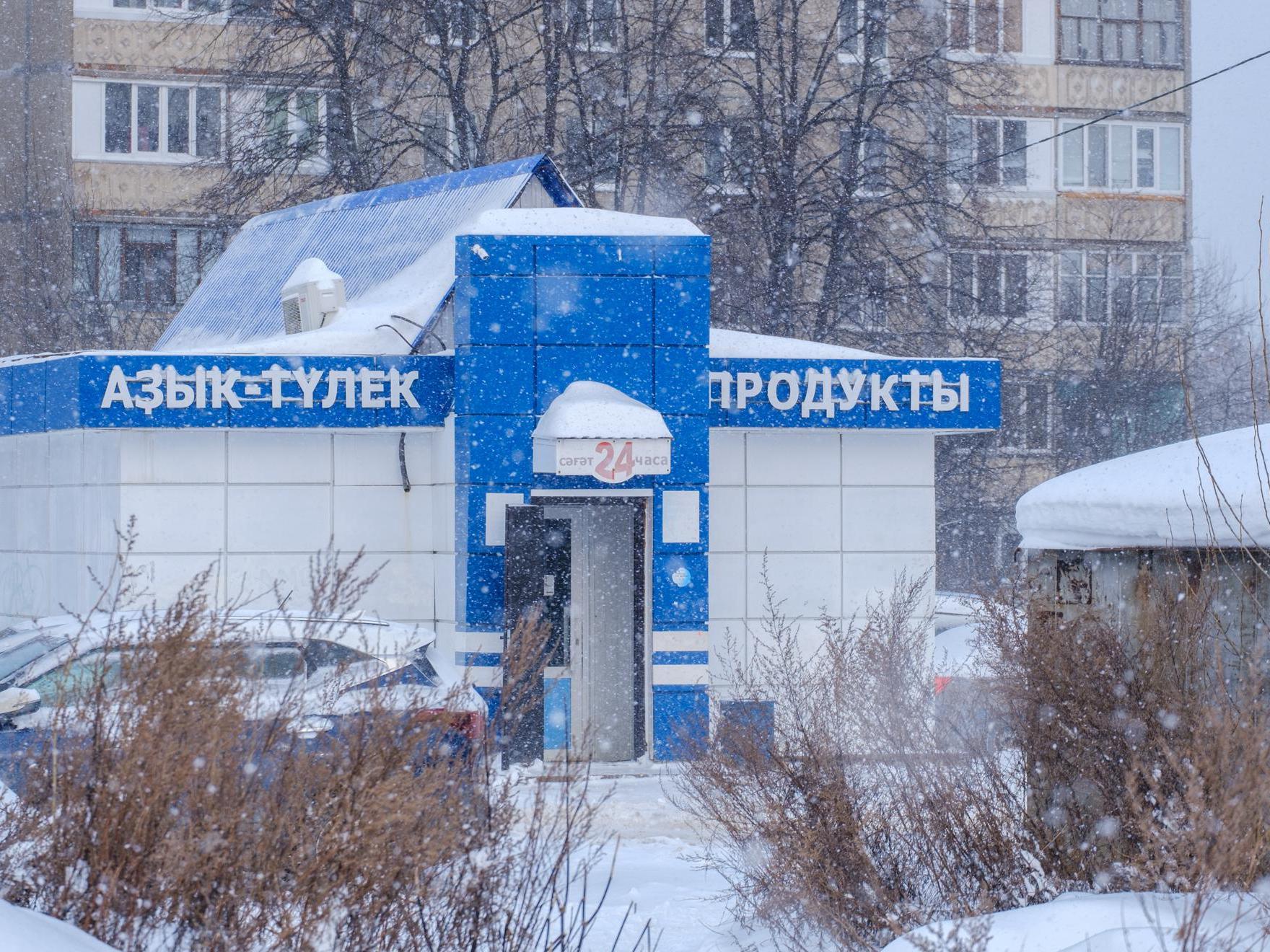
In the depths of the area, you can still find local shops not tied to large chains. These are rare nowadays.
Moving on to ordinary high-rises: many have changed their appearance, from gray faceless concrete boxes they have turned into attractive houses. At least, it has become more pleasant to look at from the outside: after renovation, the color became white-cream.
«Narkoposyolok» (drug village)
Earlier, the garages were mentioned where someone was allegedly mauled in the 2000s. We dare to assume that such a thing could well have happened, and even if not this, then something else bad.
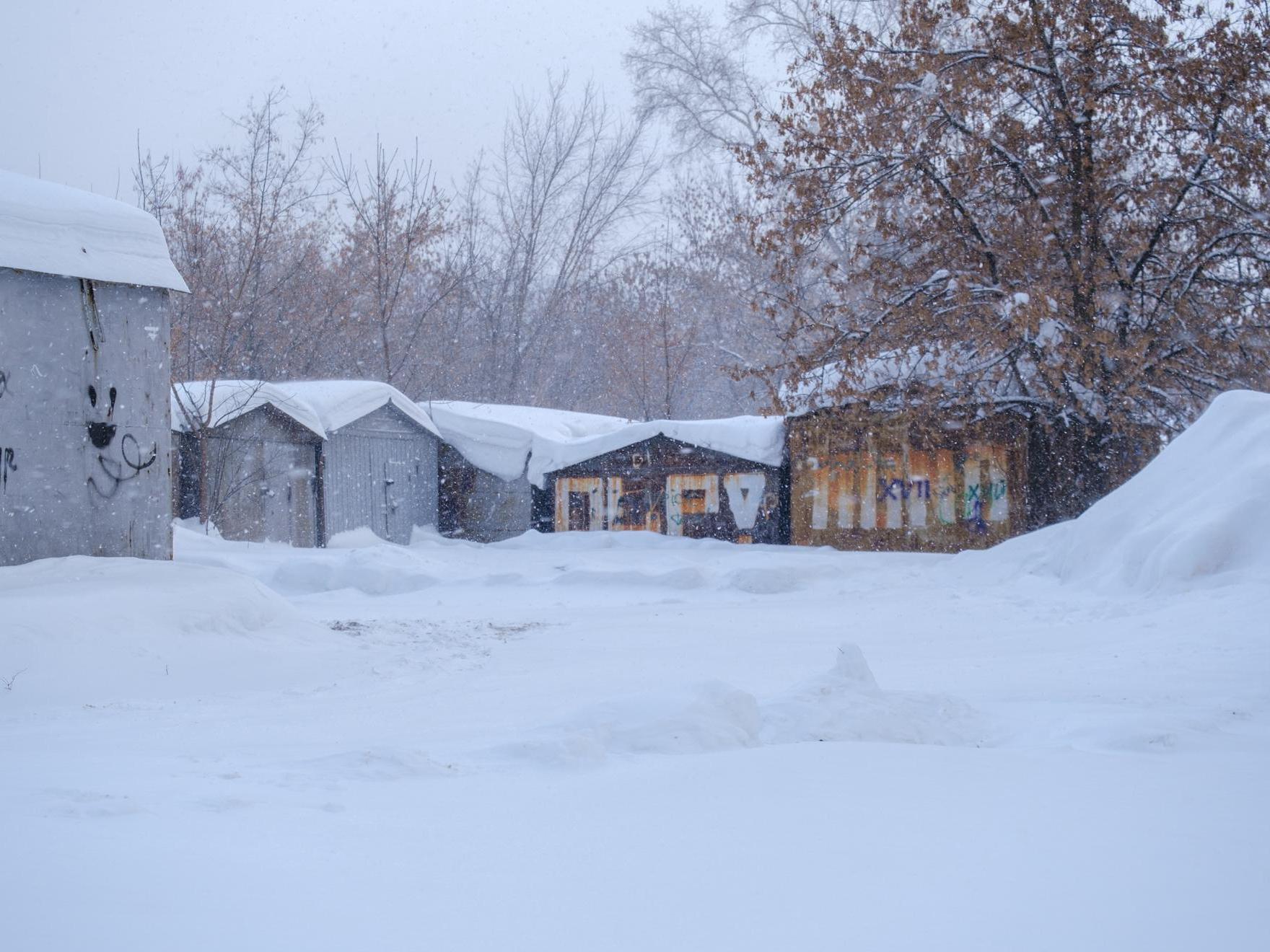
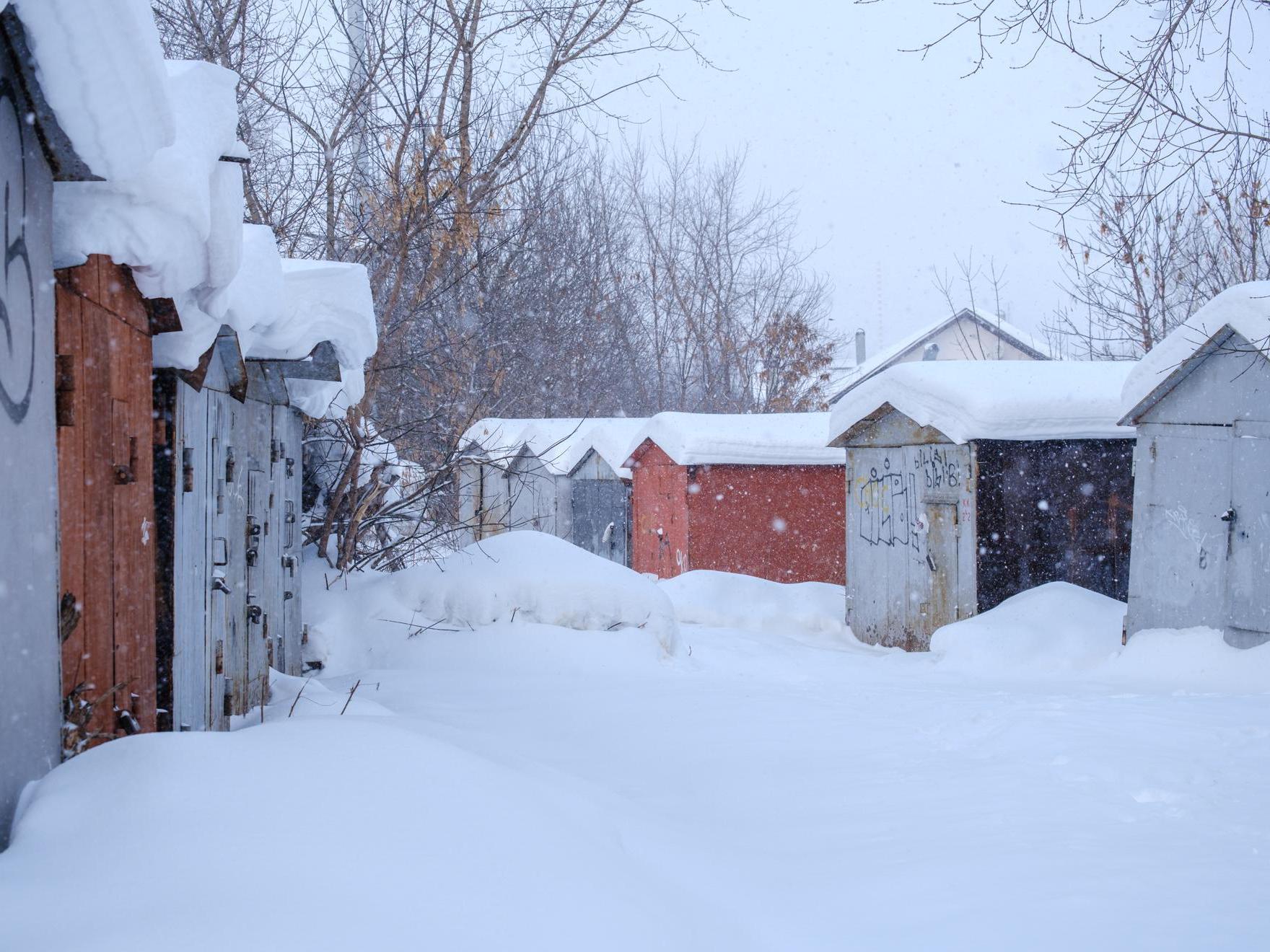
The cooperative spreads over an area of about 15 hectares and is located in a remote place: nearby are nine-story buildings, their back side, and on the other side — a railway where there is no passenger traffic, here they transport goods for the industrial zone.
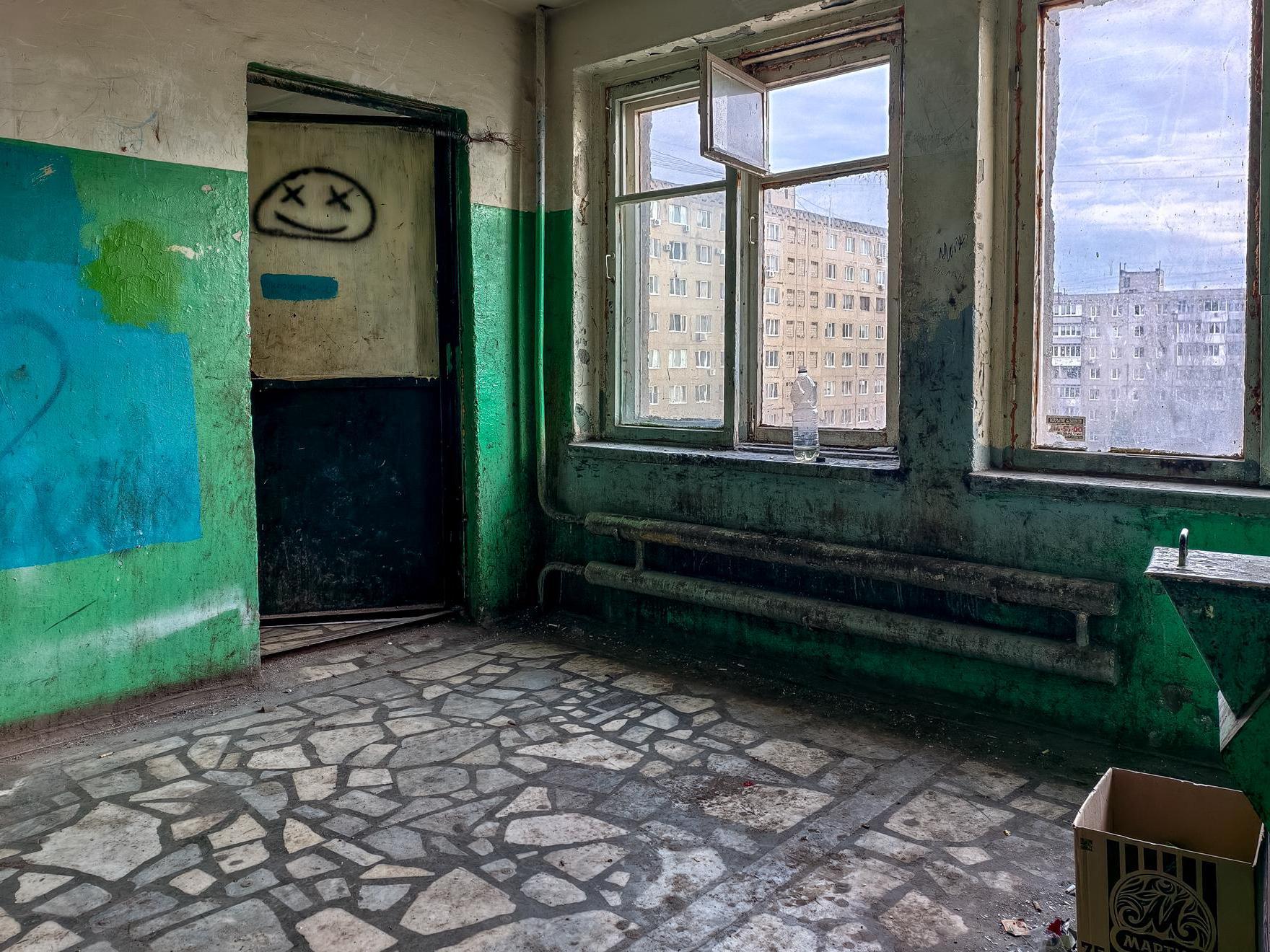
«Closer to the mountain was an equally infamous so-called «garage drug village» — a string of garage cooperatives stretching along the railroad. There, drug addicts lived out/rotted out their addictive drug-age in abandoned garages. They were called «gatherers» — they crawled out of their shelters — some on crutches, emaciated from drugs, tuberculosis and AIDS,» wrote another Ufa resident on Pikabu.
Let us remind you that drug use is dangerous and can lead to death or prison time. Better read the story of a Ufa drug police officer about how this sphere works and what consequences it entails.
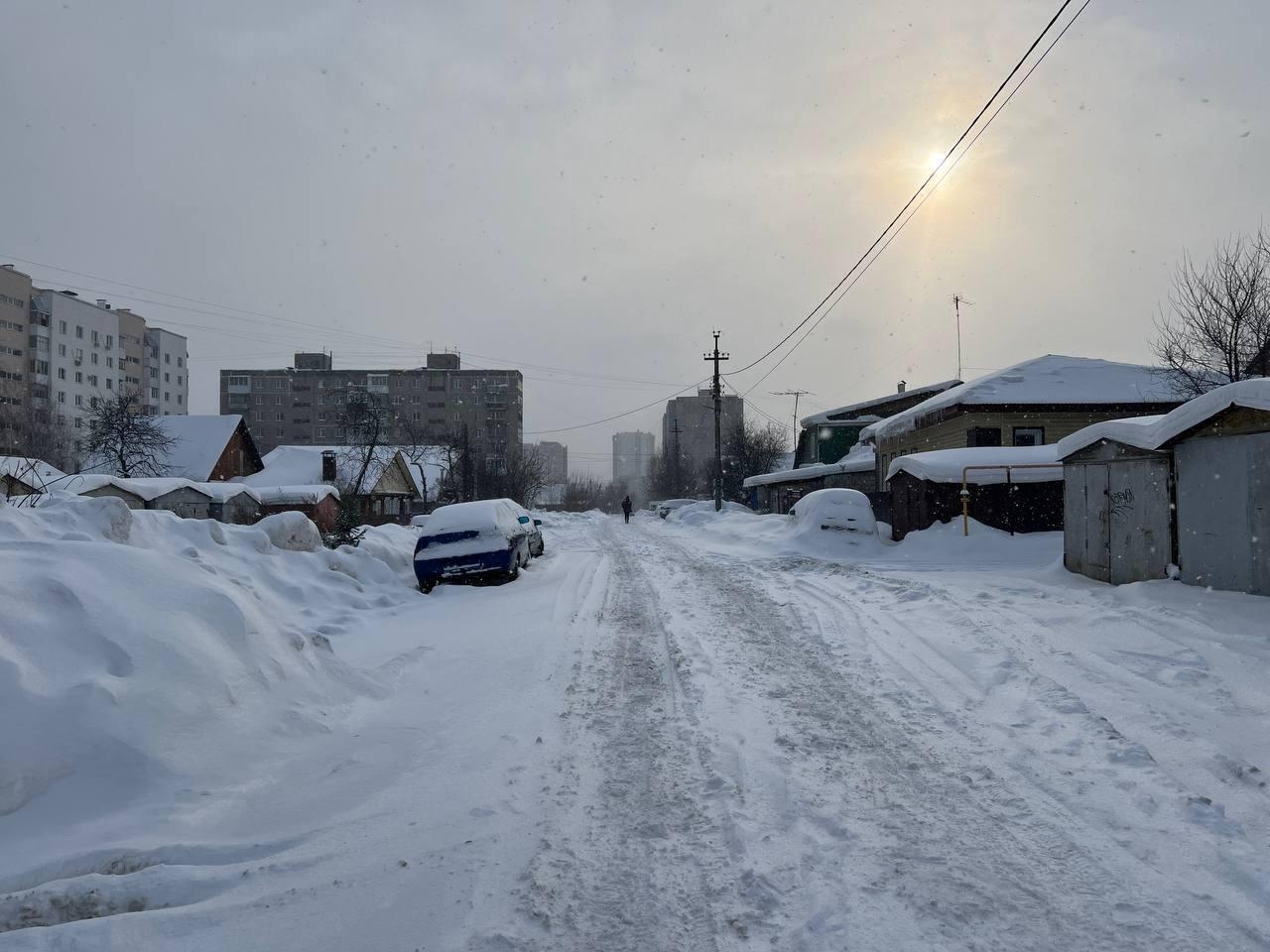
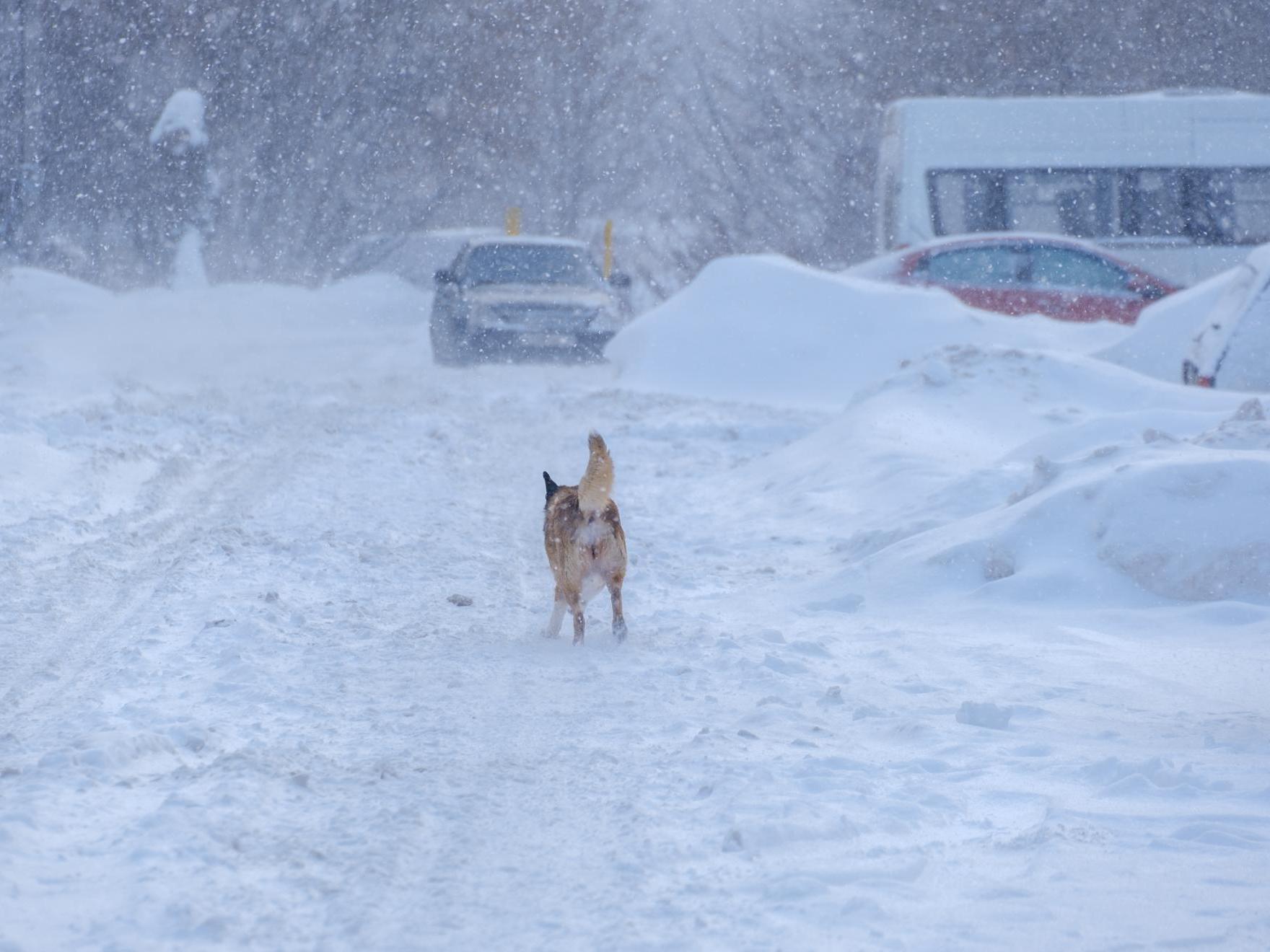
Unfortunately, an ideal place for shady dealings, plus there is no lighting, people don«t go there. There are almost no cars either: this is especially noticeable in winter, as in many places you can»t even see a track, just snowdrifts and tracks of dogs that ran through here.
On many properties — various inscriptions, drawings that carry no deep meaning for a local resident.
At the exit from the garages, we see a gloomy high-rise, near which stands a snow-covered «pyatnashka» — a VAZ-2115. Apparently, the owner couldn«t drive out and decided to leave the »swallow« to winter.
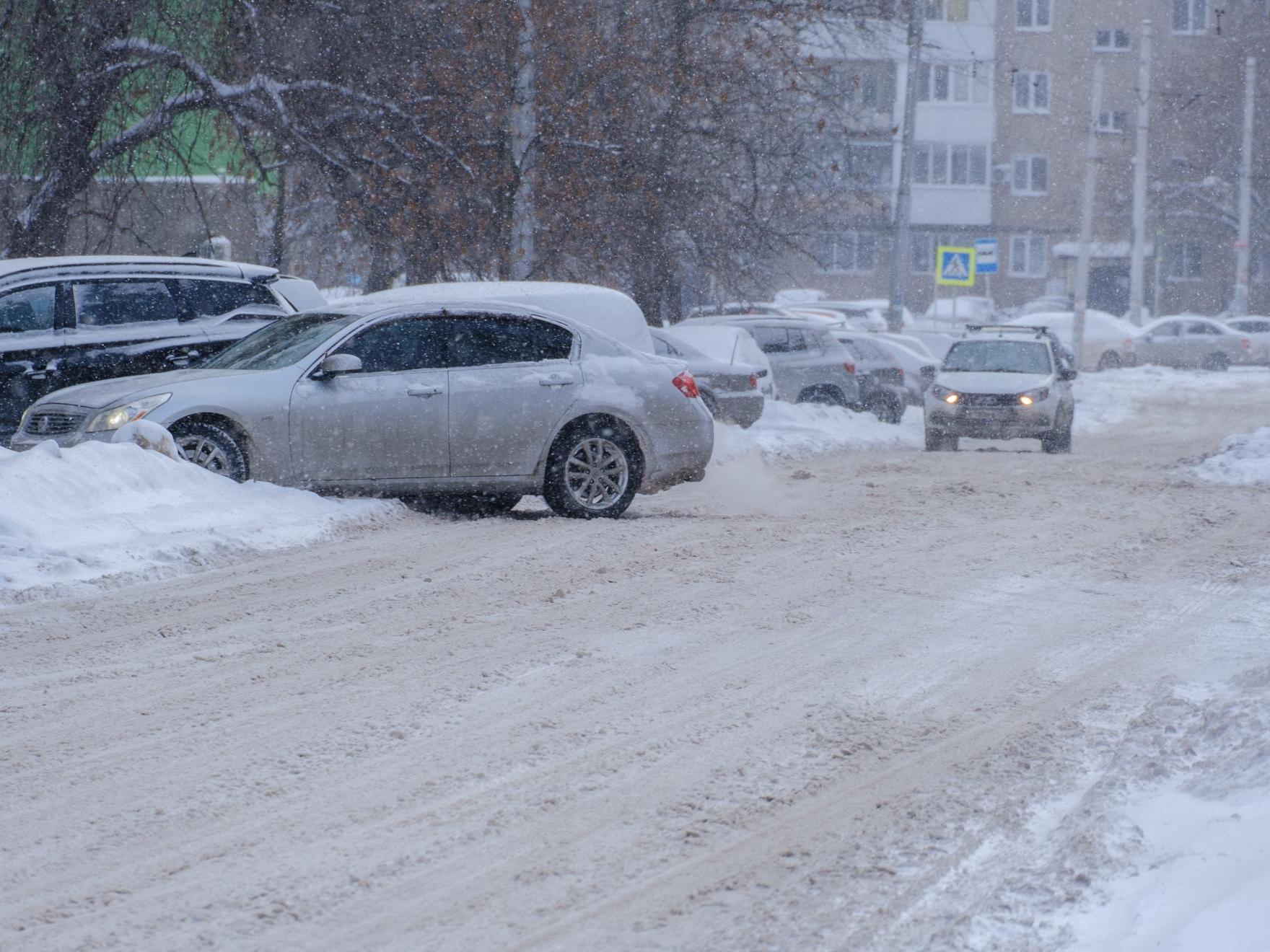
However, even foreign cars cannot get out of the local snowdrifts — no matter what drive, you can get stuck anywhere.
Shovels in Lopatino
In general, historically the village of Lopatino is located in the area of Oleg Koshevoy Street, and the local Lopatino is apparently a new part of the noble settlement. Its founders are connected with other nobles — the Anichkovs, who founded Staraya Alexandrovka in the north of Ufa.
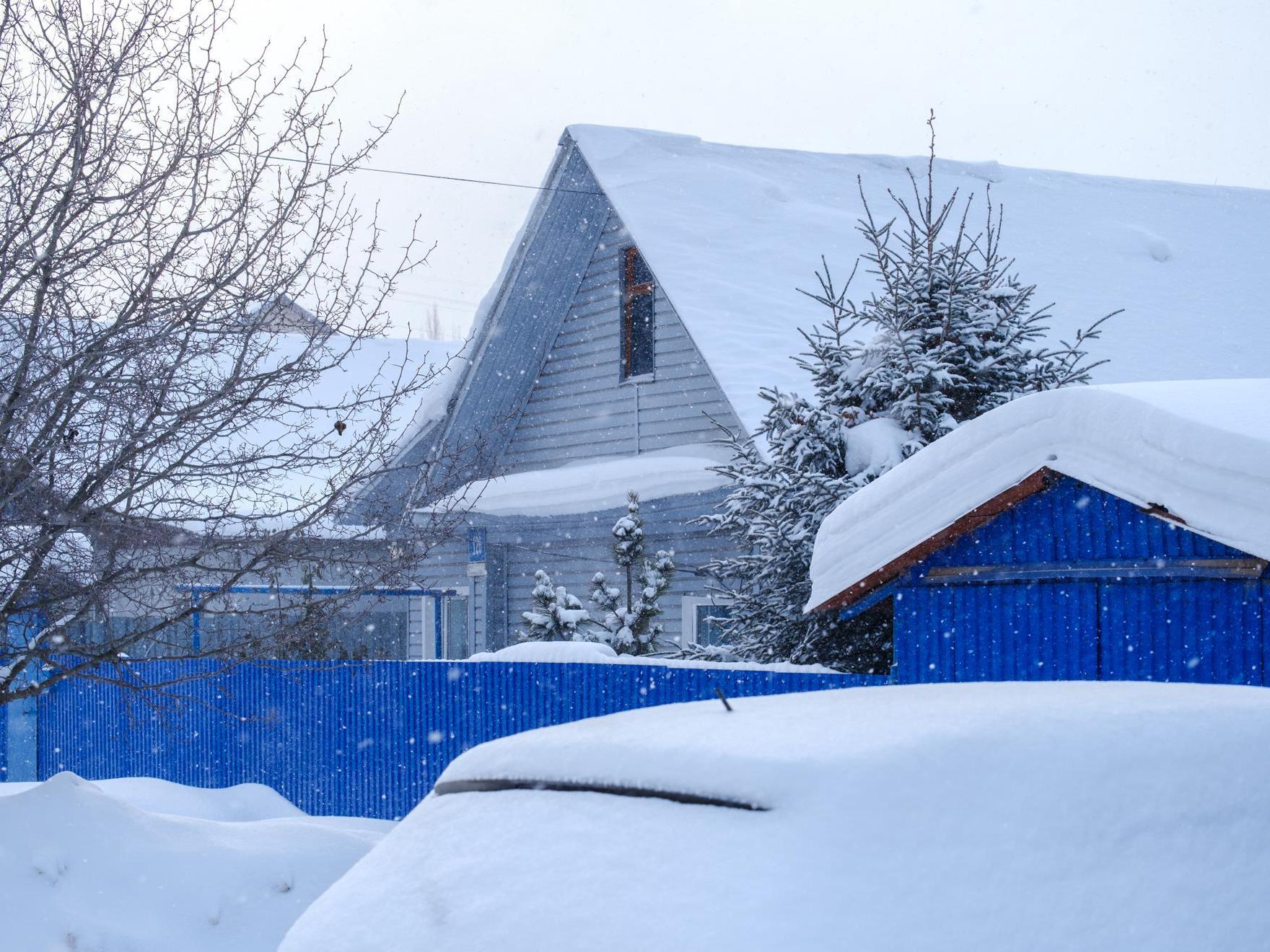
Now the new part covers an area of 0.3 square kilometers, bounded by Svobody, Vologodskaya, and Turgenev streets. The area is completely built up with private houses.
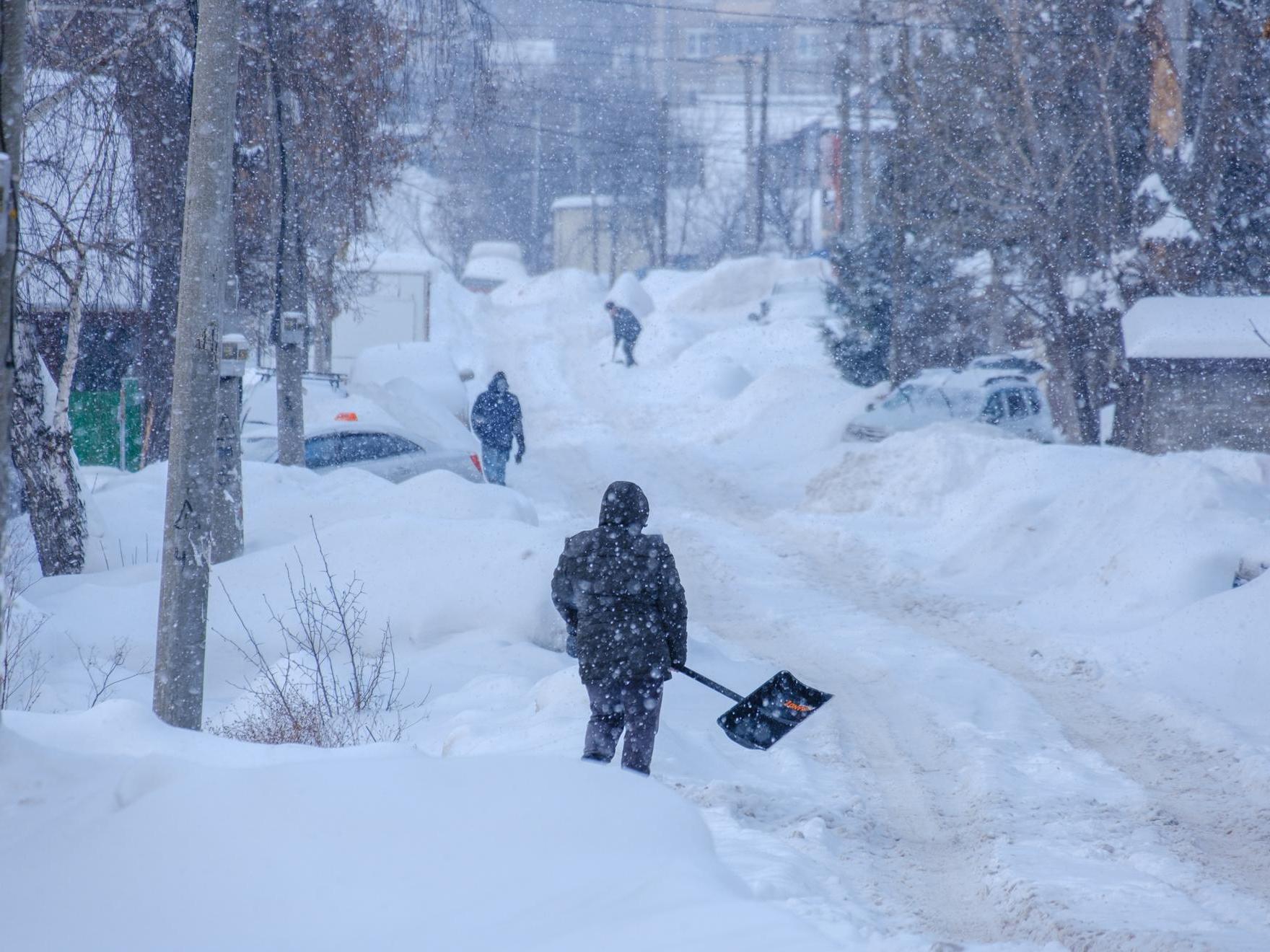
There is so much snow here that the locals who are not at work have come out with shovels to clear the yard and driveways.
On one of the houses, Slavic amulets were hung: the sun in its various manifestations.
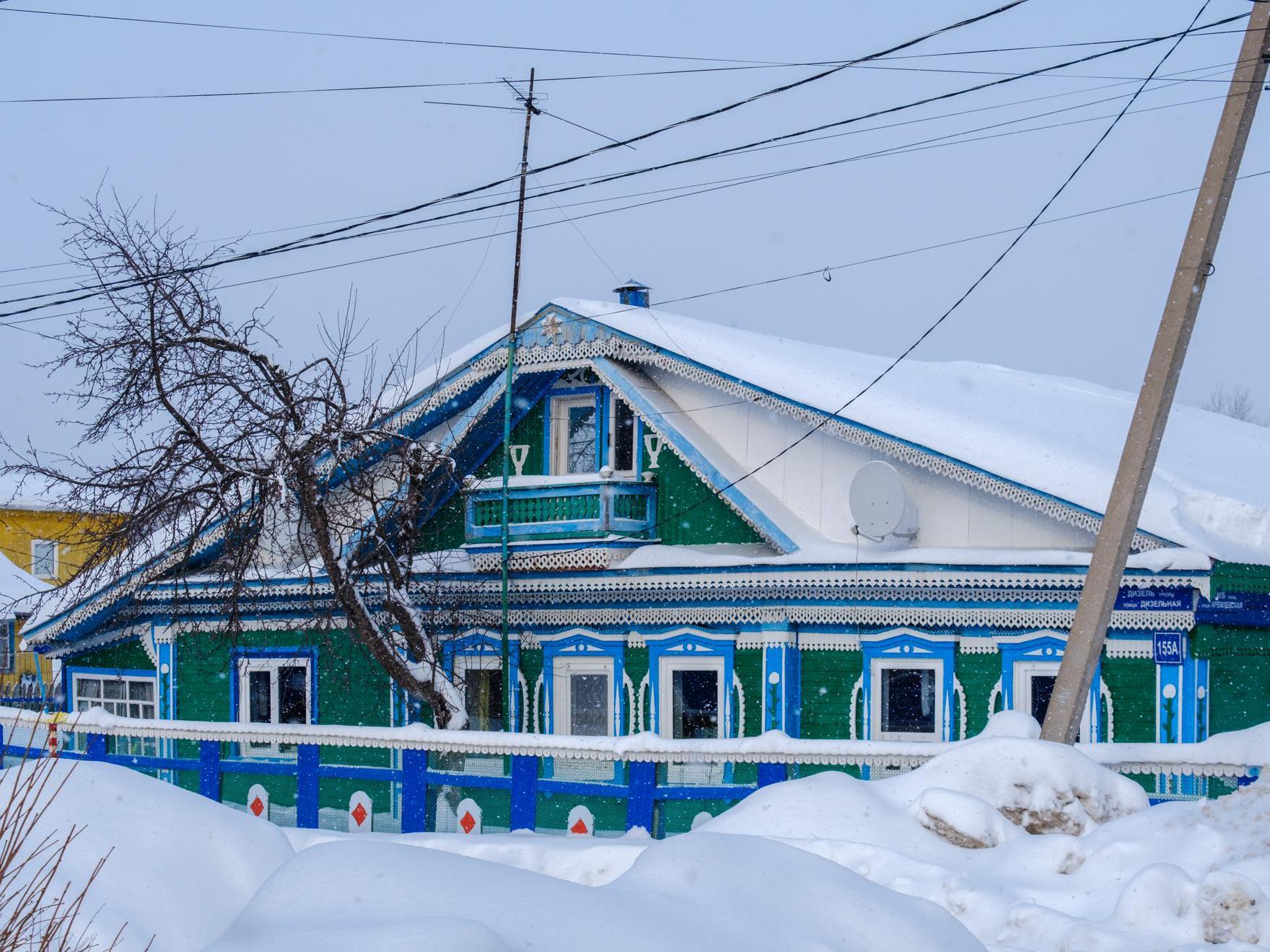
In some houses, they did not do siding or metal paneling, leaving the original wooden aesthetic with carved cornices. Truly fantastic beauty.
In general, no traces of «Romani courtyards» were found: the dark times are over. But if you step out in the wrong direction, a standard picture of outlying districts opens up: gray houses, abandoned cars, uncleaned streets.
«Today it is a peaceful urban pastoral — courtyards no different from any other Ufa courtyard,» wrote a Ufa resident on Pikabu.
We invite Ufa residents to write what other legendary districts exist — and we will rush there too.
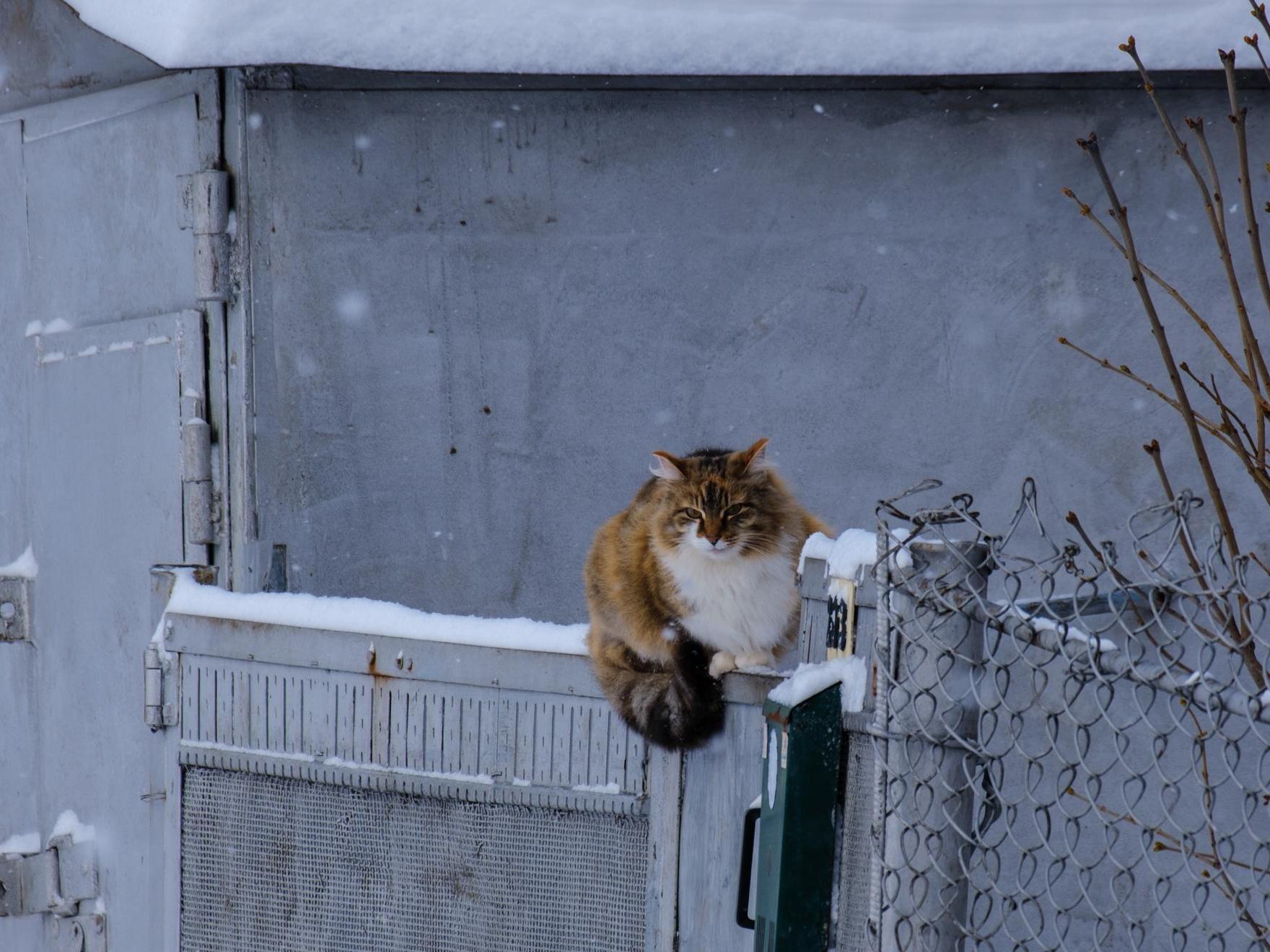
And finally, we show a local cat that was not afraid of the inclement weather.