Scammers Push Chita Schoolgirl to Arson Attempt
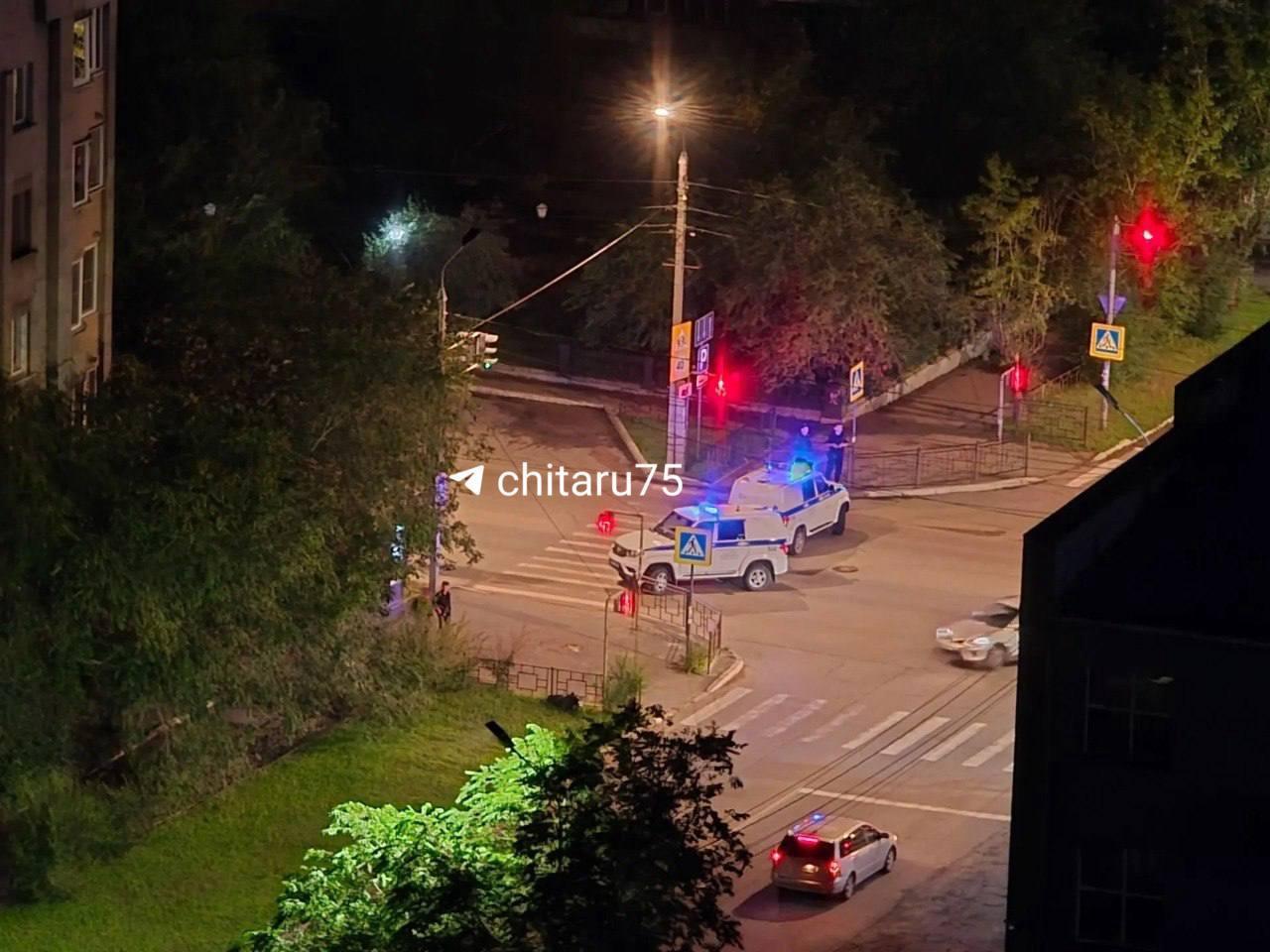

The road near the military commissariat was cordoned off on the evening of 24 July
On the evening of Friday, 24 July, police cordoned off a section of Amurskaya Street in central Chita, blocking both vehicles and pedestrians. As it would later emerge, an administrative building could have caught fire that evening, and the person tasked with setting it alight was a frightened school graduate who had become a tool in the hands of phone scammers. Fortunately for everyone, including herself, the plan was never carried out. But now the victim of the criminals faces criminal prosecution, and her entire family has been put through a severe ordeal.
This story shows just how far scammers can go today, not hesitating to use even recent school students for their purposes, and how important it is for parents and loved ones to pay attention to what is happening with the person beside them.
We tried to find out how such a story could even become possible, exactly how scammers hook people, what they use to persuade even vigilant individuals into their schemes, and by what signs one can tell that a person has already fallen under their influence.
To protect the young woman«s identity, we have changed her name. A source told Chita.Ru about the girl»s communication with the scammers.
The signs were there
Katya is 18 years old. She is a beautiful, fragile, and creative young woman who has just finished school, passed the Unified State Exam (EGE), and was preparing to enter university. She was raised in a complete and well-off family. The girl fell under the influence of phone scammers after her exams. She remained under their control for two whole weeks, following all instructions and gradually becoming more deeply drawn into a scheme that ultimately led to a crime.
It all began with something extraordinarily simple — a single click on a link. From a hacked account of an acquaintance on social media, she received a message asking her to vote for a friend who had allegedly been awarded the title of Hero of Russia. The girl responded to the request, and immediately after clicking the voting link, she received a notification — supposedly her account on Gosuslugi (the government services portal) had been hacked, all her personal data had already been compromised, and to protect her data she needed to call the number provided immediately.
From there, events unfolded according to a well-worn scenario. The frightened girl called the number, and the scammers were already waiting on the other end. During the conversation, they convinced her that Central Bank employees were now working with her, explained that her money was at risk, and then began dictating what to do.
Without telling her parents anything, following the scammers« instructions, she took out a loan of 250,000 rubles ($3,100 at current rates), withdrew the money, and transferred it to a phone number that turned out to be registered in a country in East Asia. After that, the criminals demanded another 150,000 rubles ($1,900 at current rates). It remains unclear exactly what the scammers said and how they persuaded her, but Katya, still not telling her parents anything, turned to a friend for help, whom she also told nothing.
The young man, as he himself says, tried to find out why she needed the money. Katya did not want to explain. He, in turn, did not insist and, deciding to help, took out a loan in his own name and handed over the money, not suspecting what was actually happening. In total, the girl transferred 400,000 rubles ($5,000 at current rates) to the scammers. But the story did not end there.
At some point, the scammers introduced themselves to Katya as special services officers and stated that she now had to help them catch criminals. First they asked her to photograph cars near the administrative building at 9 Amurskaya Street in Chita, and then informed her that this address supposedly housed the scammers« headquarters and that to assist law enforcement it needed to be set on fire.
They explained in detail what to do and how, and sent her a recipe for an incendiary mixture. Katya prepared the flammable substance right at home. Notably, even here the girl turned for help: she asked her friend for gasoline. He was surprised by such a request and asked why she suddenly needed it, to which she honestly replied: for making an incendiary mixture. The friend, of course, did not believe her, merely laughed, and gave her what she asked for.
When everything was ready, late in the evening on 24 July, she went to 9 Amurskaya Street. According to sources, the girl was afraid and tried to back out at the last moment, telling the scammers she did not want to do it and that she was scared. But in response they threatened her: if she disobeyed, prison awaited her. Under this pressure, she still went to the building, but a vigilant passerby managed to stop her before she threw anything. The girl only burned her trousers.
Witnesses began writing about the road closure in the area around 11:00 p.m. Several fire engines and police gathered nearby. At the time, the press service of the Russian Ministry of Internal Affairs for Zabaykalsky Krai and the regional Main Directorate of the Ministry of Emergency Situations declined to comment on the situation.
Now, as the investigation is actively underway, the Ministry of Internal Affairs has provided explanations.
Police investigators have opened a criminal case on charges of attempted deliberate destruction or damage of property (Part 3 of Article 30, Part 2 of Article 167 of the Russian Criminal Code).
Responsible, level-headed, creative. What do people say about Katya?
According to Katya«s former school teacher, she was nothing like someone who could be called irresponsible. On the contrary, she was so reliable that she handled all organizational matters.
At the same time, according to the teacher, Katya was a good student, planned to enter university, actively participated in school events, drew, and easily found common ground with those around her.
In class, as the teacher recalls, things were not easy for her. The teacher says Katya had her own interests and stood out from most of her classmates. Perhaps that is precisely why the girl did not feel like she belonged in the group.
At the same time, the teacher never noticed excessive gullibility in her. On the contrary, she says Katya always had critical thinking. The teacher saw nothing unusual in her behavior, apart from accumulated fatigue and a depressed state in the last weeks before graduation. The teacher attributed this to constant tutoring sessions, exams, and graduation preparations.
We spoke with a friend of the girl. She says Katya lived just like many of her peers: hung out with friends, enjoyed watching films and TV series in her free time, especially in the true-crime genre, and read fiction. At school she aspired to earn a gold medal.
— I wouldn«t call her a gullible person. Quite the opposite, she was quite cautious. She usually handled stress calmly, — the friend says.
About six months ago, the friend began to notice changes in her. According to her, Katya looked depressed, and it was clear she was sad and lonely.
When Katya«s acquaintance learned what had happened, it came as a real shock. After that, the girls no longer communicated, and she does not know what is happening with Katya now or where she is.
How to help a child avoid becoming a victim of scammers
In this story, the warning signs were there from the very beginning. The scammers clearly told her not to tell anyone anything, intimidated her, and gave her strange tasks. The girl asked friends for unusual things, and there were ingredients for an incendiary mixture in her room. All of this could have been noticed, and then the tragedy could have been avoided.
The head of the press service of the Ministry of Internal Affairs for Zabaykalsky Krai, Alyona Furmanova, notes that when it comes to preventing any destructive manifestations, the attention of parents, teachers, and people toward each other in general is very important.
Police officers and representatives of public councils regularly hold meetings with schoolchildren, students, and other citizens. They explain how people can be drawn into illegal activity and how not to become a victim of scammers.
It is important to notice in time the person who has already fallen under the influence of criminals.
— As a rule, fraudulent actions do not happen over a few minutes or hours; often citizens are under the influence of scammers for several days or weeks, and here it is important to notice changes in behavior, pay attention to phone calls, to lonely elderly people near ATMs, to nighttime trips to unusual addresses, and if there are suspicions that a person has gotten into some bad situation, report it to the police, — Furmanova said.
What does the girl face?
On the one hand, Katya was very lucky. Had a passerby not stopped her in time, the charge could have been far more serious. So much so that the case might have been investigated not by police but by the FSB (Federal Security Service). On the other hand, if the passerby had not intervened and Katya herself had changed her mind about throwing the bottle, there might have been no criminal case at all.
The penalty for property damage (Part 2 of Article 167 of the Russian Criminal Code) provides for imprisonment or forced labor for up to 5 years. But since this is specifically an attempt, the sentence cannot exceed three-quarters of the maximum. This means the maximum prison term under this qualification is 3 years and 9 months.
In practice, however, the court takes into account many circumstances: whether actual damage was caused; whether the damage was compensated; whether there is an admission of guilt and remorse; whether there are prior convictions; the person«s character profile; and aggravating and mitigating circumstances. If there are no negative factors, actual imprisonment is far from always imposed.