Russia Considers Belarus Dairy Imports
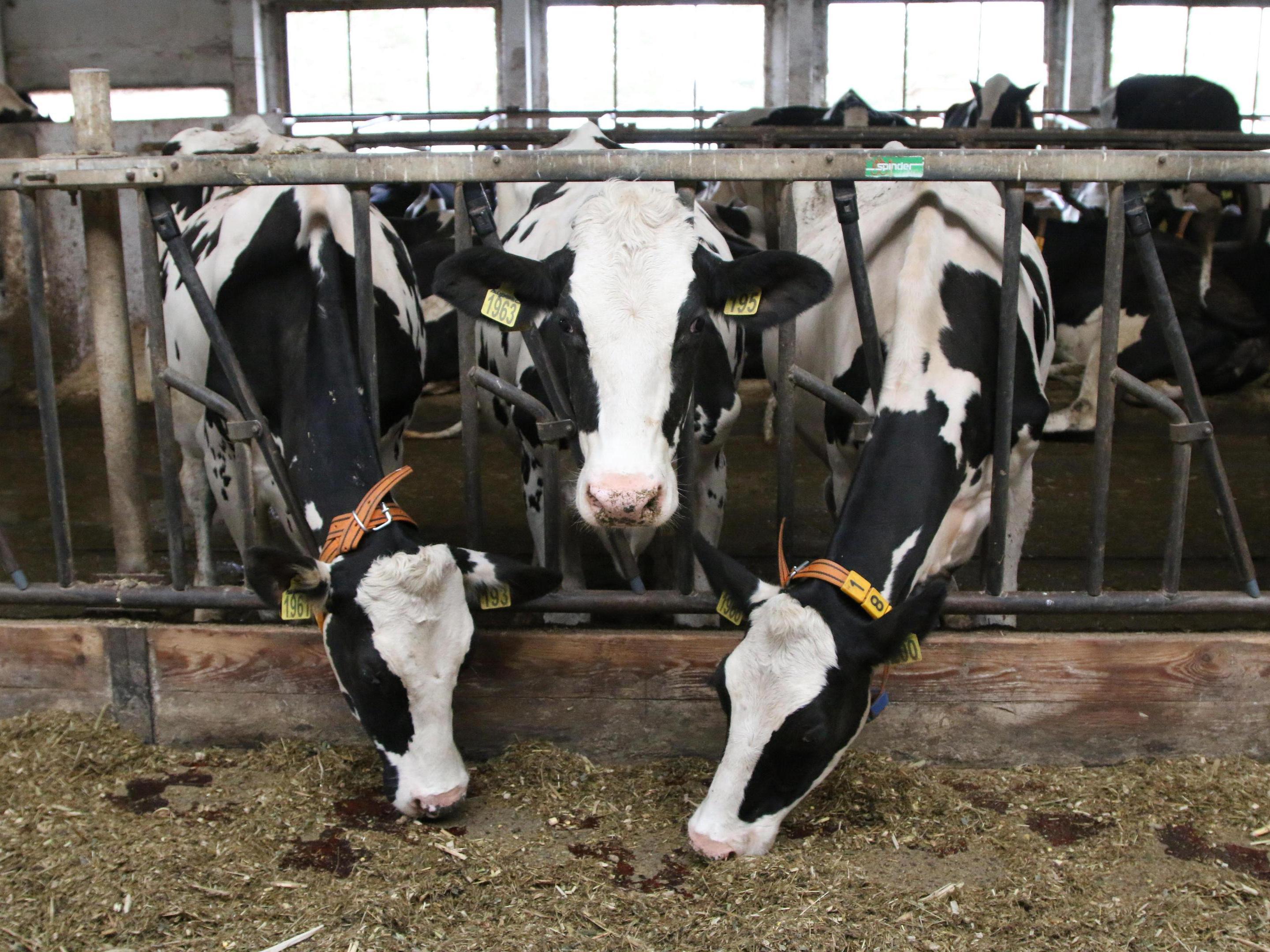

The Russian dairy industry has reached a historical maximum over the past 30 years, producing 34.3 million tons of raw milk. However, behind the dry figures of records lies a difficult struggle by domestic producers for profitability and market share. At the recent Council on Agro-Industrial Policy of the EAEU in Minsk, Russian Minister of Agriculture Oksana Lut and Deputy Prime Minister Dmitry Patrushev outlined a new vector: Russia is ready to integrate with Belarus, but the main goal remains achieving food independence and supporting its own farmers.
Belarus accounts for 90% of its exports within the union countries. Russian producers openly speak about unequal competition. Belarusian dairy products are often cheaper due to two factors: low procurement prices for raw materials strictly regulated by the state and an almost complete transition to ultra-large industrial complexes. MSK1.RU discussed this with Olga Bashmachnikova, Vice President of the Association of Peasant (Farmer) Farms and Agricultural Cooperatives (AKKOR).
— Russians increasingly choose Belarusian dairy products: they are cheaper and considered higher quality. At the same time, the Minister of Agriculture Oksana Lut has already stated: «We should not regulate this entry because we live in a single [trade] space.» Why do you think the Ministry of Agriculture takes this position?
— In essence, the Ministry of Agriculture«s position is driven by the fact that the market should be competitive, and the balance of imports and exports allows it to be stabilized. From the department»s point of view, supplies of imported food from countries with low production costs (and especially from those with well-established logistics) are convenient and ensure the availability of inexpensive products for citizens.
— But domestic producers suffer as a result.
— Absolutely. And we have tasks for food security. It is important for us that the dairy industry develops within the country. Today, worldwide the trend is toward domestic production, because that is the independence that all countries need. Therefore, conditions must first be created for production within Russia. If necessary, additional support for it. And food independence in the dairy industry is possible only when we support our own cattle herd, our own producers, and do not depend on supplies from abroad.
The market of milk producers in our country is structured. Cows are kept by private household plots, farms of various scales: 25 head, 50, 100, 200, 300. There is medium business — 800 head, there is large business — over a thousand. All of them occupy their place and their share in the market. And the operating conditions for each type of producer must be optimal. It is also important to care for and create conditions for small family farms, just as for large ones. After all, these are diversified milk suppliers that cannot be put out of action — there are simply many of them in different locations.
— And what problems in general do small family dairy farms face today?
— Today it is difficult for them to work in digital systems, difficult to work, for example, in the «Merkury» and «Honest Sign» systems — there are 14 different Federal State Information Systems (FSIS) in total. Regulation and accounting are not separated separately for small and large businesses. Even if the farmer sells products at markets or fairs or in his own stores. Working «digitally» is a huge amount of time. And the farmer works constantly: he has cows, they need to be fed, milked, cleaned, and milk or processed products sold. He cannot afford to sit for days in all FSIS at once, and that is exactly what the regulator requires. Today we are talking about a unified digital system, which is planned to be launched from March 1, but the work for the farmer will not become much less.
— So the problem is not in digitalization itself, but in the lack of service support for farmers, so to speak?
— Exactly. These should be either service centers or cooperatives that take on the functions of working with digital. And let the farmer work on the farm and in the field. Hiring staff for each farmer is expensive. Additional salary, accounting, software, a powerful computer — for a small farm this is unaffordable. And if the farmer himself sits at the computer, he cannot produce milk; he will not last long.
— Nevertheless, family farms have shown growth for a long time.
— Yes. Until 2023, it was the sector of peasant (farmer) farms that showed growth in cow numbers. Over 15 years, by 5.6 times. Why is a family farm effective at all? Because all family members work, optimize costs, monitor the health of cows, use their own feed, fewer antibiotics and veterinary drugs. In such a model, one can survive and receive sufficient income for the family.
But today the administrative burden has become so great that farmers find it hard. If maintenance is not performed either by a service center or a cooperative, small farms will not survive. And what is more important: a farm with cows, a self-employed family living in the village, or digital systems?
If small farms close, part of the milk producers will leave the market. Yes, their niche can be filled by other suppliers, including imports. But who will live in the village and provide administrative control over the territory? AKKOR constantly says: the family farm is the most important form of labor organization in rural areas, motivated for results.
However, today a situation is developing where the Ministry of Agriculture is betting on large producers. But it is important to remember that we have a multi-structured agriculture. Betting on only one segment is a huge risk. Why did the number of cows in agricultural organizations constantly decline until 2023?
There are reasons for this: it means cows get sick, it is difficult to find an effective manager for a large complex, staff lack motivation, low calf survival, high costs for veterinary care, antibiotics, vaccines, feed, and much more. We cannot fail to analyze Rosstat data obtained over decades.
Since the number of cows on peasant farms grew for decades, it means this model was normal, optimal, and profitable.
— But is big business able to cover the lost volumes?
— Don«t put all your eggs in one basket. For some reasons, until 2023 large business was reducing livestock. If we now bet only on one sector, after some time we still won»t solve the food security problem.
— The problems of the dairy industry are clear. And what do you propose to do?
— First of all, we advocate for supporting family dairy farms and creating conditions in which they can function normally. First of all, reducing the administrative burden, including digitalization requirements, small family farms should be removed from excessive regulation, provided access to borrowed resources, and helped to organize cooperatives. It is necessary to support all segments of producers and the entire market — only then will we have a sustainable dairy industry and real food independence.