Tyumen artisan crafts boudoir dolls sought in China
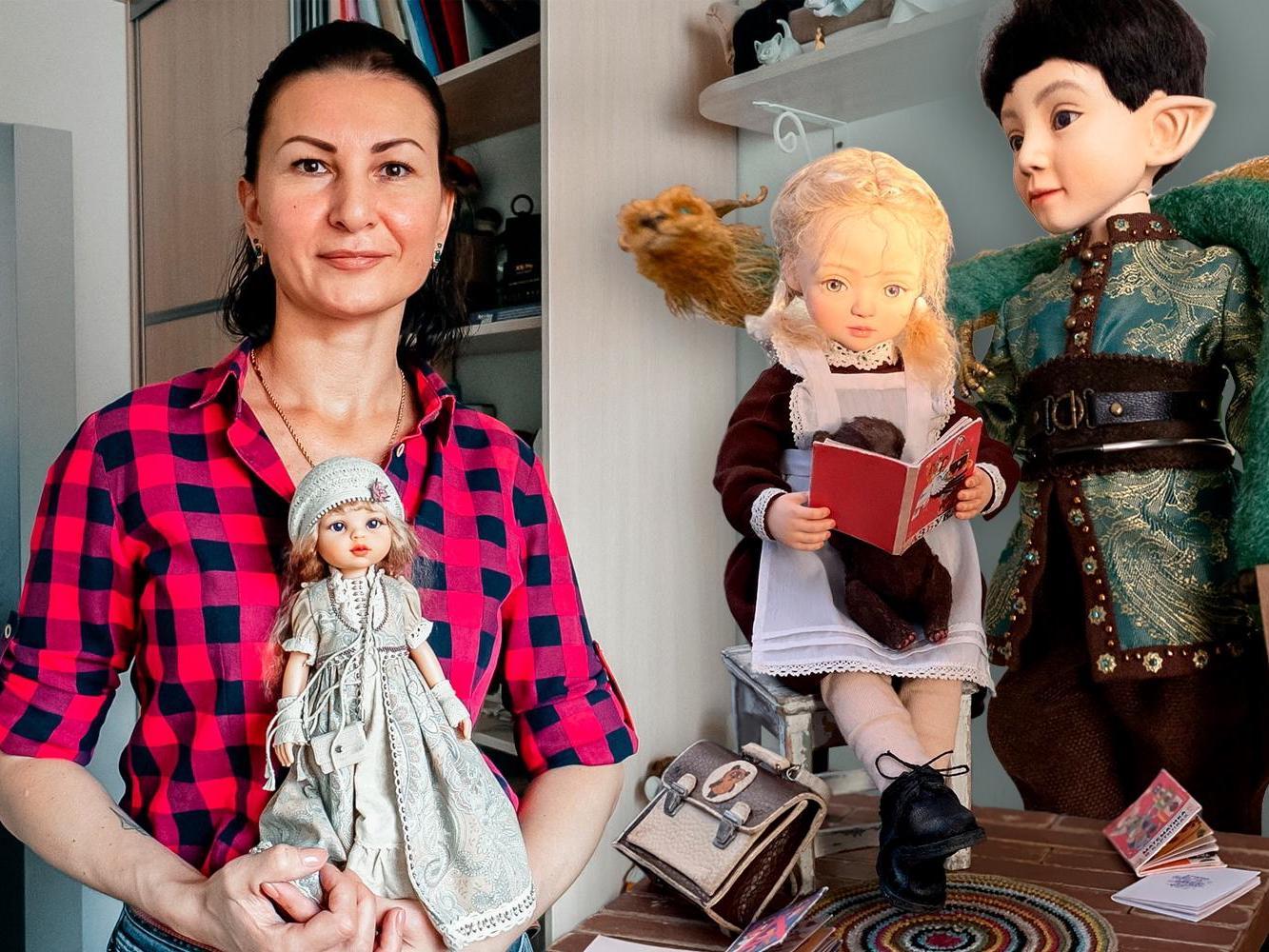

Each doll reflects Anastasia’s vision, with unique names, backstories, and handmade identity papers
In the early last century, Paris couturier Paul Poiret invented and created the first boudoir dolls, giving them a practical role: they showcased his outfits — in miniature. Society ladies did not shop, marketplaces did not yet exist, so one had to improvise. Quite soon these little dolls evolved from mere elegant mannequins into works of art and collector’s items, and the fashion for them has not faded to this day. This story is about Anastasia Verkhozina, who creates unique boudoir dolls in Tyumen (Western Siberia, Russia).
Anastasia’s process combines sculpting, painting, and tailoring into cohesive, display-ready boudoir artworks
Scraps from childhood and someone else’s (un)fulfilled dream
Anastasia Verkhozina has loved and known how to do handicrafts since childhood. Her mother taught her the basics of knitting and sewing. Later, drawing joined the list of creative skills.
— «We lived poor. Until I was 11 we didn’t even have a TV. So we crafted — what else was there to do. We would go to an atelier, beg for fabric offcuts, and then make something from them. When I got older, I became interested in bead embroidery. Later I sewed Tilda dolls (fabric stuffed dolls created by Norwegian artist Tone Finnanger),» our interviewee recalls.
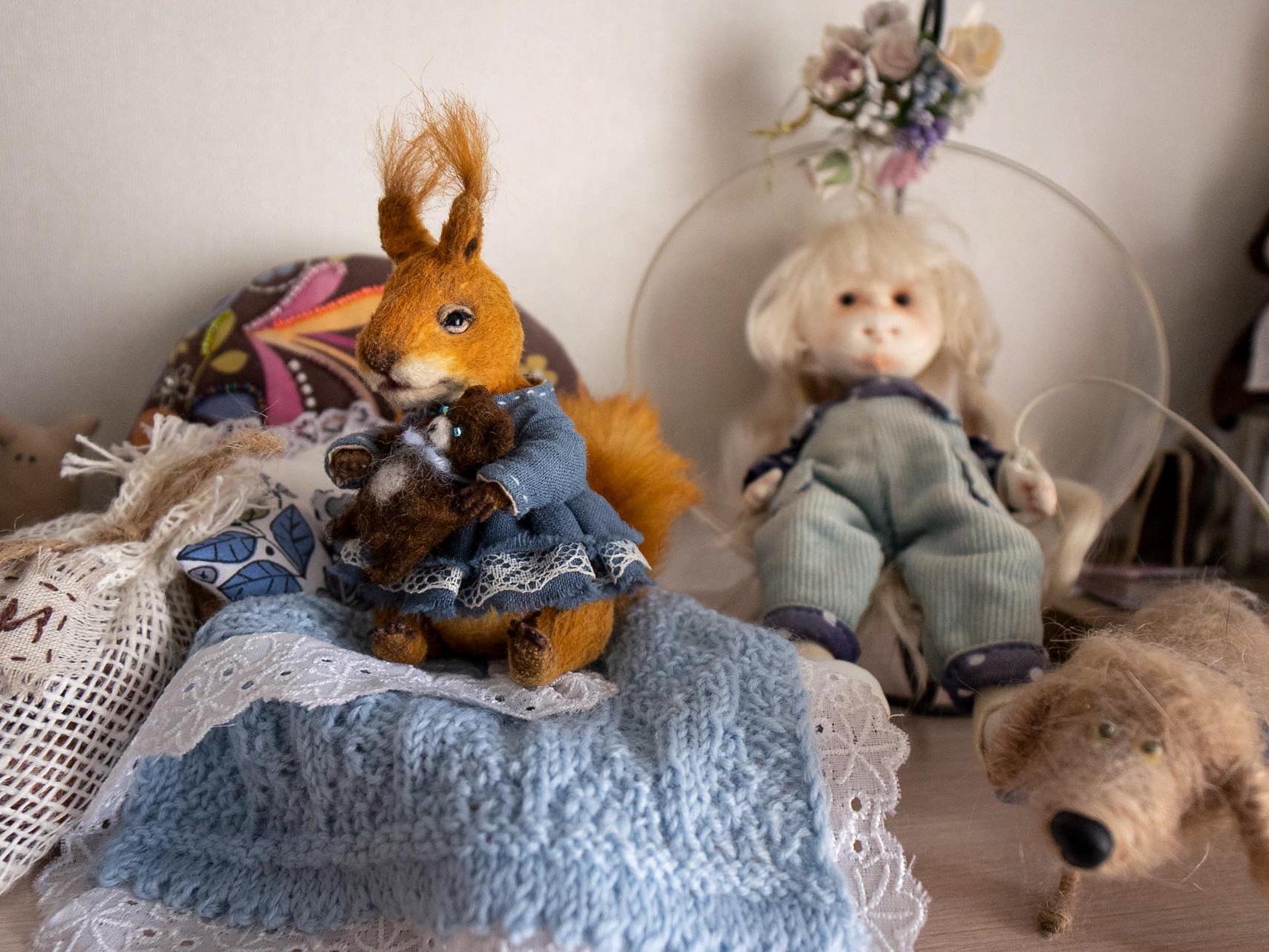
She has loved crafting since childhood, surrounding herself with art and gifted friends’ creations
At the same time, after finishing school she trained as a manager — hardly a profession one would call creative. Anastasia, however, never worked a single day in that field. For a time she worked as an accountant, and later collaborated with various Tyumen restaurants, crafting wooden check presenters and menus for them.
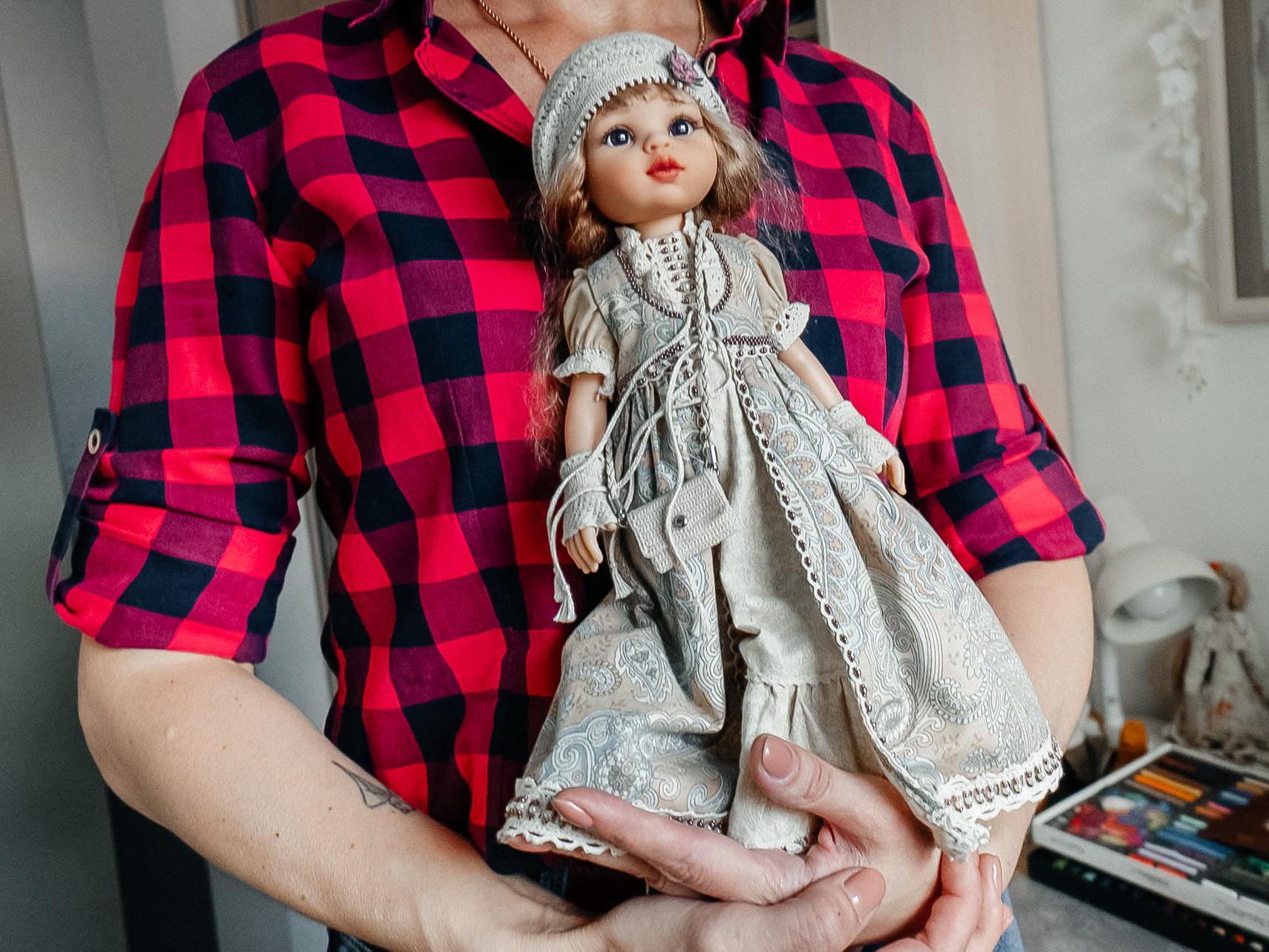
For this finished doll, Anastasia designed a new outfit and styled a fresh hairstyle
— «Dolls — their creation — came into my life thanks to my mother-in-law, you could say, through her story. When she came home from the ceremonial 1 September assembly as a first-grader, her father threw away her doll with the words: “That’s it, childhood is over, time to become an adult.” She cried bitterly for a long time. Since then she had dreamed of a doll of her own, which she admitted to me about five years ago,» the craftswoman continued.
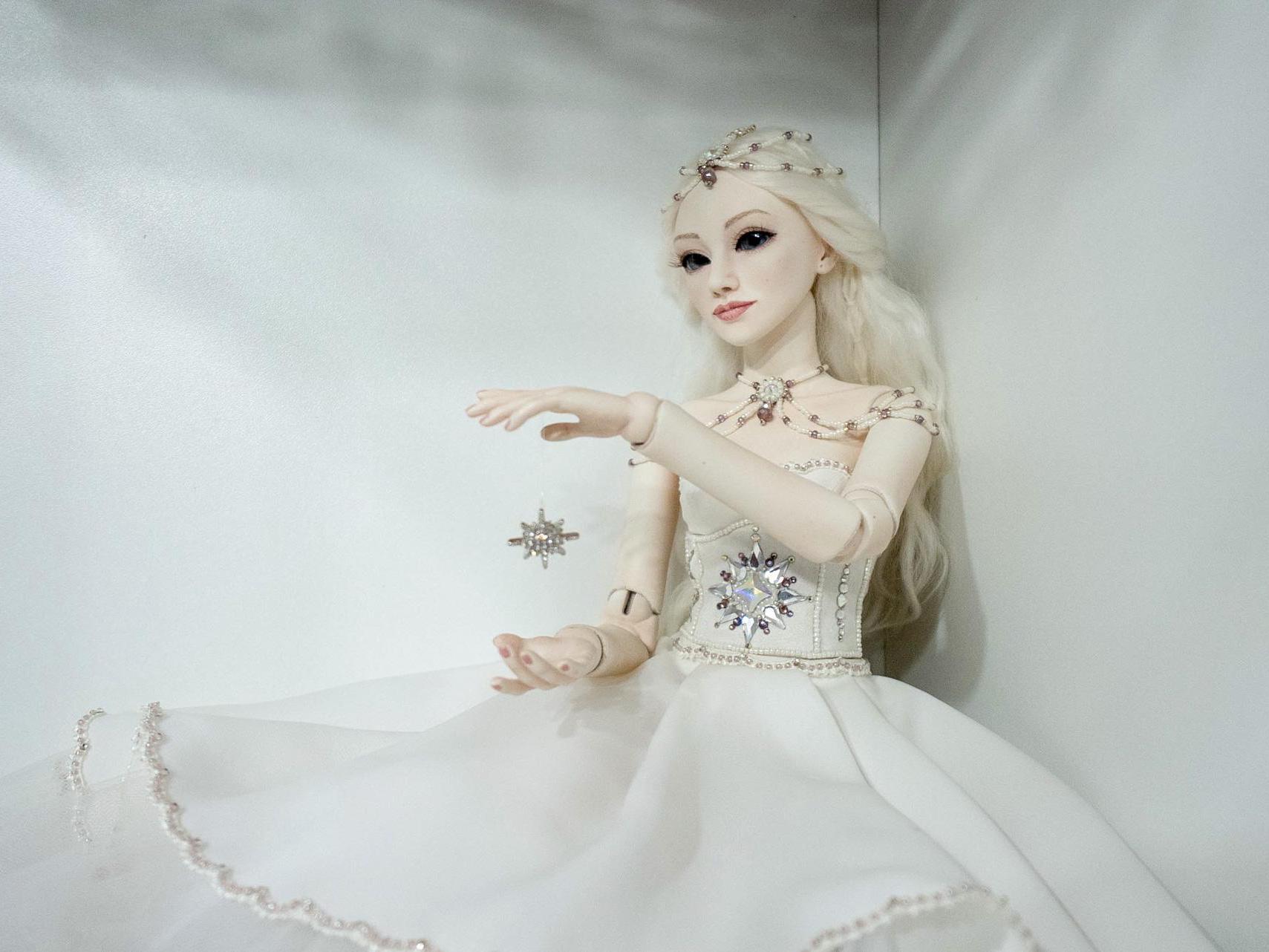
A jointed beauty, her first training doll, created following a detailed professional workshop
In search of a doll like those from the Soviet past, Anastasia combed through almost every store. Then by chance she saw Paola Reina dolls online. She bought one, placed it in a pretty suitcase she had made herself, and gave it to her mother-in-law on Mother’s Day.
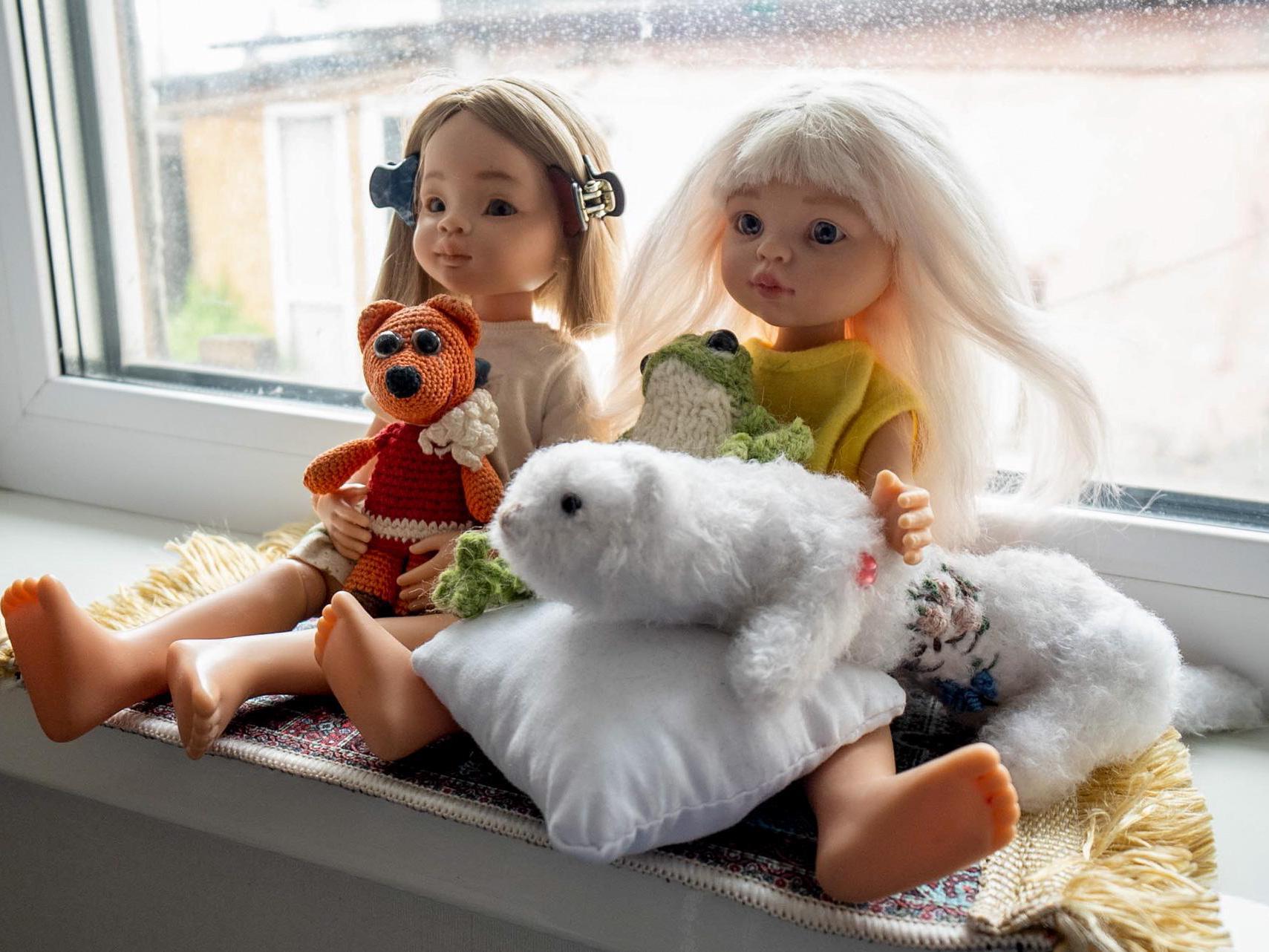
Originally identical Paola Reina dolls now look different through distinct hairstyles, colors, and repainted faces
— «I didn’t yet know that people repaint such dolls’ faces and change their hair. Later I tried it, and it worked. But after the third or fourth doll I, frankly, got bored. I wanted to learn to sculpt dolls,» our heroine went on.
Tiny shoes, dresses and wigs: the doll magic
From words to deeds. Anastasia enrolled in doll-sculpting courses, and soon, as if on cue, a free marathon on making doll bodies from air-drying plastic came along. There were 1,500 participants in that workshop, 130 reached the finish, and seven made the final. The winner — unexpectedly for herself — was Anastasia Verkhozina. As a prize she received a training lesson on creating boudoir dolls.
— «Boudoir dolls are partly sculpted and partly textile. They are not playthings because they are very fragile. And the plastic they are made from fears water, so they must not be wetted. You simply place them on a shelf and admire them,» she explained.
For each doll Anastasia begins by creating an image. She bases it on some childlike little face but does not strive for a portrait likeness.
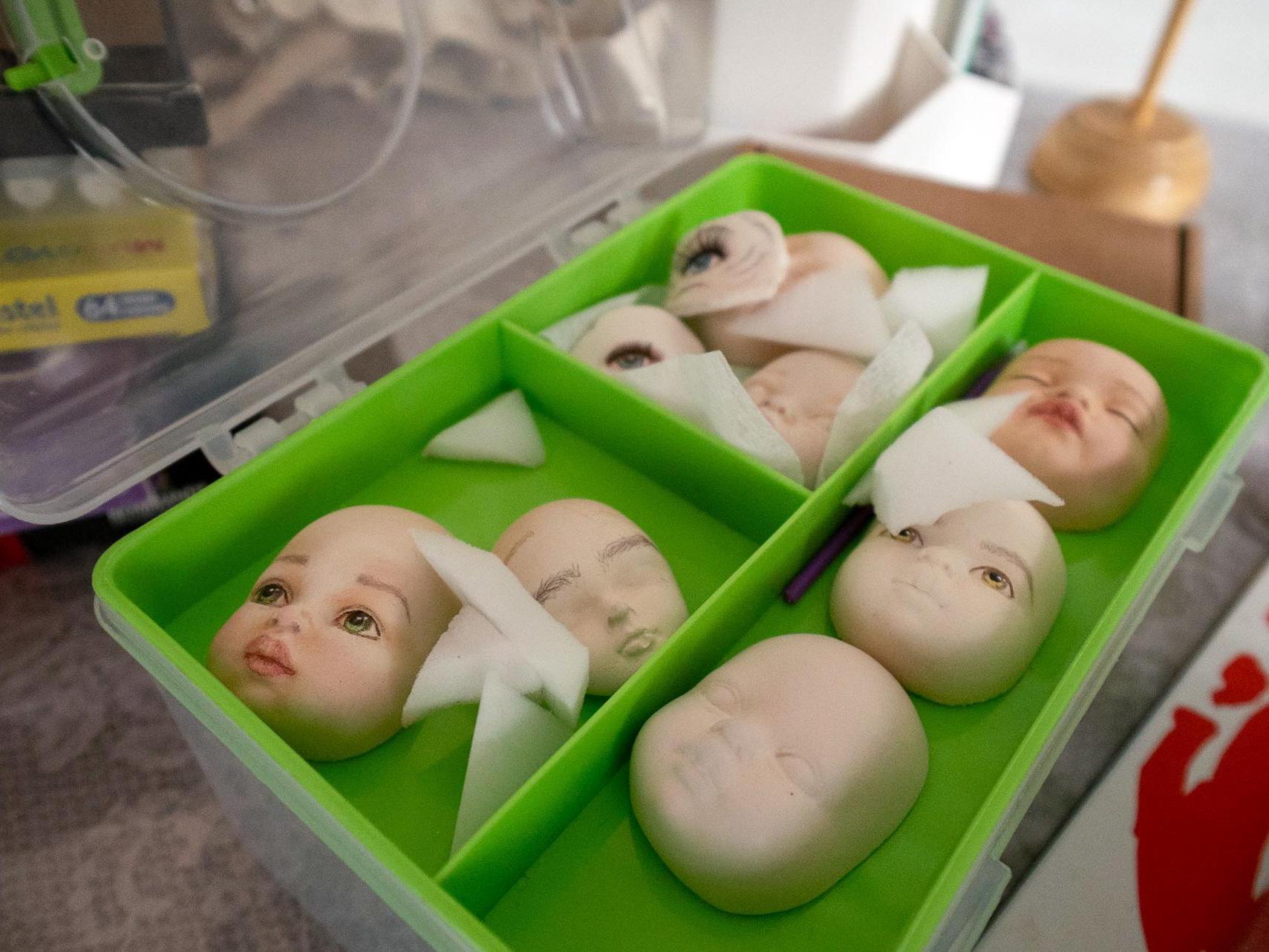
Practice faces used to test color combinations, materials, and eyelash options before final painting
— «An image is a mood, at least an approximate costume. Then comes drafting the blueprint, sculpting the bases, working out volumes, detailing. Sculpting a face with specific expressions and emotions, working out the fingers and nails takes a colossal amount of time. After assembling and gluing the joints I move on to painting the doll, although other artisans usually do the opposite: they first paint the doll and only then select a wig and make the costume,» our heroine shared.
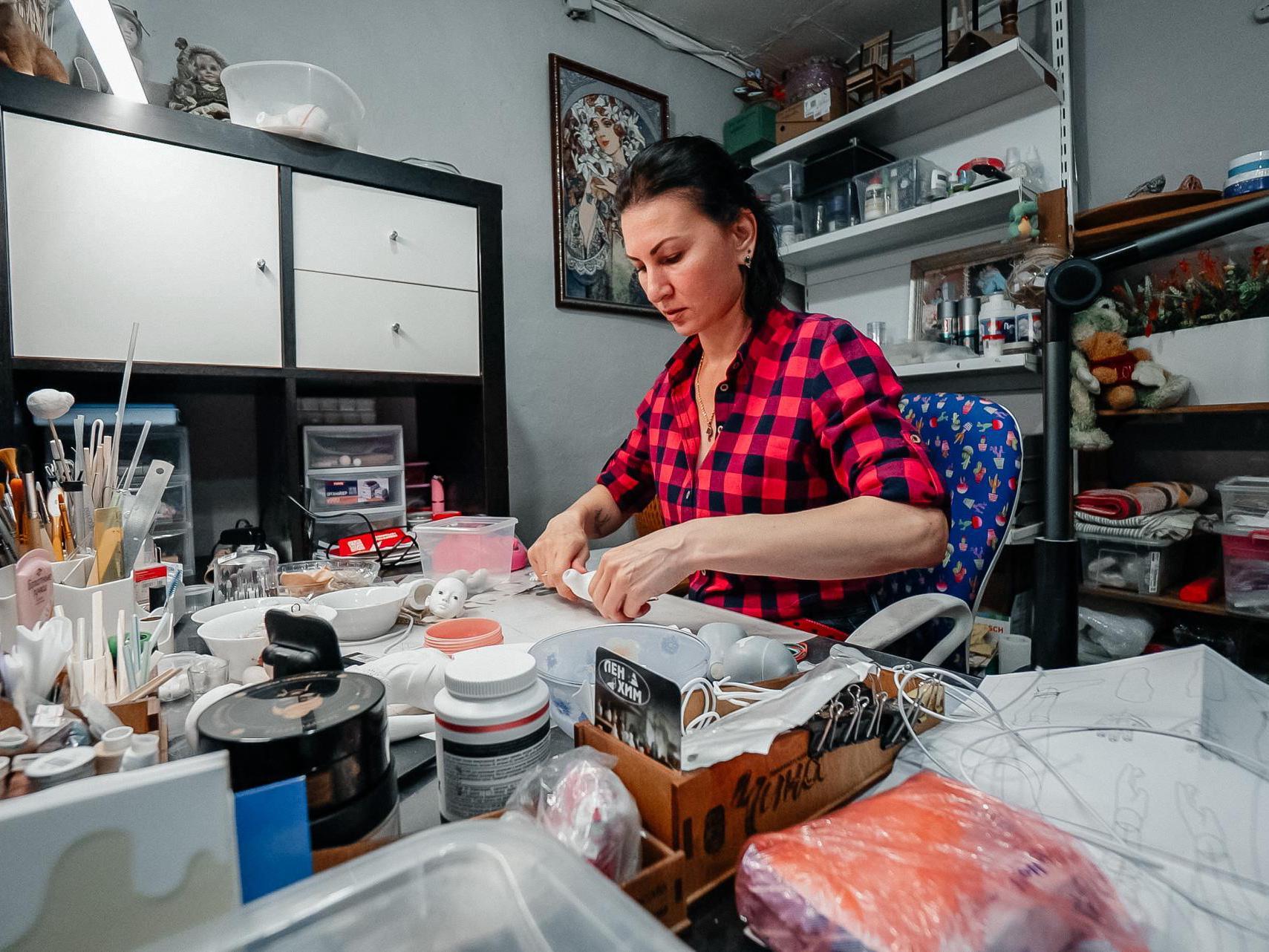
She could spend days in the studio, balancing creative work with family responsibilities
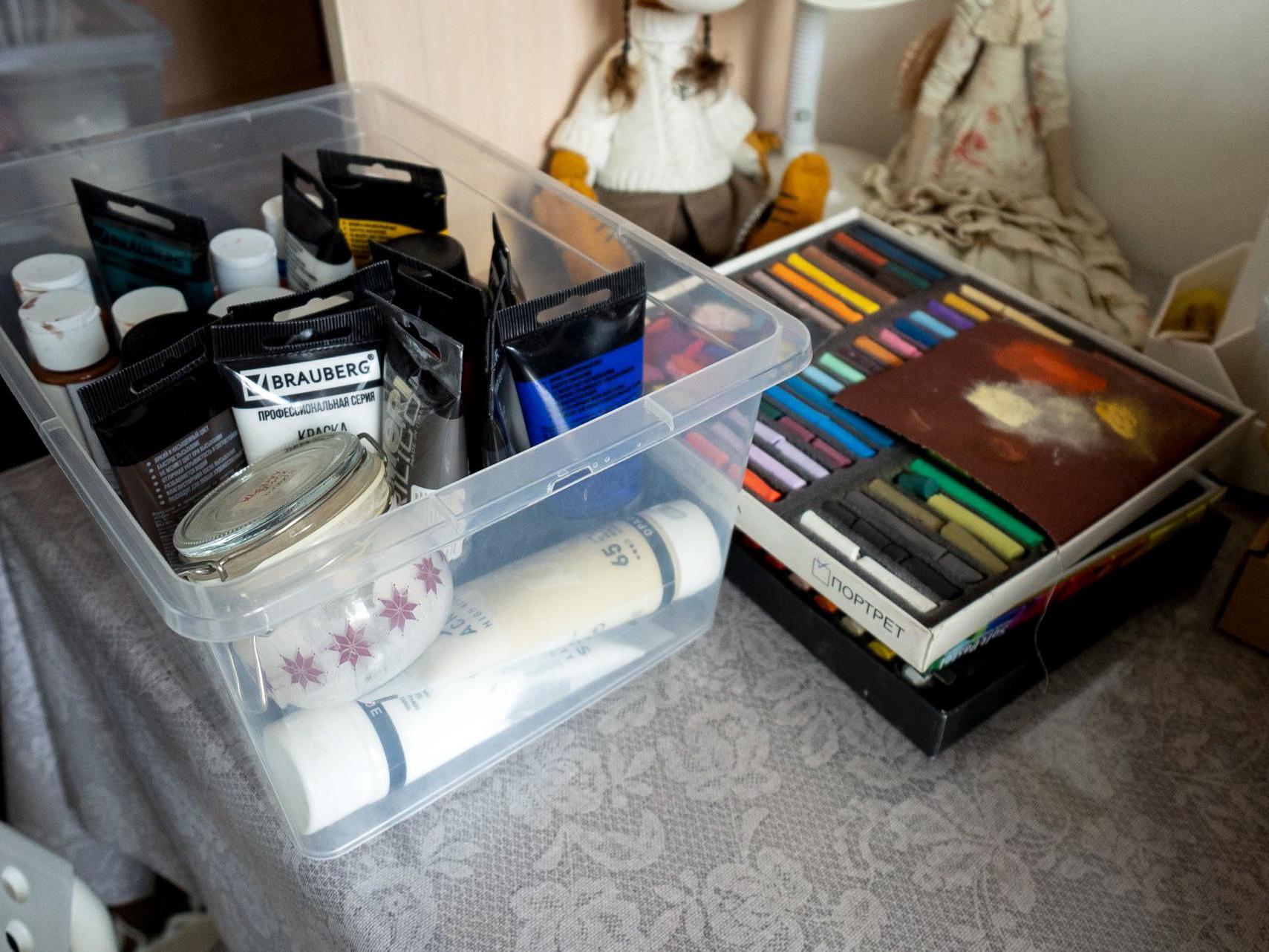
Acrylic paints and pastels form her main palette, alongside numerous specialized tools and supplies
This is what the doll Tanechka looks like — the embodiment of a modest Soviet schoolgirl:
For doll wigs Anastasia uses different materials, most often goat or llama wool. Silk threads can also be used, but human hair will not do for these purposes: it is too thick for little dolls, and nothing pretty will come of it.
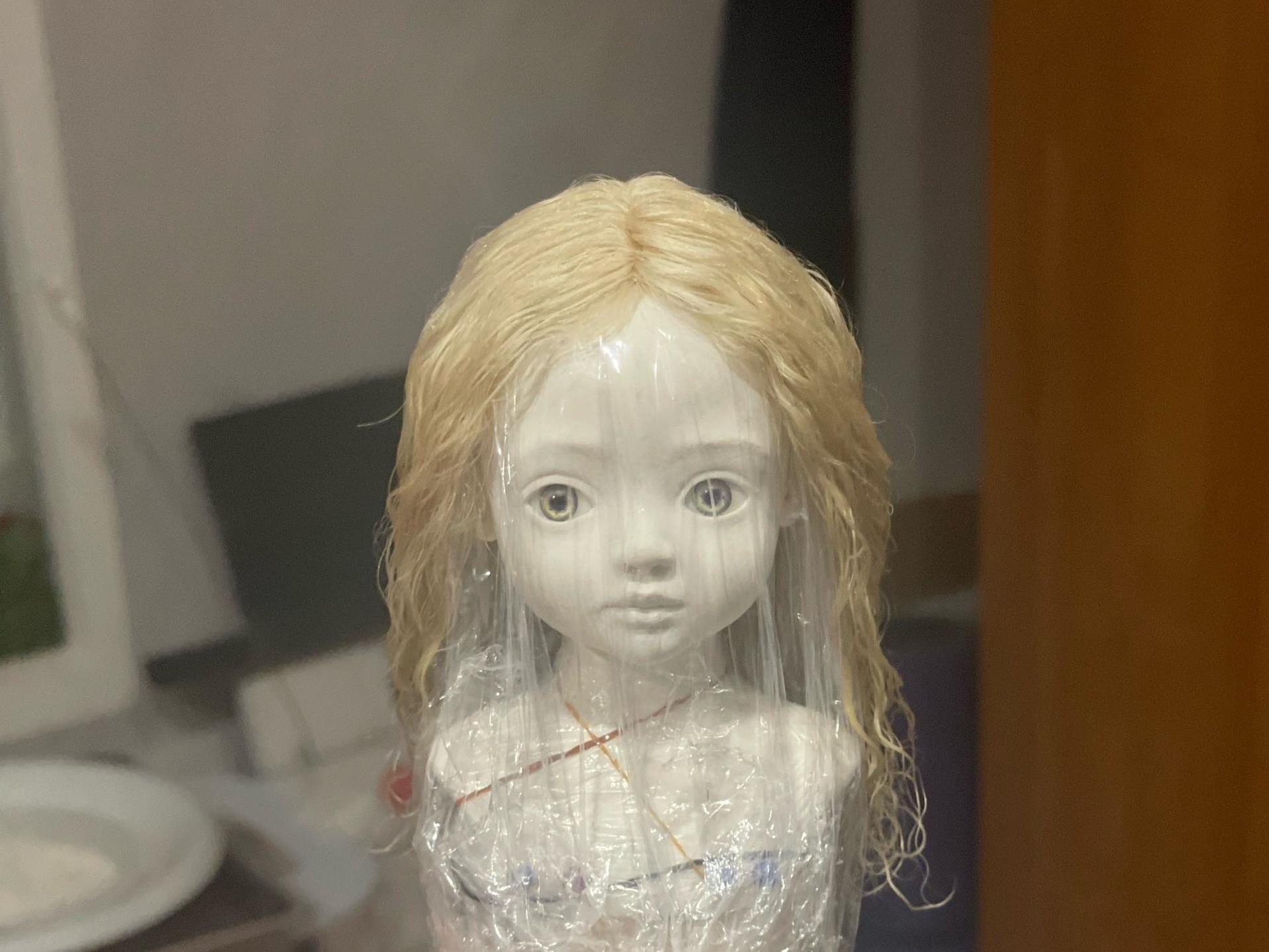
Tanechka during wig fitting, awaiting assembly, painting, and final costume adjustments
— «I sculpt dolls from air-drying plastic, which I apply over a plasticine blank. The parts take a day to dry, after which I refine the resulting base, set the eyes, and prime it. It’s a very long process: making one doll body takes about a month and a half. Then you still have to paint the doll, make a stand, craft a wig and accessories, and sew clothes and shoes. All told, creating one doll from start to finish takes two and a half months, and sometimes longer,» the craftswoman amazed us.
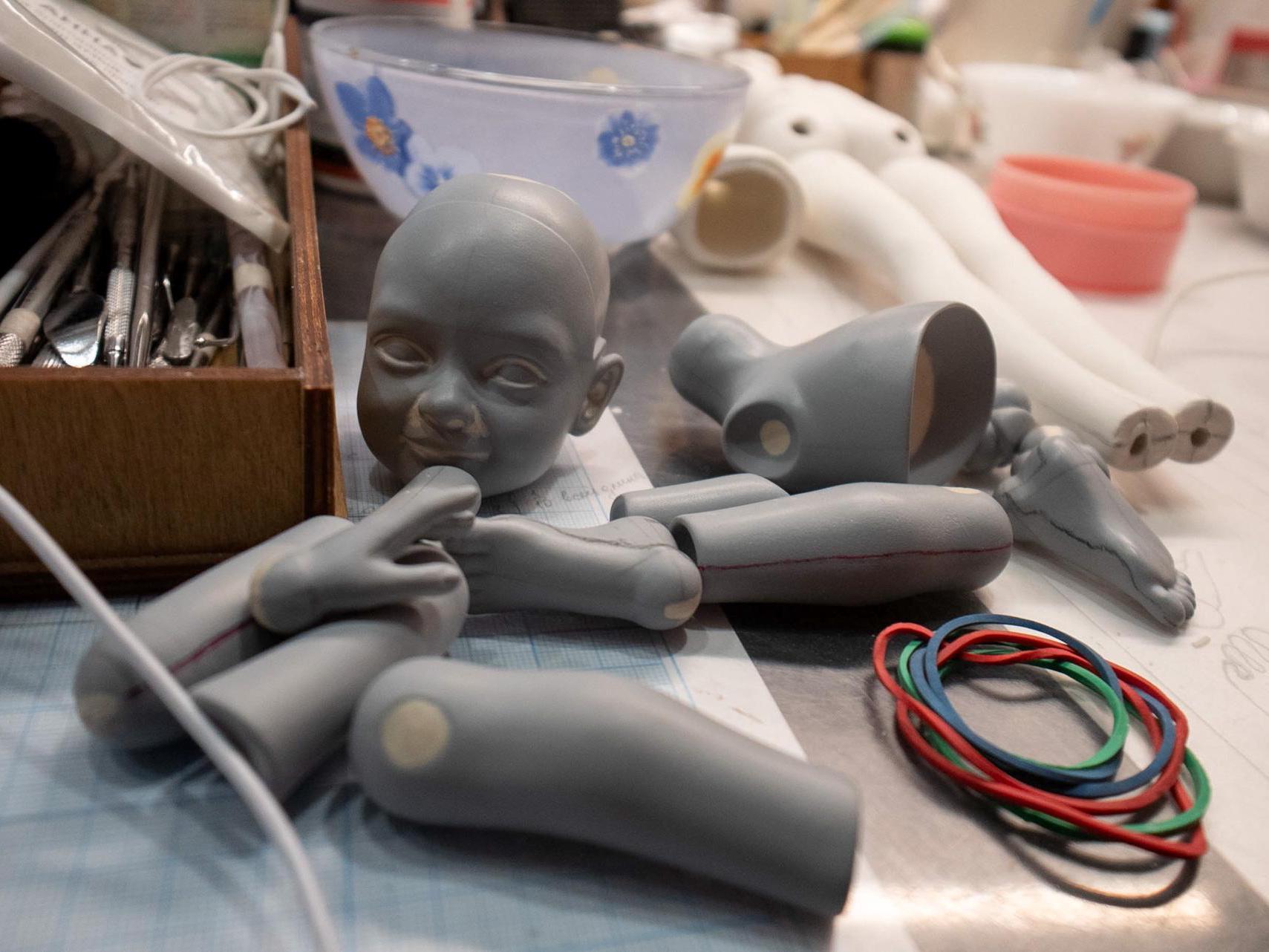
These master molds create consistent impressions for casting parts of future dolls
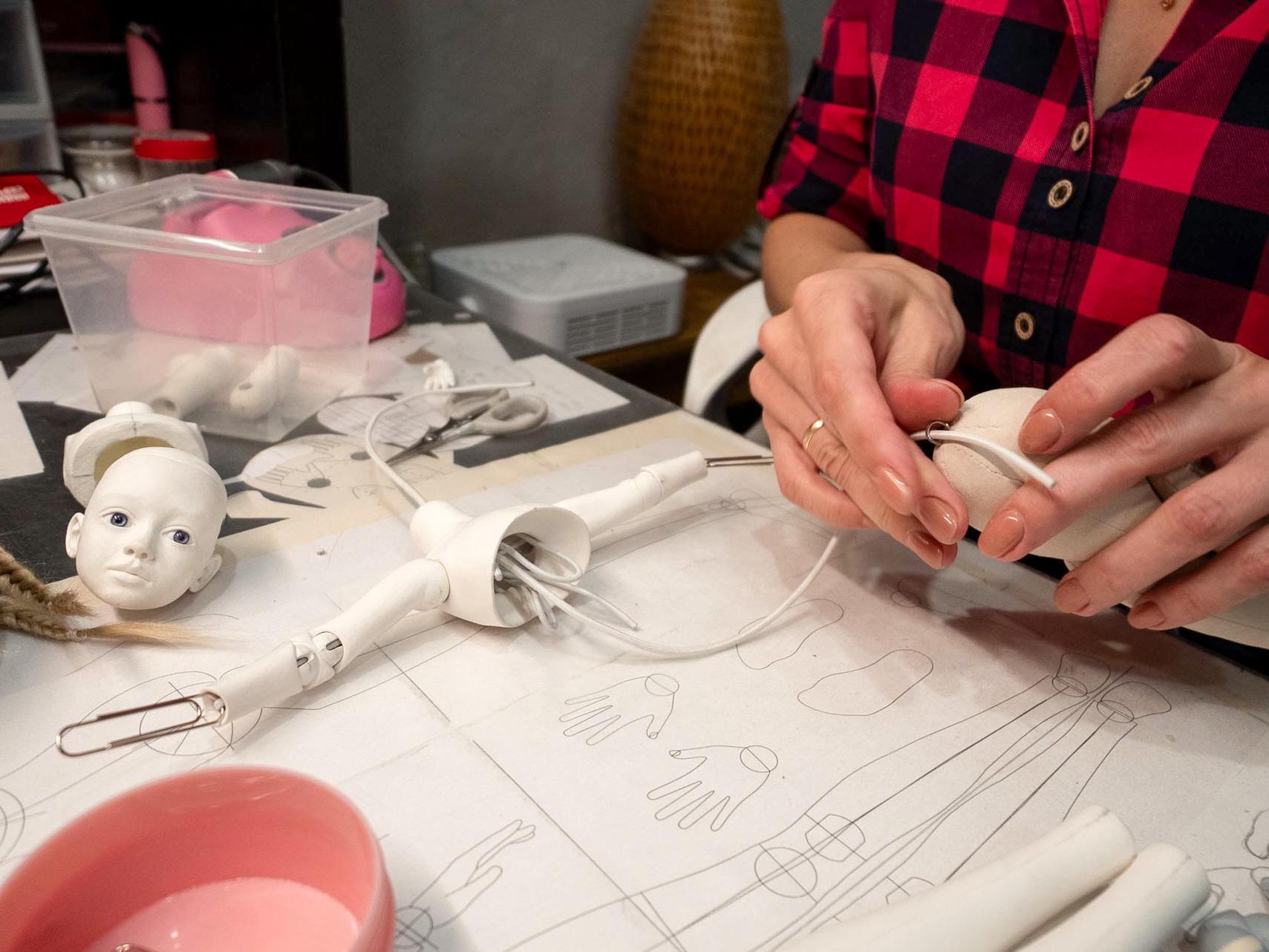
A new Tanechka is in progress; her outfit is finished and awaiting completion
She has plenty of consumables, but something new for work is never superfluous. Recently Anastasia bought a vibration table that helps remove bubbles from plaster. Her toolkit also includes items used off-label. With a nail drill she bores various holes in blanks (for example, for joints) and, with thin bits, sands tiny parts to perfection.
— «The dust particles that fly off are captured by a good fume extractor, which I also bought in a nail salon store. There’s also a hot-glue gun to attach hair to dolls. My studio even has a small oven. Ordinary people bake pies in such things, and in mine plasticine melts and plastic parts set at +40 °C (104 °F). Yes, the plastic is air-drying, but in summer the studio has high humidity, and the dolls’ arms/legs/faces simply won’t dry on their own,» our heroine explained.
Since the dolls are small (on average they are about 30 centimeters tall — about 11.8 in), their wardrobes require the thinnest fabrics so the clothes look harmonious. Batiste, rayon challis, silk and velour work well. Leather thickness for doll shoes should be from 0.5 to 1.1 millimeters (about 0.02–0.04 in), no more.
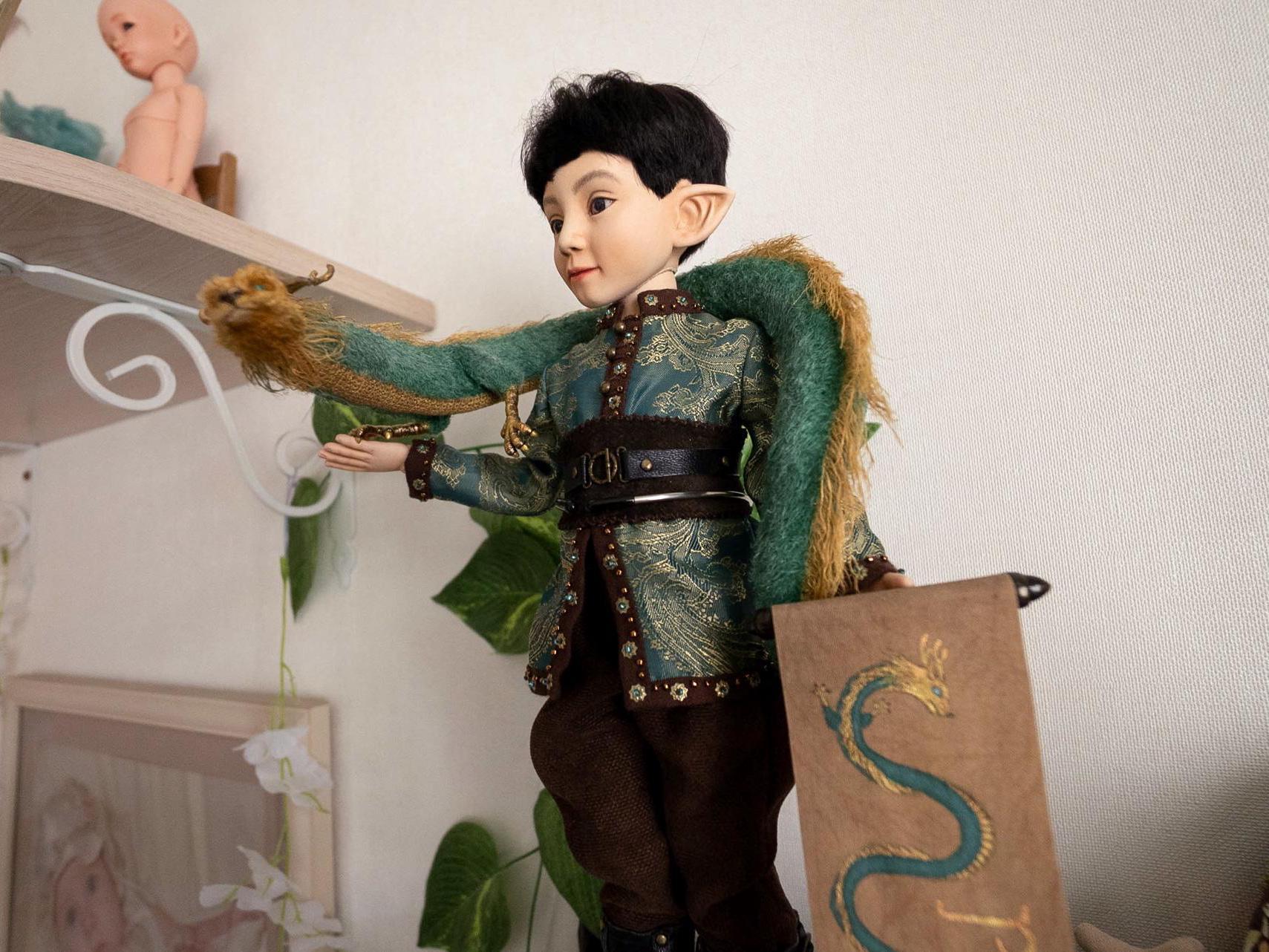
Meet Duchar, a small elf whose enchanted dragon companion becomes a loyal lifelong guardian
First customers, simple arithmetic, and a doll abroad
As often happens with artisans of many kinds, the first customers are friends, acquaintances, and of course relatives. That’s how it was for Anastasia — or almost. Her first buyer later became her friend.
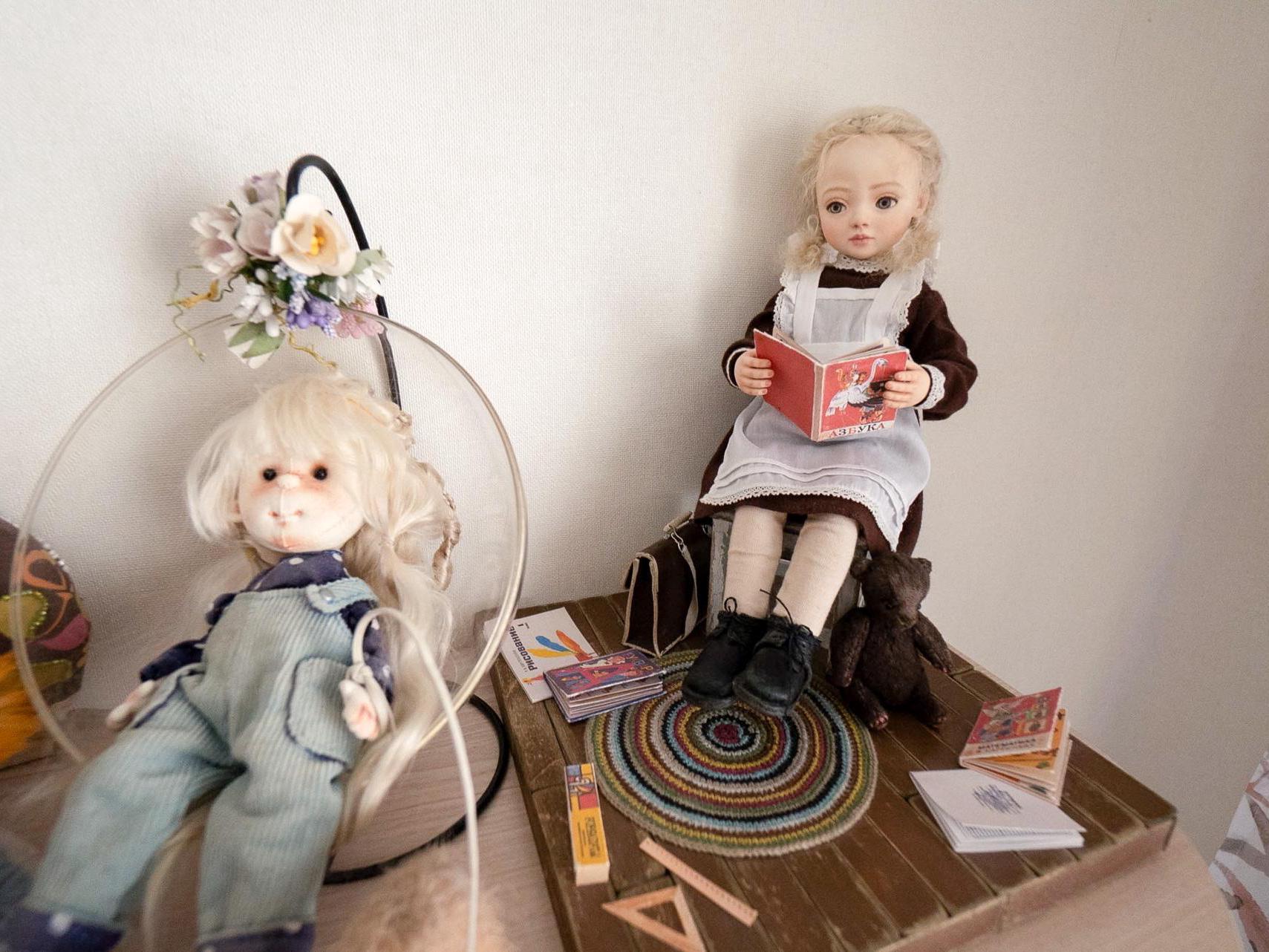
This schoolbook-carrying doll stays in Anastasia’s home collection and is not for sale
— «When I was just starting out with dolls, I was very afraid to paint them — my hands shook. I didn’t yet know how to make wigs for them, and there was much else still to learn. To overcome my fear, I went for training, where I met a wonderful girl. She is a collector. And at the stage when I was sculpting my doll, she said she wanted to buy it,» our interviewee recalls with a smile.
That was three years ago. Around the same time, the craftswoman began running pages on social networks. That is where her “House of Dolls of Anastasia Verkhozina” lives.
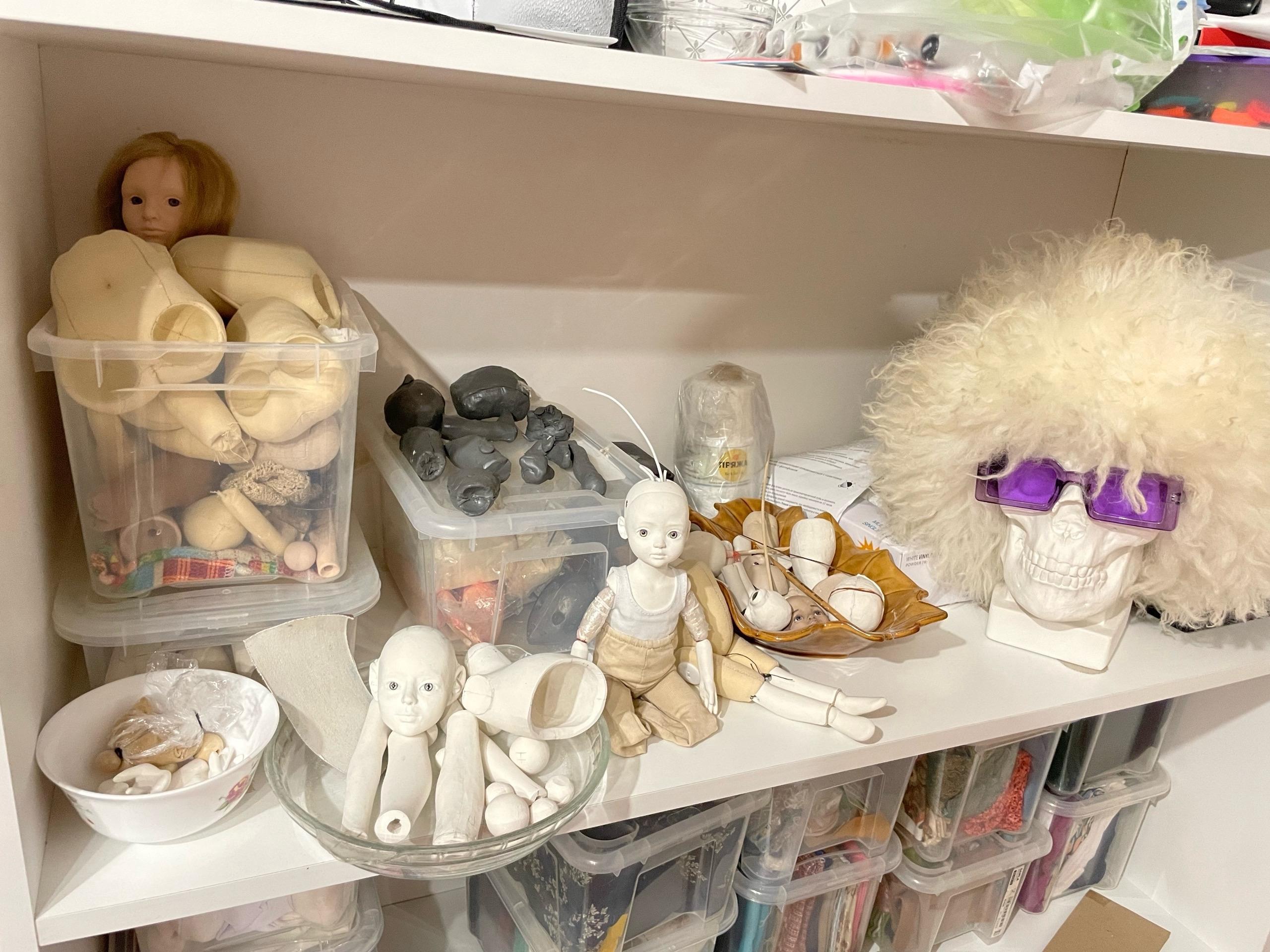
Shelves hold future dolls in progress, with fabrics and leather for outfits and shoes
— «It’s always hard to settle on a price for an original doll. How do you express two to three months of painstaking labor in money? On average, good boudoir dolls cost from 35 000 rubles (about $370 at current rates). The more renowned the maker, the higher the price. There is, for example, the ball-jointed doll designer Marina Bychkova, whose most expensive doll is valued at $2 000 000,» Anastasia explained.
The final price of a doll, she continues, is influenced by the presence of various additions, which is perfectly logical.
— «It’s one thing when you simply dress a doll; it’s another if you also have to make a stand or crochet a pet — a tiny one, literally a few centimeters tall (about 1–2 in). I trained specifically to create these. Additional décor and an extra set of clothes for the doll also increase the price,» the craftswoman continued.
She promotes her work through specialized exhibitions and takes part in contests for doll makers. For one of these she created Julenka.
— «Kindergarten matinee, a holiday, children all dressed up in different costumes, each with a role in the skit. Our Yulia is a pineapple. But how do you explain to a child that there are no princesses in the scene, only fruits and vegetables? You can only soothe her by giving her a toy to hold and a crown on her head,» the creator said of the toddler doll.
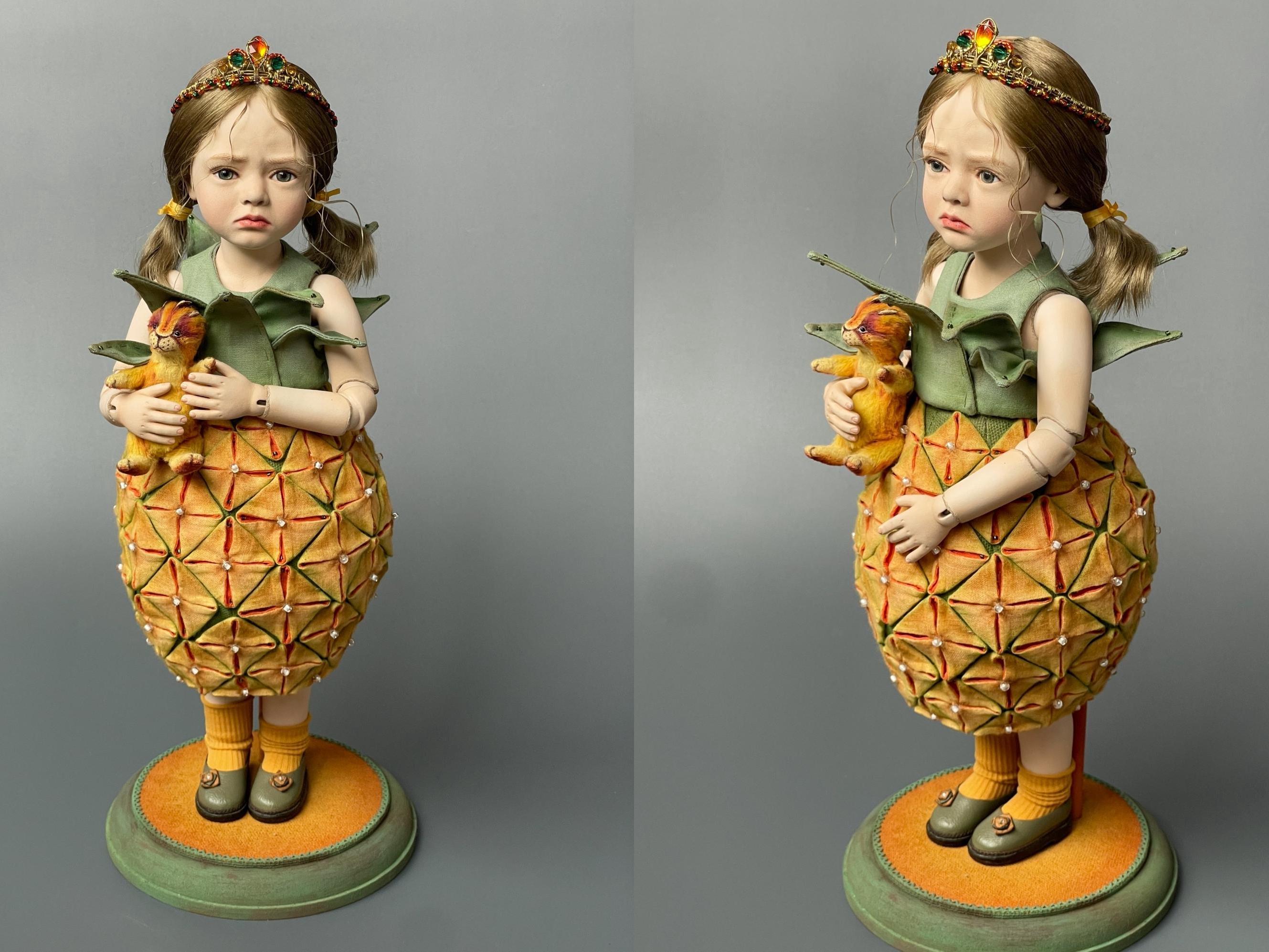
The doll Julenka was exhibited and later purchased by a collector from China
Now Anastasia’s customers are mainly from Tyumen and Moscow. But this is only the beginning. More lies ahead.
— «An author should make a passport, at least a small one. This is normal and common practice,» the craftswoman explained, and we went on examining her creations.
Source of inspiration and ambitious plans
For now, creating dolls for Anastasia is more of a hobby that brings in some money. But something else matters more to her.
— «It’s my way of life — what I breathe, what I live by. If it becomes a mini-business — wonderful. If not — that’s fine too,» the craftswoman admitted.
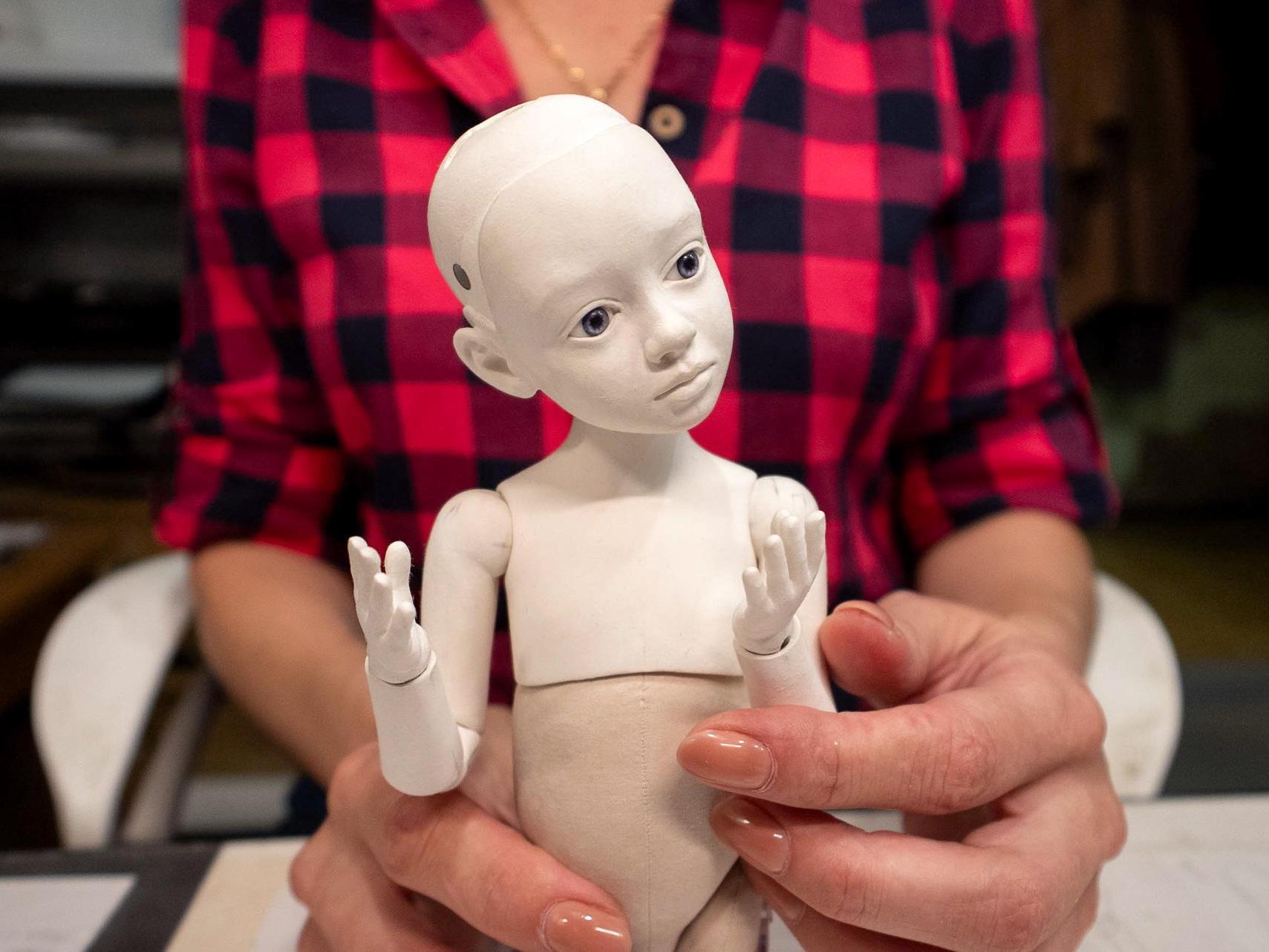
Final touches will add rosy cheeks and soft lashes to the emerging character’s expressive face
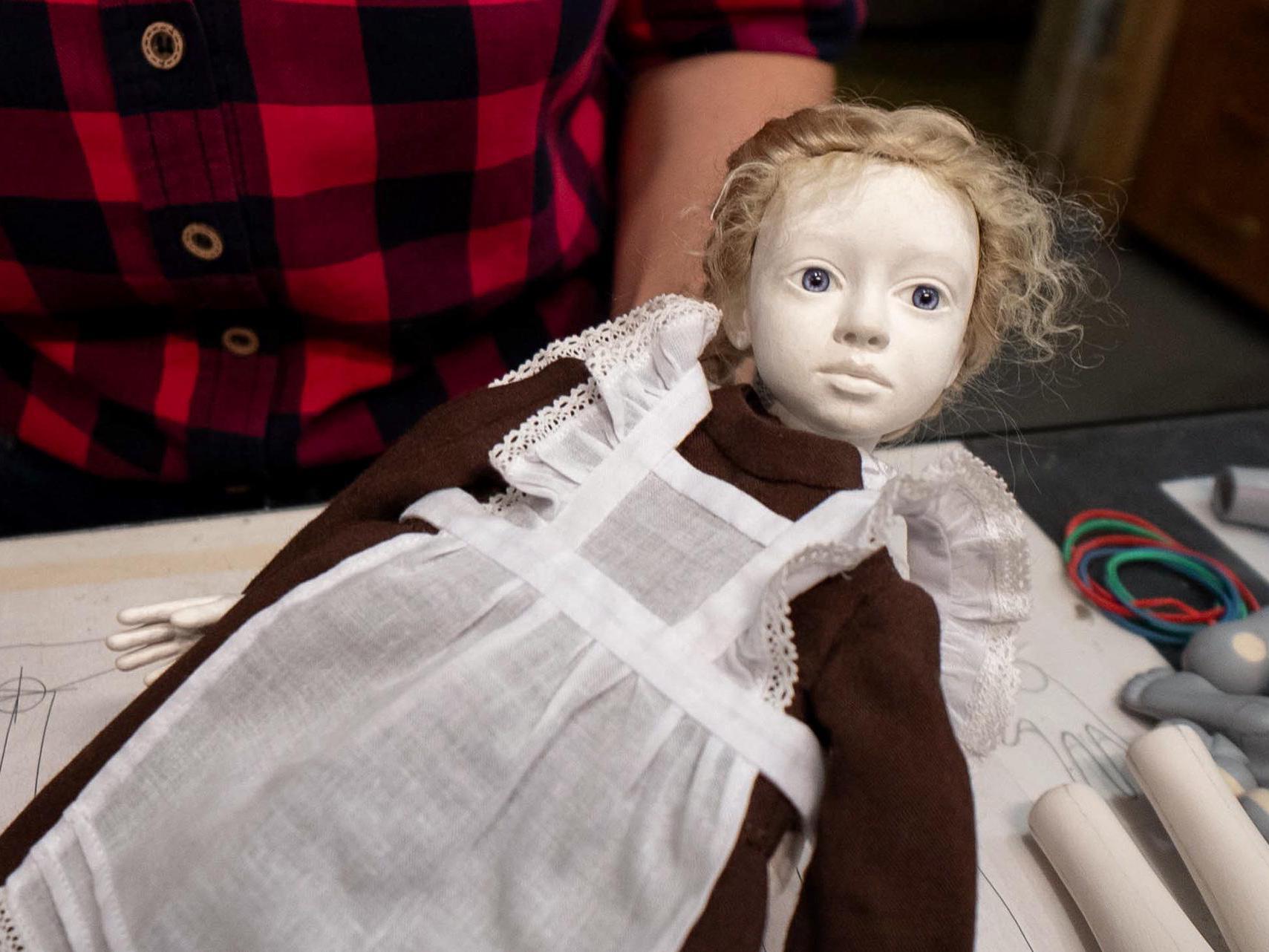
The outfit includes dainty knee socks and undergarments crafted to scale with delicate materials
Her plans include starting to teach others how to make dolls — to share her skills and knowledge with those who are also interested. She has a wish for them and for you. Here it is:
— «Do not be afraid — create. Never be afraid and never doubt yourself. I have a doll I bought from a woman who began learning to sculpt them at 75 (!). I bought it to look at every time I doubt or worry. She is my inspiration. You need to take action and do — and believe in yourself,» Anastasia Verkhozina summed up.
We have also told you about other unusual hobbies of Tyumen residents. For example:
For kids — Minecraft, for adults — Rick and Morty. How a former snowboarder and a tattoo artist make custom rugs.
Your VAVASHA: how a Tyumen engineer left the factory and created her own clothing brand with a Russian soul.
Not only grandmothers knit! How a Tyumen woman quit a beloved job to create designer bags and sweaters.