Psychologist: "He Cannot Find His Voice"
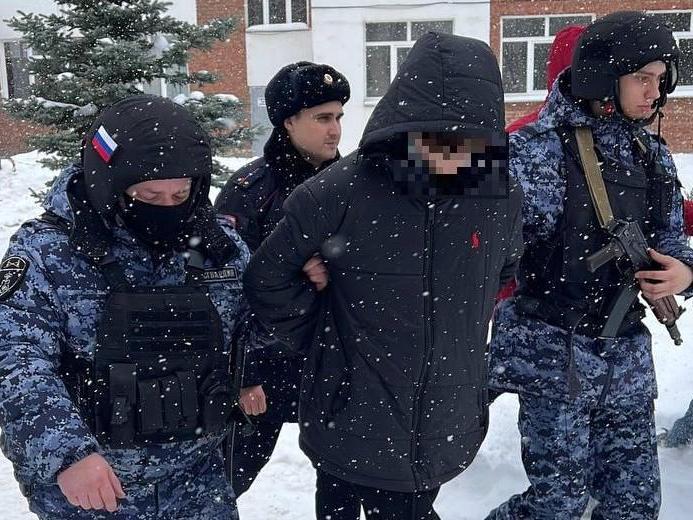

Medical psychologist of the highest category, Doctor of Biological Sciences Regina Khalfina explained how to notice signs of instability in your child and how to communicate with him. Recall that on 3 February in Ufa, an incident occurred at Gymnasium No. 16, where a ninth-grader came to class with a plastic pneumatic pistol, shot at several students and a teacher, and set off a firecracker.
The attacker«s peers said that he had a strained relationship with the teacher. According to students» parents, the boy posted messages on social media where he admitted to hating the teacher. But what is really going on in the minds of such children?
How It Begins
— Often in the manifestos of teenagers who resort to armed attacks, there is a narrative about a «hero» taking revenge for humiliation, or a «victim of the system». How is this personality formed?
— This process is often formed at the intersection of personal trauma and cultural context. A teenager experiencing long-term bullying, rejection, or a sense of injustice seeks an explanation for his suffering and a form to express pain. Popular culture (film, games, online subcultures) can provide ready-made, albeit distorted, narratives: the image of a lonely hero fighting the system, or an avenger restoring justice by force. It is important to understand that games or films themselves are not the cause. They become dangerous when the teenager«s psyche is already traumatized and real channels for expressing pain, seeking support, and restoring self-worth are blocked. He sees no other way to gain »significance« and a »voice« except through this distorted, violent scenario.
— Many school shooters described a long period of loneliness or bullying before the attack. How does the transition occur — from the state «I am in pain and I suffer» to the state «I will destroy you all»?
— This transition is not a sudden leap but a slow «simmering». Long-term psychological pain, especially when combined with humiliation and hopelessness, leads to emotional «anesthesia» and dehumanization — both of oneself («I feel nothing anymore») and of others («they are just part of the system causing me pain»). The teenager stops seeing others as living people with their own worlds. At some point, accumulated rage and despair crystallize into the idea of revenge as the only way to end this pain and prove one«s existence. This is not a transition to strength, but to a desperate, destructive act, when internal pain becomes so unbearable that it can only be »expelled« outward through an explosion.
— Yes, indeed, such incidents are not a spontaneous fight but a carefully planned phenomenon. What happens to the teenager during this quiet period?
— This is a key aspect. Such meticulous preparation and theatricality indicate a deep need to be seen and heard. For a teenager who has felt invisible for years, this act becomes a terrifying, final, and only way to declare: «I was here. My pain was real. Now you will see it.» It is an attempt to turn from a victim of circumstances into the author of his own, albeit nightmarish, script. Psychology sees this as a tragic replacement of creative self-expression (art, sports, achievements) with destructive, because all other paths to recognition seemed blocked.
That«s the Click
— What becomes the trigger for action?
— At the moment of acute loss (breakup, public humiliation, death of a loved one), the last supports collapse. Internal defenses (rationalization, hope, connection with someone) stop working. The teenager feels in a psychological vacuum. Effective methods of help at this moment are, for example, presence, not advice. Not saying «it will pass», but being there, letting him know that his feelings have the right to exist: «I see how much pain you are in. I am with you.» It is important to remove the taboo on pain. Create conditions where one can talk about shame, hatred, despair without immediate judgment or panic. Information about crisis helplines (phone, chat) should be absolutely accessible and anonymous.
You can notice this moment by abrupt changes: giving away valuable items, direct or veiled threats on social media, complete withdrawal after an acute episode, quotes about farewell. This is not «attention-seeking» but the last distress signals.
External Causes
— Psychologists often call such acts of attack a «form of suicide». What do you think about that?
— This point of view can be agreed with an important caveat. Often this is extended suicide, where self-destruction is combined with the destruction of symbols of the pain caused (school, classmates, system). The act is aimed not only at others but also at the complete erasure of one«s former »humiliated« self. This is not a cry for help but an act of ultimate despair, when life and pain have become indistinguishable, and the only way out seems to be total destruction of both. However, it is important to avoid oversimplification — each case is unique.
— According to data, in 81% of cases, others knew about the plans for an armed attack. However, they often do not want to «snitch». How to deal with this?
— We need to transform the concept of «snitching» into the concept of «caring for safety» and «responsibility». Address this topic directly and without judgment. Explain that betrayal is leaving a friend in trouble when he clearly intends to harm himself or others. And telling an adult is an attempt to save him and those around him. Create guaranteed channels of communication that teenagers trust. This could be not only a school psychologist but also an external, anonymous chatbot or hotline.
— How to change the often «formal» system of psychological testing in schools to identify teenagers with mental health issues?
— Formality arises where there is no trust and follow-up action. Testing is not a trap but the beginning of a conversation. It is important to explain the goal to teenagers: not to punish but to help. Shift the emphasis from «identifying problems» to «studying climate and well-being». Ask not only about symptoms but also about feelings of safety, connection with classmates, the presence of a trusted adult. After anonymous testing, group and individual conversations with a psychologist who can create a trusting atmosphere should follow.
A Few Tips for Parents
— Listen to them without immediate solutions. Your task is first to understand, not to fix. The phrase «tell me how you see it» is more valuable than «you should do this».
— Respect the teenager«s world. Take interest in his games, music, content not from a critical perspective (»what are you playing?«) but from a curious perspective (»what do you like about it?«).
— Let the teenager know that it is okay to be angry, sad, jealous, and that does not make him bad. «Yes, that is really hurtful, I understand why you are angry.»
— Pay attention not only to words but also to changes: in sleep and eating patterns, social circle, loss of interest in what used to bring joy.
— Talk about your own feelings and difficulties. This is not a weakness but a model of healthy emotional management. For example, you can admit: «You know, I had a tough day today, I»m tired.«
— Most importantly: your stable, unconditional love and acceptance, not dependent on achievements, is a fundamental protection. The teenager must know that there is a place where he will be accepted as he is, and that place is home and your heart.
Reference. In Russia, the count of cases of armed attacks in schools is usually taken from 2014, when the first attack occurred at Moscow School No. 263. Since then, such tragedies have occurred regularly: among the most well-known incidents are attacks in schools in Moscow, Ivanteyevka, Kerch College, Kazan, Perm University, Serpukhov, Izhevsk, and Bryansk. According to American studies, the majority of school shooters (71%) had experienced bullying.
Read about what happened at an ordinary Ufa school here. We found out from parents how they reacted to the situation. The head of the League for a Safe Internet, Ekaterina Mizulina, sharply commented on the incident at the Ufa school, linking it to increased external influence.