Yekaterinburg student escapes Myanmar slave camp
A 21-year-old student Madina from Yekaterinburg escaped a Myanmar slave camp and returned to Russia, revealing the scheme that traps victims.
May 1, 2026 0


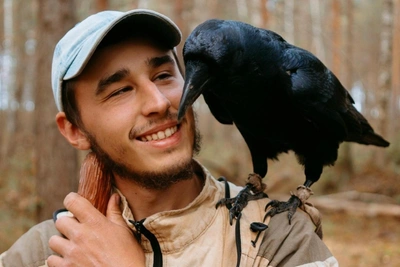
The 21-year-old student from Yekaterinburg after escaping a Myanmar slave camp.
Source:
21-year-old student Madina from Yekaterinburg, who escaped from fraudsters in Myanmar, has returned to Russia. Such camps are entire towns with a slave labor structure, from which few manage to escape. According to volunteers, the girl was starved and beaten, and other captives died before her eyes.
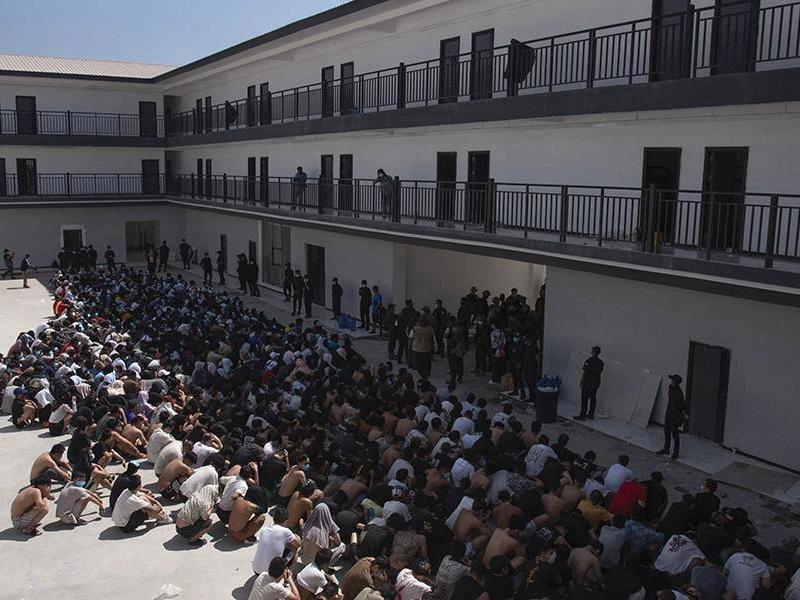
An estimated 100,000 to 120,000 people are held in slave camps in Myanmar.
Source:
Fraudulent «farms» remain active, and millions of people still fall into the traps of scammers. Tempting job offers hide the grim reality of these camps.
Madina, the student from Yekaterinburg, was photographed by journalists at the airport.
How do people become slaves?
Madina is now in a safe location after her escape from slavery.
According to various estimates, between 100,000 and 120,000 people are held in slave cities in Myanmar. The majority come from Vietnam, India, and Sri Lanka, but citizens of the Commonwealth of Independent States (CIS) are also found.
Victims are offered easy, high-paying jobs, such as modeling or telemarketing, with salaries up to $5,000 in Thailand. To apply, usually only English language skills are needed, and for modeling jobs, an attractive appearance. The «employer» pays for the flight to Bangkok.
After arriving in Thailand, people are put on a bus and taken to the «office.» They do not even suspect they will end up in another country, even when they are transferred to boats to cross a river.
What happens inside the scam parks?
These parks are fully equipped cities with all infrastructure. Workers formally perform the promised duties, but with perverted nuances. Call center employees talk to clients on the phone, but instead of selling goods, they extort money.
Models use their looks to deceive men willing to pay for virtual relationships. They are also paid, but can only spend money inside the city, where prices are set so high that earnings are insufficient to live on.
Captives live in cramped rooms with 20–30 people, sleeping on bunk beds. Working conditions are far from promised. For poor work, failure to meet targets, or infractions, the «employer» may beat or cripple the subordinate.
Moreover, according to victims, illegal organ transplantation is practiced in these parks. Those who work poorly may be sold for organs.
How do captives manage to escape?
Camp leaders offer to buy freedom for $10,000–$15,000, but most captives do not have such sums. Moreover, after release, victims face 60 days in prison for violating visa-free regime.
Some girls who worked as models used the fact that they could not be beaten to avoid damaging their appearance. They staged strikes, refused to work, after which they were sent to military field camps.
Captives who have become bothersome are smuggled across the border by armed guards. In Thailand, they are detained by border guards and held in custody for illegal border crossing.
Sometimes hostages reach out to human rights activists via the internet, to which they have access. However, they cannot pinpoint their exact location, and there are many such places in Myanmar, so rescue can take months.
Upon receiving information, Myanmar diplomats contact a private volunteer military organization. Its representatives wait until at least 20 people are gathered for an operation, then enter the territory armed and take the listed individuals. After that, the rescued go to a center for human trafficking victims, then to a migration prison, and after about a month to Bangkok.
After liberation, former hostages often do not want to talk about their experiences, fearing accusations from society.
Read more