Social Nanny in St. Petersburg: Who is Eligible for Assistance

Originally, social nannies provided assistance only to families with two or more children under one and a half years old born at the same time. Now the program has expanded the range of recipients.
The service provides short-term childcare for children under three. The nanny can play with the child, read, go for walks, and also help with feeding, sleep, and hygiene procedures.
Who is eligible for a free nanny?
Those who can count on assistance include:
- large families;
- low-income families;
- student families;
- single-parent families;
- families of participants in the special military operation;
- families in difficult life situations.
According to the committee on social policy, in 2025, 471 St. Petersburg families used the social nanny service. This number included 231 large families (of which 8 are families of participants in the special military operation), 2 low-income, 2 student, and 36 single-parent families.
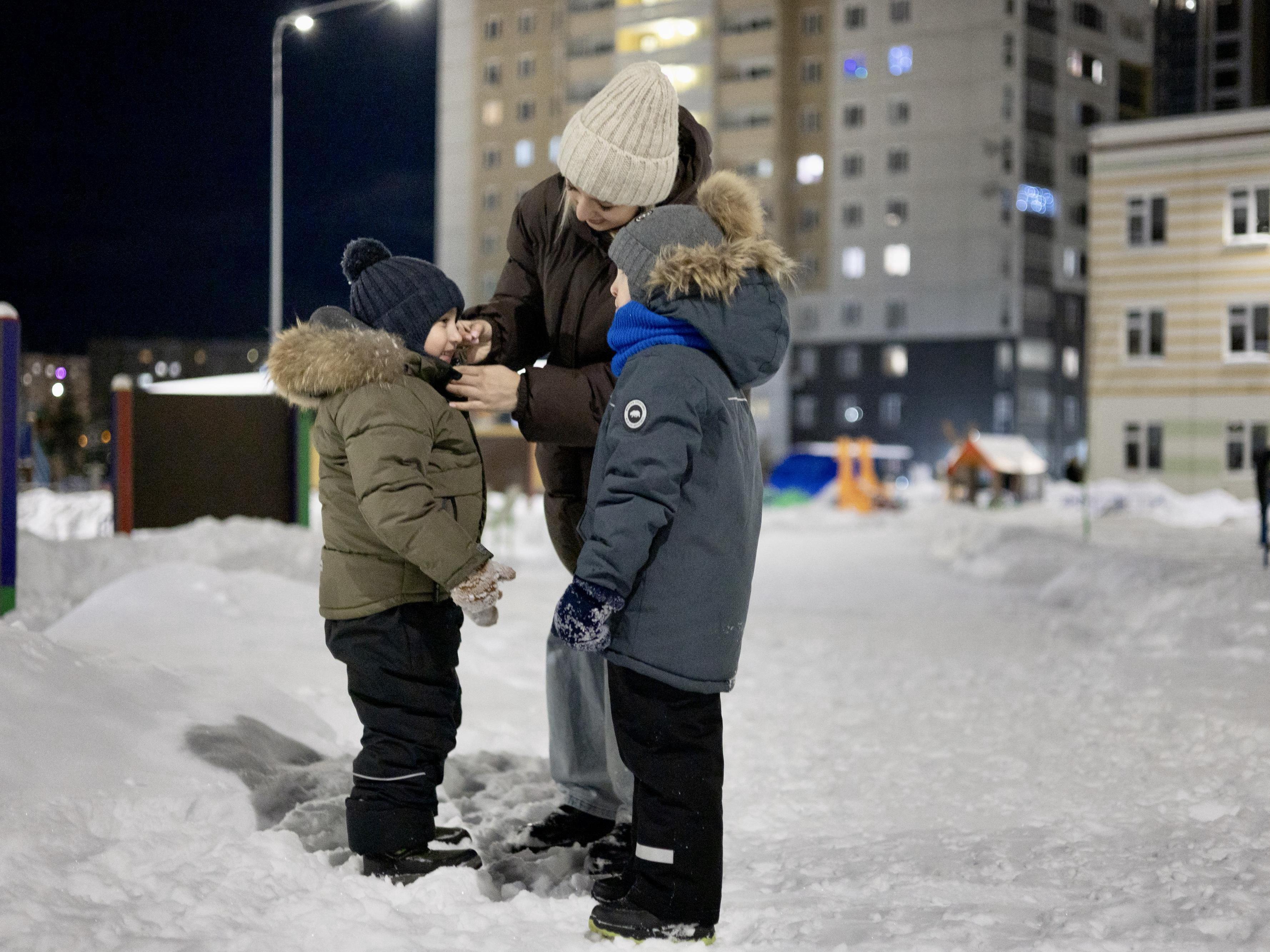
A mother of many children, Diana from St. Petersburg, shared how the program helped her. «A friend of mine, who is also a mother of many children, told me about it—she learned about this opportunity from social services,» she shared. After submitting the documents, the family was assigned a nanny who lives nearby. The helper comes two or three times a week for four hours. «I usually take the daytime slot—my daughter sleeps during the walk, and I can use that time to calmly take my older son and middle daughter to their classes,» Diana explained.
How to become a social nanny?
To get a job, one must be a Russian citizen at least 18 years old with a secondary general education or higher. Candidates undergo training in a professional development program. In 2025, 143 nannies were employed in St. Petersburg.
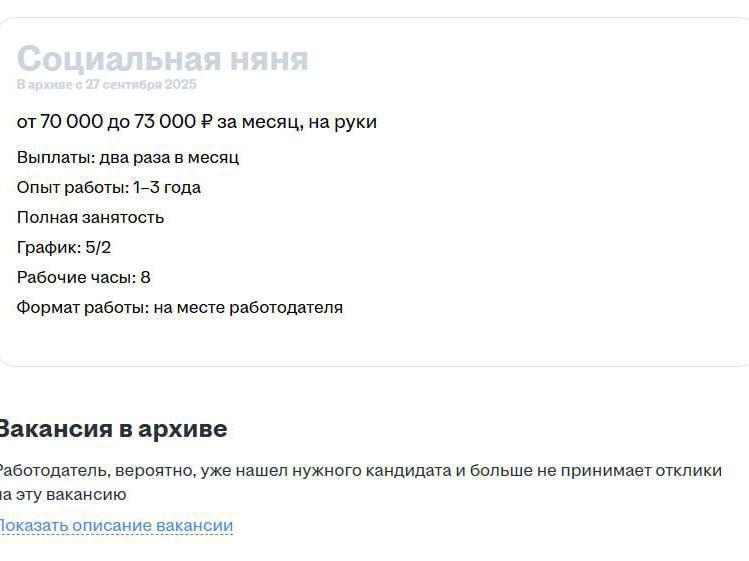
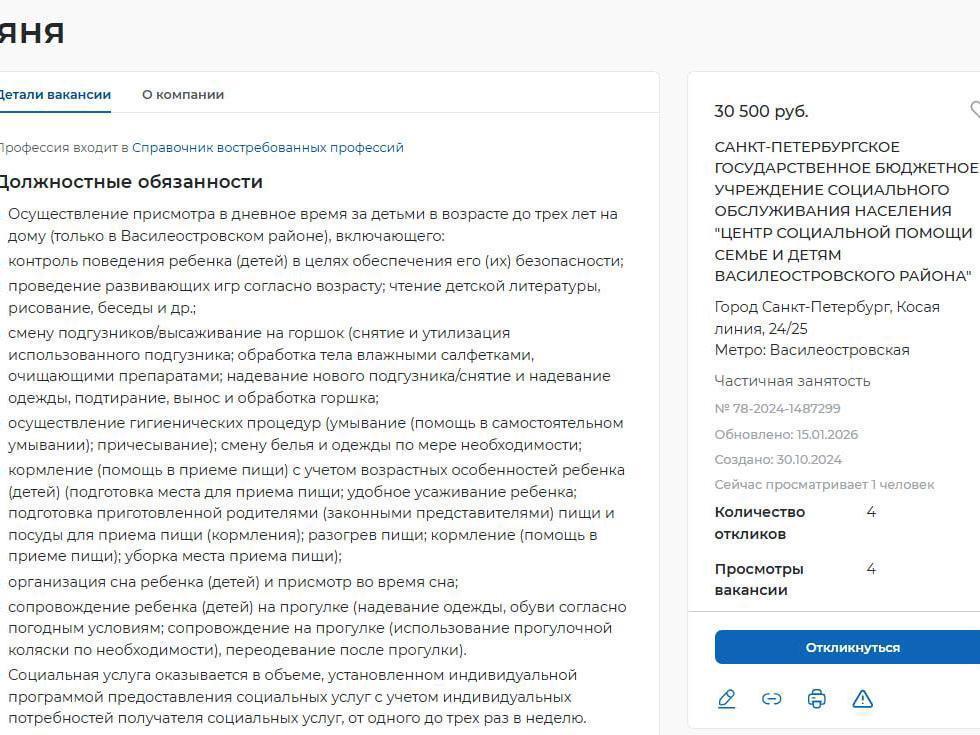
The specialists work in district centers for social assistance to families and children. The salary depends on the rate: with full employment, it is 70,000–73,000 rubles (approx. $780-810 at current rates). For example, in the Vasileostrovsky District, there is a part-time vacancy paying 30,000 rubles (approx. $330 at current rates) per month. Applicants are required to have no criminal record and no medical contraindications.
Natalya, a 59-year-old nanny, completed courses from the Employment Center after retiring. «The courses lasted three months—they taught first aid and how to observe etiquette in the family,» she said. Now she works half-time, visiting two families for four hours a day. Anastasia, 19, also works half-time, combining the job with her studies, and earns about 40,000–45,000 rubles (approx. $440-500 at current rates). «Both of my families live nearby, so I manage everything calmly,» she says.
Contracts with nannies are valid until December 2027. The program«s extension depends on further funding.
Why do some mothers miss out on assistance?
Irina, the mother of a two-year-old son, works full-time and has an income above the subsistence minimum. «The point about income confuses me—because often to get benefits, your income needs to be below the subsistence minimum,» she shares. However, for single-parent families, no official income requirements have been established.
Irina is wary of hiring a nanny through private services due to a friend«s negative experience. «She hired a girl—high rating, good reviews. In the end, she left her child with her, and the girl apparently couldn»t handle the baby. She didn«t steal anything, but she silently returned the money, turned off her phone, and just left,» she explained.
Working mothers note that social nannies are usually available during the daytime, while help is needed after work or on weekends. «If only you could invite a nanny on weekends or after work for at least a couple of hours to even just go grocery shopping…,» they say.
Private nanny services in St. Petersburg are expensive. On average, babysitters charge 1,000 rubles per hour (approx. $11 at current rates). With 2–3 hours of work on weekdays, the weekly amount reaches 10,000 rubles (approx. $110 at current rates). Some offer services for 500–600 rubles per hour (approx. $6-7 at current rates) but require full-time employment of 8–10 hours a day, which amounts to at least 80,000 rubles (approx. $890 at current rates) per month.