Samara artisan restores over 1,500 Soviet Christmas ornaments
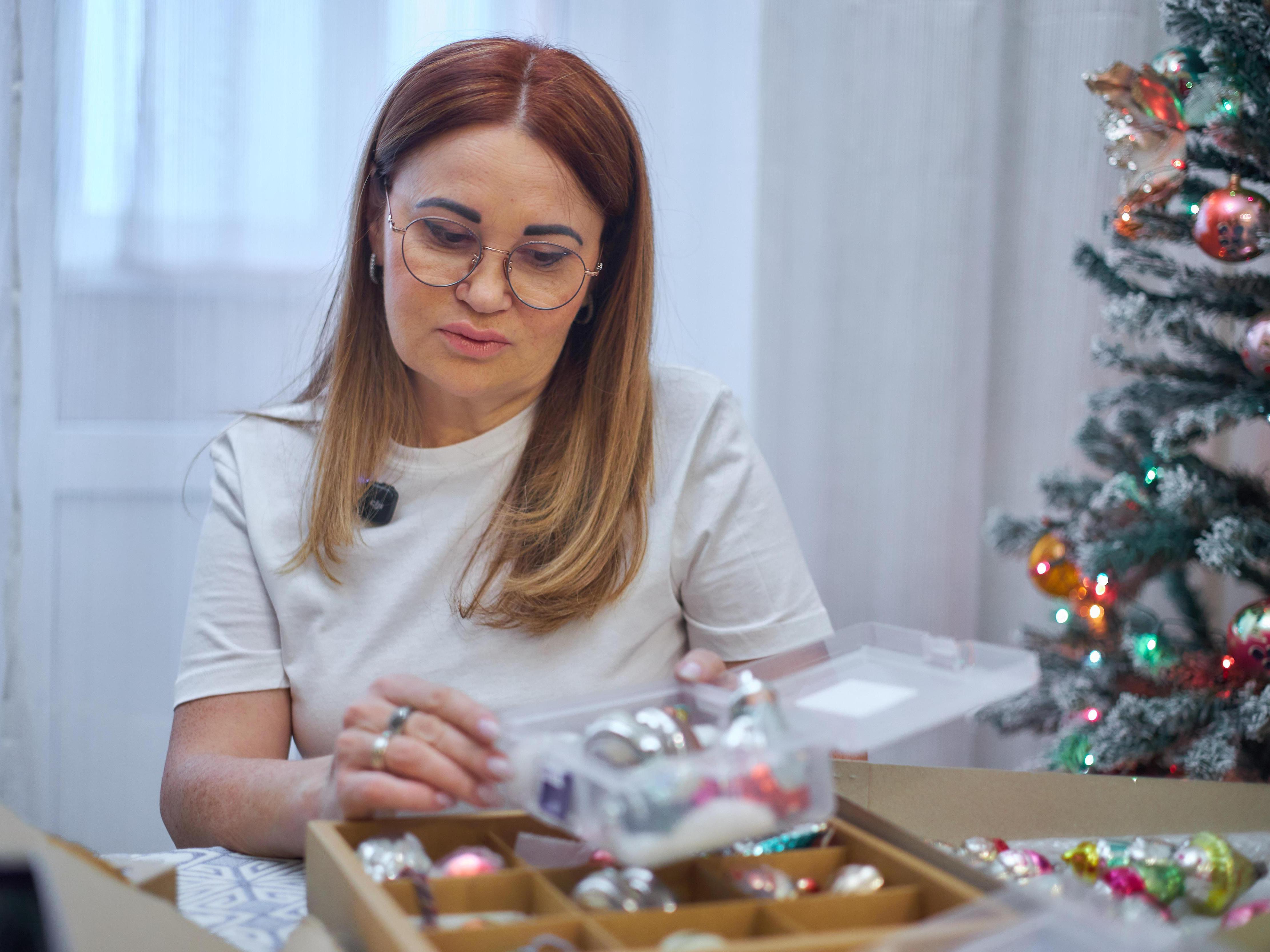

How many times a year do you take out your Christmas ornaments? Probably once — before the holidays in late December? But for Samara resident Natalia Miller, it«s New Year all year round. She collects and restores Christmas ornaments from the USSR era, with over 1,500 items in her collection.
We viewed part of this treasure trove (yes, we«re not afraid to use such a grand word). Natalia told 63.RU how it all began, how she finds ornaments, why she travels to retrieve them herself, how much she sometimes pays, and who is missing from her collection. She also shared her dream — to open a Christmas ornament museum.
«Every ornament, every story is captivating»
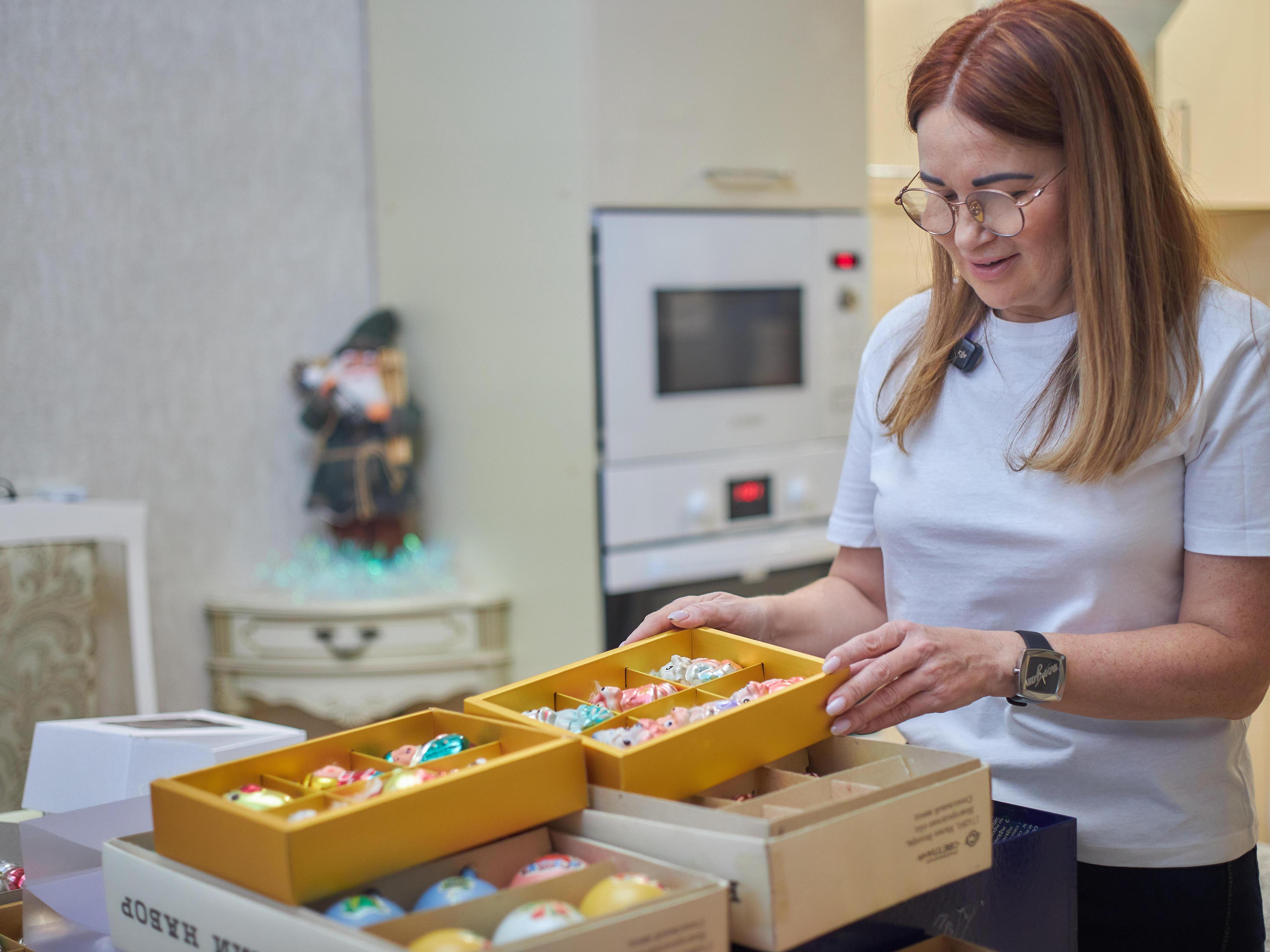
— Your collection has over 1,500 pieces. Tell us, how did it all start?
— It all began in childhood, when probably every family had a cult of preparing for the New Year, decorating the tree together, and before that, going to stores to buy Christmas ornaments. I«m from a small town in the Orenburg Region, so our ornaments were from the selection available in shops. These were pinecones, little houses, some clowns, balls.
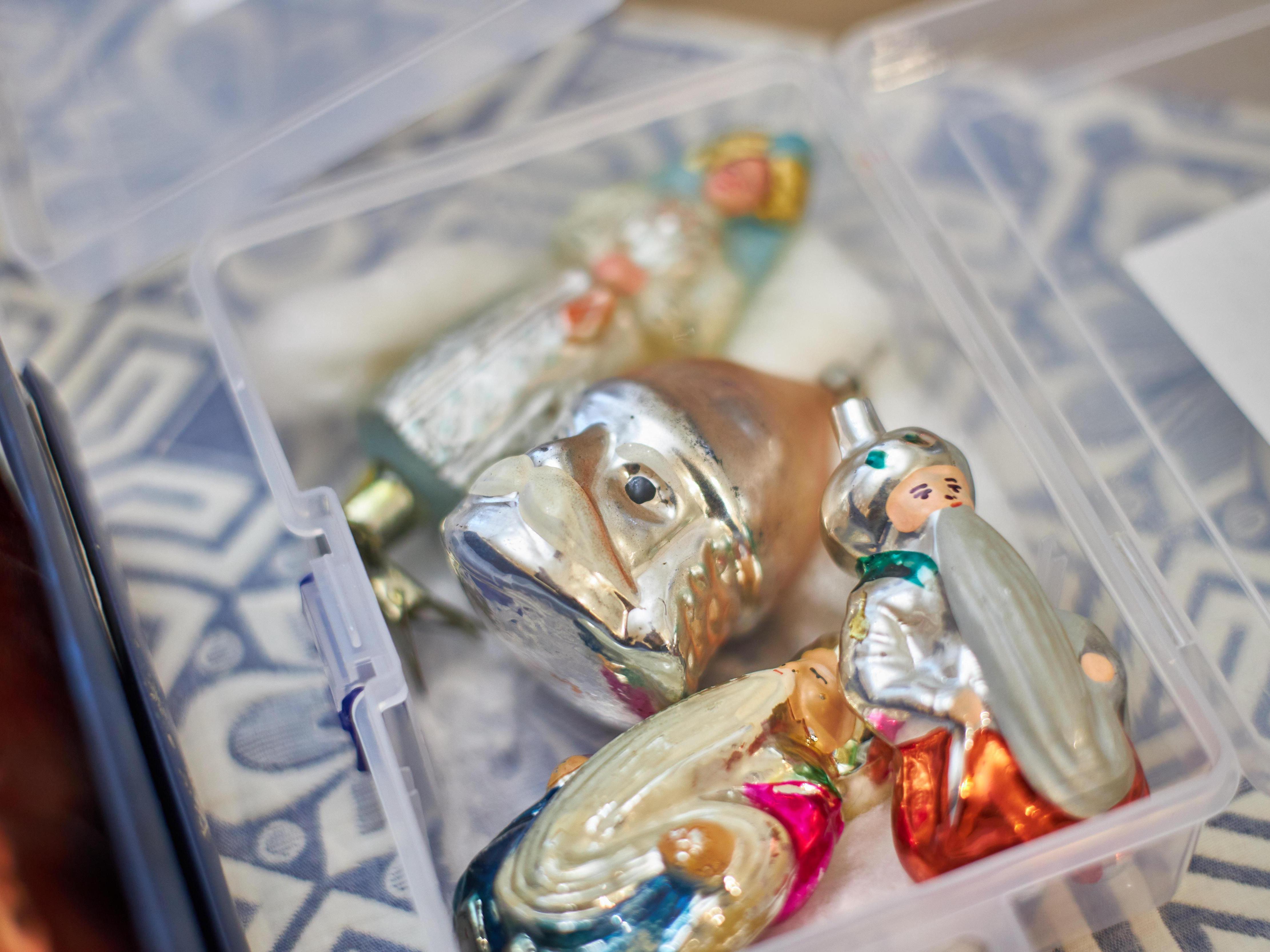
And for some reason, whenever we decorated the tree, my mom would tell us stories, like this squirrel, for example — it«s from a Pushkin fairy tale, that it sings songs, cracks nuts, and we believed it. And my dad said that this head was also from a Pushkin work, that it was a talking head, and we believed again, but didn»t understand what these ornaments were, well, a head is a head, a squirrel is a squirrel. Later, as an adult, in 2004, I moved to live in Samara and took these ornaments from my parents with me.
— How many ornaments did you have at that time?
— Not many, not all ornaments survived the move. And probably, at that time, ornaments didn«t evoke such reverence; if they broke, they broke. There was no internet then, no thematic groups. And then one fine day, I got information that the talking head was part of a set. I started searching online for information, collecting it. And it really turned out that this head — wasn»t just a head, it«s a series of ornaments released for the 150th anniversary of the birth of the poet Alexander Sergeyevich Pushkin. From the «Ruslan and Ludmila» set.
But the main thing is that I hadn«t even seen this set, and I wanted to see it, I started searching for what this set actually looked like. And to find it, I needed to look for thematic groups, so I slowly started delving into this topic. And once immersed, I couldn»t get out, because every story, every moment, every ornament captivated and still captivates me. That«s when I started collecting.
The first set I assembled was exactly «Ruslan and Ludmila». All these items are in their original paint, but so far I haven«t come across Ruslan. I»m searching, I hope he somehow drifts to me, or I find him myself.
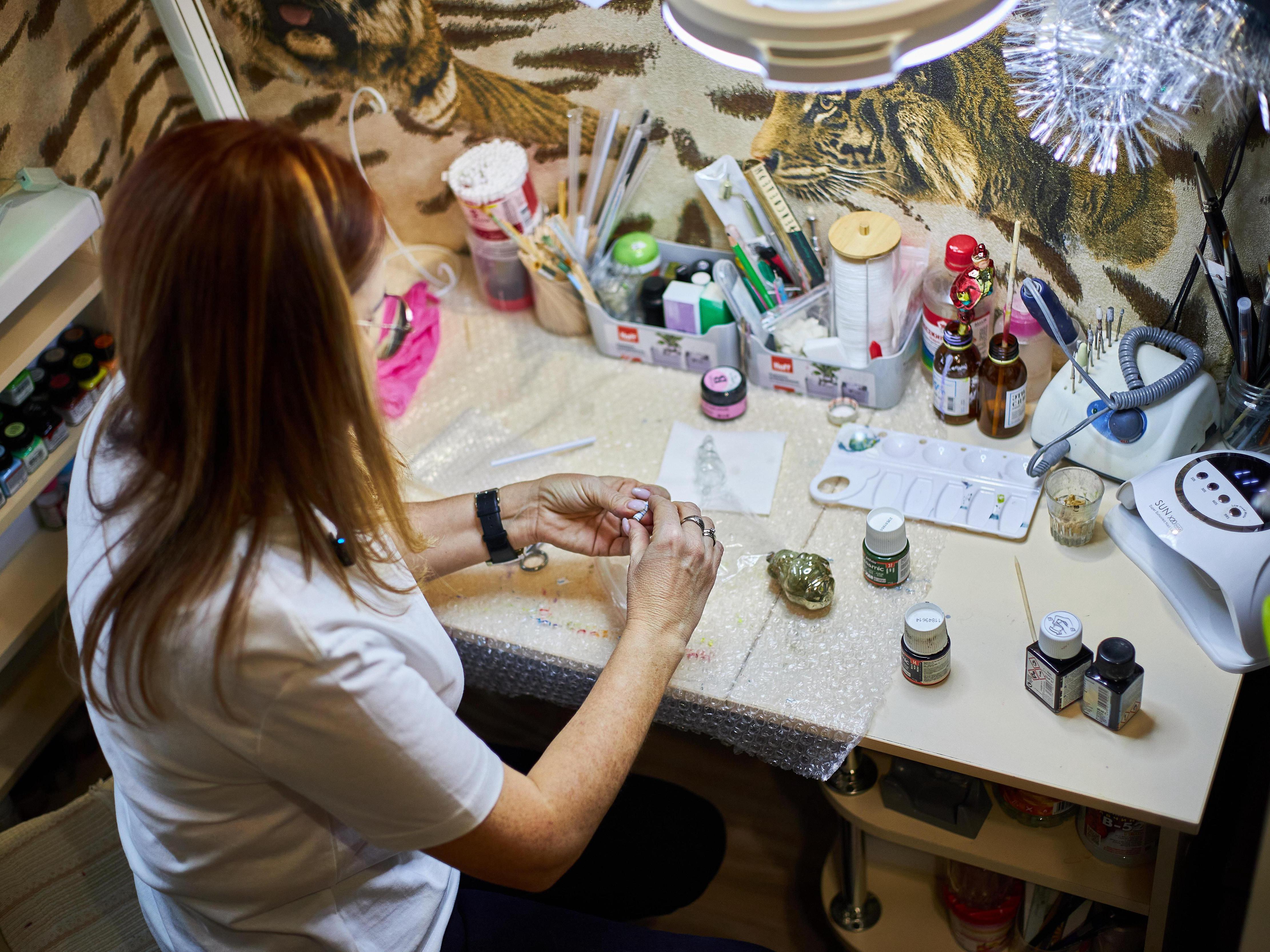
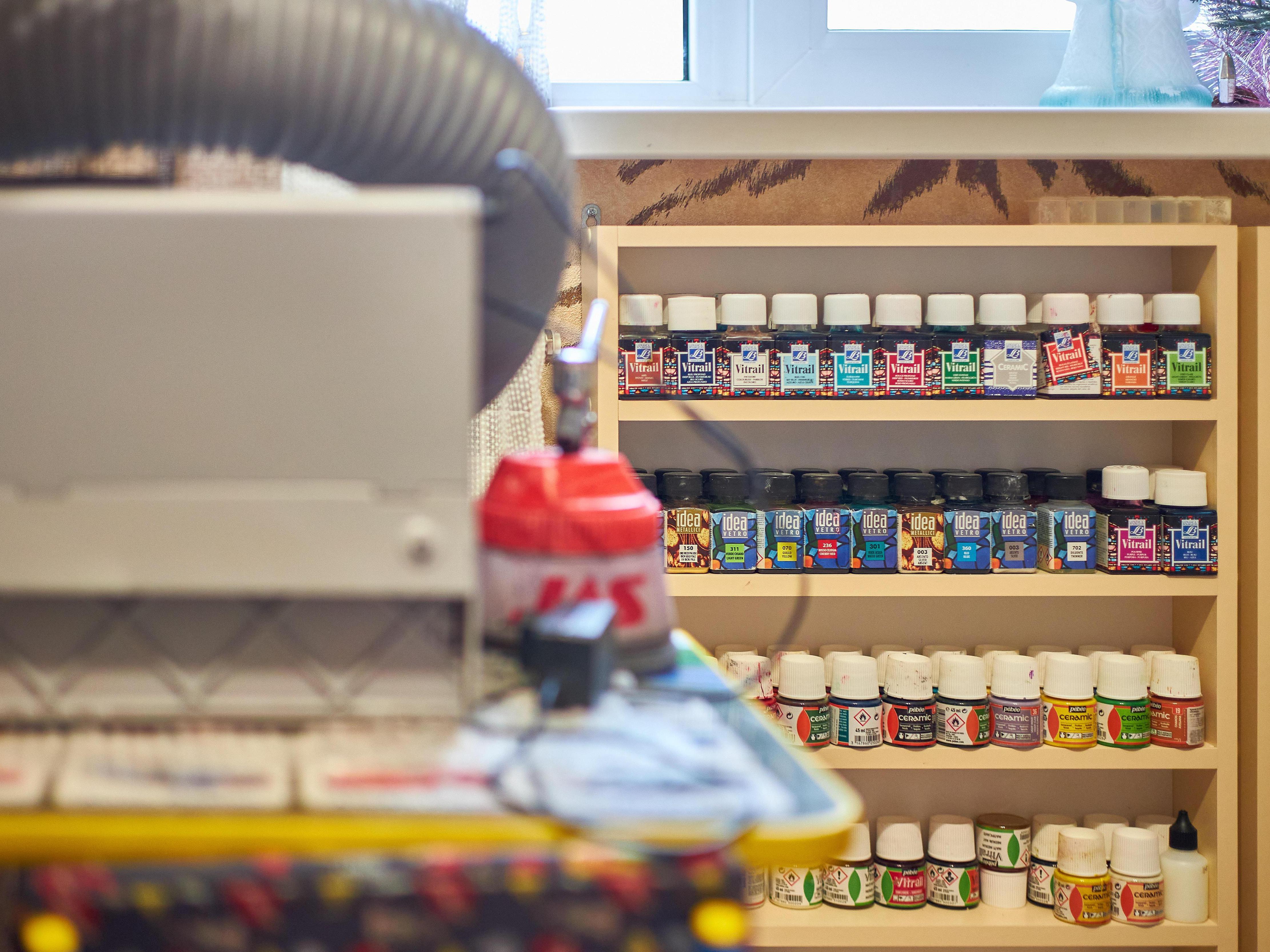
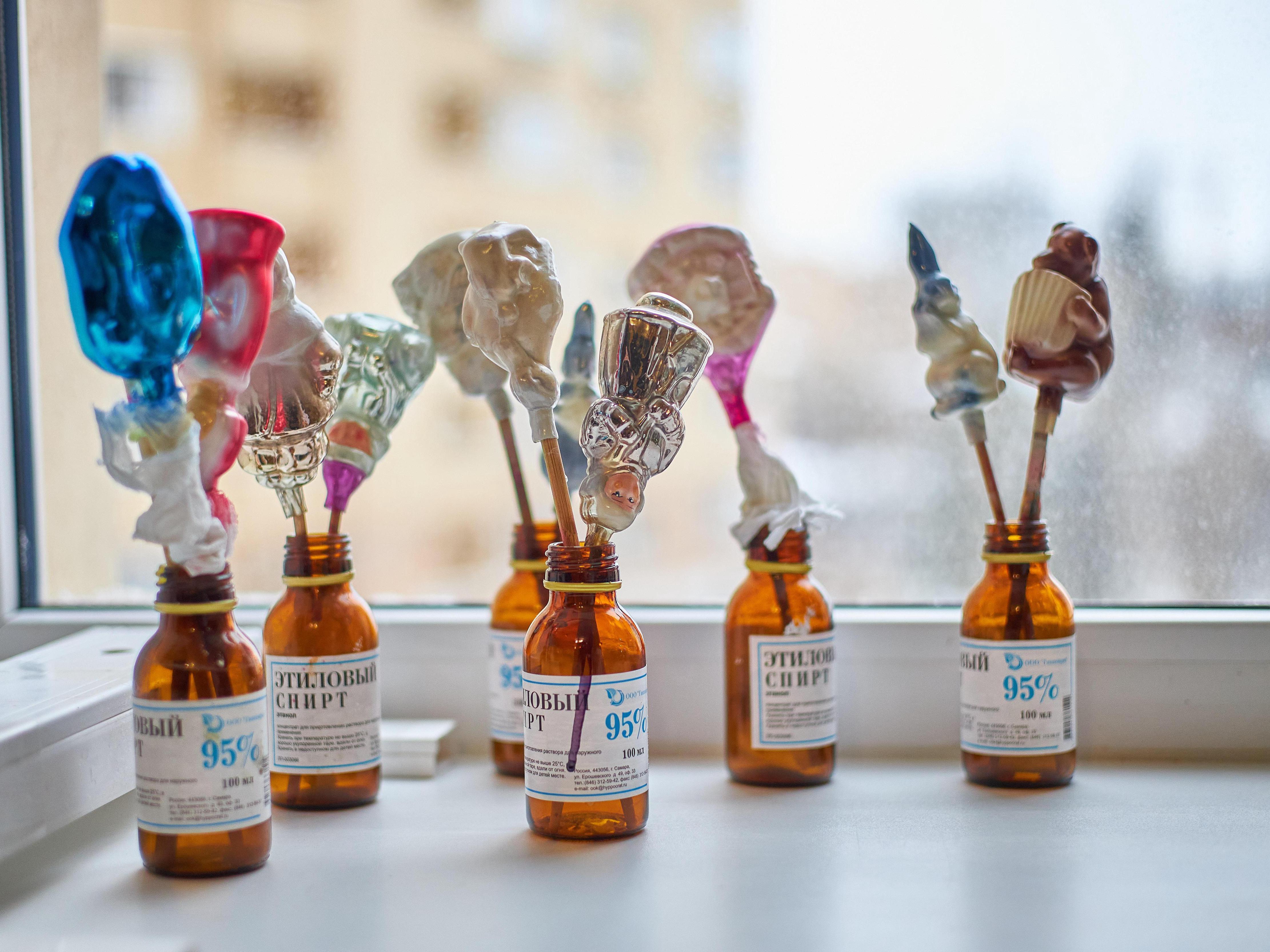
And with collecting came an interest in restoration, because not all ornaments were preserved in good condition, not all reached me intact, and to fix them up, I had to recall chemistry, because I needed, for example, to restore the mirror coating that ornaments were covered with. I needed to paint ornaments and learn about paints.
«One ornament can cost tens of thousands of rubles at auction»
— How do you search for ornaments? And was there a case when you had to go to another city or country for an ornament?
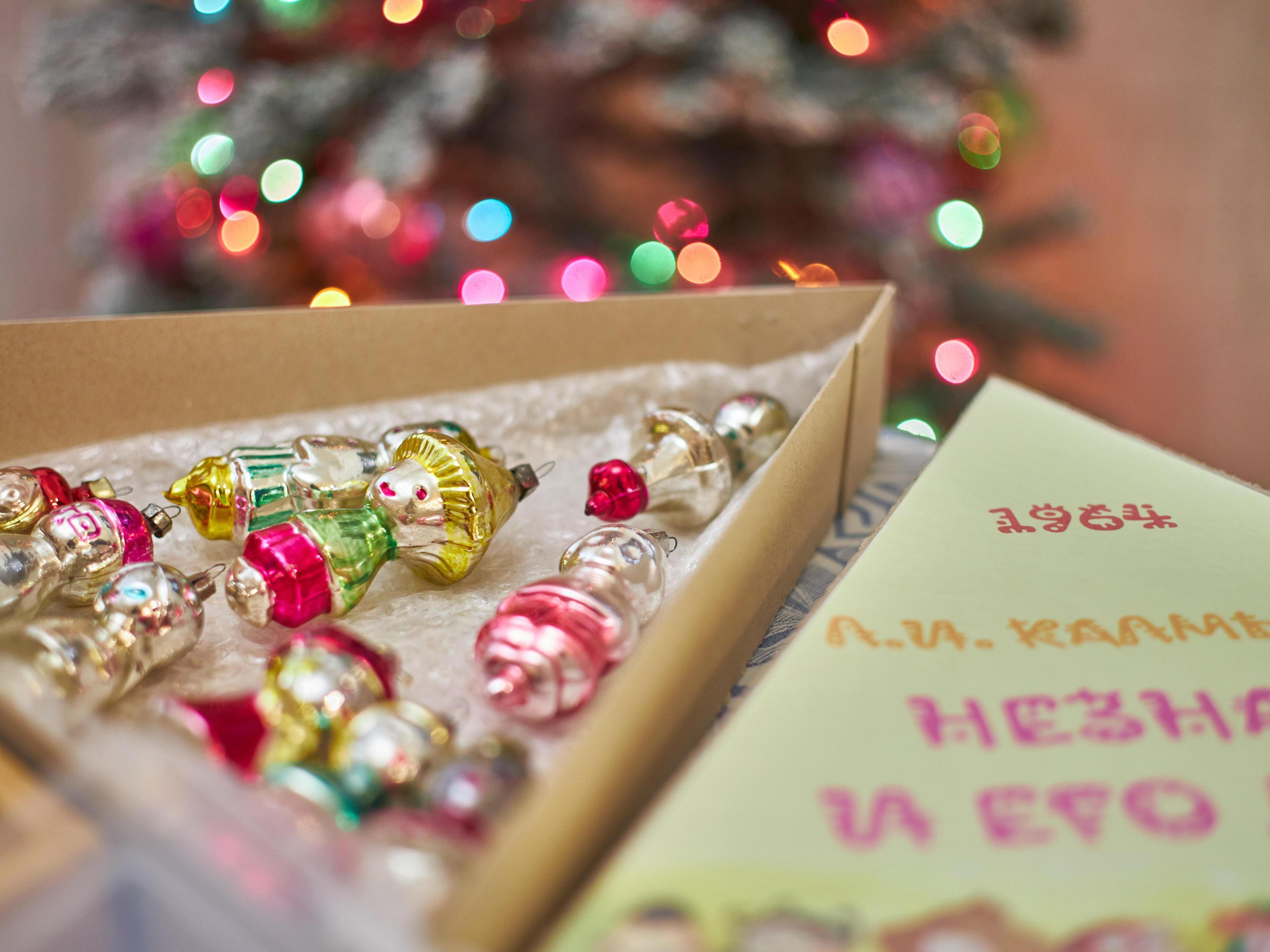
— I«ll tell you one example now. I had such an item — Vintik (Screw). It»s a mass-produced ornament made everywhere. But I heard it called a character from the «Dunno» series. And a colleague from our «guild» of Christmas ornament enthusiasts from Izhevsk told me — listen, I have an item, take it from me, I think it«s Znayka (Know-It-All). I took it.
But I was puzzled because Znayka seems to be a boy, but here with round glasses, looks like a girl, it«s probably someone else. I started gathering information — it turns out these ornaments belong to a set by L. I. Kalmykova, who worked at the «Kultura» factory (Cultigrushka), located in Leningrad. And in 1964, this set of 11 ornaments and a box was approved for production. But the main thing is that the box was approved, but the lid wasn»t even approved — and there«s no original lid.
And so I started collecting, searching, found at auctions, in thematic groups, someone was selling. You know, I have this feeling that when old garages are demolished, they find these ornaments and just put them up for sale in boxes. And such a box came to me, I started searching in it — and found: that«s how Sineglazka (Blue-Eyes) arrived to me. All characters I found at auctions, I became obsessed with this set, it became my favorite set.
— How much do ornaments cost at auctions?
— Probably, however you snatch it. I bought one of the ornaments for 8,000 rubles (about $89 at current rates). And on average now each ornament at auction costs more than 30,000 rubles (over $333). And, you know, it comes to anxiety. You buy it, and the seller is in Moscow. You can send it by mail or via SDEK, but you start worrying and fearing — what if something happens, what if some box is thrown on it. And you go get it yourself. I had it several times that I picked up ornaments myself from other cities. But not always specially; sometimes, I time it with business trips.
Back to the set from «Dunno». I gathered almost all, but couldn«t find Ponchik (Donut). My whole family was laughing at how obsessed I was with this Ponchik. I got up in the morning, checked all social media, I was looking for him. And finally, this Ponchik appeared. How I fought for him at the bidding. I literally won this ornament at auction and also went to Moscow for it. Bought it for 35,000 rubles (about $389). In the end, it took a year and a half to collect the whole set (by the way, I almost have a second set assembled now).
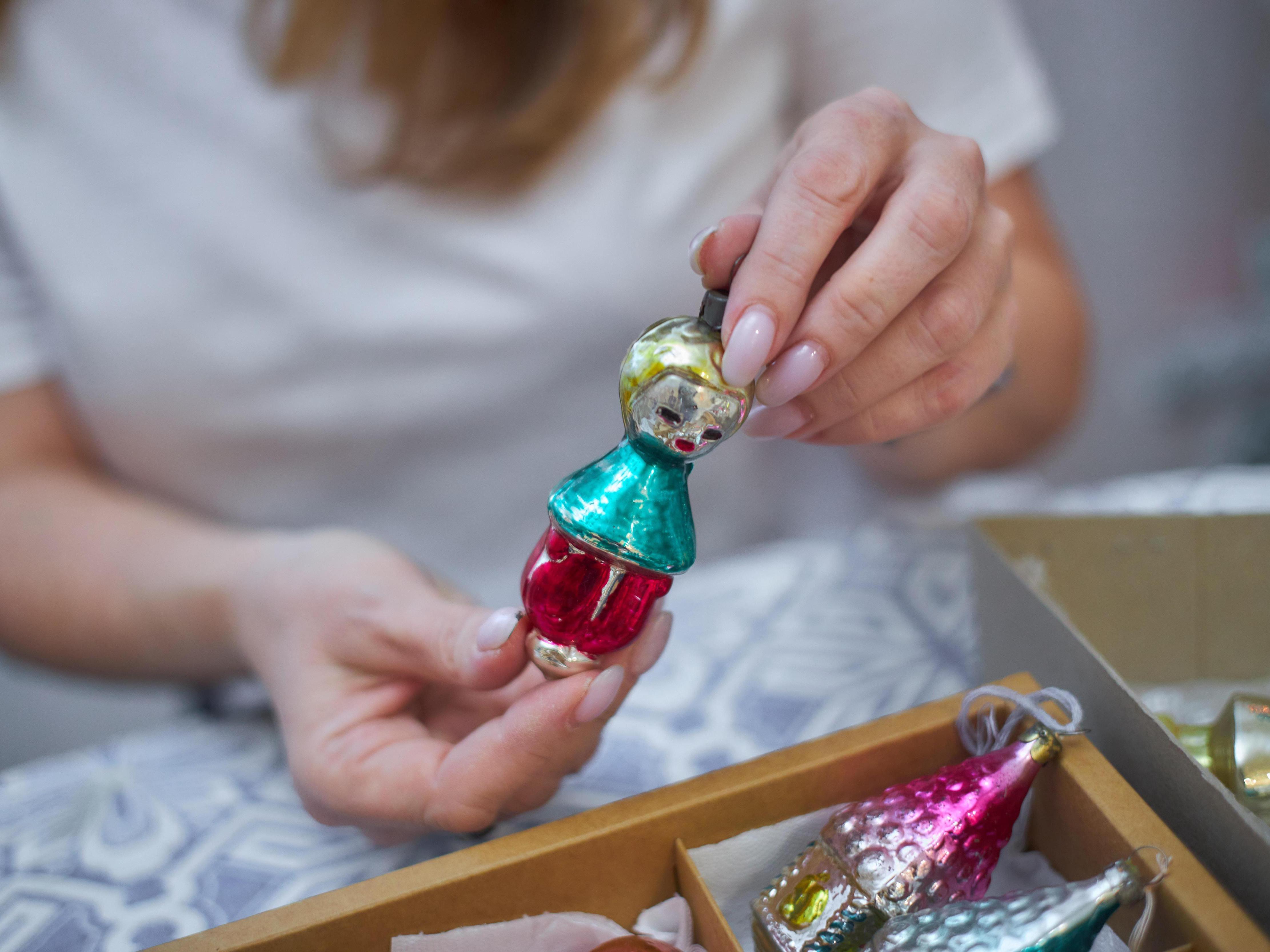
Then I wanted to arrange the set in a box, but since no one has seen the lid and no one knows the box dimensions, my husband with a mathematical mind said, let«s measure it out — put them like this, now we»ll measure everything and make it. So this box, of course, isn«t original, made by hand, but I really like it.
— Tell us about an ornament you exchanged for something. Is there such a one?
— Here«s Shpuntik (Small Screw) that I have, which I exchanged for Sineglazka. I ended up with two Sineglazkas, and among my communities I found another appreciator of this set who was willing to trade. She offered me this ornament, and in return I sent her Sineglazka. It went to Novosibirsk. So this set is really my favorite and cult.
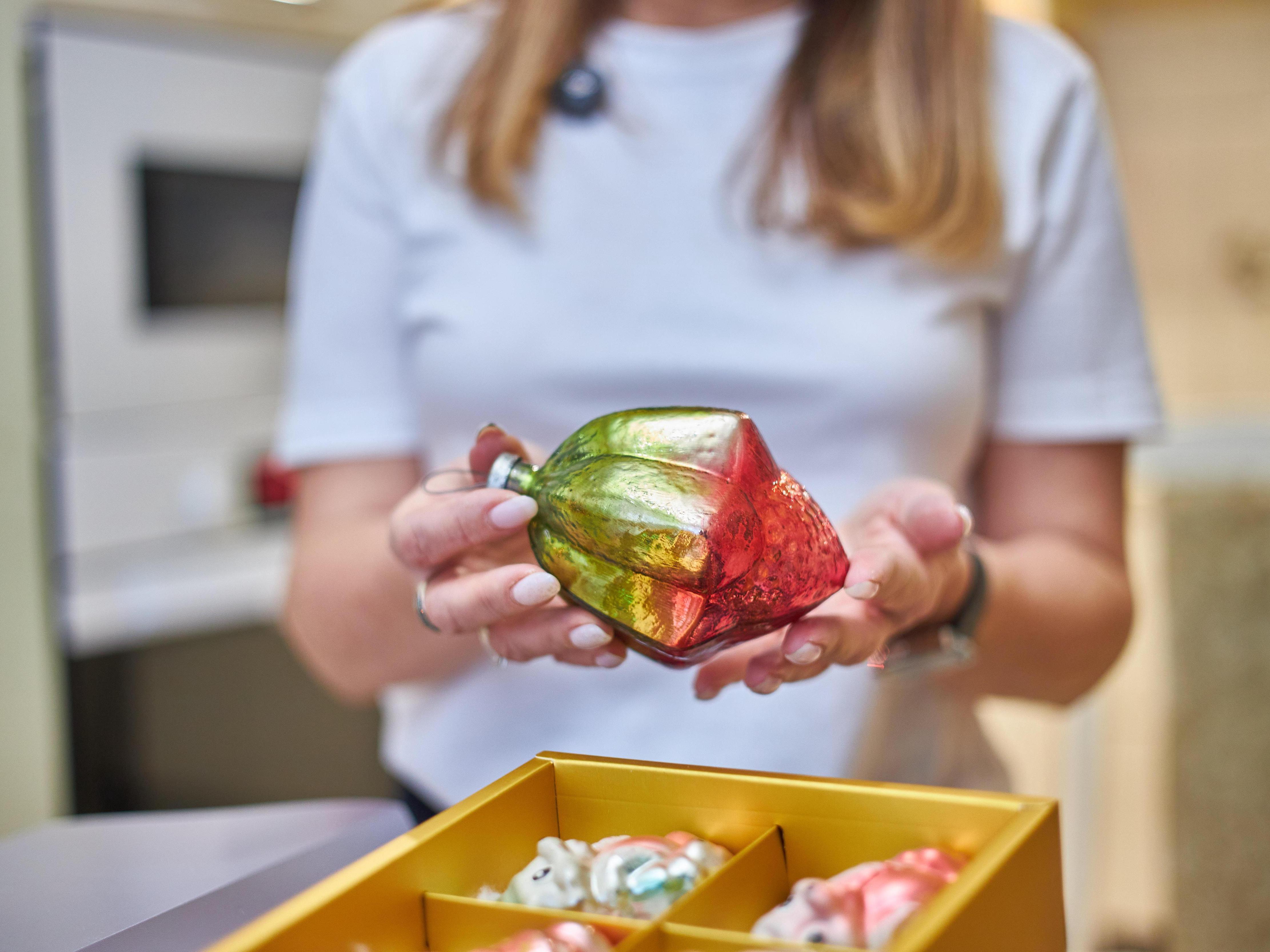
There«s another favorite set. These are Christmas ornaments from the Stalin era. These ornaments decorated trees on squares, including the tree on Red Square. They»re not meant for outdoors, they have thicker glass, were called «giants» for their large sizes — they«re from 12 to 18 cm. These ornaments are popularly called Kremlin ornaments.
There are mass-produced ornaments that were later distributed to regions. These are pinecones, lemons, suns, but there are rarer ones. I, of course, don«t have many yet. I»m searching for an eggplant, a strawberry. Less rare ones I have — an apple, a tomato, a carrot, Kremlin clocks that show five to twelve. They started being produced after the release of the film «Carnival Night».
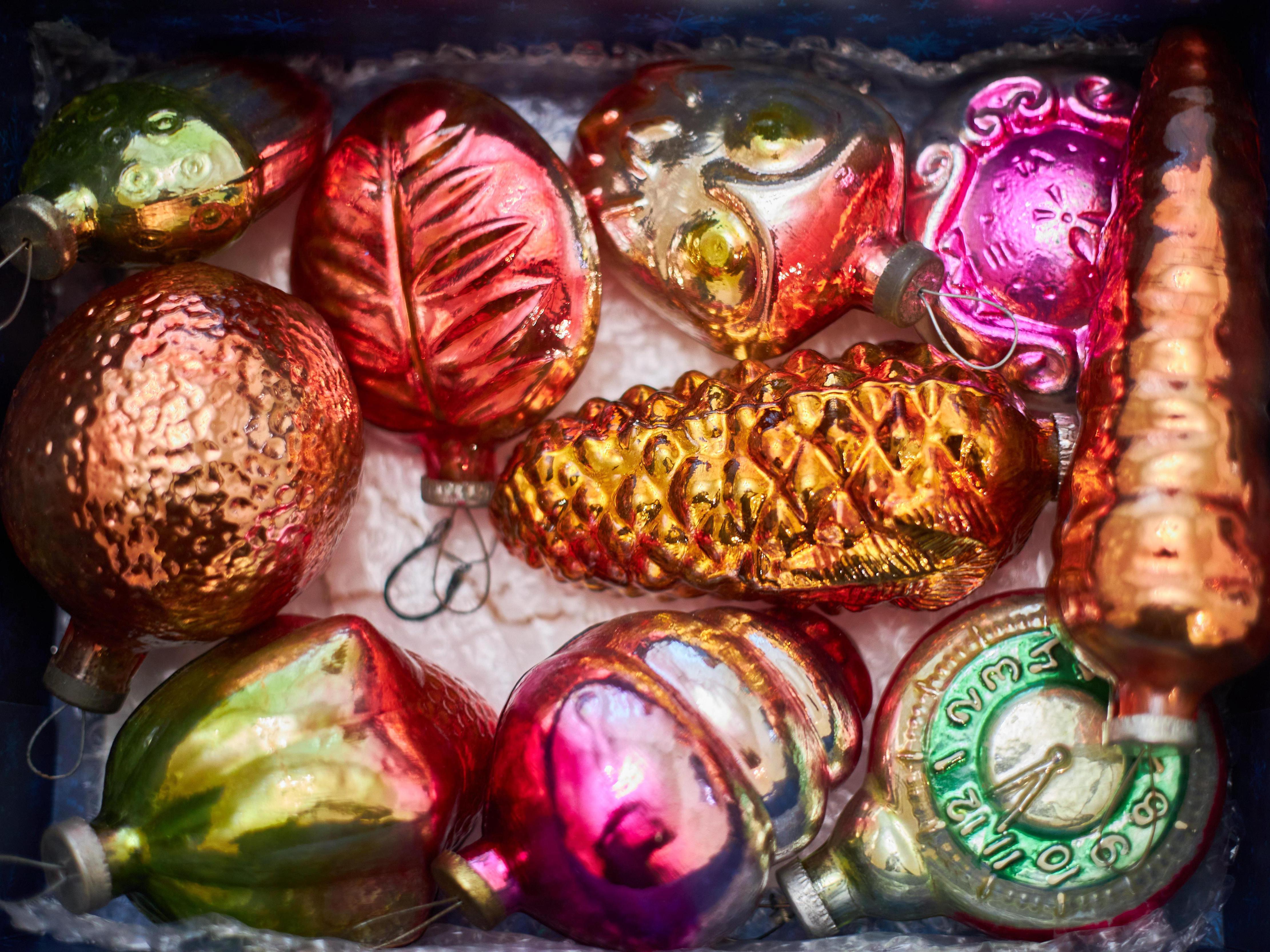
I generally concluded for myself that ornaments were created for events. For example, the Olympics, Pushkin«s birthday, the release of some film or cartoon.
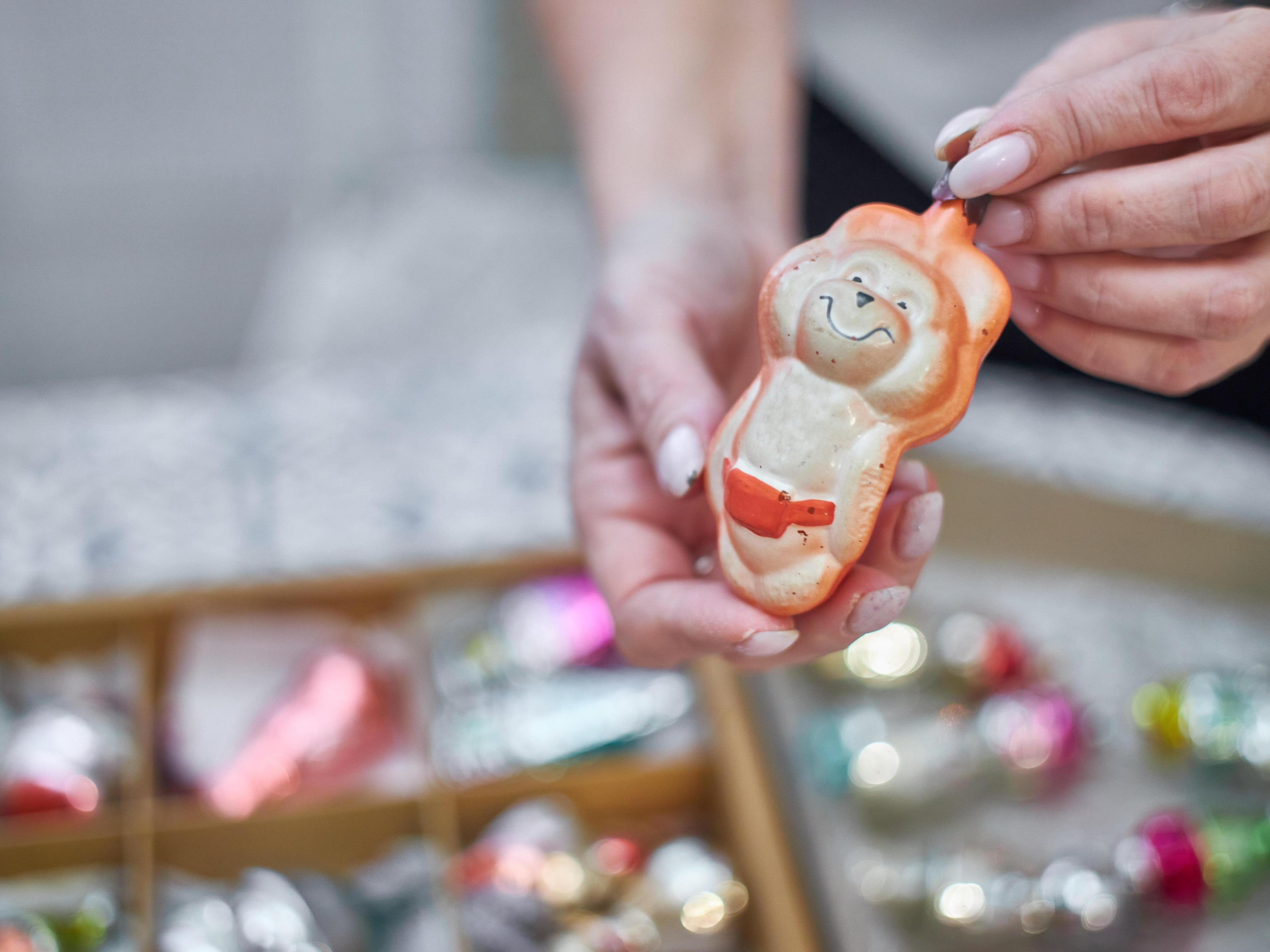
— Tell us about the oldest ornaments in your collection. From what years are they produced?
— Balls from the 1940s — these are the earliest Christmas ornaments that started being produced. Generally, the New Year began to be widely celebrated in the USSR in the 1930s. First, there were ornaments from papier-mâché, various snowflakes, and then Christmas ornament factories started producing glass ones. I understood that mainly the development of Christmas ornaments was done by the «Kultura» factory in Leningrad.
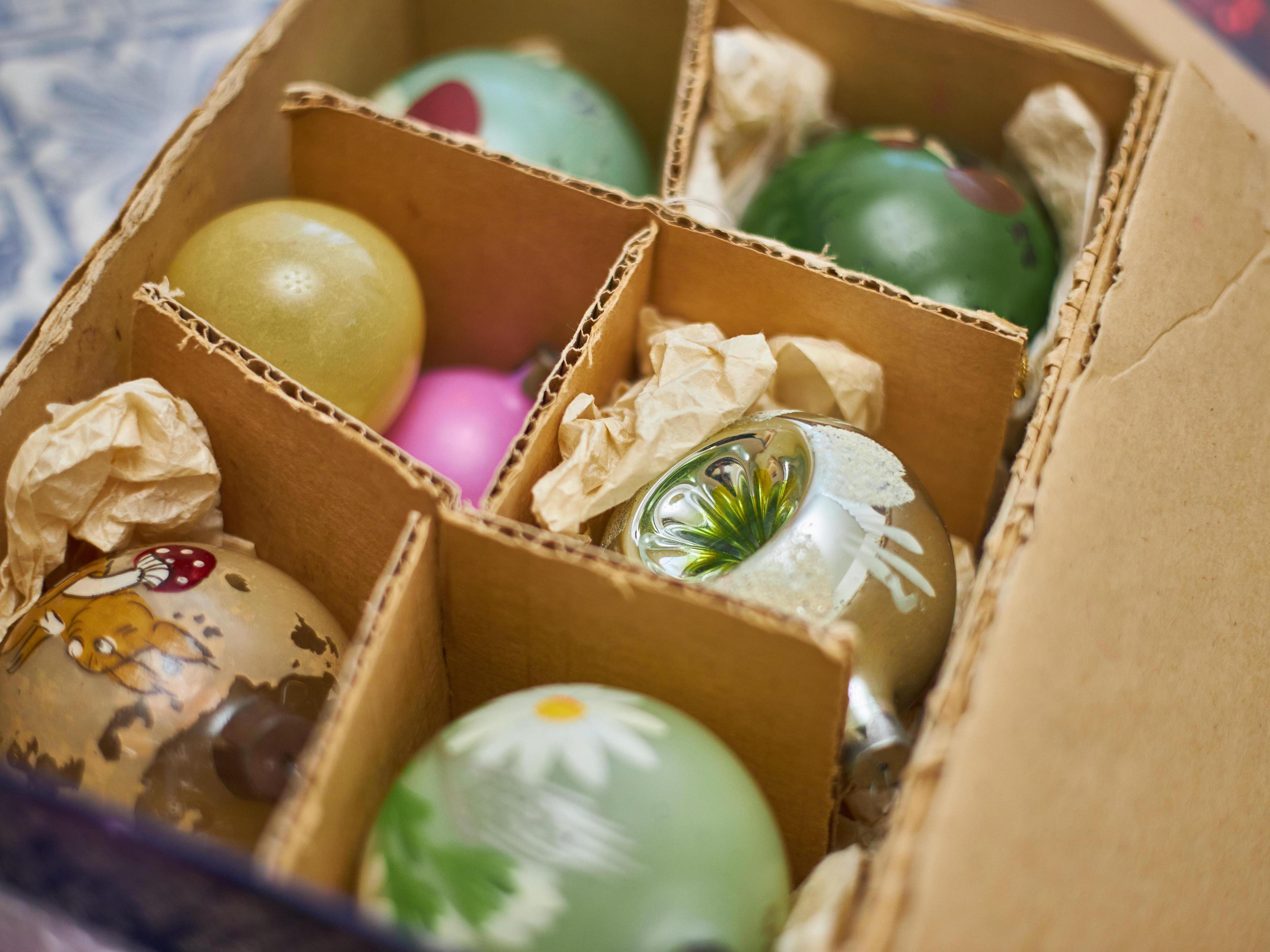
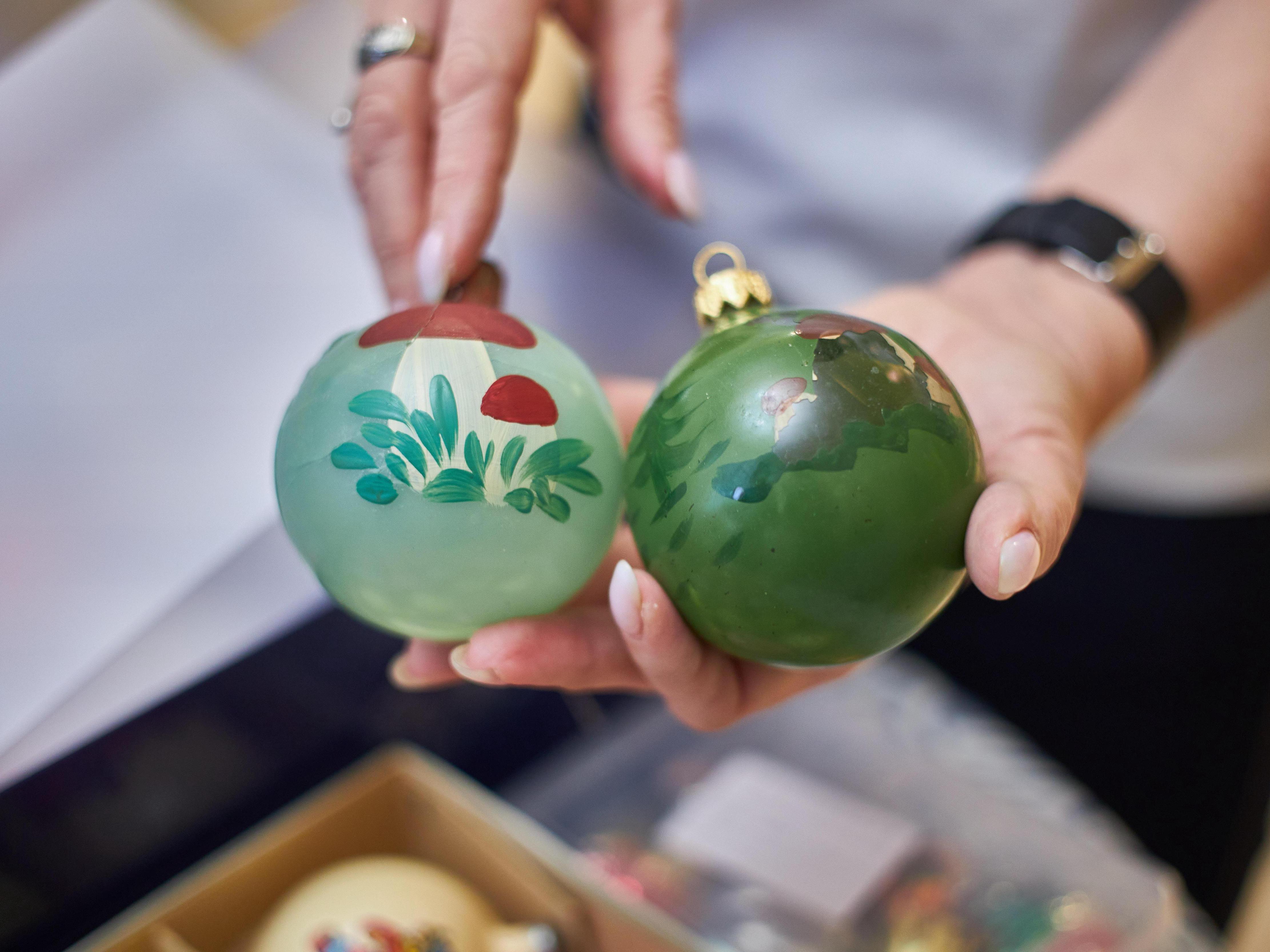
— How did these balls come to you?
— One ball was completely broken. I tried to glue it, but a sphere is very hard to glue. And it came to me like this. I came to my mom«s, went to throw out trash, and on the dump I saw a box with Christmas ornaments. And so I took this box home. Found two balls there, started asking, inquiring in my groups. Yes, they don»t look great, but I don«t throw them out because they even have old hangers preserved.
— So, is this some one collection or did you just put them from different collections into one box?
— No, these are balls that were produced as standalone ornaments. Without series, just balls. Ball-flowers were different. Like cornflowers, then daisies. There were also balls with mushrooms, with squirrels, with foxes. Also from fairy tales.
«Nothing is known about Christmas ornament production in Kuibyshev, I want to find out»
— Ornaments from which factory do you like the most? Maybe you have some preferences?
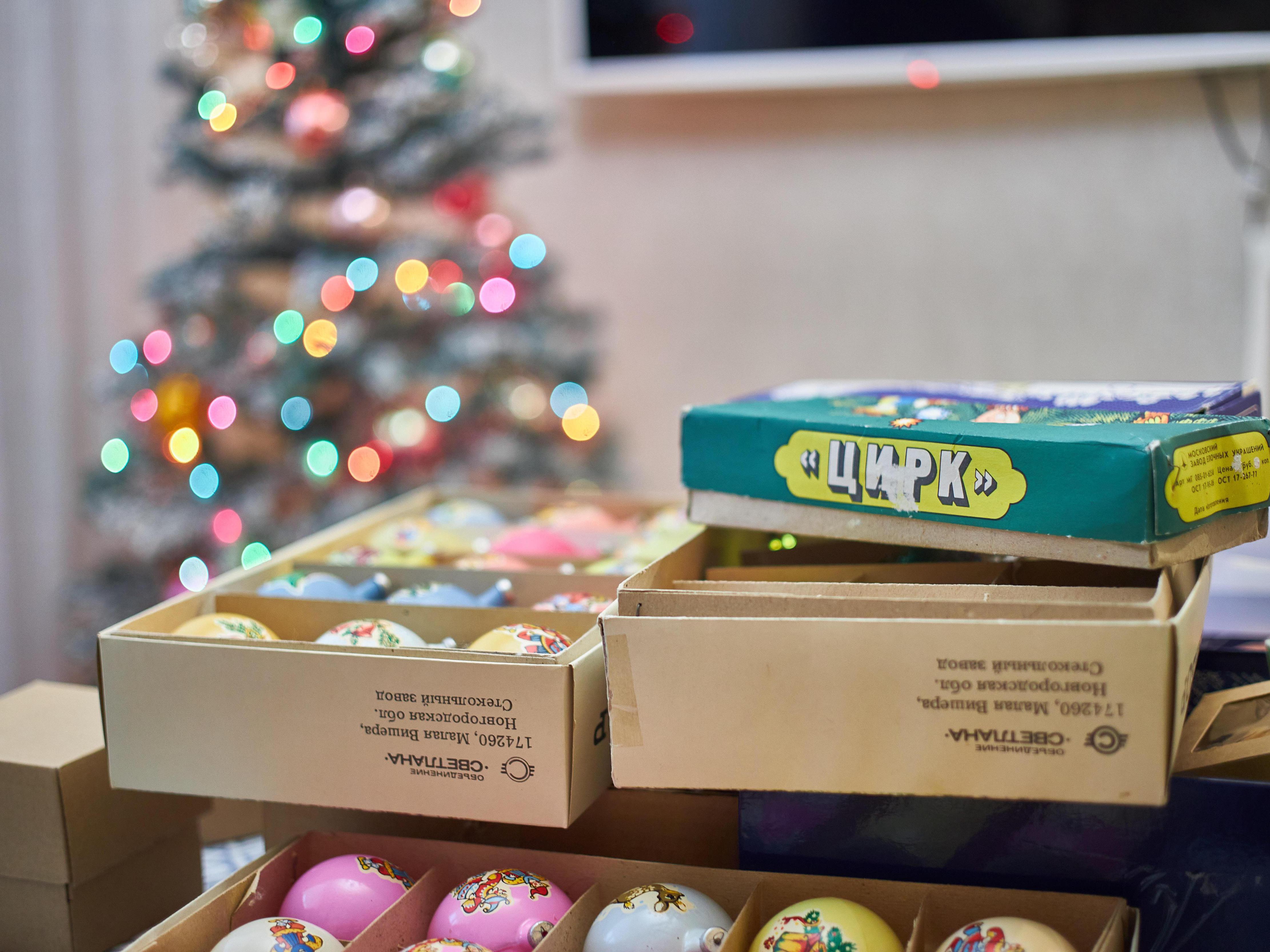
— There are many, but recently one set captivated me. It«s the «Malaya Vishera» factory in Novgorod. I have three sets of balls from it. There are no names in any sources. And I gave them names myself. For example, one I called «Zodiac Signs». But for some reason, there are 15 balls in the set. And I decided for myself that probably it»s a horoscope, and the rest — just symbols of festivities: a Christmas tree, bells.
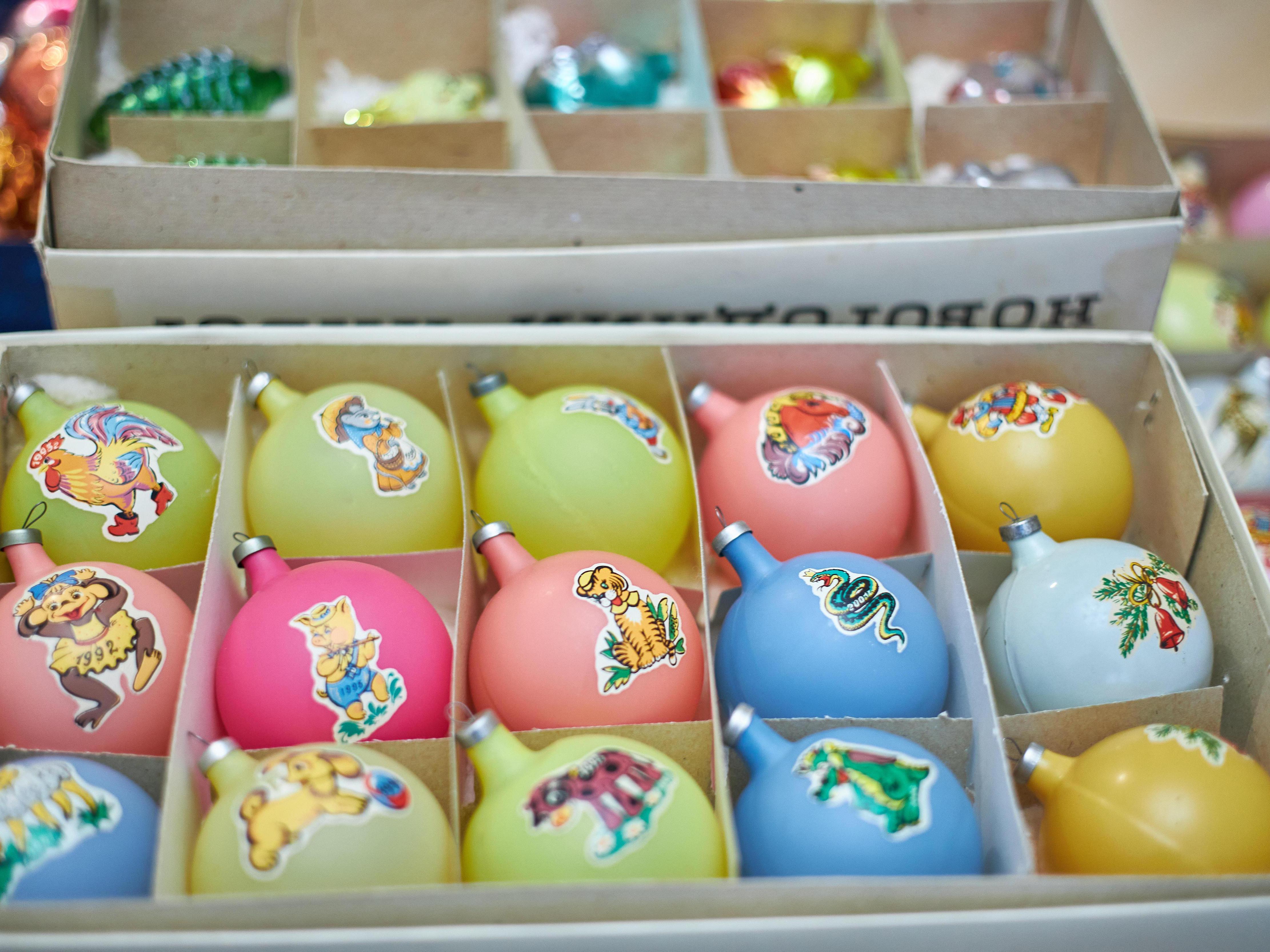
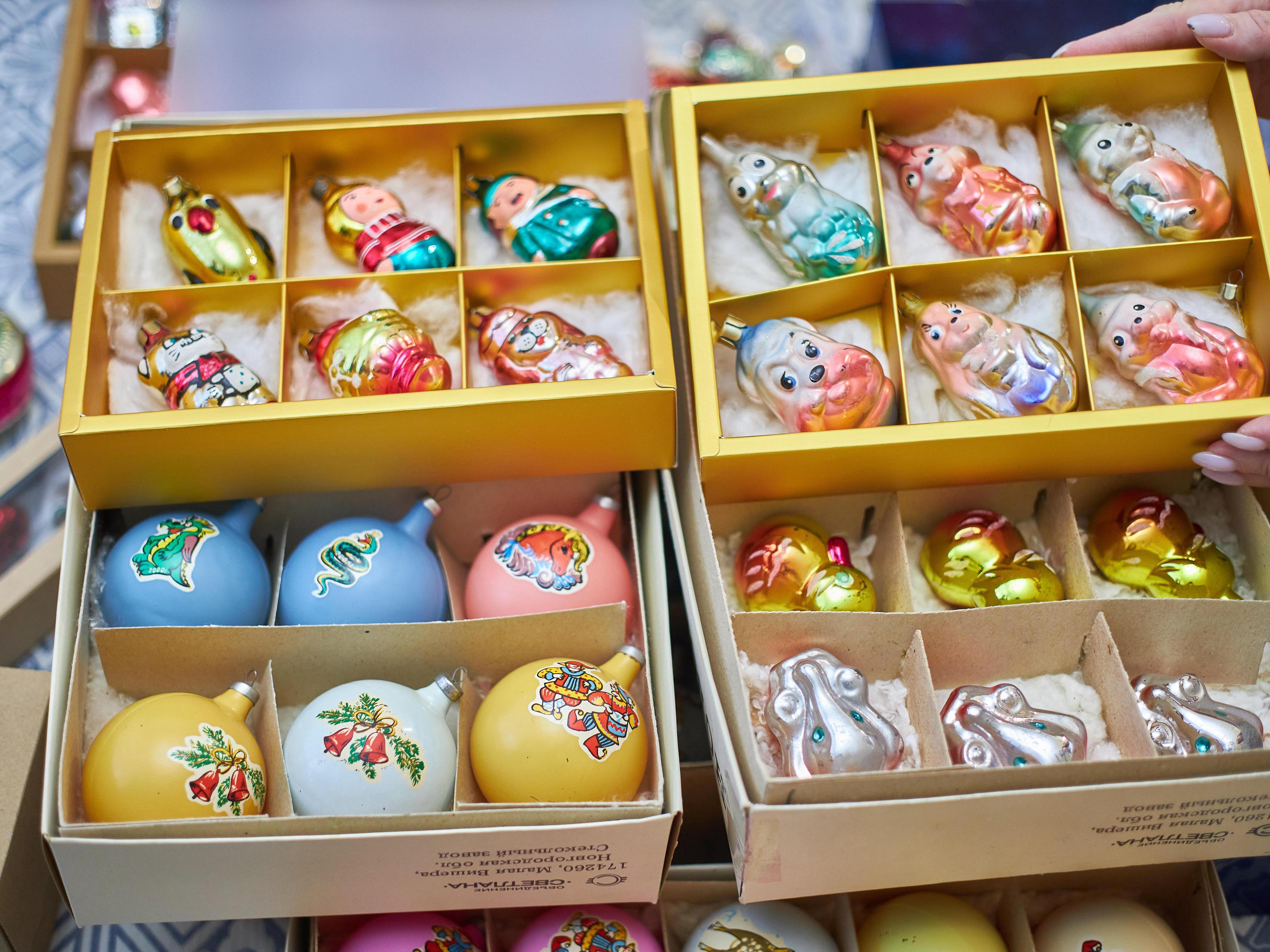
And also my favorite characters from cartoons. That«s childhood. And I collected these sets for a very long time. They»re quite rare. One — «Three from Prostokvashino» from a St. Petersburg factory. And this set «Chip «n» Dale» from the «Biryusinka» factory, which is in Krasnoyarsk, it still operates. There are 5 figures in the set, but I have two Chips, I can«t separate them because they»re so beautiful. So my set contains six figures.
Some figures are very rare. Rare, for example, is this Gayechka (Little Nut), which I also went to Moscow for. It has a crack, but that didn«t scare me, because it»s better to have one like this than none.
But back to the «Three from Prostokvashino» set. The factory in Nizhny Tagil also released a «Three from Prostokvashino» set. But in the two sets from different factories, there are differences, the painting is different. That«s what makes them interesting. One ornament from such a set came to me in a very unusual way. There»s an author of catalogs on Christmas ornaments, Alla Korzhenevskaya. Everyone knows her in our community. So, she knew that I was collecting this set and couldn«t find Galchonok-khvataika (Grabby Little Jackdaw). Well, she was so moved that she gave it to me. I»m very grateful to her.
— Were Christmas ornaments produced in Kuibyshev?
— Recently, through government services, I got access to the reading room of the Samara Regional Archive. I became very sad and upset that I know about many factories, I have ornaments from Krasnoyarsk, Nizhny Tagil, Astrakhan, Voronezh in my collection, but I know so little about Samara. And no one knows about it at all.
I started asking collectors again, and I got some information. During the war, from April 1, 1943, in our Kuibyshev, there was a factory for making Christmas ornaments. Then it was called «Artel named after M. Raskova», located on Frunze Street, 94. By 1950, this factory expanded, they started producing children«s toys, rubber balls.
And now I somehow think that the talking head that my dad told about in childhood was produced exactly in Kuibyshev, because my parents never went anywhere, we lived in Buguruslan (in the Orenburg Region), which is 200 kilometers from Kuibyshev, and I think that ornaments from Kuibyshev were supplied to Buguruslan too. But no one in our community knows for sure.
— The community of Soviet Christmas ornament lovers — how big is it?
— The community is big, there are many lovers. But, you know, there are few appreciators, because some join the community thinking that they«ll start selling ornaments, reselling, and get rich. I»m from the community that wants to collect collections, I don«t make this my main income. I have a job.
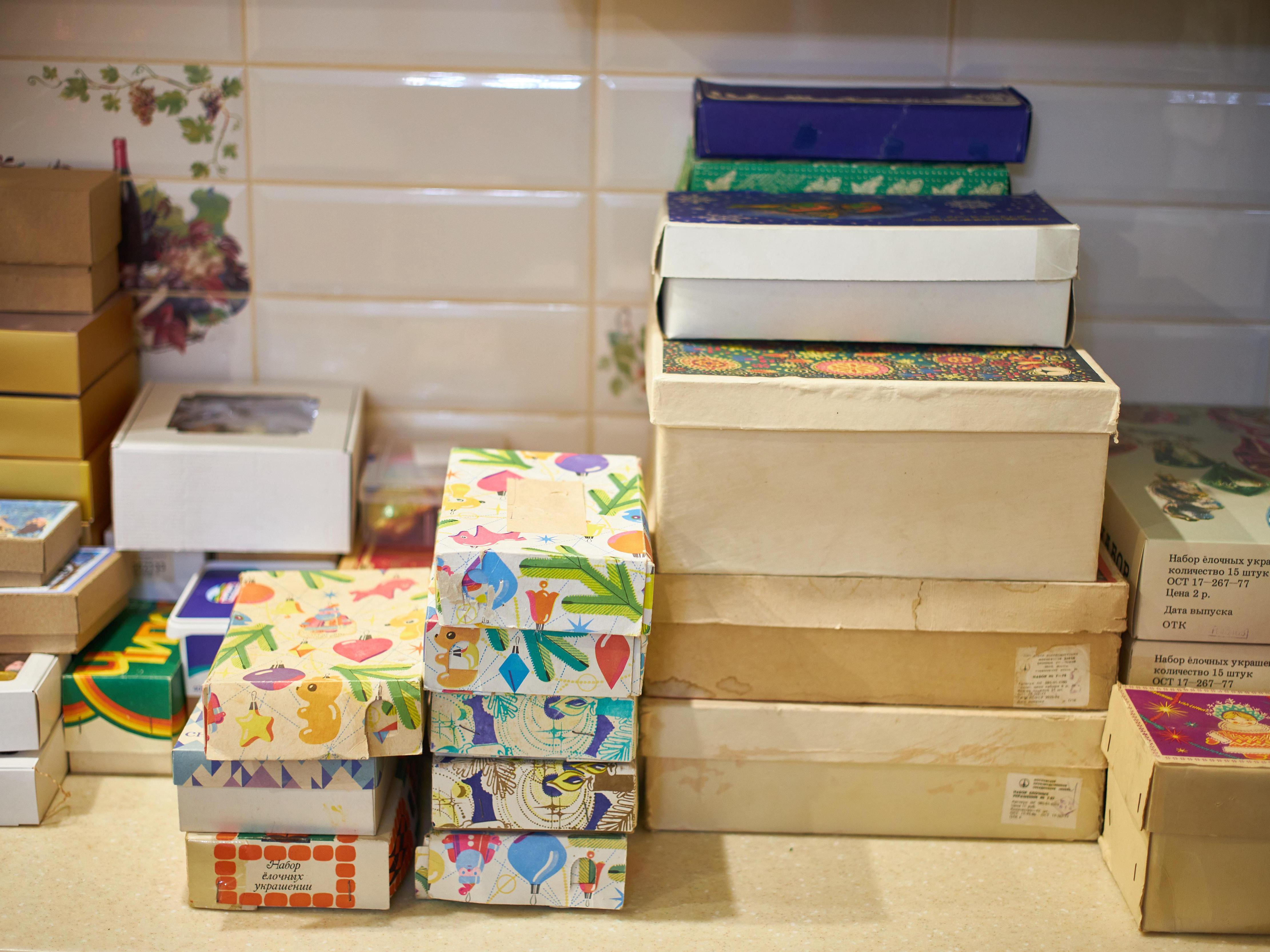
«I want to bring people kindness and the atmosphere of holiday»
— Where do you work and how do you combine work and hobby?
— I work on weekdays from 8 a.m. to 5 p.m. at one of Samara«s enterprises, heading the occupational safety and ecology department. And when I have free time after work, I rush home and immerse myself in my ornaments. But this isn»t my only hobby, I attend a figure skating club. And I catastrophically lack time for everything.
— Before the interview, you said that in your collection, ornaments are mostly unrestored. Where do the ornaments you restore go?
— Restored ornaments stay at home for now. Some I sell, but without inflating prices. I honestly tell that it«s an ornament with damage. And I immediately write that it»s not for a collector, but for the soul. I try to make it good, so that this ornament brings joy.
For example, I have a Kremlin ornament bud that I restored. It was completely peeling, the glass was all black, I washed it, applied internal amalgam, fortunately, I master this technique. And the bud transformed. So the ornament remains in my collection.
— Have you exhibited your collection anywhere — in museums or exhibition centers?
— I say, this is just a hobby. And it«s hard to find someone, organize, when the year ends, it»s reporting time... And I don«t know if anyone needs it. Recently, I went to a school to tell seventh graders about Soviet-era Christmas ornaments — I hit a «wall», only two girls from the whole class came up to me afterward, took photos of the ornaments, asked questions... Ideally, of course, I»d like my own museum.
— How do you imagine your museum?
— I don«t know yet which path to take. In any case, ornaments like I have now haven»t been seen in our periphery. Because such specimens remained in Moscow, in Leningrad. And I«d like to convey this, show it. I, of course, would be happy if there was an offer, say, to organize some fund, exhibition, space where people would come and look.
Maybe I could conduct master classes. I have a sufficient number of ornaments that don«t represent great value to a collector, but on which we could learn to bring ornaments back to life. And maybe children and parents wouldn»t be so eager to throw out Soviet ornaments, but pass them down from generation to generation — as a heritage of spirit, a heritage of history, family tradition.
— Are there any exhibits that you wouldn«t display in a museum and leave at home for yourself?
— In a museum, I probably would display everything, if it still remains mine and it will be under some glass and security. Why not share for some period so people can see? I think it will motivate people to read works, watch fairy tales, return to kindness. In general, I want to bring people kindness and the atmosphere of holiday.
— I can«t help but ask. How do you feel about modern ornaments?
— You know, I feel neutral about them. To each their own, as they say, but I can say that these ornaments don«t bring me much wow-delight because they look stamped. After all, it»s not glass, but fiberglass. And the paints are somehow lifeless, or something.
Yes, many now make them using molds, patterns that were in Soviet times, but for some reason, the spirit of our childhood is closer to me. I think ornaments back then were kinder, more human, faces were original, they conveyed character, mood.
I tried to buy a couple of these modern ornament forms on a marketplace. What can I say? They are so underdeveloped and injury-prone. They crack and just fall apart in half. Soviet ones are closer to me.