‘Our Coal Tomb’: Life Beside Prokopyevsk’s Open-Pit Mine

Prokopyevsk is one of the monotowns in southern Kuzbass, where most locals survive only thanks to work in the coal industry or related sectors. In Soviet times, the population reached almost 300,000 people. People came for shifts, built houses, sent their children to school, and decided to stay.
Now there are just over 170,000 residents, and every year there are fewer. People are trying to escape the fate of spending their lives in a place that is gradually dying and drowning in black dust covering the city from the development of open-pit mines.
The editorial staff of NGS42.RU visited the private sector and low-rise district of Prokopyevsk, where residents every day from their windows see, hear, and feel how coal is mined, blasted, and loaded, while huge mountains of waste rock are piled up.
And from our window…
Wherever you go, in any part of the city, you can sense the stagnant, tarry smell of creosote and burning coal. It feels like you«re standing with your nose pressed against a smoking locomotive pipe. The smell clings to hair and clothes with double force, and locals joke that this is a simple way to recognize a Prokopyevsk resident from afar.
In one of the courtyards, we meet Vil Ravilov—a Prokopyevsk photo artist capturing what may be the final years of his hometown«s life. On the walk, he will be our guide and give us a tour of the areas we»re interested in.
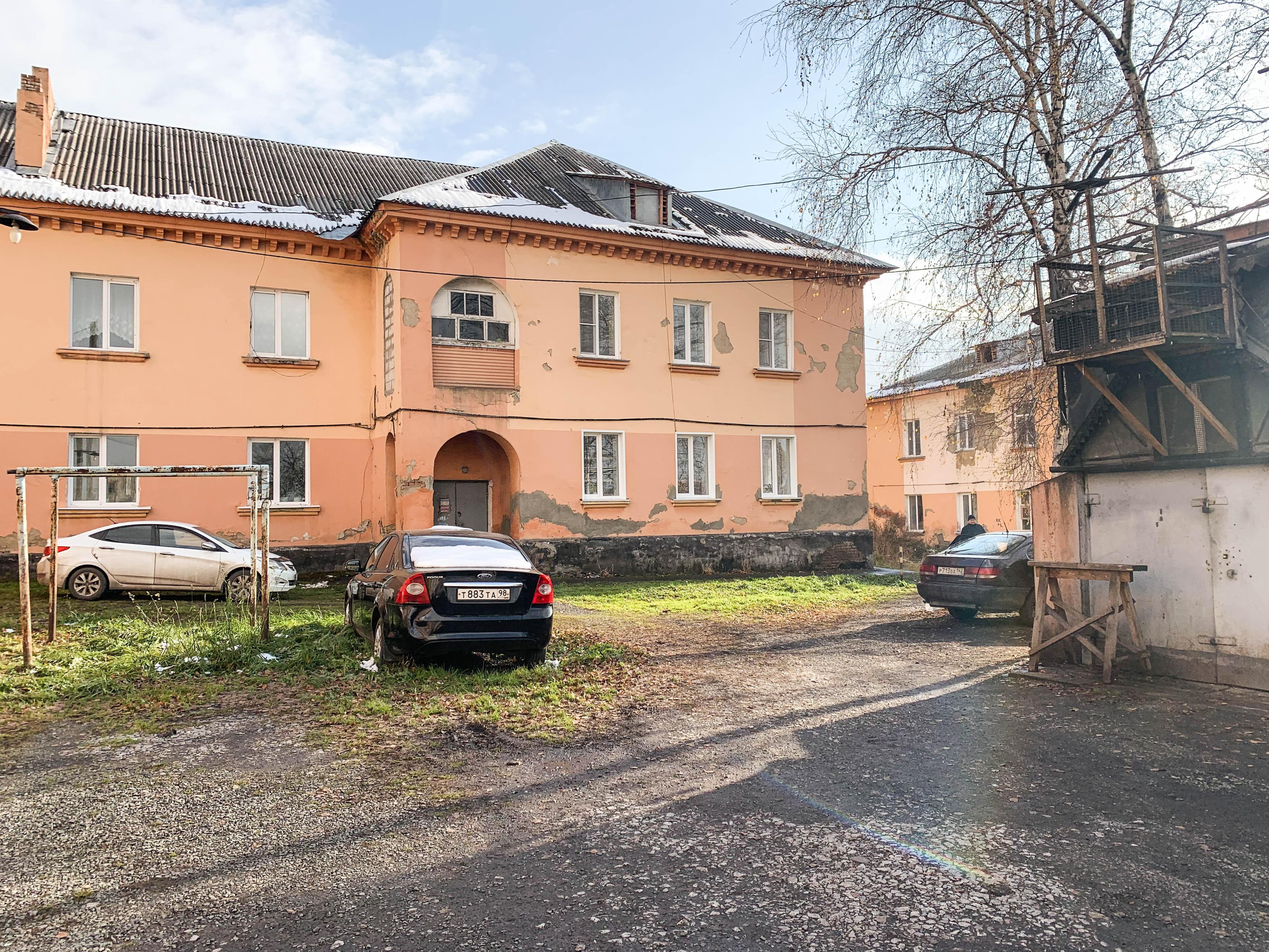
We head to the Maganak district—the closest point of human habitation, located right next to the open-pit mine. If you look at maps, the distance to the former «Krasny Uglekop» mine is less than 500 meters. However, in reality, it looks much closer than it seems: reach out your hand—and it will be covered in dirt from the coal dumps.
By law, the distance from an open-pit mine to residential buildings should be at least a kilometer, but here this rule apparently doesn«t apply. Locals are convinced that because of this, sooner or later they will become seriously ill or even die. Vil says that miners previously tried to buy out nearby housing. Some left their homes, while others refused to move for pennies.
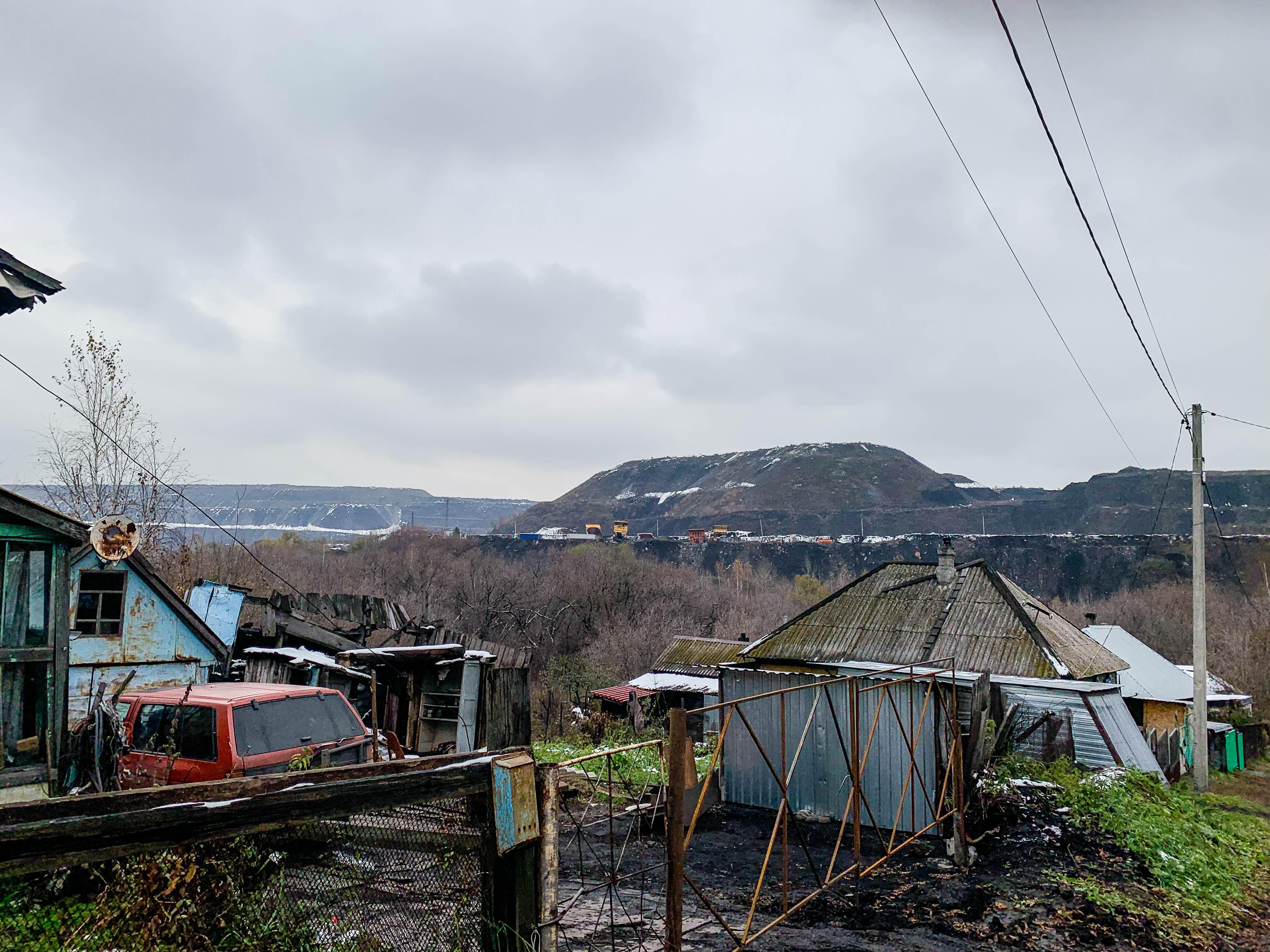
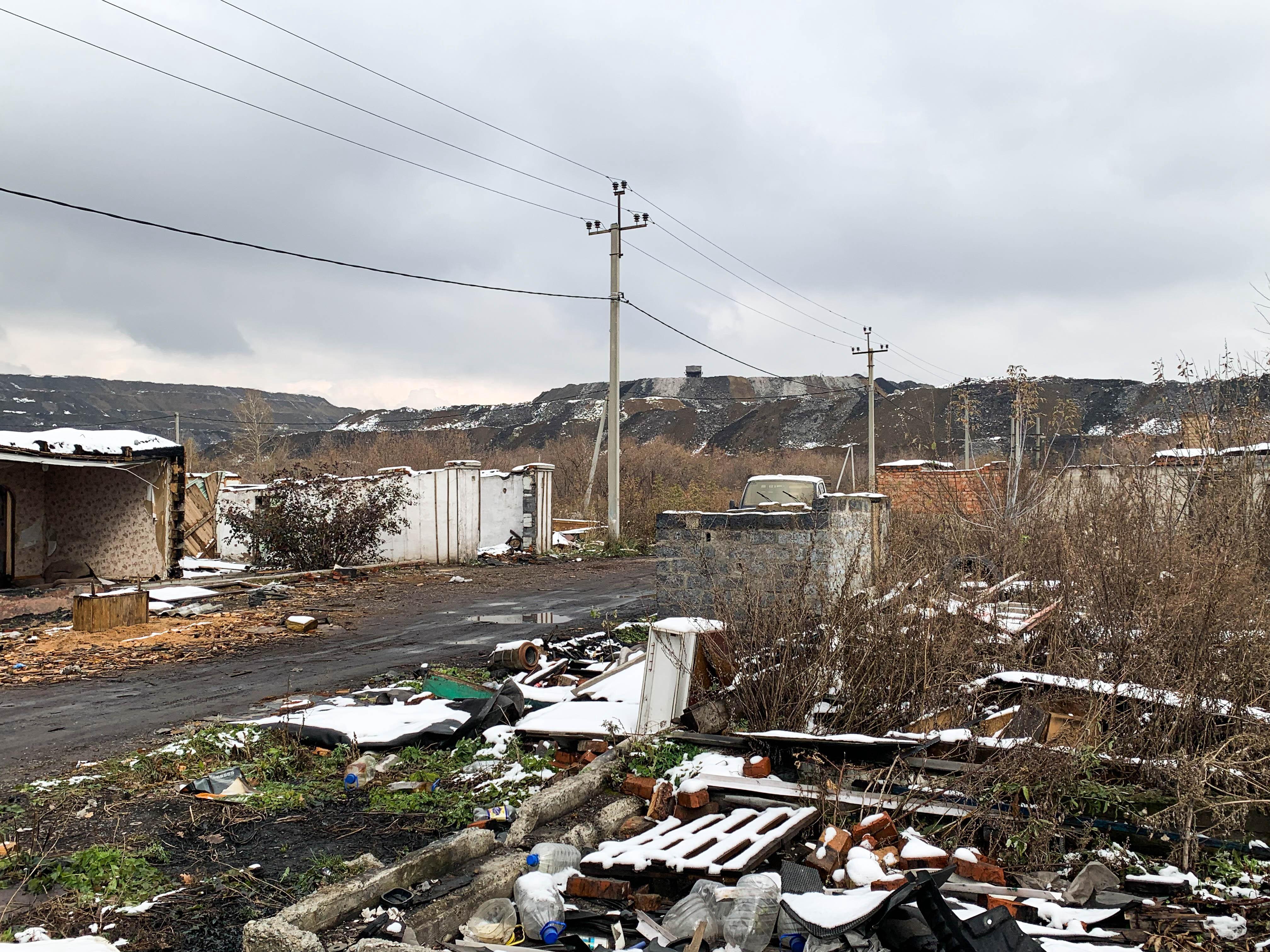
Several houses in Maganak Lane near the quarry have been abandoned. It«s noticeable that the occupants moved out quite a while ago: tall grass overgrowth and leaning walls that are about to collapse under the weight of the roofs attest to this. While we explore the ruins, a grayish car, which was probably white not long ago, drives into one of the inhabited courtyards.
This is Alexei«s car, a man around forty years old—one of those who have remained to coexist with the open-pit mine. The man says that mining has now been »mothballed,« but before that, living was almost impossible, as they blasted the rock powerfully. Now, only somewhere in the distance, you can hear how huge BelAZ trucks continue to unload coal and »beep« while reversing.
When asked about the reasons for his desire to stay here, the man answers obviously—there«s no money for new housing. Even if the »mine« buys out the house, they»ll give pennies for it, with which you could only buy a room in a communal apartment or a flat in a crumbling barracks. And that«s it. Here, he has some kind of household.
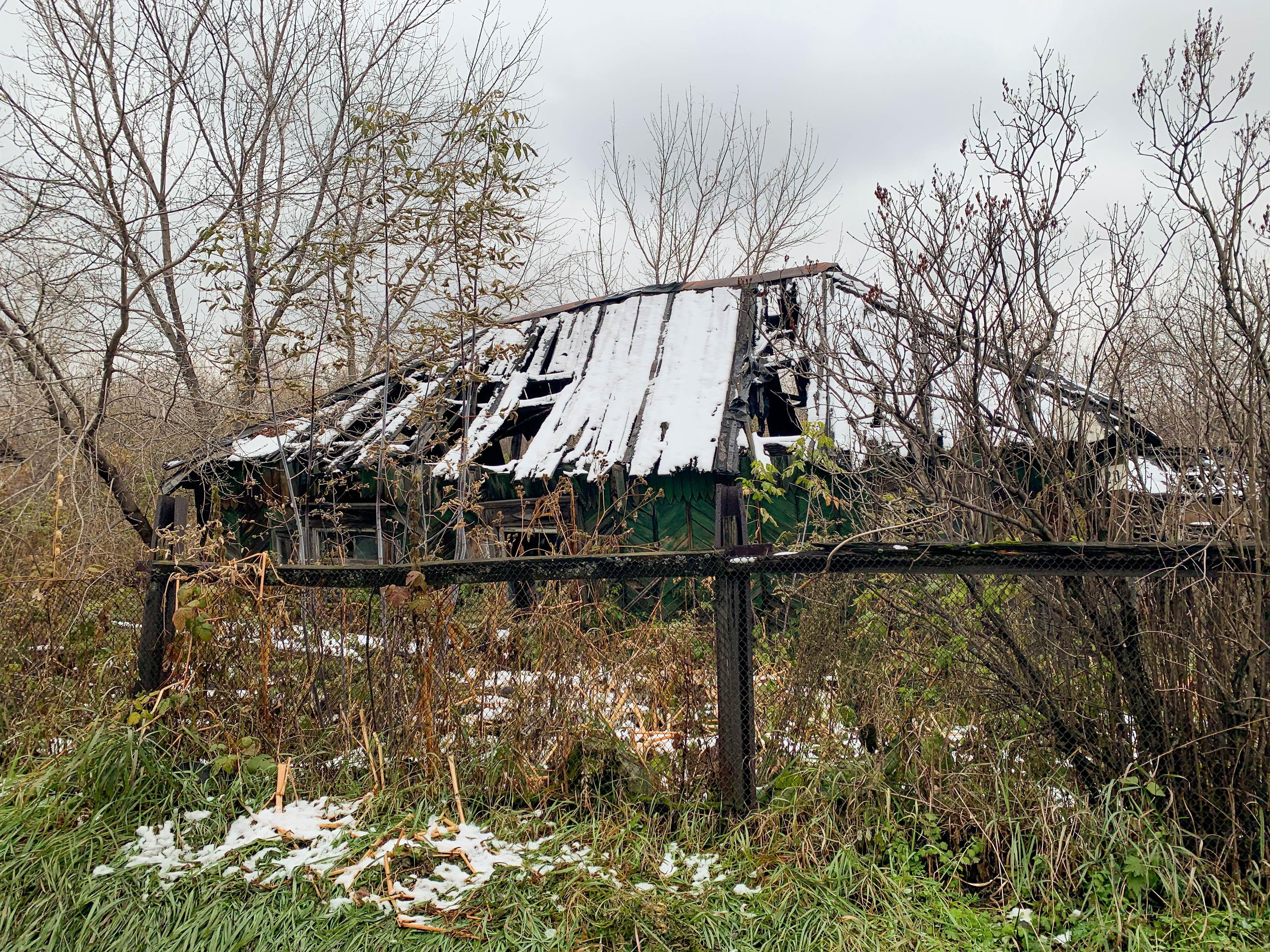
“When they were blasting, foundations cracked left and right among the locals, my cellar cracked completely. Now they«re loading coal remnants there, day and night, it»s impossible to sleep. The worst part is that all this dust and dirt fly into the house, you can«t open the windows, but there»s nothing to breathe anyway. Those who left did well, of course, but they abandoned everything here, I have to constantly cut down these maples, they grow like crazy,” Alexei complains about his former neighbors.
While we were talking, a puppy burst out squealing near the house opposite. Probably due to the noise, a resident came out into the yard, but upon hearing the question of whether the open-pit mines interfere with life, he just waved his hand and went back inside, quietly cursing under his breath.
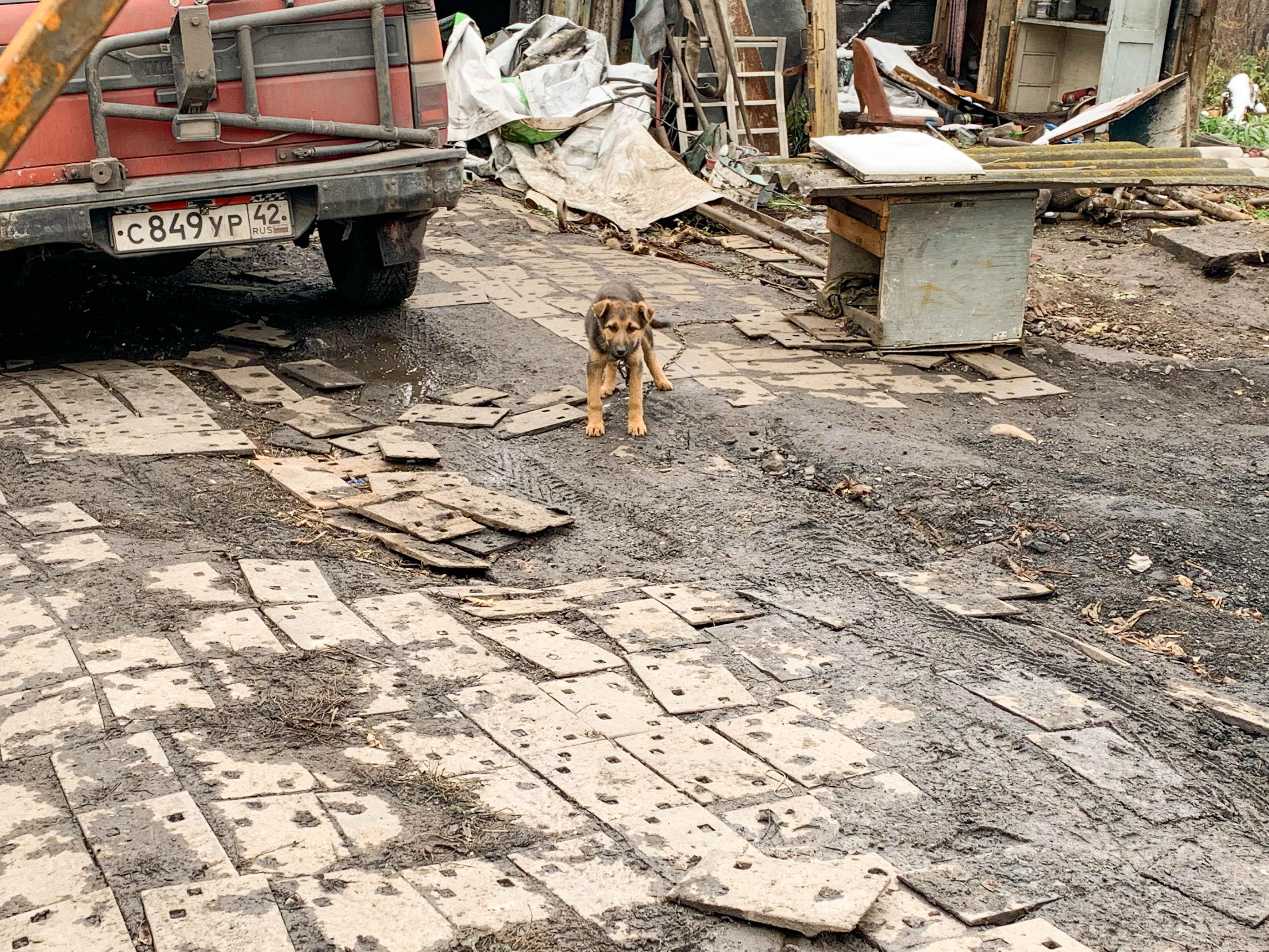
The rest of the alley seems empty and abandoned, but smoking chimney pipes indicate that people are still here. We didn«t want to stare at the empty slopes of the dumps for long, so our stay here ended and we headed to Northern Maganak.
‘Coal’ Dog
But before driving further, my companion suggests approaching the open-pit mine from the other side to get a closer look. We are greeted by a sign with the name of the deposit—‘8 Marta’ (March 8)—and a stray dog the color of coal.
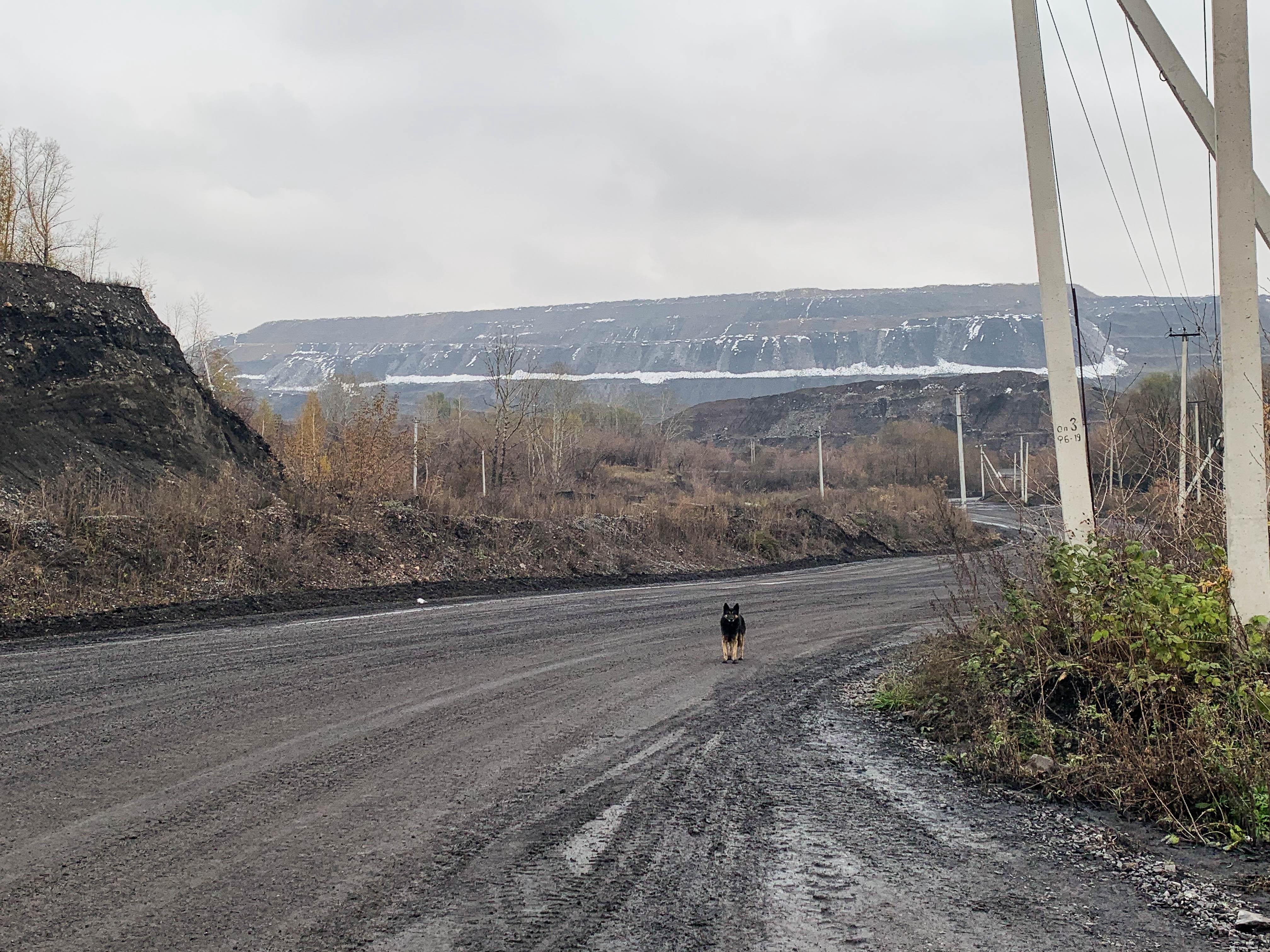
In the distance, black and white mountains of dumps are visible, along with dozens of BelAZ trucks that carry out smoldering rock on their backs and dump it near the access road. On these piles, the rest of the pack of dogs has found shelter, climbing away from the frozen ground and stiff snowdrifts. It seems that all the land in the city is one big open-pit mine.
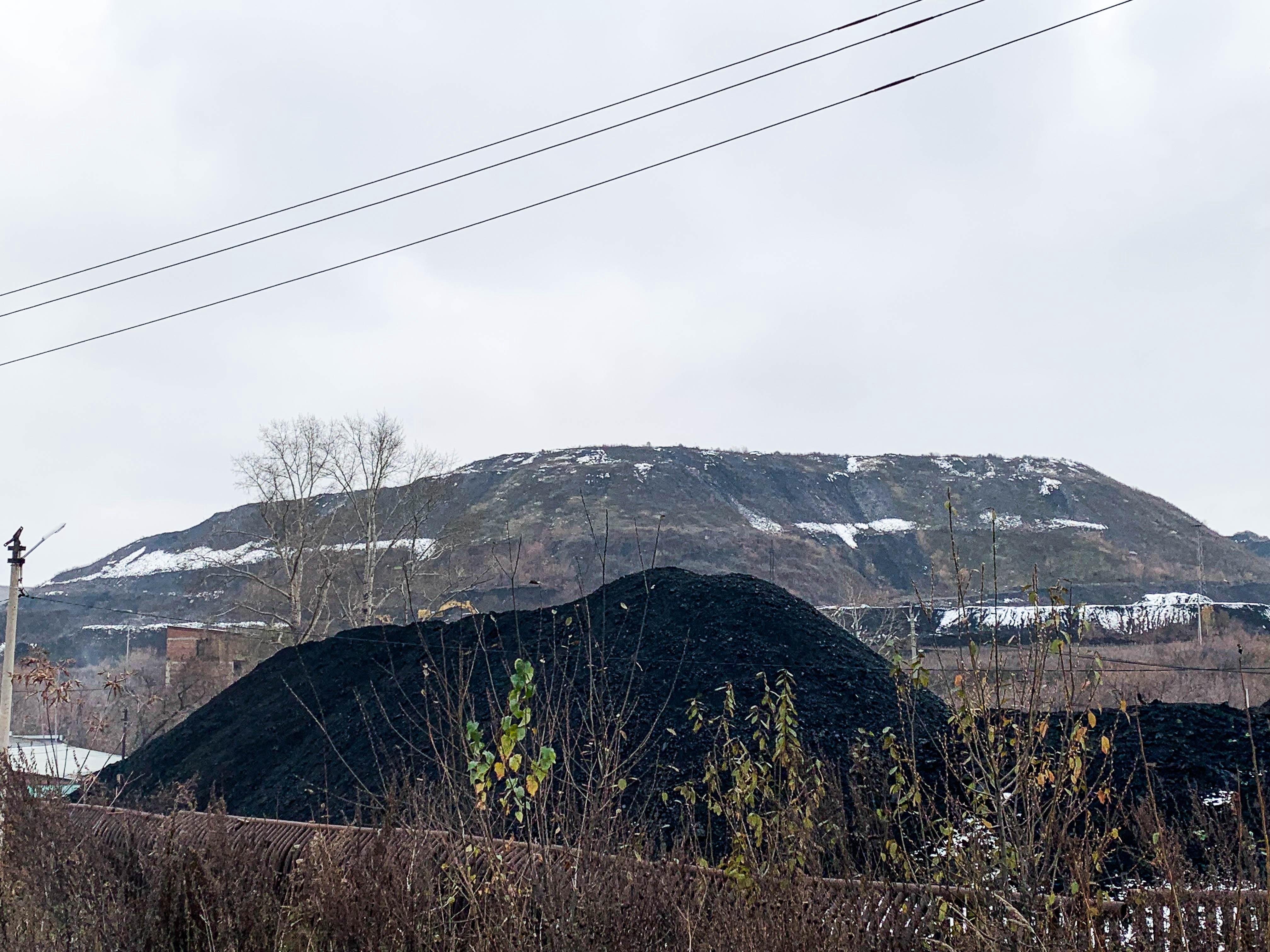
The photographer explains that the transition from underground mine development to open-pit mining began in the city long ago, at the end of the last century. It was presented as a way to avoid deaths in mining, since collapses almost never happen in open-pit mines. But no one said that the method would contribute to the destruction of nearby lands, gradually turning the area into a lifeless ‘lunar landscape.’
Next to the dumps—a depressing sight. A dump that formed on the ruins of abandoned houses. Near one of them, a small truck is being loaded with surviving cinder blocks and bricks. It«s unclear whether these are former owners or resourceful resident thieves who will later put the materials up for sale or use them to improve their own living conditions.
But we’re used to it
We finally reach Northern Maganak; the journey turns out to be much longer than expected. The quality of roads even in the center of Prokopyevsk leaves much to be desired. The arrival point is a bit farther from the open-pit mine, about one and a half kilometers away, and the views are not as ‘picturesque.’
We stop near a future pond; right here, a few meters away, a new church and a walking park are being built.
“Coal miners are trying to atone for their sins,” a passerby answers when asked what construction is happening here.
On the opposite side of the street stand low-rise buildings on their last legs. Peeling and ugly little houses with sparse shops. Two women come out of a popular parcel pickup point.
“From here, you can«t see as well what»s inside the open-pit mine, but when they were blasting, it was like many, many fireworks scattering, only without any beauty. The whole house shakes and breaks, what kind of life is this—our future tomb,” one of them says.
Her friend nudges her in the side, hinting, like, let«s go quickly, but as a farewell, she throws out: “We»re used to all this.” And silence falls on the street. Then again, you can hear how another batch of ‘black gold’ is being unloaded from multi-ton trucks.
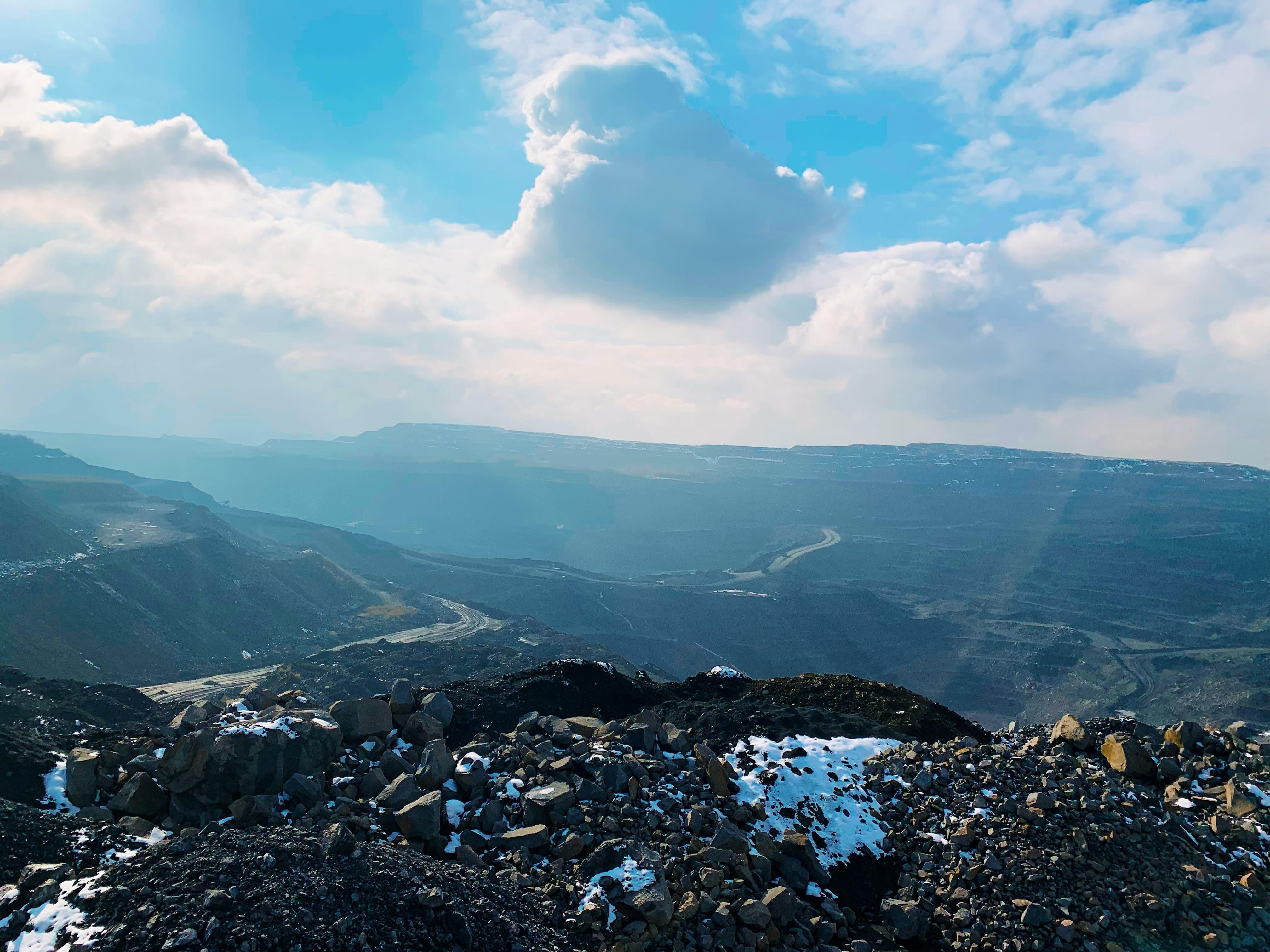
Vil suggests climbing to the very edge of the open-pit mine. It«s easy to do—there are no obstacles except for a small ravine. We reach the highest point; the depth of the cliff is about a hundred meters, if not more. At its bottom, several skyscrapers and a cultural cluster like the one being built in the regional capital could fit simultaneously. But now, down there—there are tons of sealed coal that can be mined for years.
From above, you can see passing multi-ton dump trucks, walking excavators, sinking in thick coal dust and vapors. They seem very tiny, almost toy-like. Breathing becomes harder, maybe from the climb, but more likely, the air near the excavation has become heavier. After admiring the ‘beauties,’ we return to the remnants of Prokopyevsk civilization.
In the end, Vil says that few in the city believe the situation will ever change for the better. And to be honest, it seems there are no such dreamers left at all.
After all, black snow, cancer diseases, air that«s impossible to breathe, houses that are worthless and uninhabitable—these are just a small part of the problems that aren»t usually discussed here. And dreaming about solving them—even less so.
What else to read?
1. “‘This is not a growth point, but a place to live out one«s days’: a frank column by a resident of a dying Kuzbass city”
2. Searching for radiation in Prokopyevsk: checking if readings spike near the coal open-pit mine
3. “A wall collapsed next to a worker”: how Belovo residents live as their homes crumble due to 40-year flooding
4. “There«s no work, young people are leaving”: how villages near Kemerovo, bordering the taiga, live