Nizhny Novgorod Oncologist Reveals Harassment, Prison Visits, and System Flaws
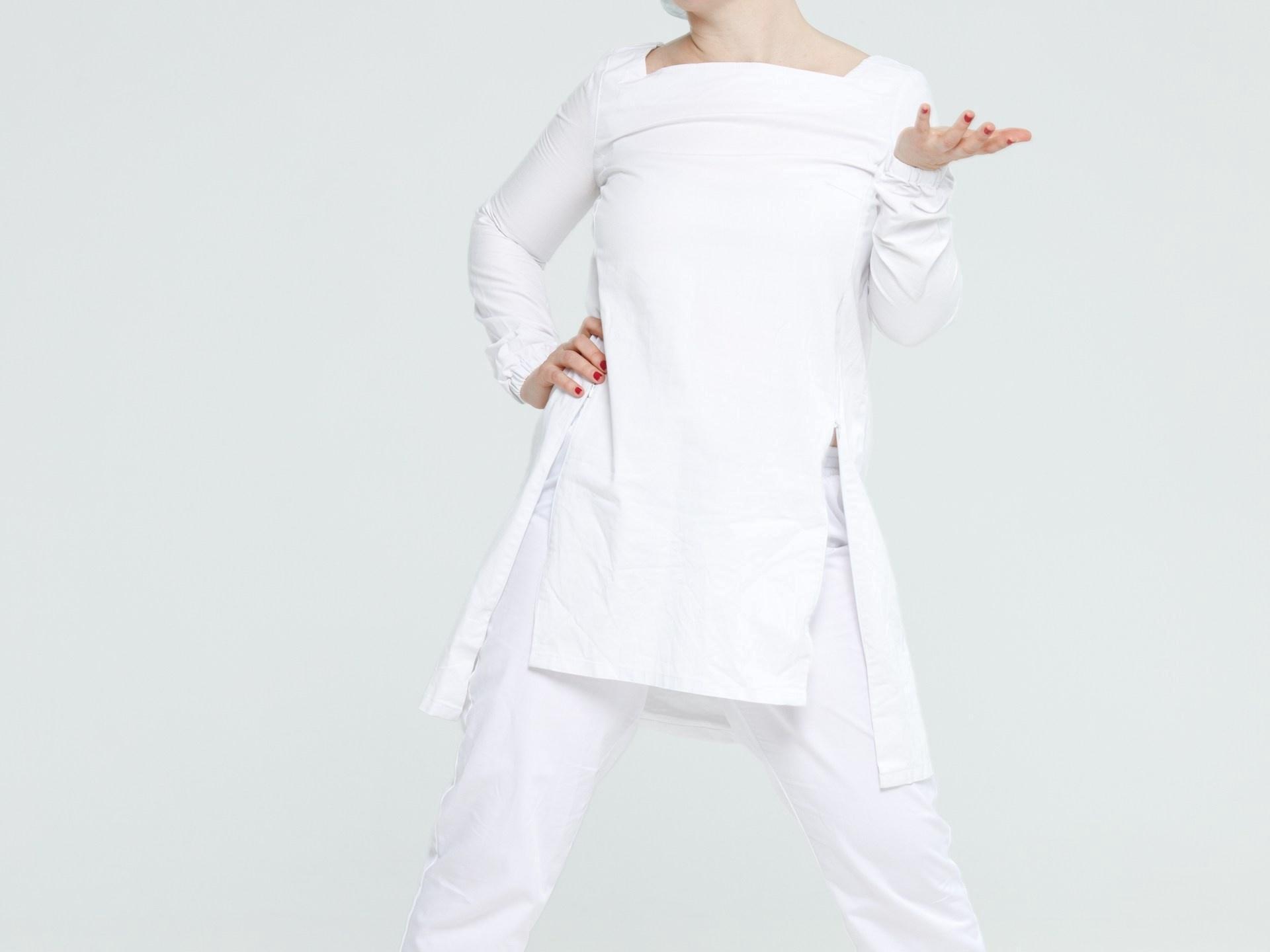

Nizhny Novgorod surgeon, oncologist, and mammologist Natalia Alekseeva was born in the small military settlement of Smolino in the Volodarsky District. The future doctor grew up in a large family. Her father was an artilleryman, her mother was a physicist by education and a communications officer in a military unit, and her grandfather was a military paramedic. Still, going to study in Nizhny Novgorod to become a doctor was a very ambitious task, Natalia recalls.
Today, she is an established specialist who has gone from being a surgeon in a state hospital to an oncologist-mammologist in a private clinic. She is also a mother of three children. In a conversation with NN.RU, Natalia shared what it really means to be a woman doctor, why she visits patients in prison, and when she felt hopelessness. All this and more in our interview.
Natalia Alekseeva is an oncologist-mammologist, ultrasound doctor, doctor of physical and rehabilitation medicine, minimally invasive surgeon, and breastfeeding specialist. She has been in the profession for 15 years. She now specializes in treating breast cancer, although she started her medical journey as a surgeon. She even wrote a popular science book on breast cancer treatment titled «PRO Breast: Revelations of a Mammologist». The Nizhny Novgorod native also heads the surgical department and leads the mammology center «MAMMOMED».
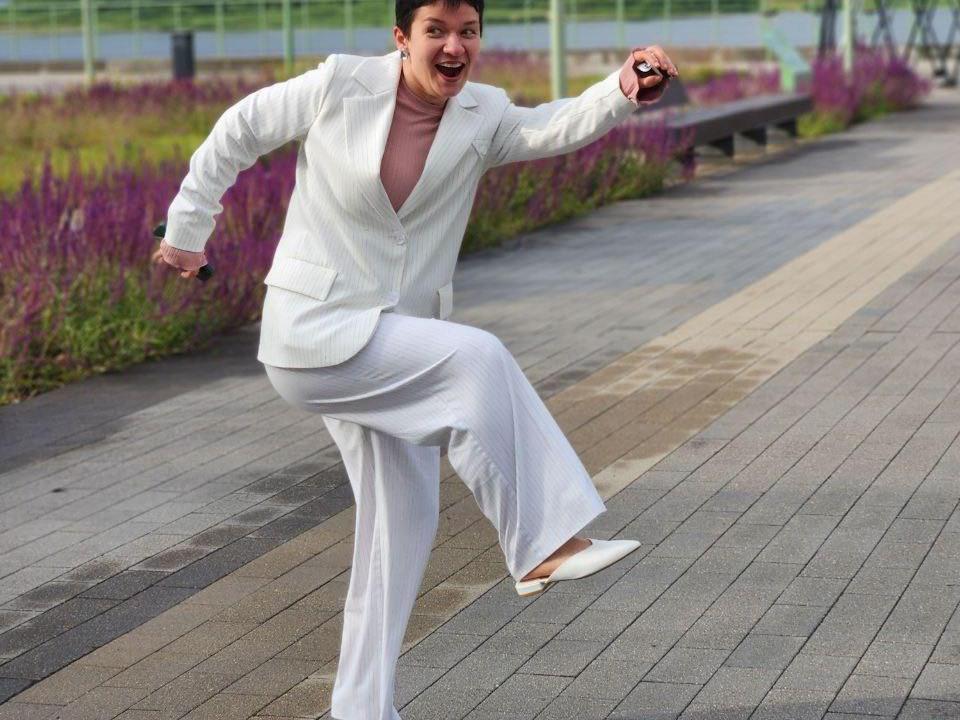
— Natalia, you grew up in a large family in a small military settlement. Tell us, what was it like?
— Imagine a small town where everyone knows each other. And they know everything about each other. Or even make things up. We lived as if in a swarm, where it was very hard to be. For the 90s, a large family is madness. And I also have an older brother with Down syndrome. At that time, disabled people rarely lived with families; they were often sent to boarding schools. But my parents didn«t do that. And, of course, it affected me and the whole family.
Moreover, life in a small town always means very low salaries. When I was sent to Nizhny Novgorod during my student years, I always had a bunch of bags and jars of food. My mom would run around to neighbors looking to borrow money to send me. It«s very hard to escape this situation because at the very least, you need different salaries.
As a child, I was into music, wrote plays, and even thought about tying my profession to this field. But my mom said: «Do you want to become a music teacher in a kindergarten?» I said I didn«t want to. And then I focused on what I was good at. And in school, that was biology.
— How did you manage to escape and become a doctor?
— My mom listened to the radio in the evenings. Suddenly, she came across an ad for Medical Lyceum No. 28 in Nizhny Novgorod. I already liked both chemistry and biology, but... the paper with the lyceum«s number got lost. Fortunately, it was found a year later. And my mom and I went to the entrance exam.
At first, they said I didn«t get in. So, we had to go to Nizhny to pick up the documents. I insisted on going with my mom because every time leaving the small town for the big city was a holiday. It turned out I had been accepted! They just wrote my last name wrong.
And an amazing time began. Compared to a regular school in a small town where people didn«t really want to study, here it was a completely different environment. We went to the hospital, studied everything. Then I entered medical school. But, to be honest, until my third year, I didn»t really want to be a doctor. However, then surgery started! It became an incredible discovery for me.
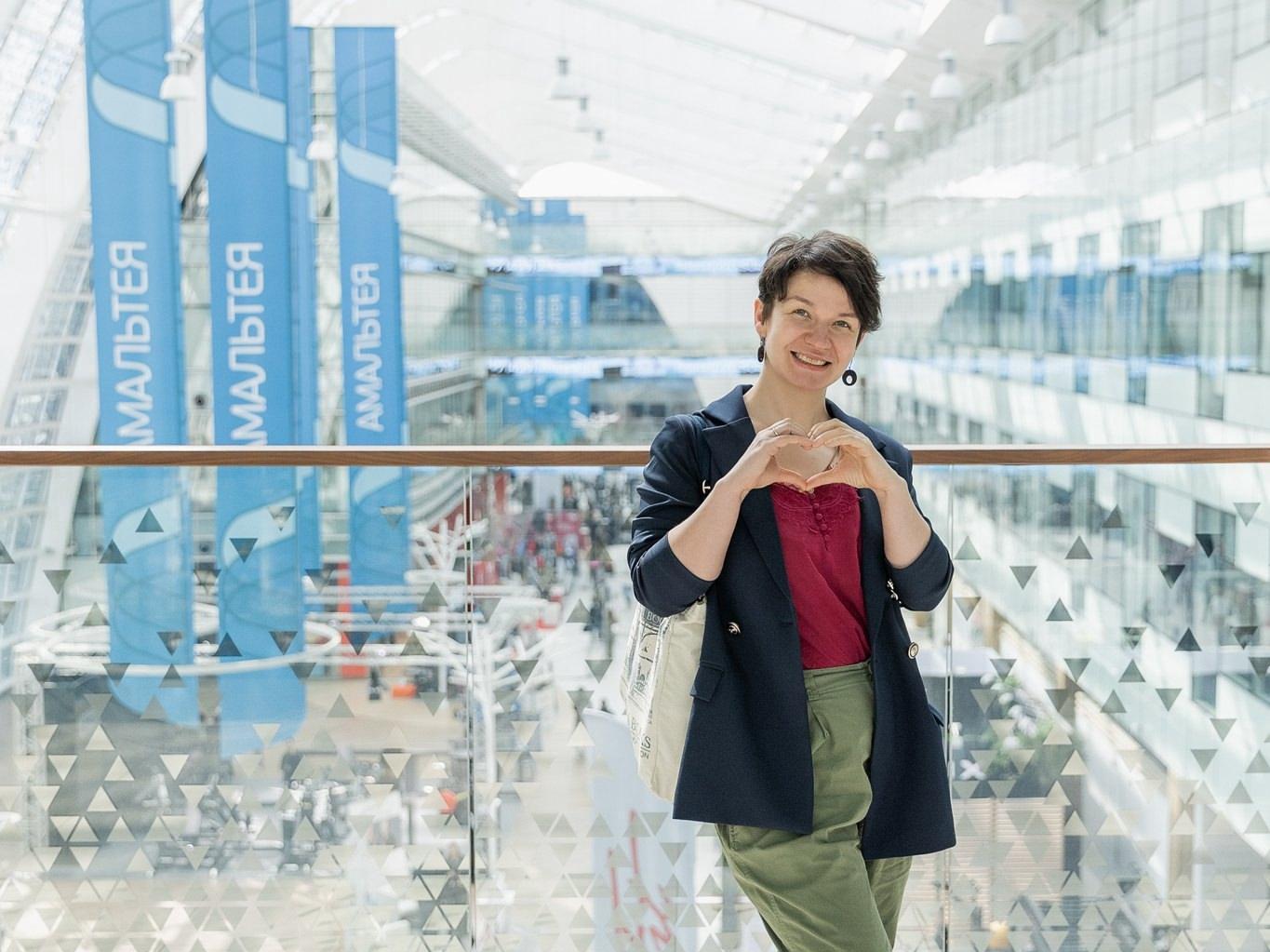
I was constantly in hospitals, on duty. I performed my first surgery in my fourth year — suturing a perforated gastric ulcer. Over time, I retrained as an oncologist.
— What exactly did you like about surgery?
— That I could really cure a person. Perform an operation — the person gets better. Seeing the result of your work is very important for many doctors.
I had an amazing surgery teacher — Andrey Viktorovich Menkov. I remember, at the first meeting in the surgery club, he said that curing a disease is far from everything. Our task is to return the person to society healthy physically, socially, psychologically. So later, I also trained as a rehabilitation specialist to help patients comprehensively. In the end, nothing should prevent a person from being happy. And besides the disease itself and possible complications, many face stigma.
For example, a woman who has had breast cancer might not talk about it at work because she fears dismissal. Or she might not even tell her partner because she«s scared of losing her family.
Conversely, I had an amazing, young, beautiful patient who was undergoing rehabilitation. She really liked one exercise machine for physical therapy that helped develop her arm well. And she said that her husband specially made one at home for her. I think that«s wonderful!
Unfortunately, husbands often distance themselves instead. They think: «She»s terminally ill, and I need to move on.« But breast cancer is not a death sentence. It»s treatable.
Let me give another example of a patient who overcame the disease. I asked her what the treatment period meant to her. The patient said it was an amazing time when she, a mother of many children, started taking care of herself instead of constantly rushing somewhere. It«s an incredible metamorphosis.
— Can you tell us about unusual clinical cases you encountered while working as a surgeon?
— There was a case in cold winter when a patient frostbit his scrotum. I asked: «How?!» He said: «You see, I was in the garage, we were drinking, but I was lightly dressed. To avoid freezing everything, I decided to pour antifreeze on it.» That«s how the person got frostbite.
— How much harder is it for women to get into surgery? And why are there fewer women: is it because family usually takes up a lot of time?
— When I got into surgery, I had no other concerns. Then family and children came later. Women start prioritizing their lives.
Surgery is a separate love that you need to dedicate your whole life to. It«s very hard to split yourself. It»s hard work, standing for hours and nights at the operating table.
I remember removing fingers from an HIV-infected patient that had, you could say, dried up. Such patients can sometimes be aggressive when they start coming to after anesthesia. So during one of the operations, when I was already pregnant, I was hit in the stomach.
On the other hand, in surgery — and I encountered this — there is disregard for women. «Oh, she»s a woman, what can you expect?« — people might say. It»s mostly a male community.
And I even had to deal with harassment. I had to flee from one hospital because of it, even though I wanted to do my postgraduate studies there.
It exists in our profession, but for some reason, no one talks about it. When I encountered harassment, it scared me. I didn«t tell anyone because I was ashamed. I thought I had provoked the situation. And now I understand that»s not the case. But it took me 10 years to realize that. Unfortunately, young girls might be in this state right now.
— Why did you decide to retrain as an oncologist?
— At that time, I was working at Hospital No. 33. The deputy chief doctor Alexey Ivanovich Aristov called me and said there would soon be layoffs. I asked: «Do you want to fire me?» He said: «No, I want to retrain you, we»ll go retrain together.«
I once even almost got expelled from the institute when I was caring for my friend«s mom, who had stage four lung cancer. I had a choice then: where was I more needed: here, with a person who was dying now, or in my studies. That»s how I became an oncologist.
— What is the age of your youngest patient diagnosed with cancer?
— 18 years old, because I only treat adults. But there are cases when people get sick even earlier. Today, every one of my appointments is for an oncological disease. And often, these are complex and rare patients with many comorbidities. In general, girls should start monitoring their breast health from age 13.
— How often do you encounter very difficult cases, like someone coming with the last stage of cancer?
— Very often. I have two categories of oncology patients. Some have pre-cancer or first-stage, just discovered. Others, who for some reason delayed. For example, some might be afraid to go to the doctor and end up with stage four, but that«s also treatable.
— So, now everything is treatable?
— Everything should be treatable. A person with breast cancer is someone who remains capable of work until the end. For the last year, all my patients have been young, beautiful, wonderful women. But sometimes they say they need to finish the gardening season first, then can preserves, and only after that will they go to the mammologist.
— What signs of breast cancer are easy to notice but often missed?
— New asymmetry of the breasts, cysts, swelling, inflammation, discharge. In this matter, it«s key to find a golden mean. If you notice something — go to a doctor. But it»s wrong to go for checkups every three months without reason for «prevention». Just as it«s wrong not to go at all or put it off until the last minute.
— Have you had patients who denied cancer or refused medication treatment?
— Yes, there are many like that. I remember a patient came with a protocol from the oncology dispensary. She had synchronous cancer — two tumors growing simultaneously. And she asked: «Maybe I don»t need this treatment? My neighbor told me about currents, I«ll treat myself with those.»
Another patient came to me with a huge ulcer instead of a breast. And she said she had no metastases because she followed a blogger«s advice to drink a certain amount of vodka.
— Can you persuade such patients?
Do I persuade them? Perhaps not at all. But I try to gradually involve them in the whirlwind of examinations and treatment process: «Let»s go here, let«s do this.» Some need to be scared a bit: «Don»t you want to see your grandchildren grow up?« or »You haven«t planted tomatoes yet, who will do that?» It works. Focus should not be on the cancer, but on what you want to accomplish in this life.
— Have you ever faced professional burnout?
— Of course. It happened when I was still working in a state hospital. Unfortunately, many people even leave medicine out of hopelessness. The system is such that there are cases when many important things happen either very slowly, or for a fee, or they are completely unavailable to the patient. And you feel helpless because you can«t help.
For example, take the same Volodarsky District. When you don«t have a car — it»s a problem. Even to go to a free doctor«s appointment. For instance, I had a premature daughter two months early. In Nizhny, we went to the regional hospital every day to see an ophthalmologist to check her eyes with a neuro-ophthalmologist. It»s important in such cases because a premature baby can go blind.
Once, a woman with premature twins from a remote district came there. She didn«t have a car and could only get there two to three months after giving birth. It was too late, and both her children went blind.
Now I also visit young mothers in prison. I went several times to see breastfeeding women, since I specialize in breastfeeding. And I«m currently writing a scientific article specifically on women who are incarcerated.
Women fill out questionnaires on levels of depression and anxiety. They are all in a very difficult state. But they, like ordinary women, ask typical questions: «Why does it hurt here?», «Where did this formation come from?» Although there is its own specificity. Sometimes women try to deceive and use health issues to get some leniency. On the other hand, these are also women who are waiting for someone, who are raising children here. And even there, being a mother is happiness for them. I saw a nursery in prison. There are just adorable babies. Mothers work and run to their children to feed them.
— How do you manage to keep a positive outlook on the world?
— It«s largely thanks to my amazing patients. They can be scared, but gradually come out of their shell of fear. I»m proud of them for being so brave and overcoming despair.
My grandfather has always been and remains an example for me. And one incident in his life confirms that. He served in Romania in the city of Constanța in the 1950s. Later, he was entrusted with equipment and medicines, and he discovered a huge basin filled with ampoules of morphine. Can you imagine what unaccounted ampoules of morphine mean in an international port! To not let down his colleagues or himself, he destroyed every single ampoule.
I get goosebumps when I remember this story. My grandfather lived to his last days with a clear mind. He was always a very positive person. I try to learn from him.