Dybenko Intersection Ranked Among St. Petersburg's Most Dangerous
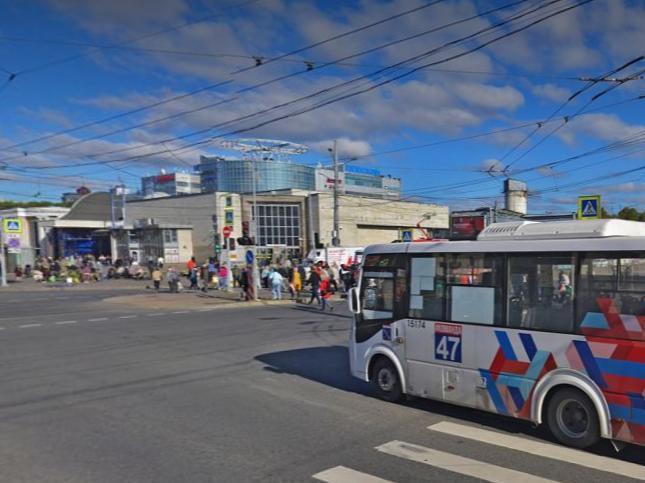

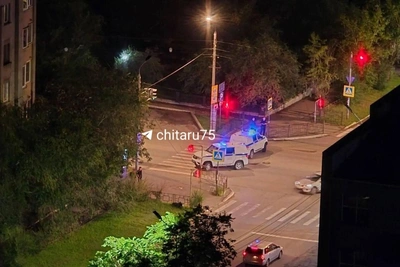
The intersection of Bolshevist Avenue and Dybenko Street in St. Petersburg has been included in a nationwide accident rating, sparking debate about the actual danger level of this section.
How Dangerous is the Dybenko and Bolshevist Intersection?
The rating of the most accident-prone locations where traffic accidents with casualties occurred was compiled in January by the company «SpetsDorProekt,» which works in the field of intelligent transport systems. According to the data, the St. Petersburg intersection of Dybenko and Bolshevist came in sixth place, while the top spots were taken by intersections from Saratov, Omsk, Chelyabinsk, Voronezh, and Ufa.
Over eleven years, 62 traffic accidents were recorded at this intersection, with the number stabilizing in recent years at about eight per year. The compilers of the rating paid special attention to pedestrian safety: during the same period, 21 pedestrian collisions occurred here. «The local administration should pay special attention to ensuring safety for this category of road users,» the document notes.
The St. Petersburg Directorate for the Organization of Road Traffic (DORDD) presents its own statistics, which differ somewhat from those in the rating:
- 2015 — 1 accident, 1 person killed;
- 2016 — 1 accident, 1 person injured;
- 2017 — 2 accidents, 2 people injured;
- 2018 — 15 accidents, 15 people injured;
- 2019 — 7 accidents, 7 people injured;
- 2020 — 7 accidents, 7 people injured;
- 2021 — 6 accidents, 6 people injured;
- 2022 — 6 accidents, 6 people injured;
- 2023 — 7 accidents, 7 people injured;
- 2024 — 5 accidents, 5 people injured;
- 2025 — 7 accidents, 7 people injured.
«Taking into account the accident data at the specified intersection from 2015 to 2025, starting from 2019, the number of traffic accidents at this intersection has not changed year by year and has been 5–7 accidents per year,» the directorate says. «At the same time, over the past 10 years, the traffic load at the intersection has increased significantly (several times) due to active housing construction both in the Nevsky District of St. Petersburg and in the adjacent residential area of Kudrovo in Leningrad Oblast.»
Thus, specialists point out that maintaining a stable number of accidents against a backdrop of multiple increases in traffic can be considered a result of the measures taken.
DORDD also emphasizes that assessing accident rates solely based on the number of accidents without considering accompanying factors is biased. «In the opinion of the directorate»s specialists, assessing the accident rate of a particular section of the street-road network or intersection by the number of traffic accidents without comparing this value with the factors and circumstances that contributed to the generation of the accident event is significantly biased. Under conditions of constantly growing motorization in the area and an increase in the number of pedestrians using the transport interchange hub of the «Dybenko Street» metro station, preventing an increase in the number of accidents is a clear indication of the effectiveness of the measures being carried out, including in road traffic organization,« they say.
What Measures Have Been Taken and What is Planned?
Leading specialist at DORDD Dmitry Popov, who is also an expert in the working group under the Government of the Russian Federation on legislation in the field of road safety and a member of the commission under the governor of St. Petersburg, explained the situation.
According to the industry methodological document «Recommendations for the Recording and Analysis of Traffic Accidents on Russian Federation Highways,» a section of road up to 1000 meters long outside a populated area or 200 meters in a populated area, or an intersection where three or more accidents of one type or five or more accidents regardless of type have occurred within a year, resulting in deaths or injuries, is considered accident-prone.
Dmitry Popov confirmed that the Dybenko and Bolshevist intersection remains on the list of accident concentration locations and will not be removed from it until the results of 2025 are summarized.
According to data, following the commission meeting in March 2025, specific measures were prescribed: changing the phased traffic scheme, prohibiting left turns, and installing a photo-video recording complex for red light violations. These instructions have been fulfilled: traffic and pedestrian flows have been separated, priority has been created for trams, and left-turn and oncoming flows have been separated. A left turn from Bolshevist Avenue when moving from Krilenko Street to Dybenko Street has been prohibited. Informational light sections for drivers have been installed. Since 2023, a photo-video recording complex has been operational, which issued 3,631 violation rulings in 2025.
According to Popov, all possible measures in the field of road traffic organization have been implemented, and further improvement of the situation requires infrastructure changes. «The most fundamental thing is to build the »Kudrovo« metro station,» admits Dmitry Popov. «Because it will immediately take on a huge flow of people who simply won»t go to this intersection. You see, the surge in accidents occurred precisely when the railway crossing from Kudrovo was opened. Any solutions have a limit to their effectiveness. And in this case, we have radically increased the traffic flow and load on the intersection, which structurally has remained the same as it was.«
At the Smolny, it was previously stated that the start of construction of the «Kudrovo» metro station depends on federal co-financing. Vice-Governor Nikolay Linchenko noted that the city will begin designing after resolving property issues regarding land plots. On January 21, the government of Leningrad Oblast reported that back in 2023, the regional budget provided for a 309 million ruble (approximately $3.1 million at current rates) subsidy to St. Petersburg for land acquisition, but the Committee for the Development of Transport Infrastructure (KRTI) refused to conclude an agreement. Now the plots will be purchased by Leningrad Oblast, which also supported the initiative for federal funding. «The government of Leningrad Oblast is ready to transfer the plots for the design of the depot and the station»s ground vestibule, if necessary, at the expense of the oblast budget, to pay compensation for the acquisition of land plots from owners for subsequent transfer to St. Petersburg. Funds for these purposes are allocated in the oblast budget,« the oblast government stated.
How Many Dangerous Intersections Are There in St. Petersburg?
Dmitry Popov said that the road safety commission meets every year in the first quarter. «Not only and not so much to determine the list of accident concentration locations, their characteristics are already contained in the industry methodological document,» he says. «At the meetings, representatives from each district and the road supervision service of the State Traffic Inspectorate make proposals to reduce the number of accidents, and the commission decides how adequate they are to the situation. The simplest: it is proposed to install pedestrian barriers, but upon closer examination, it turns out that all 5 accidents per year on a specific section are vehicle-to-vehicle collisions. And what will barriers change? We take other measures.»
He gave an example of a non-trivial solution: on Sofiya Street between Bela Kun and Slava streets, moving pedestrian barriers from the median to the edge of the roadway eliminated accidents during U-turns, which occurred due to obstructed visibility.
According to the expert, in 2018, the list of accident hotspots numbered over 350 points, and now their number has decreased to 50–60. Based on the results of 2024, 57 addresses were included in the list.
The commission proposes and monitors measures such as changing traffic regimes, installing traffic lights, adjusting their phases, introducing additional sections, and separating flows.
According to the Comprehensive Scheme for the Organization of Road Traffic, developed on the order of the Transport Committee, the number of accident concentration locations in St. Petersburg decreased from 880 in 2019 to 91 in 2023. «89% of collision concentration locations are situated at intersections or near them. In 98% of cases, accident concentration locations are located on main streets of St. Petersburg with high traffic intensity,» the document states.
The Dybenko and Bolshevist intersection is included in the list of recurring accident concentration locations for 2021–2023 along with other addresses:
- Oktyabrskaya Embankment, 122, building 2;
- Obvodny Canal Embankment — Moskovsky Prospect;
- Marshal Blyukher Prospect — Zamshina Street;
- Bolshevist Prospect — Dybenko Street;
- Kollontai Street — Bolshevist Prospect;
- Marshal Blyukher Prospect — Kondratyevsky Prospect;
- Obvodny Canal Embankment — Izmaylovsky Prospect;
- Nevsky Prospect — Ligovsky Prospect;
- Narodnaya Street — Bolshevist Prospect;
- Marshal Blyukher Prospect — Piskarevsky Prospect.
In the area of the «Dybenko Street» metro station, 8 collisions, 7 pedestrian collisions, and 4 passenger falls were recorded during the specified period. «The main measure to increase pedestrian safety, as well as increase throughput at this transport hub, is the installation of grade-separated pedestrian crossings,» the scheme says. «Consequently, with the implementation of this measure, the intersection of Dybenko Street and Bolshevist Prospect is subject to reconstruction.»