Delayed Restoration of Krasnodar's Kosyakin House: Inside and Out Photos

For a long time, the Kosyakin House in Krasnodar was deteriorating and resembled an abandoned building more than an architectural monument. But in 2022, hope emerged for the preservation of this cultural heritage site. The Art Nouveau mansion acquired a new owner after an auction, who was obligated to carry out restoration.
In spring 2024, long-awaited work began at 13 Kondratenko Street. Initially, the restoration was scheduled to be completed in May 2025, then the deadline was shifted to the end of the year, but something went wrong, and the building is still surrounded by scaffolding.
According to a source at 93.RU, the contractor on the site has been changed because the first one failed to handle the work. We requested a comment from the department that should oversee the progress—the State Protection of Cultural Heritage Objects Administration of Krasnodar Krai. When we receive a response, we will publish it, but for now, we invite you to see how the unique mansion looks inside and out.
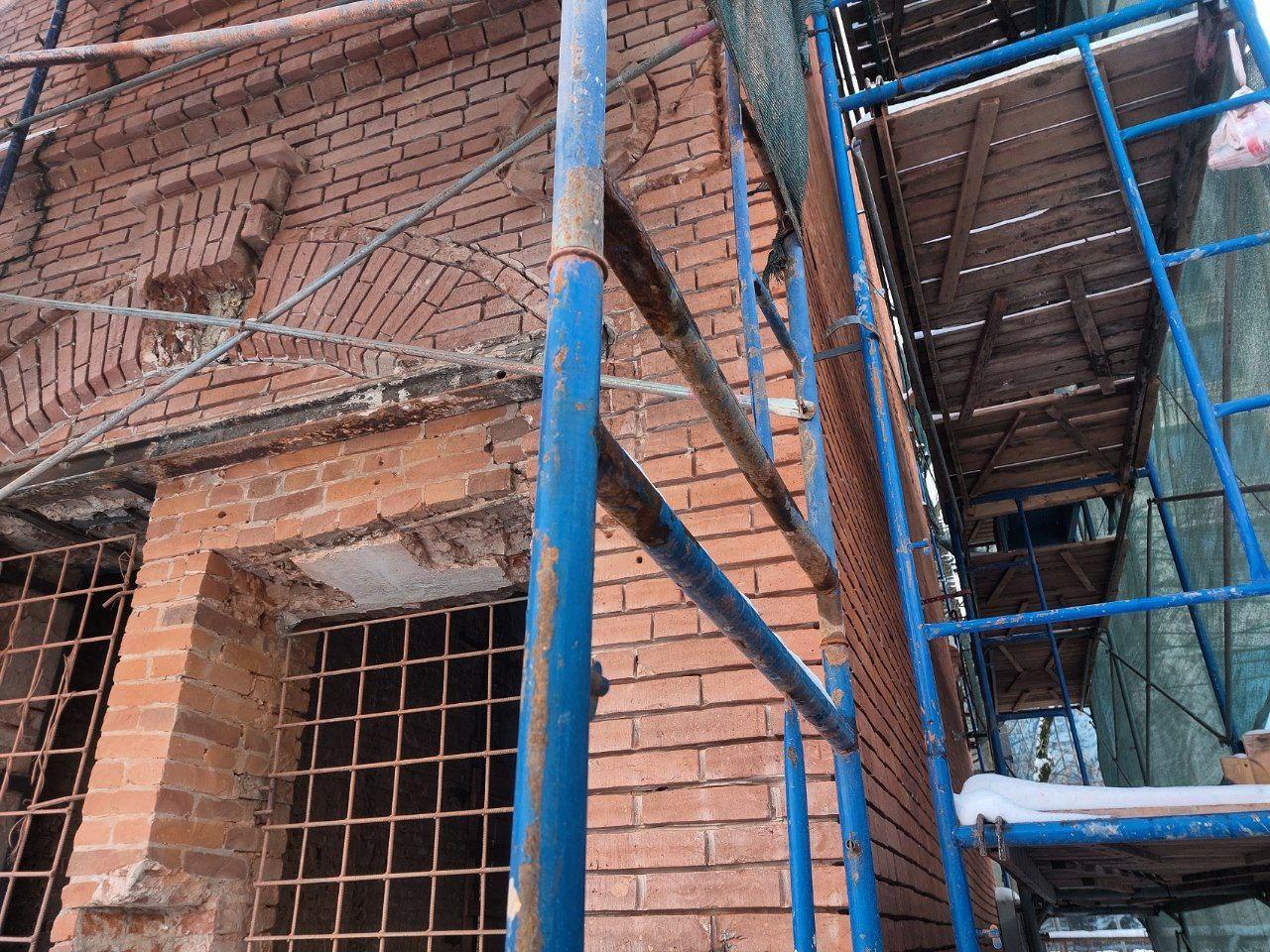
On the end wall, we noticed damage to the brickwork. Back in autumn, scaffolding was up on this side and work was being done.
The facade on the courtyard side has also undergone changes.
Earlier, the authorities of Krasnodar Krai told 93.RU that emergency stabilization work had been carried out in the architectural monument and the building«s structures had been reinforced. According to the plan, the contractor should also restore the brickwork, architectural decor of the facades, recreate lost elements of the bay window, restore the veranda, and the floor made of Metlakh tiles.
We asked historian, member of the Union of Architects of Russia, and expert in conducting state historical-cultural expertise Vitaly Bondar to comment on the current state of the mansion.
“I didn«t see any signs of actual restoration of the masonry in the photos. They removed the remains of the plaster layer, that»s for sure. Perhaps it«s not yet time for restoration. And the losses—partial destruction of bricks above the plinth, falling out of individual stones on the end facade, destruction of individual decorative elements on the main (southern) facade—are obvious, as are later additions to the masonry (including repairs). In restoration, the main thing is preserving the authentic characteristics and elements of the object; additions are only permissible where losses occurred. Everything else is new constructions, not related to the actual heritage, »props«,” Bondar noted in a conversation with 93.RU.
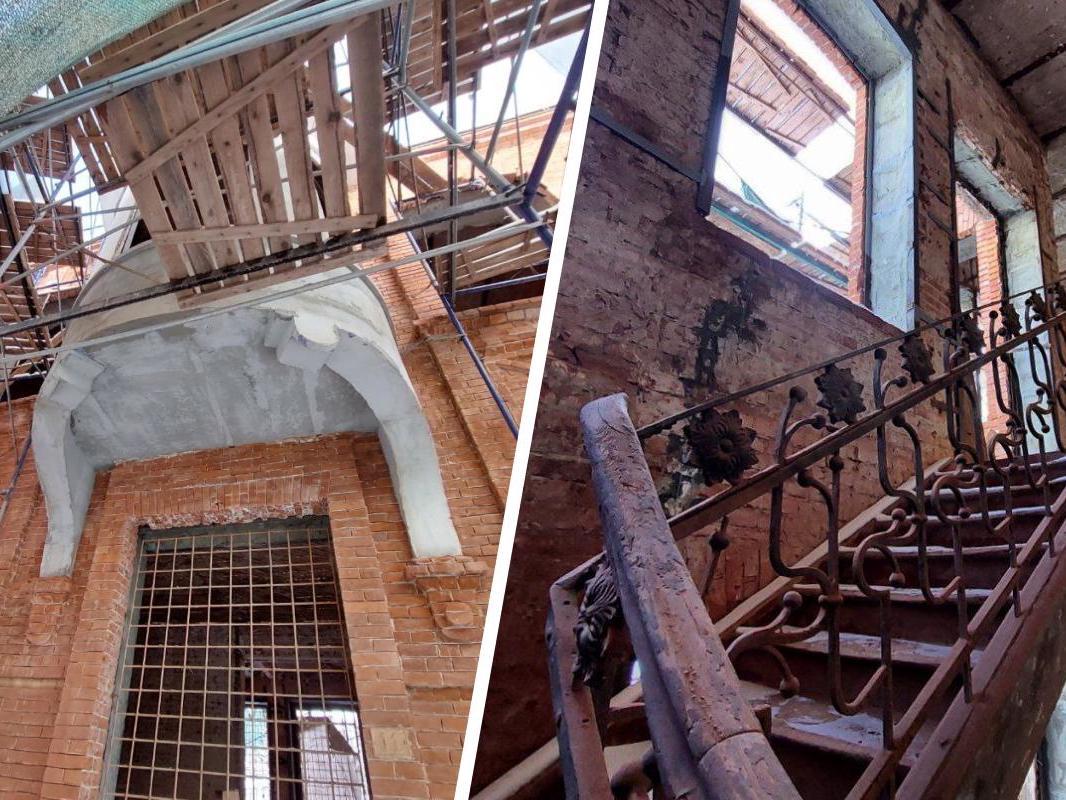
What the architectural monument looked like inside before the start of restoration can be seen in this article. Now, the famous tiles are no longer on the floor—they have been carefully stacked on the first floor, doors have been dismantled, a layer of plaster has been removed from the walls, and it«s visible where structural reinforcement was done. The unique cast-iron railings on the staircase are still in place.
When the work will be completed is still not known for certain.
What was the history of the architectural monument before this?
The Kosyakin House in the Art Nouveau style was built between 1906 and 1910. The architect lived there until his death in 1919. For the next 20 years, his wife lived there with her second family, and then the building was turned into a communal apartment with five units.
Initially, the Kosyakin House stood isolated—on a wasteland surrounded by gardens. But now it is hemmed in by multi-story buildings on all sides.
Before the replanning in 1939, it had a flat roof. Once, guests were received there, tea was drunk, and badminton was played. Later, it was made gable-roofed. At the end of 1987, the mansion was recognized as a monument of urban planning and architecture of local significance.
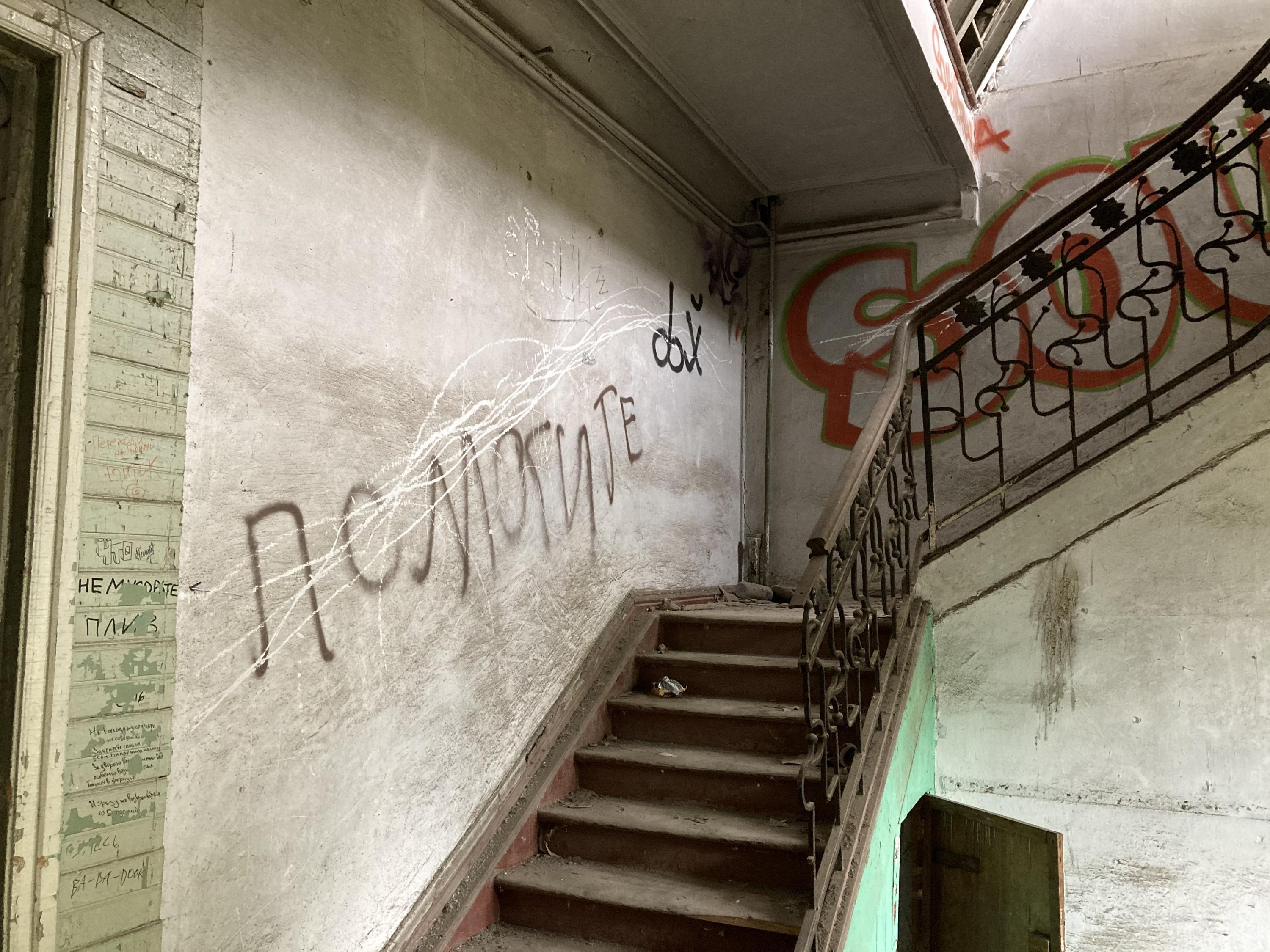
After residents were relocated, the house stood empty and became a refuge for the homeless. The walls were «vandalized» by street artists, windows were broken, and the building itself deteriorated year after year.
In 2008, the architectural monument together with the land was bought by a realtor. Later, he put the property up for sale. From 2014, the owner of the mansion became the company KorInvest LLC. At this time, city historians and the public tried to reach out to the authorities through the media about the need for the building«s reconstruction. Some believed that it was being deliberately rendered unusable to later build a business center here.
The deteriorating cultural heritage site had to be seized from the owner through court. This is the first such precedent in the krai, officials even devised a separate mechanism for this, when negligent owners are deprived of historic objects because they do not take care of them.
In February 2020, the court deprived the owner of rights to the house and determined to put the object up for sale with the condition of mandatory restoration. The new owner in 2022 became Maxim Samardak, who in various years was involved in the construction of residential and non-residential buildings. Samardak bought the building at an auction for 15 million rubles (approximately $166,700 at current rates).
Project documentation and repair-restoration work were initially handled by KubanProektRestavratsiya LLC. The State Protection Administration issued permits for conducting restoration already twice—in April 2024 and in May 2025.