Conflict of Beliefs: Izhorians and the Swedish Cemetery in Novaya Bura
An archaeological study in the Leningrad Region has revealed the history of resistance by the Izhorians, who were forced to bury their dead in a Christian cemetery instead of traditional sacred groves.
Jan 25, 2026 0
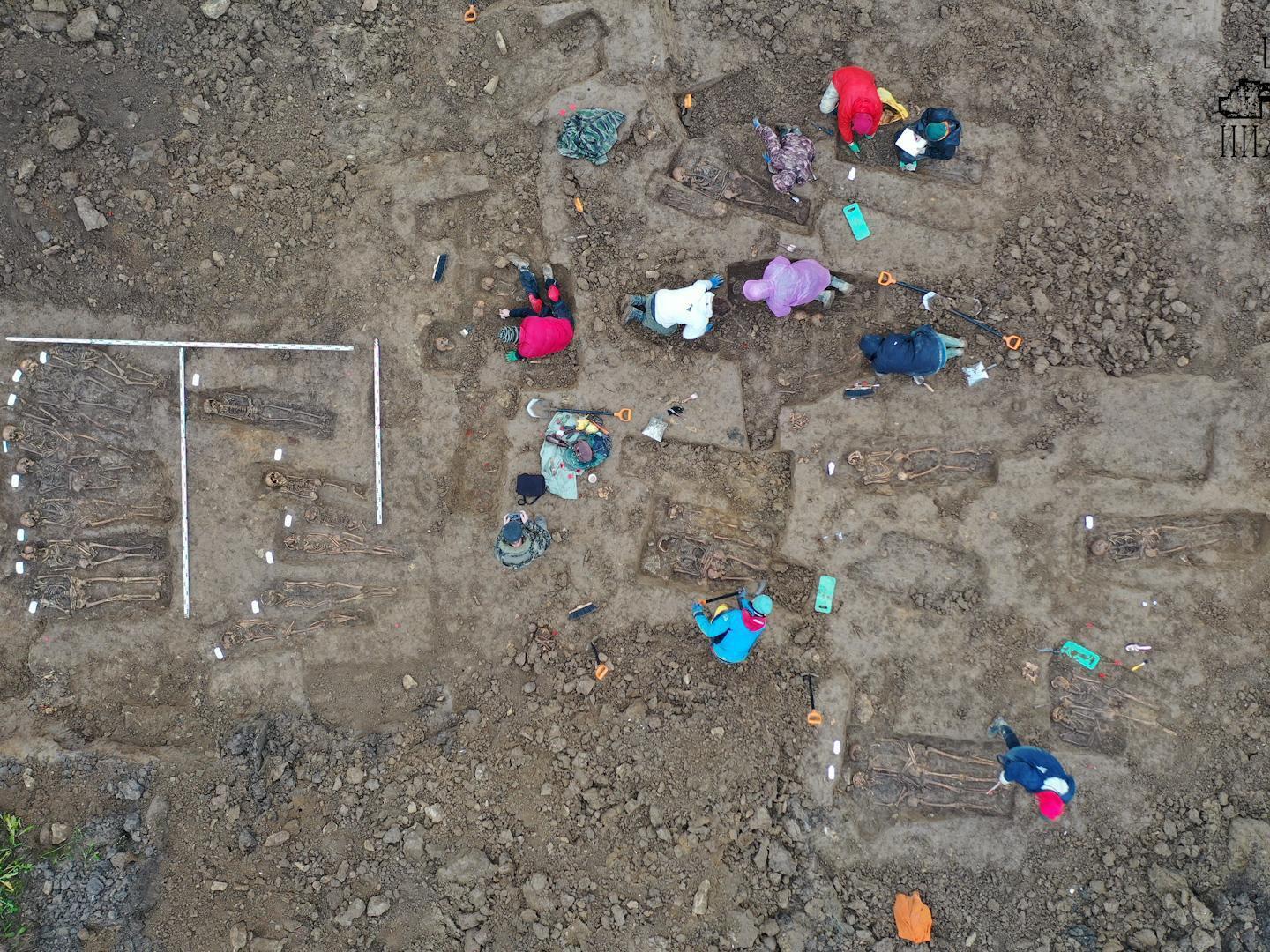

The excavation site in Novaya Bura reveals a 17th-18th century Swedish cemetery with evidence of Izhorian burial practices.
In 2021, bones of several hundred people were found near Koporye in the Lomonosovsky District of the Leningrad Region. Searchers initially thought these were the remains of victims of the Great Patriotic War, but arriving scientists discovered items from the 17th century.
Further excavations confirmed that this is a Swedish ground burial site from the 17th–18th centuries. Coins from that time, elements of burial inventory, and coffin details were found at the site. The object was named «Ground Burial Site Novaya Bura 4» and acquired the status of an archaeological monument.
The study of archives showed that for about a hundred years, from the 1630s to the 1730s, there was a cemetery at a Lutheran church here.
The local population consisted of Izhorians, who formally adopted Orthodoxy but continued to bury their dead in sacred groves — kolomishchas. Ekaterina Kononovich, a researcher at the Center for Rescue Archaeology of the Institute for the History of Material Culture RAS (IIMK RAN), noted that the idea of burial at the church met with resistance. Documents from the Swedish church preserved records of «riots, disobedience» and residents visiting «pagan places».
Archaeologists studied 370 burials. Most followed the Christian rite:
- the deceased lay with their heads to the west,
- coins were found in the coffins, especially with women and children,
- Scottish brooches of the «luckenbut» type were sometimes found.
However, some burials had clear Izhorian features: orientation with the head to the north and the presence of an iron knife.
«We have come to the conclusion that not only Lutherans were buried in this cemetery, but there is also a certain number of local residents from those who ultimately yielded, apparently, and buried relatives near the church, but buried them according to their own rites nonetheless,» Ekaterina Kononovich was quoted in a publication in the «Arkheokod» community on January 21.
Read more