Blacksmith from Perm Creates International Forged Artworks
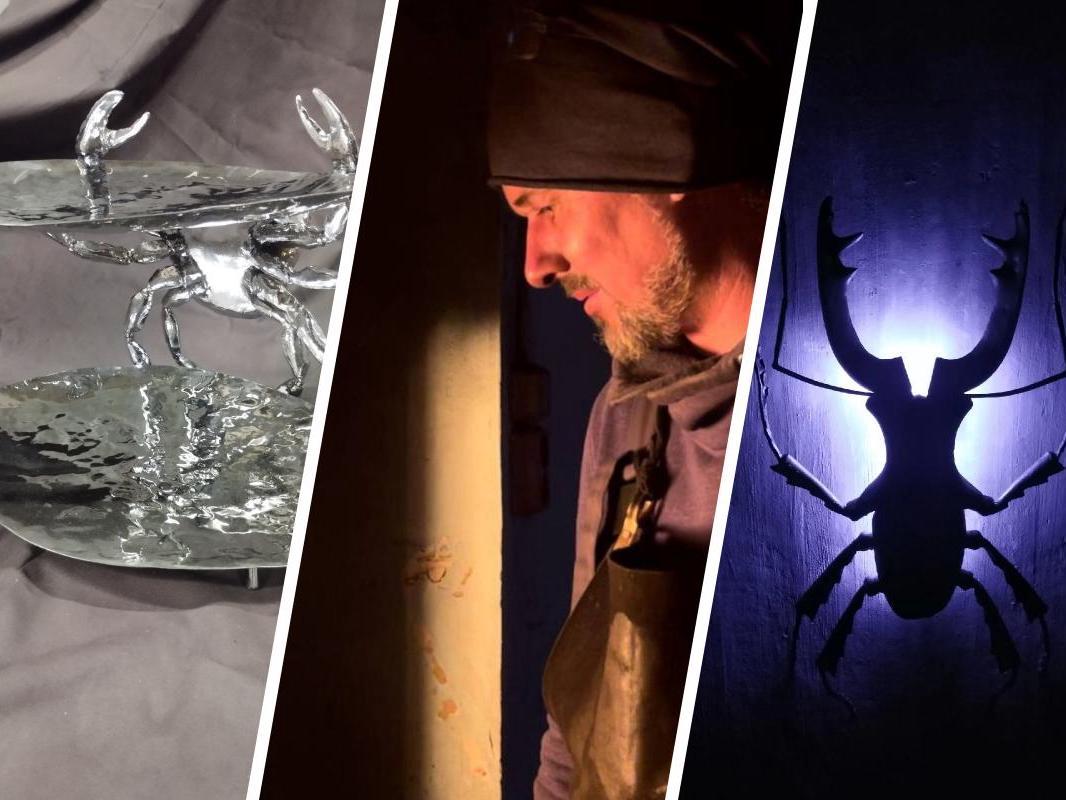

Vladimir Kashin creates authorial items from metal, including a crab dish for a restaurant and a beetle lamp.
Vladimir Kashin from Perm studied to become a lawyer and even worked in court, but for the past 20 years in his forge, he has been creating unusual dishes that restaurants buy, futuristic lamps and wall clocks, furniture and chandeliers that resemble medieval style. And once for the Diaghilev Festival, the master forged a seven-headed trumpet made of brass called Septemairis, 13 meters long. We spoke with Vladimir Kashin about his work, career choice, and favorite pieces.
Changed His Mind About Being a Lawyer
Vladimir Kashin is 40 years old. He has spent half his life taming metal. But Vladimir did not become a blacksmith right away. His father and grandfather are lawyers, his mother is a lieutenant colonel in the Ministry of Internal Affairs (MVD). Therefore, his parents insisted that he also get a law degree. After law college and the army, Vladimir worked as a court secretary, sales manager, security guard, supplementary education teacher…
“And then at some point, just sitting at work, I thought that I was not doing my own thing, I wanted to do something that would leave a mark, and be responsible for the results of my labor. That is, to see my work in its physical form,” the interviewee says. “And that’s it, the thought arose: I want to become a blacksmith. The next day, I actually quit my job and spent two months looking for a forge to learn the skills of the profession.”
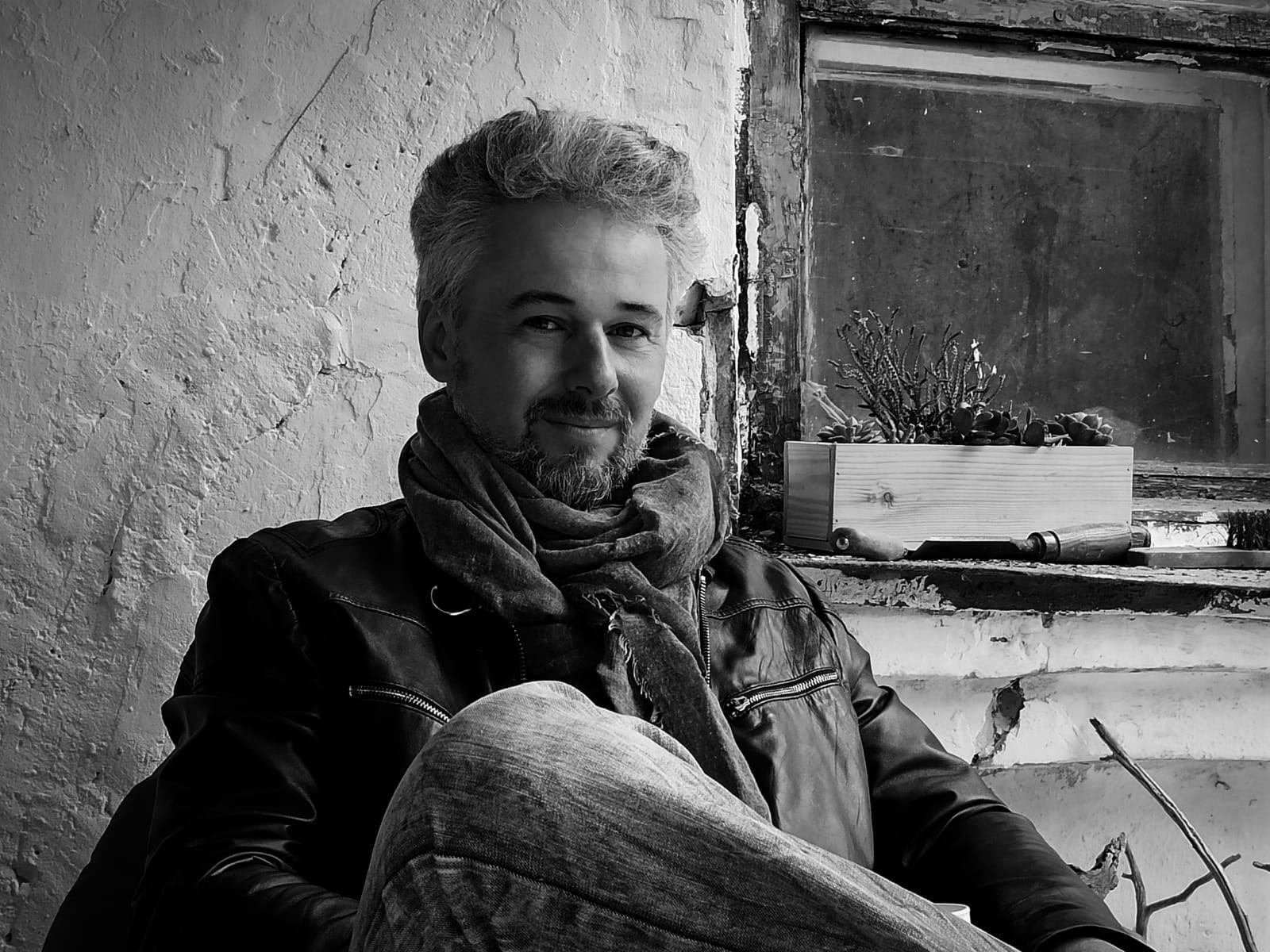
The blacksmith Vladimir Kashin stands in his workshop surrounded by tools and unfinished pieces.
For the next two months, Vladimir worked as a blacksmith«s apprentice. Gradually, he mastered «hot work,» the nature of metal, and after three years, he decided to open his own workshop Gray Foxe (which translates to “gray fox”).
“Foxe, of course, is spelled with a mistake, but this is one of those cases where a designer»s error stuck firmly to the name, and I didn«t change it,” Vladimir laughs.
What People Order
In his work, Vladimir is open to experiments and works with various materials: non-ferrous metals, brass, stainless steel, copper. He combines metals with glass, ceramics, wood.
“I most often make the sketches for future pieces myself. If needed, we involve an artist who draws all the details. If we work with a designer, the designer already has their own authorial view,” the interviewee says. “Working in collaboration is also interesting if there is complete mutual understanding.”
For interiors, Vladimir creates one-of-a-kind items. For example, lamps with chunk glass—all of them went to the USA. Other lamps in the form of three-dimensional metal beetles were sent to France.
“Now with a designer, we are preparing authorial lamps, each costing one hundred thousand rubles (approximately $1,000 at current rates),” Vladimir noted. “Each piece takes more than one day to make.”
One of the unusual orders was sets of metal dishes held by intricately forged crabs—Vladimir made them for a restaurant in Krasnoyarsk. One such dish costs 49 thousand rubles (approximately $490), and to make it, Vladimir spent a week. In total, he forged 12 sets of such dishes.
“I don’t make authorial dishes very often, they are harder to sell, I only make them to order,” Vladimir notes.
Vladimir enjoys making wall clocks, but they are very rarely bought. The blacksmith admits that he creates some pieces for his own pleasure, to realize his fantasies.
“Once I made a clock, then decided to put it up for sale, and it went to a customer in Germany,” the blacksmith recalls.
Vladimir also engages in furniture forging. He receives orders for coffee tables made of metal and glass, as well as floor lamps.
From 2019 to 2023, Vladimir lived in Feodosia, Crimea. There, he made urban small sculptures and donated them to the Architect«s Courtyard. He forged decorative fences, dishes, and even cold weapons from Damascus steel: knives, swords, and daggers. Then Vladimir returned to Perm.
The master admits that he loves working with textures.
“You can combine different materials, achieving various properties,” the blacksmith shares. “By combining glass, you can achieve an interesting play of light. Polished stainless steel refracts this light, generally creating amazing color swirls. It’s softness, meditation with textures. I dream of working with titanium. It’s like plasticine, amazingly light, it practically doesn’t rust, and it has gorgeous decorative properties.”
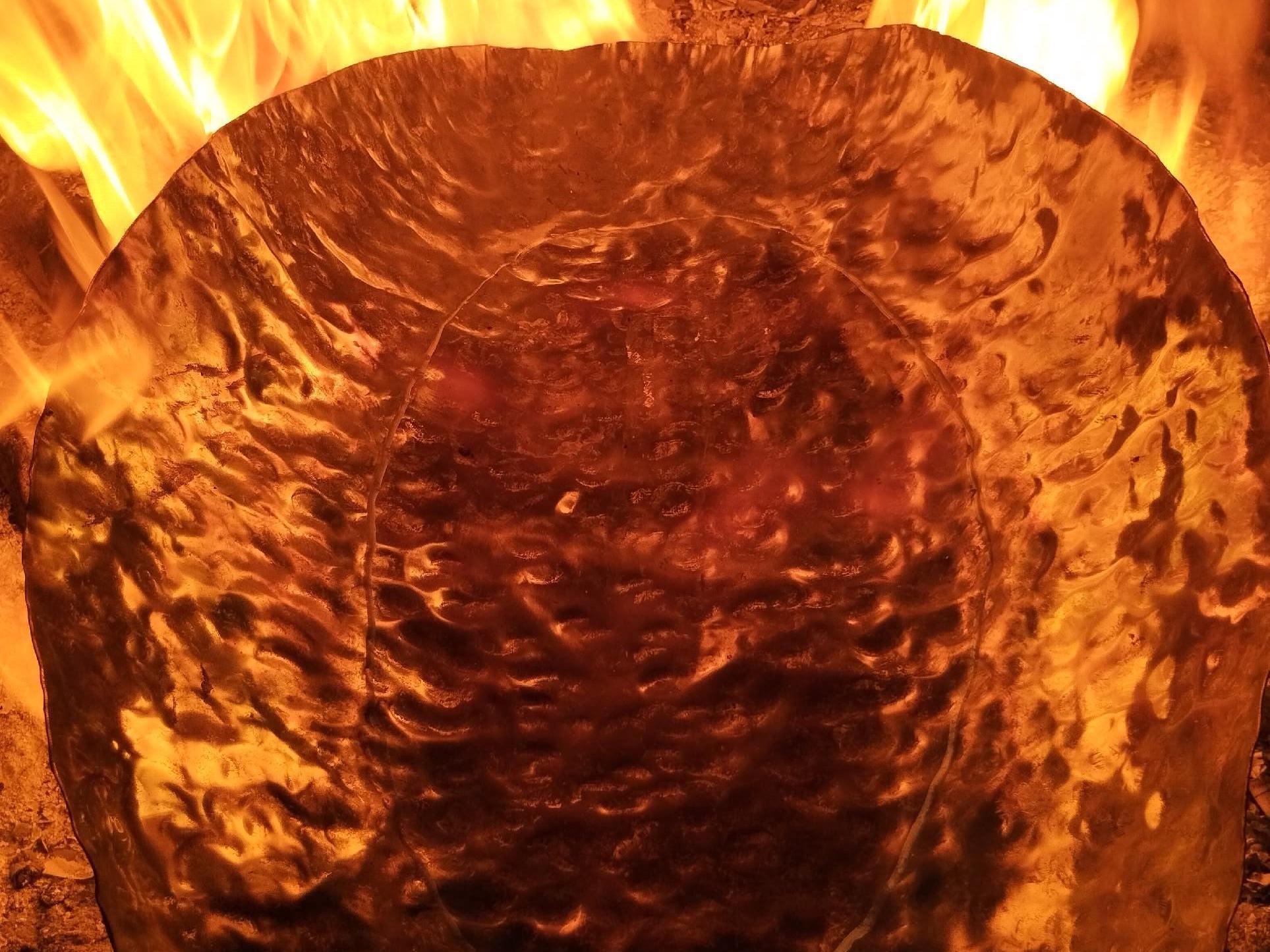
In his craft, Vladimir Kashin harnesses the power of fire and metal to create art.
Vladimir admits that a blacksmith«s income is not always stable, it all depends on orders. There were periods when the master made construction brackets because there was no other work.
“In Perm, there are few blacksmiths, many workshops have closed,” the interviewee says. “This is due to the appearance of cold forging machines. Some curls and standard forging elements these machines produce in series. Only high-class forges remain, where they approach the process creatively, work with complex textures. That is, competition among blacksmiths is now minimal.”
The interviewee shares that now he more often works in collaboration with designers for specific projects.
“It’s more convenient to work with designers, plus orders come through recommendations,” Vladimir notes. “Now I don’t give any advertising. Only people who exactly know what they want come. And designers are another ‘filter’.”
Experiment for the Diaghilev Festival and the Shpagin Plant
In May 2019, Vladimir created a unique musical instrument Septemairis. It was a seven-headed trumpet made of brass and copper, resembling a jellyfish. The length of the largest tube was 13 meters. Septemairis was ordered for the Diaghilev Festival.
On the huge jellyfish-trumpet, musician Ivan Svatkovsky from the musicaAeterna orchestra played. The image of the instrument was worked on by artist Anastasia Vayner.
“When I was forging these tubes, I had to meticulously calculate their length, how to bend the tube to get the right sound,” Vladimir recalls. “I took textbooks on sound, studied how musical instruments are generally made. That is, it was a complete immersion in all this.”
Another bright experiment in Vladimir’s work was working with materials from the Shpagin Plant. Recall that here they made an exhibition space, and the plant for repairing railway transport was closed. There were many scraps of iron, remnants of railway equipment left—essentially, construction waste. But it was from this waste that blacksmith Vladimir Kashin created small-form sculptures—a tree and a lizard figure. They decorated the territory of the Shpagin Plant.
“The task was to show that this place had some factory status, its memory still lives on,” the blacksmith shared.
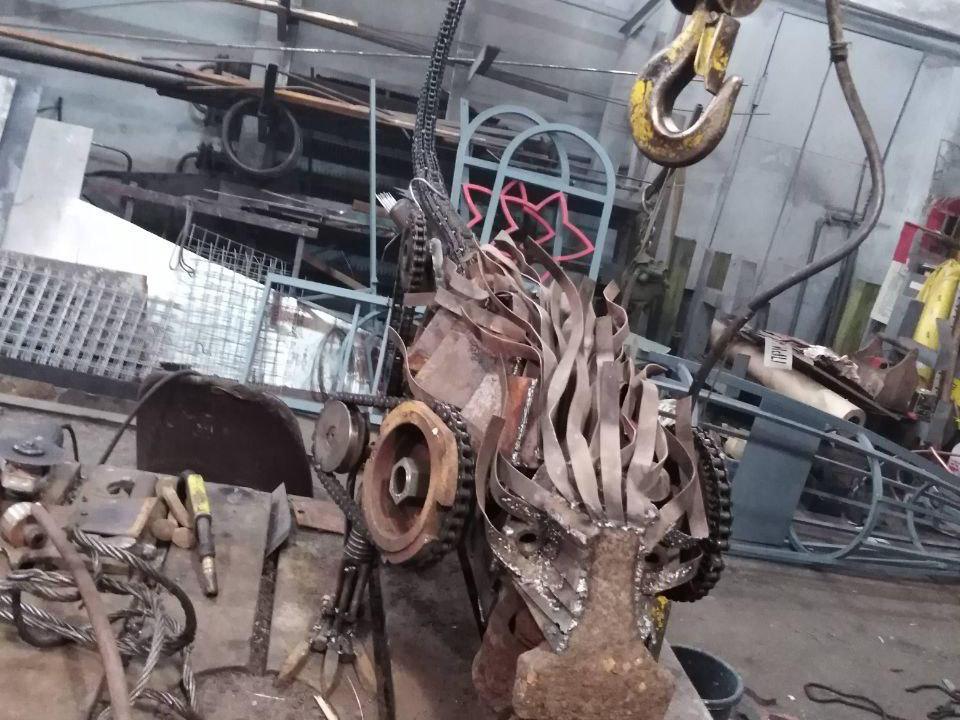
Vladimir made this lizard from railway scrap metal left by former workers of the Shpagin Plant.
Vladimir also collaborated with the Ministry of Internal Affairs (MVD) and held master classes in his forge for at-risk teenagers.
Vladimir dreams of making a sculpture based on the painting “Spring Over the City” by artist Pyotr Frolov. A sketch of the sculpture is already ready: it’s a girl stepping over the city, made by Natalya Tretyakova. The sculpture was planned to be installed in the courtyard of the Youth Theater (TYUZ), but so far no money has been found.
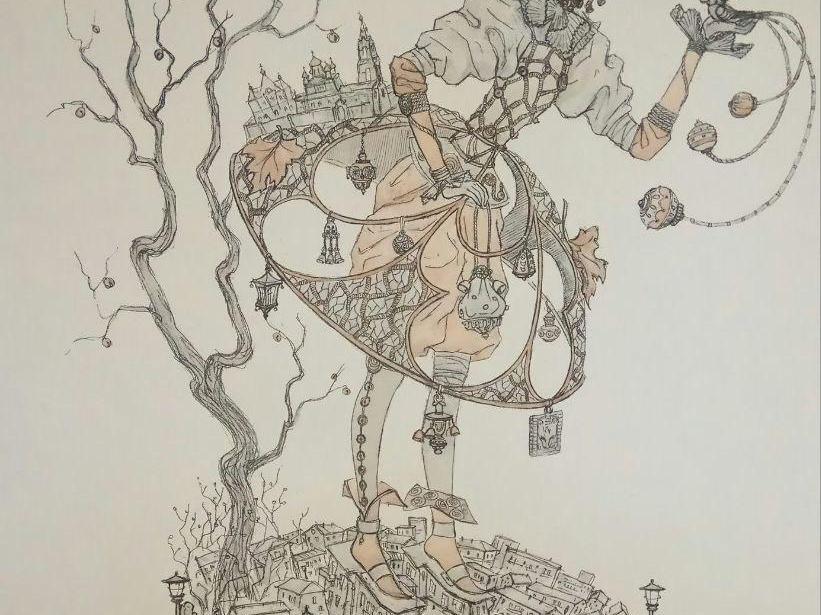
Vladimir Kashin intends to create a sculpture depicting spring from a sketch by Natalya Tretyakova.
“It would be great! To involve masters of hot enamel to paint the small details, to give the skin a subtle blush,” the master shares his plans.
Vladimir admits: he does not regret that he once decided to work outside his specialty and still make creativity his work.
“At the time, my parents, of course, opposed my choice, wanted me to continue the family succession in legal matters,” the interviewee noted. “But my ex-wife strongly supported me. My daughter is now studying in Moscow. She chose not a legal education, she is studying PR. I am not against it, you have to support your children.”
Earlier we wrote that a Perm dollmaker makes authorial dolls, thought out to the smallest details—they are hunted by foreign collectors.