Self Edge Chinois Serves High-End Duck in St. Petersburg

Critic Dmitry Grozny visited Self Edge Chinois to assess how well chef Alexei Kanevsky has reinterpreted traditional recipes, particularly the famous dish — Peking duck.
«We have non-canonical Chinese cuisine; for example, we don»t cook Peking duck, but Kanevsky duck,« explained waitress Marina. This approach allows the author, brand-chef Kanevsky, to freely interpret classics.
Self Edge Chinois is a new establishment by the restaurant team Dreamteam, founded by Alexei Burov. He started with the craft beer store «Pivnaya Karta» in 2008 and is now among the trendsetters of the Russian restaurant market. His premium project Self Edge Japanese has made it into the top-10 of the Lemon Guide award three times. Establishments under this brand are also present in Moscow and Yekaterinburg.
The Chinese version of Self Edge has taken a prestigious location in St. Petersburg. Entering through a glass door, guests encounter a statue of Karl Marx. To the left is the entrance to Self Edge Chinois, to the right are Dmitry Blinov«s restaurants Harvest and Reborn, one of which was previously included in the world ranking The World’s 50 Best Restaurants.
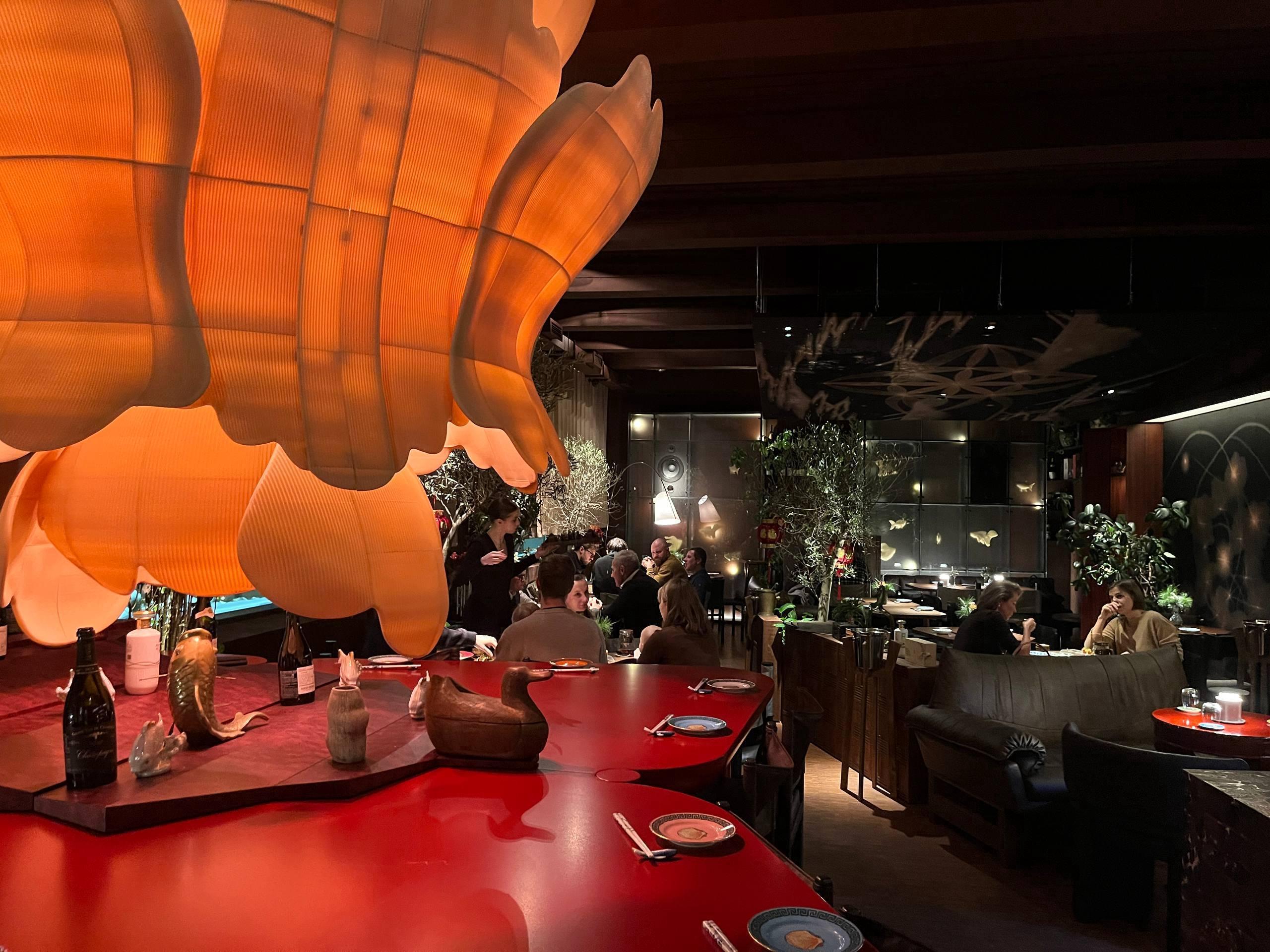
The restaurant«s interior is immersed in semi-darkness, music plays louder than in its Japanese sibling, and the atmosphere is less intimate. Numerous details point to Asian themes: Chinese lanterns on plants, a lotus-shaped lamp over the »sunset table,« and an abundance of painted tableware with Eastern patterns. Chopstick rests are made in the shape of fish.
Tables are placed close together; there are seats for two, as well as for groups of up to 6 people, including sofas.
The menu is not entirely Chinese: a third is taken up by the Raw bar section with fish and seafood, as in the Japanese Self Edge. Prices are high: a pair of sushi costs from 750 to 2,900 rubles (approximately $8 to $29 at current rates), baked crab — 5,900 rubles (approximately $59), and a seafood platter — 13,900 rubles (approximately $139). However, there are also dishes under 1,000 rubles in the snacks, dim sums, and hot dishes sections.
The cocktail menu of 12 items is designed as a fan, each drink — 850 rubles (approximately $9). The main drinks menu is decorated with images of warriors and dragons. A glass of wine will cost from 980 to 3,900 rubles (approximately $10 to $39).
Service is prompt, although sometimes dishes are brought too quickly. Waiters themselves offer to refill the teapot with boiling water (from 800 rubles, approximately $8) and explain the tradition of several «infusions» of Chinese tea.
Among the dishes, the hand-roll platter for 2,900 rubles (approximately $29) stands out. The set includes four pairs of rolls with different fillings, as well as additions: caviar, chips, Sichuan cabbage, and pickled mustard stems. The spiciest option is with shimeji mushrooms, the most unexpected — with pak choi cabbage and chips.
Eggplant and tomato salad (690 rubles, approximately $7) is distinguished by a spicy chili sauce instead of sweet. The eggplants could have been crispier.
Warm celery salad with seafood (790 rubles, approximately $8) — a light dish with squid, shrimp, and chicken broth. Pieces of chili are almost imperceptible.
Dim sums (790–1,200 rubles, approximately $8–$12) are tiny, one-bite size, with sauce already inside. Crab soup (1,190 rubles, approximately $12) — a whole show: into a soup tureen with vegetables, chicken broth is poured from a teapot, then crab meat on a steamed omelet is added. You can adjust the spiciness with chili paste.
Crispy noodles with chicken (950 rubles, approximately $10) are served in a cardboard box, reminiscent of street food. Part of the noodles is crispy, part combines with sweet and sour sauce and fried chicken. The chef, who grew up in China, created the dish based on childhood memories.
The main show — Kanevsky duck for 5,500 rubles (approximately $55). Half of the bird is baked and smoked, then served in two ways: slices with hoisin sauce and rolls in nori with rice and vegetables. This is a departure from the classic ritual with pancakes. The dish is designed for 2–3 people, but the result is ambiguous, especially considering that in other restaurants a whole duck costs less.
Black cod with chili salsa (4,500 rubles, approximately $45) receives high marks, but the price is significant. The dish is intended for two.
For dessert — mochi (590 rubles, approximately $6) larger and harder than usual, with mascarpone and white chocolate filling, sprinkled with matcha. Rice pudding (560 rubles, approximately $6) in the shape of fish is served with mango and pineapple tartare.