Make Georgian Chicken Satsivi with This Quick Walnut Sauce Recipe

Satsivi is a traditional Georgian dish made from poultry (chicken or turkey) with a walnut sauce. It originates from the western regions of Georgia and is often found at family holidays and feasts. The distinguishing feature of the sauce is the large amount of crushed walnuts with spices and seasonings. The dish itself is served cold, hence the name: the part «tsivi» translates from Georgian as «cold».
Our colleagues from the publication 59.RU share a family recipe for this very appetizer that is often seen at Georgian feasts, especially in Imeretian families. To prepare it, you only need a couple of ingredients and about an hour of time.
For preparation, you will need:
one broiler chicken carcass;
400 grams of walnuts (about 0.9 lb);
three cloves of garlic;
a small onion;
water;
dried coriander, saffron, and khmeli-suneli (a Georgian spice blend).
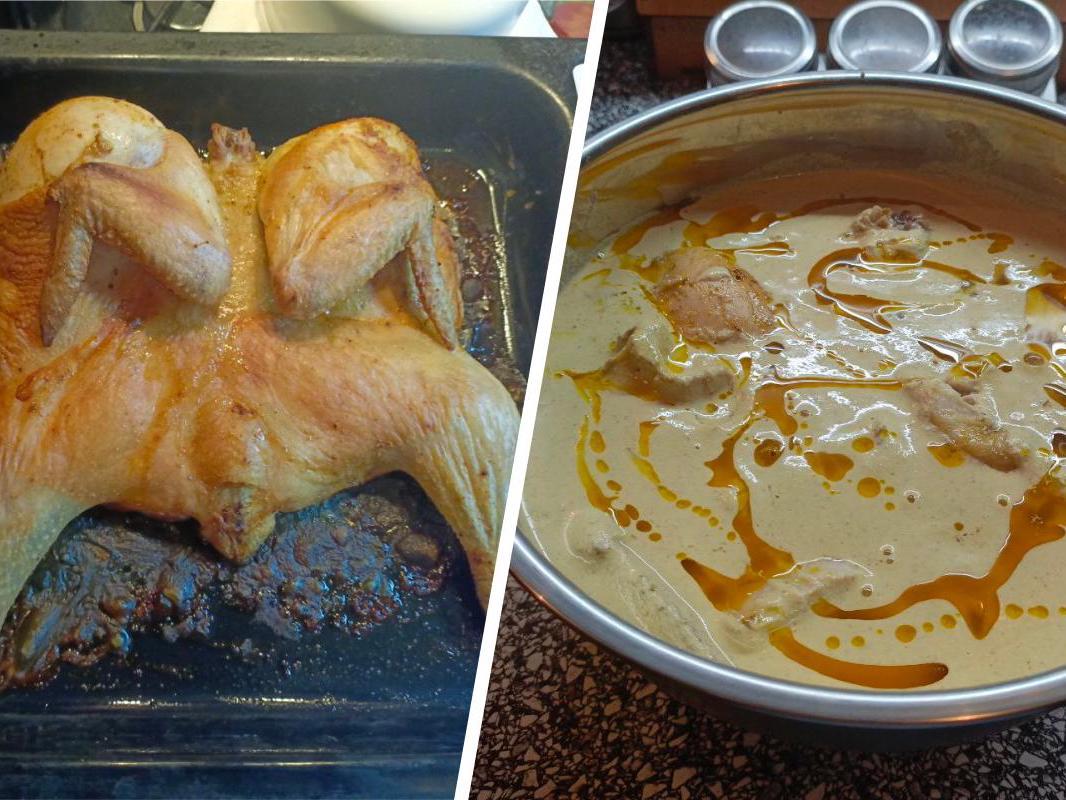
Wash the chicken, clean it, rub with salt, garlic, and special chicken spices. Place it to bake in a preheated oven at 180–185 degrees Celsius (356–365°F). The carcass should roast until golden and crispy, which takes about an hour.
Set aside the walnut mixture for now. Take a small onion and chop it into small pieces. Pour a little oil into a heated pan and add the onion there. Sauté it until golden brown. Once ready, the onion is also added to the walnut mixture. Everything is mixed again until uniform.
Check if the chicken is ready. If so, take it out of the oven and let it cool slightly, but not completely. It«s important that the poultry remains warm. By this time, our sauce will have settled.
When the chicken becomes less hot, cut it into medium-sized pieces and place them in a deep dish where it will be stored—a metal bowl or pot if there«s no bowl. Pour the sauce over. Taste for salt and add if necessary. As final touches, add half a teaspoon of 8–9% vinegar and the previously set aside nut oil. Let the chicken marinate and soak in the sauce.
Serve chilled with hot lavash, khachapuri, or cornbread mchadi. Traditionally, satsivi is eaten with hands, but of course, as convenient for each. Enjoy your meal!