Komi-Permyak woman shares recipe for sur
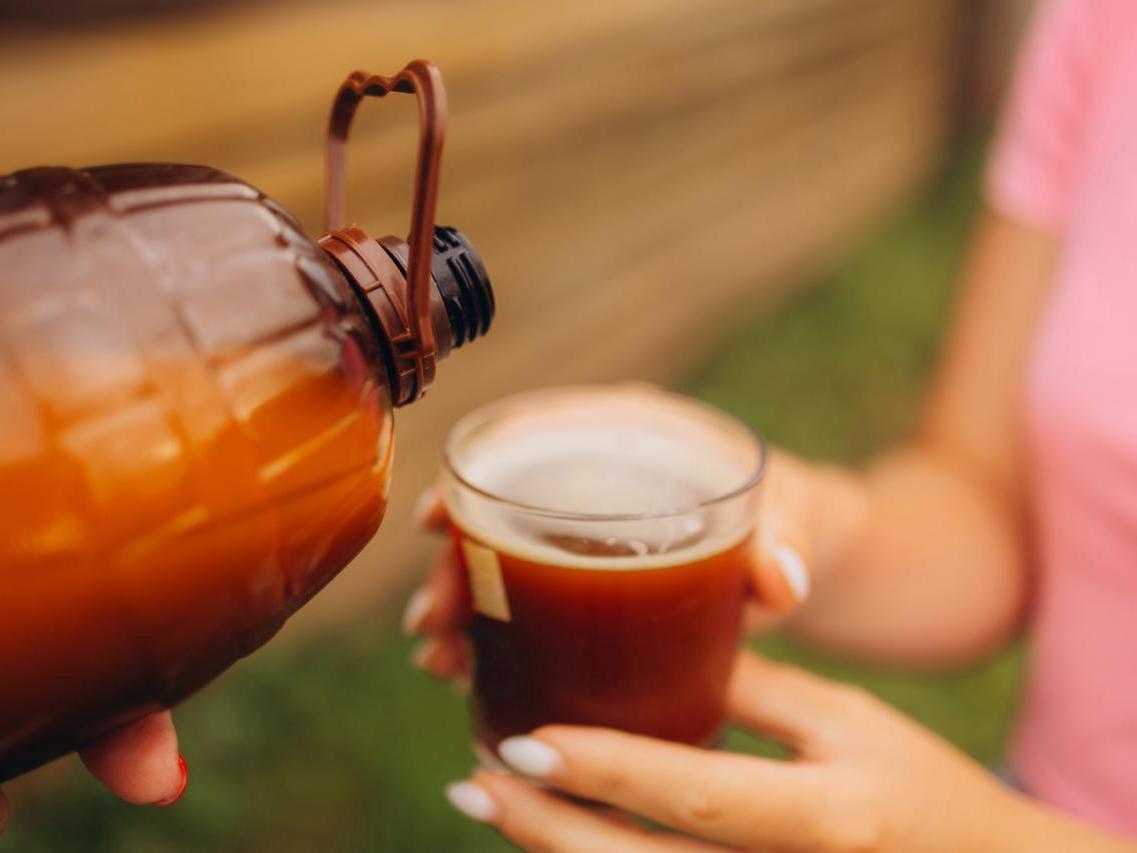

Sur is recognizable by the fine, persistent foam that forms on its surface.
In the year of the Komi-Permyak Okrug’s (Komi-Permyatsky okrug) 100th anniversary, local cuisine is drawing growing interest from residents and tourists. While many have already acquired a taste for dishes made from pistiki (spruce catkin dishes), the Komi-Permyak drink sur and its recipe remain shrouded in mystery. People say its flavor is unlike anything else, though it looks similar to kvass or beer. Indigenous Komi-Permyak woman Marina Ivanovna Systerova, who lives in the village of Mizhueva (Perm Krai), shared with 59.RU a recipe passed down from generation to generation.
Marina Ivanovna works at the Mizhuevsky Dom kul’tury (Mizhueva House of Culture) and organizes the «Bur sur» (Good Sur) festival, for which she herself prepares this delicacy. She once left to live in the north, worked in Perm, but ultimately returned to her native village of Mizhueva.
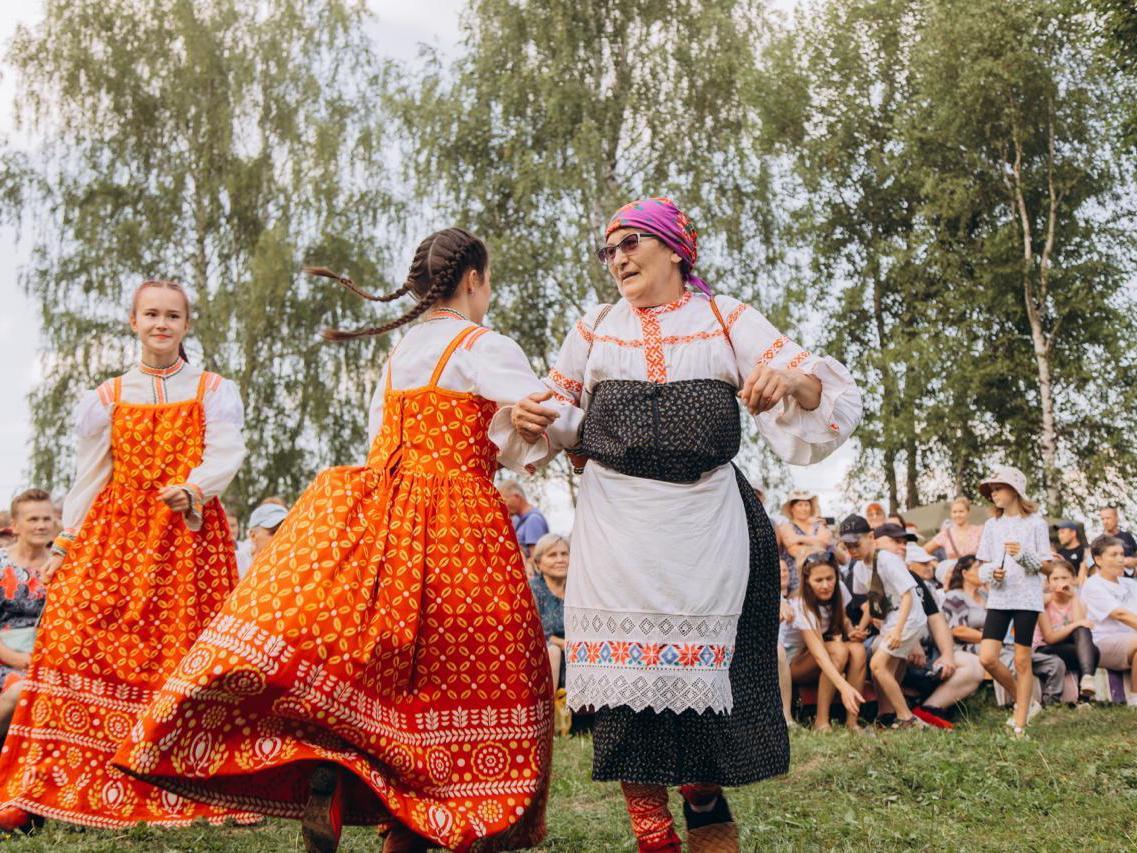
Marina Ivanovna wears glasses and a headscarf while attending the Bur sur festival.
She recalls how her mother and grandmother made sur. It was prepared for holidays, wakes, or the arrival of honored guests. The recipe is not simple and requires a lot of time, so it was not an everyday drink. Kvass, for instance, was made much more often. The kvass starter culture was used to make sur, but nowadays that is rare and yeast is used instead.
Some sources online say sur was a sacred ritual drink. It was not only consumed on festive days but also offered to the gods. That is why on the internet sur is sometimes called the «drink of the gods».
Marina Ivanovna says you need rye grain, water, a little yeast… a Russian stove and, preferably, a mill!
— Someone says they make it in a modern oven, but I don’t believe that. Sometimes you won’t even get the dark reddish color in a stove. It depends on many things: how the stove is heated, when you put it in. If you overdo it — it will taste bitter, — explains Marina Ivanovna.
As is customary with folk recipes, there are no exact gram measurements and homemakers cook in troughs and earthenware jars «by eye». So the ingredient ratios are only approximate: for 3–4 kilograms of rye malt you will need 5–6 liters of water.
Marina Ivanovna takes a small sack of rye seeds, spreads them in a trough, and covers them with water. After a day to a day and a half, depending on the temperature in the house, the rye begins to sprout. Then the water is drained and the rye is transferred to a trough with a hole, where the sprouts grow to 1–1.5 centimeters in roughly two days. Next, the sprouted grain is laid out to dry on the stove. At Marina Ivanovna’s home they dry there for three days. Her aunt, for example, leaves the sprouts there a whole week — again, it depends on the stove.
— After I dry everything, I take it to the mill. Fortunately, we still have one left in one place here. But sometimes I can also run it through an electric crusher three times so the grain is ground finely, — explains Marina Ivanovna.
The resulting rye malt is mixed with boiled water to the consistency of sour cream, but not rich farmhouse sour cream — the wooden spoon should still tip to the side.
— You need to heat the stove for two to three days. Then, when it is fully fired up, I rake the red coals to the side and set a cast-iron pot with the malt and water inside. I leave it there for a day, — says Marina Ivanovna.
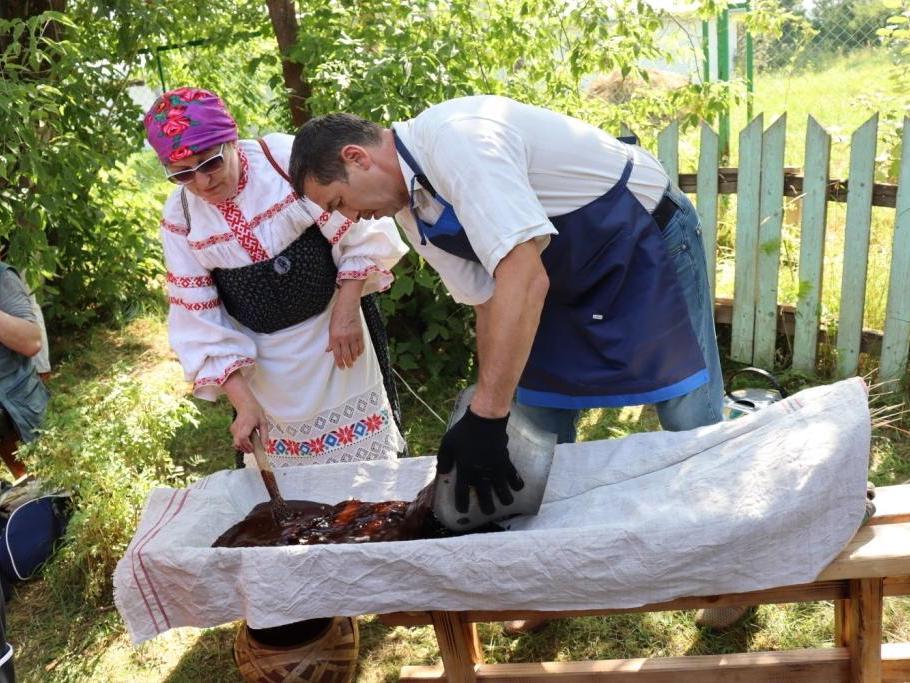
After the stove stage, sur becomes very thick and looks somewhat like chocolate.
During this time in the stove, the water and malt reduce. So when Marina Ivanovna takes the pot out, she pours in boiling water again. Now the drink needs to be strained through a special filter.
— I place small wooden slats in the trough, then straw, and linen cloth on top. The sticks are needed so the cloth doesn’t sag all the way down into the trough, otherwise it won’t drain. Through the hole in the trough, the sur runs into a krynka (earthenware jug), — says Marina Ivanovna.
The sur collected in the krynka is cooled, then yeast is added and it is left at room temperature. «For 9 liters I add less than a teaspoon of yeast,» says Marina Ivanovna. If you make sur during the day, by evening or closer to night it will be ready. You can tell by the foam that forms on top.
— The timing varies. It depends on the temperature in the house. If it’s cooler, fermentation is slow. Warmer — faster. There’s no fixed temperature in the villages. In city apartments you have central heating. Here we have to heat the stove in the morning, and then it can still get cool while it’s cooling down, — says Marina Ivanovna.
There are «male» and «female» sur versions. The recipe given here can be considered the recipe for the female sur. The male version is boiled with hops after straining; yeast and sugar are added and it is left to ferment longer. That makes the drink stronger.
As Marina Ivanovna says, entrepreneurs have come to her many times wanting to produce sur on an industrial scale. But no one has yet managed to make that idea work.
— So many people have come to me. Oh, how many asked for this recipe, watched. People even came from abroad — I don’t remember from where, from Moscow, from Perm. They want to do it but apparently can’t grasp the technology and achieve the right consistency. We make it in a Russian stove, so what equipment could replace that for large volumes? — says Marina Ivanovna.
Earlier we wrote that a chef from a Perm Krai restaurant shared recipes for unusual apple preserves.