Smolny Establishes Facade Decoration Rules

Public discussions have started in St. Petersburg on amendments to the landscaping rules. These changes establish how building facades should be decorated for holidays such as New Year and March 8, as well as for everyday situations.
Background
In December 2025, it was reported that plans were afoot to ban the placement of compositions with artificial plants, objects, and materials on facades. Exceptions were to be made only for events of city, national, and international significance. All existing decorations that did not comply were to be dismantled within six months after the rules took effect.
The business reaction to the initiative was mixed. Some entrepreneurs argued that their decorations did not harm facades and created a festive atmosphere, while others supported the introduction of standards to improve the urban environment.
Nature of the Changes
The discussion materials have been published on the website of the city«s Committee for Urban Planning and Architecture (KGA). The explanatory note states that the requirements are aimed at preserving the architectural appearance of St. Petersburg.
The aesthetic regulations include preferred types of live plants and acceptable shapes for planters, as well as standard solutions for decorating for significant events. The final version of the draft removed the strict wording banning all other decorations.
Key change: when using standard solutions, separate approval for a facade landscaping project will not be required. Non-standard designs will need KGA approval.
An important requirement is that all decorations must be placed without attaching to architectural details and structural elements of the facades. Attachment is allowed only in window and door reveals and in the planter structures provided for in the project.
This will help avoid chaotic decoration, ensure stylistic unity and careful treatment of facades, and reduce administrative barriers.
Standard Solutions for Greenery Elements
Basic compositions that do not require approval include:
- Shaped trees and shrubs
- Standard trees
- Spike plants
- Coniferous trees
- Shaped flowering plants
- Trailing plants
Combined compositions are allowed.
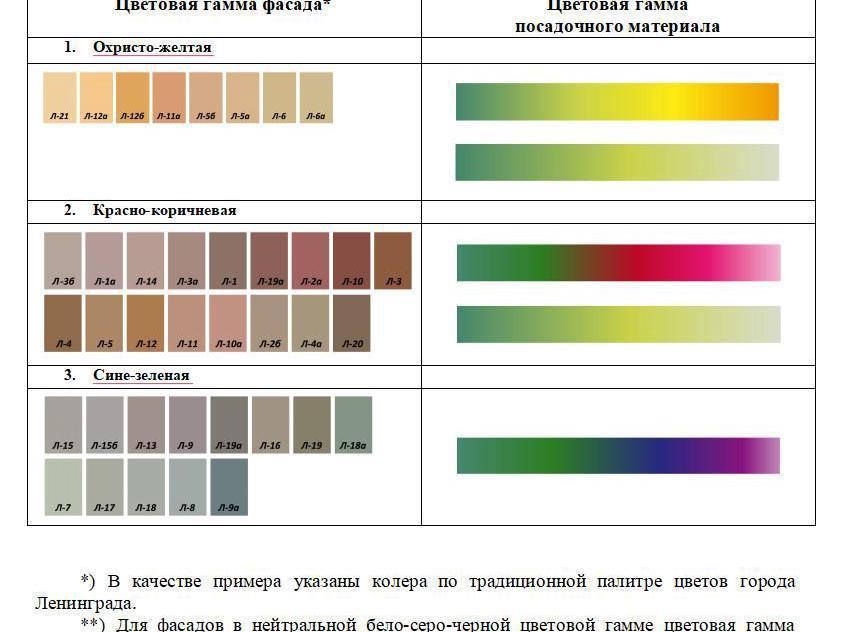
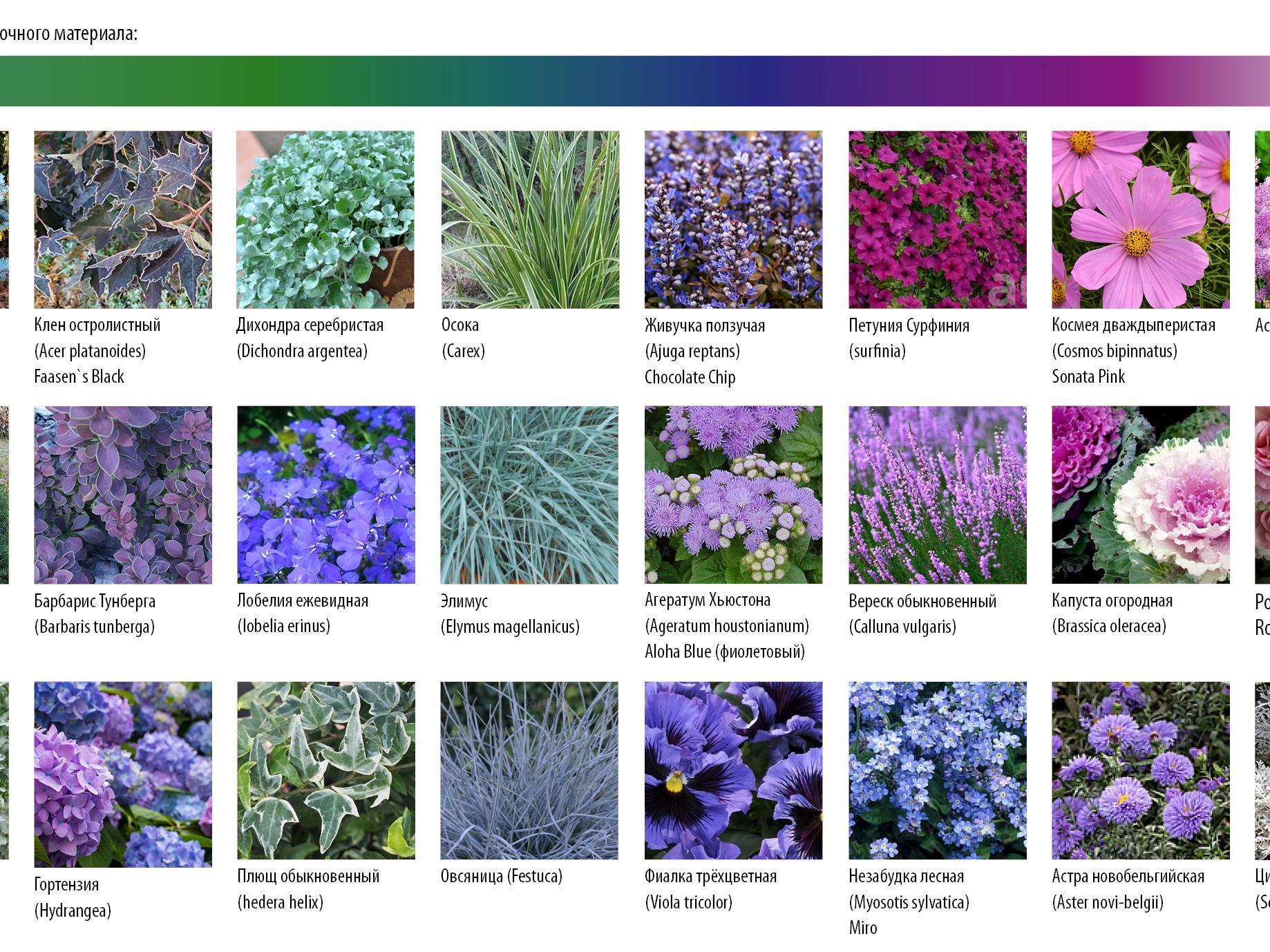
Color schemes are set depending on the facade color. For example:
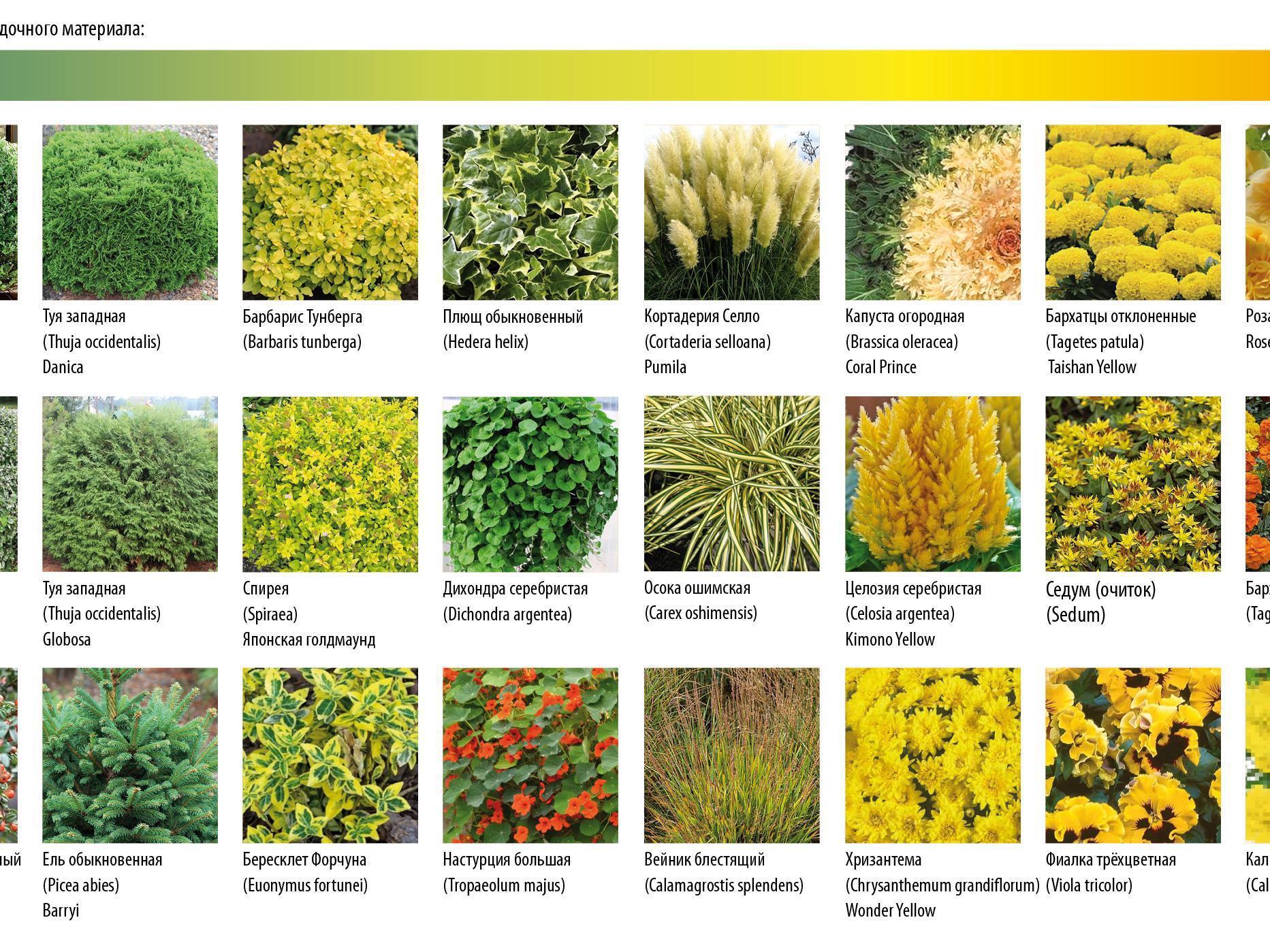
- For ochre-yellow walls, a yellow-green color scheme of plants is recommended, such as common boxwood, western thuja, and roses.
- For red-brown facades, a combination of green with yellow or pink is suitable, for example, Canadian spruce and wax begonia.
- Gray-green walls can be complemented with plants in green, blue, and violet tones, such as wild pansy and common heather.
- For facades in a white-gray-black palette, any of the listed options are acceptable.
Standard Solutions for Planters and Pots
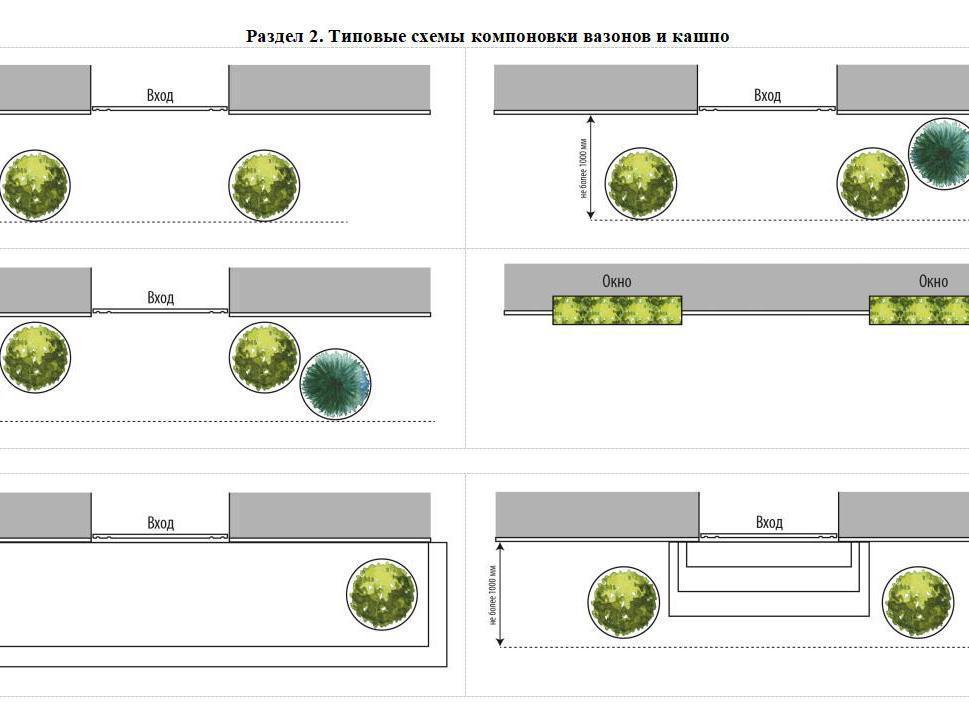
Planters and pots in standard designs can be made of concrete, stone, or textured stone. They may have a rectangular shape with a bottom size of 0.6×0.6 m and a height of 0.6-1 m, or 1.1×0.3 m with a height of 0.3-0.9 m. Round or cylindrical shapes with a bottom diameter of 0.6 m and a height of 0.6-1 m are also acceptable. Linear dimensions may vary by no more than 30%.
In front of the entrance, no more than two planters are allowed on each side, at a distance of no more than 1 meter from the wall.
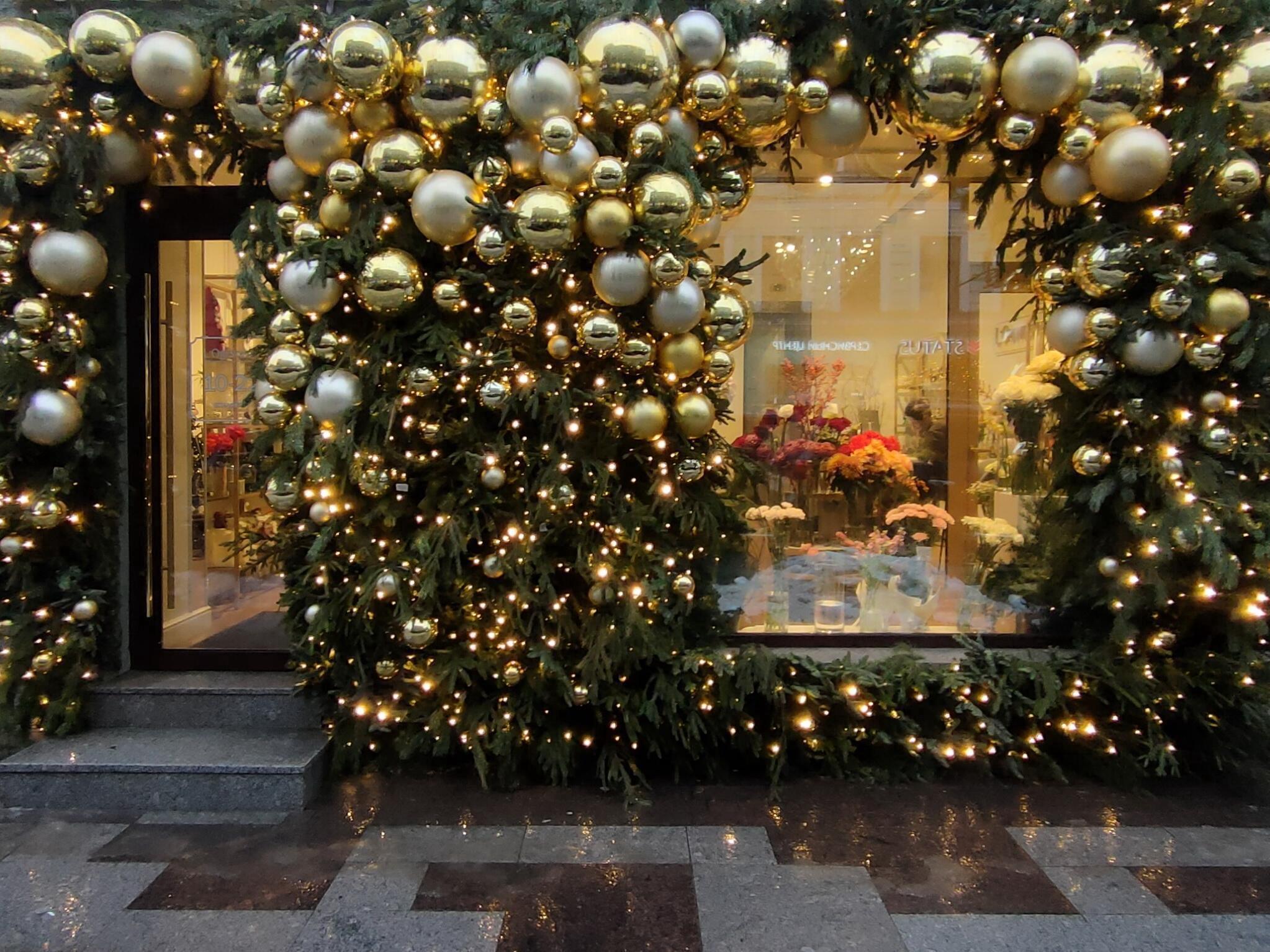
How to Decorate Facades for New Year
New Year decorations can be placed from December 1 to January 25. Attachment is made in window and door reveals, on the glazing, or to the frames of windows and display windows.
KGA proposed five decoration options:
- U-shaped arches made of fir branches above the entrance and windows, with Christmas trees in planters in front of the entrance.
- The same arches, but with additional bows and ribbons on the display windows.
- Rounded arches made of branches above the entrance and windows.
- Christmas trees at the entrance on the ground and fir branches around the perimeter of windows.
- Decorations exclusively in the form of Christmas trees in planters.
Combinations of elements are allowed, and the color scheme may vary.
How to Decorate Facades for March 8
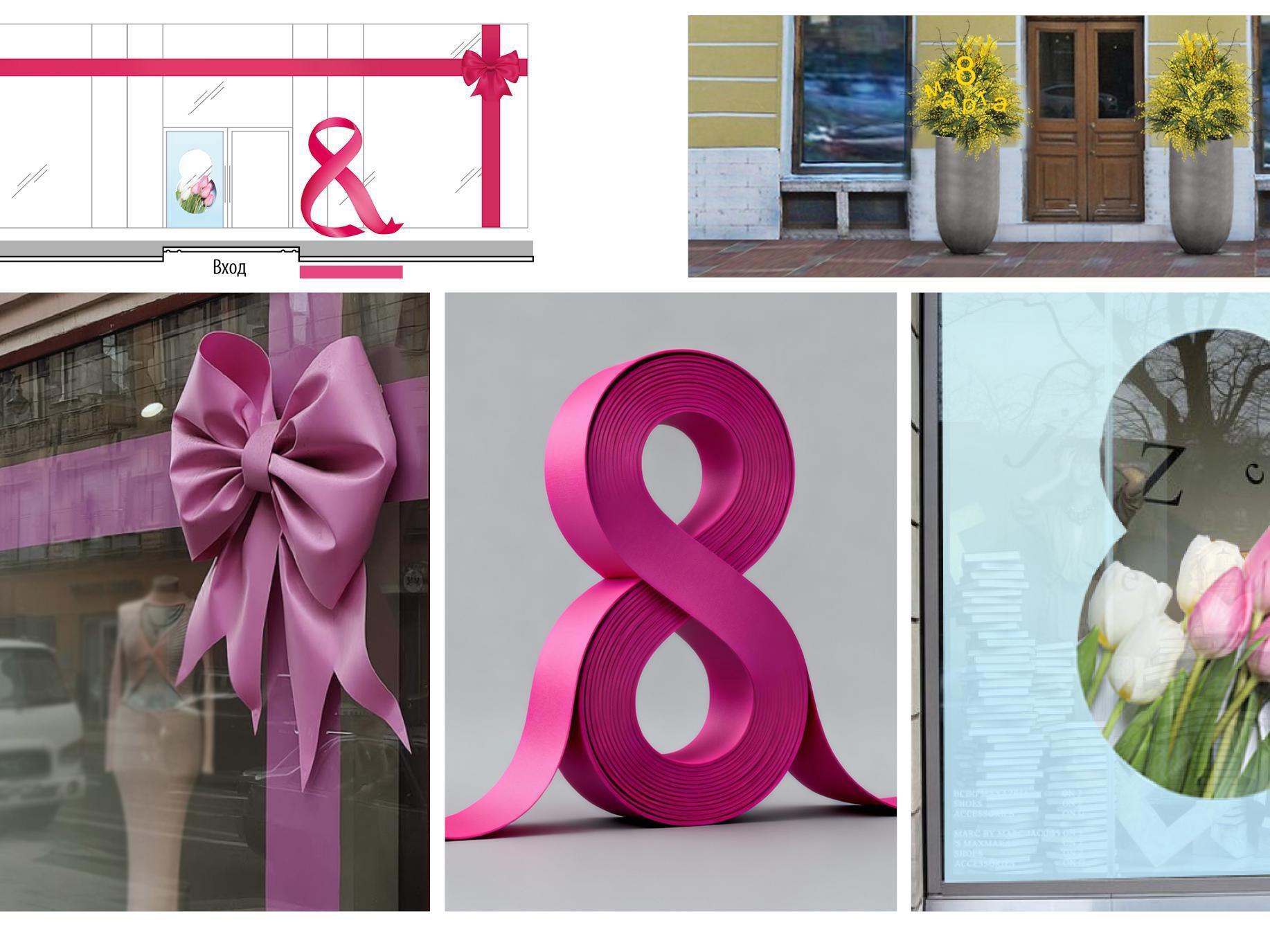
March 8 decorations are allowed from March 3 to March 10. Attachment is similar to New Year decorations.
Options include:
- Bouquets of mimosa in planters with the inscription «March 8».
- Decoration of the facade with a pink ribbon and bow.
- A structure in the shape of the number «8» in front of the facade.
- Window decal with a cutout in the shape of the number «8».
Combinations and color variations are also possible.