Perm Sisters Raise Snails for Food
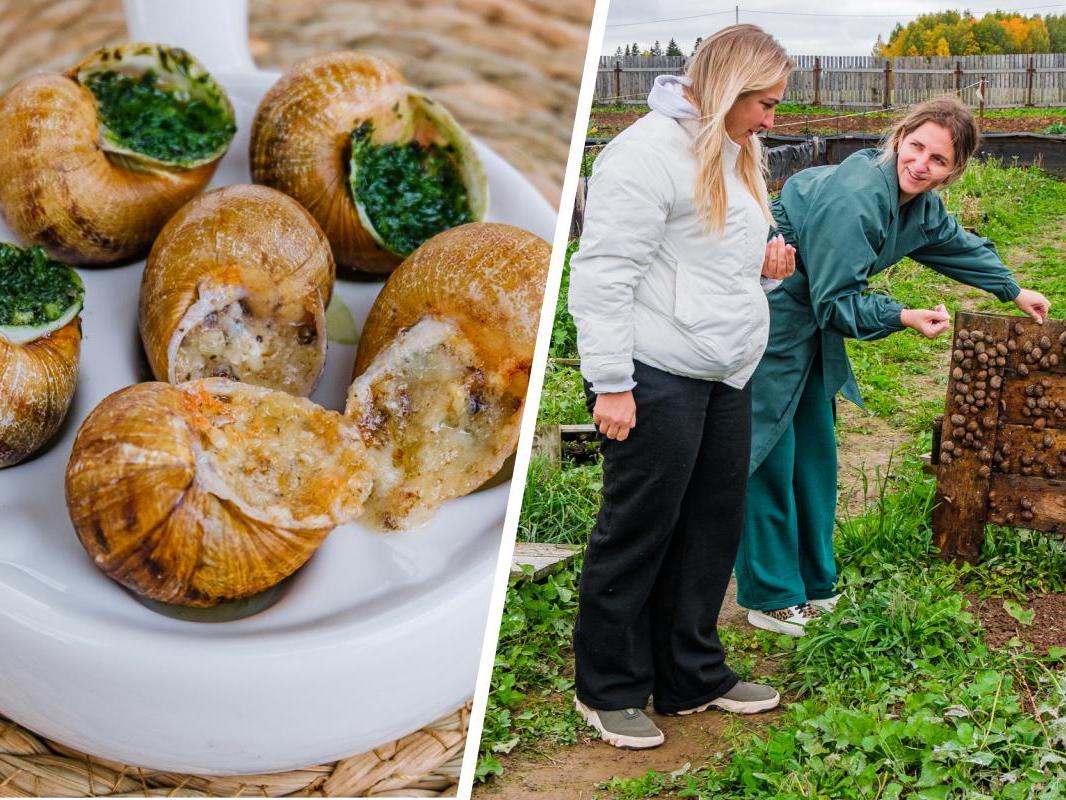

On the left, a prepared dish; on the right, the founders of «Ulitki ne za gorami».
Two sisters from Perm, after long years working as an accountant and an auditor, decided: «Time to build something with our own hands». Said — done. They bought juveniles and started raising… snails. Friends at first tapped their temples in disbelief. Now those same friends have become regular customers. Reporters visited the «Ulitki ne za gorami» farm and spoke with its creators, Olesya Ustyugova and Natalya Alekseeva. Here are the details.
From accountant and auditor to snail farmers
Natalya worked as an auditor her whole life; she has her own auditing firm. Olesya worked as an accountant. About two years ago the women realized they had already reached professional mastery and wanted to master a new field. After the COVID epidemic they switched to remote work, which meant the pleasant perks of business travel disappeared — and things got a bit dull. «Every day the same routine», says Natalya. The sisters decided to create something with their own hands. They are developing the business alongside their main jobs. «We earn in winter and spend in summer on the farm», they joke.
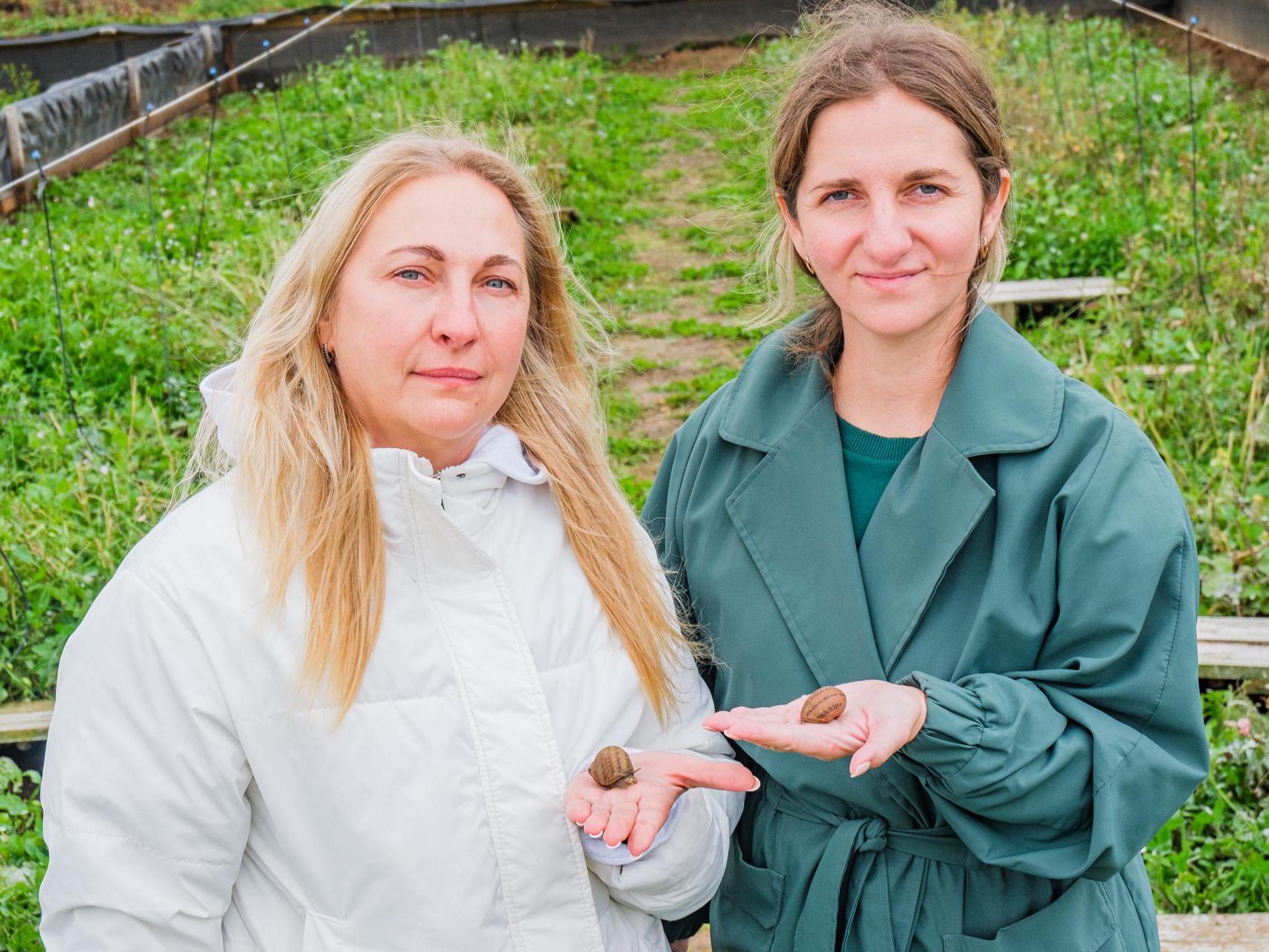
Natalya, in a white jacket, and Olesya, in green, are in their third season.
At first the sisters tried to raise another delicacy — shrimp. Everything was going well until an unpleasant nuance emerged.
— In fact, in six months a shrimp grows from a tiny thing to a large one, — says Natalya. — It isn’t rubbery, it’s insanely tasty, excellent. But there’s one problem with shrimp — they eat each other, meaning they’re cannibals. At one point the water’s pH changed slightly and they started devouring themselves. They’re also very hard to control. You can’t see what’s happening in the algae, and we don’t know what’s going on in their heads.
After a year and a half of trying to tame the shrimp, they decided to drop the idea. They netted the survivors — literally 20 lucky ones left alive. Natalya shares that they’re still in the freezer, because after the months spent raising and protecting them, they grew attached and know each one, so to speak, by sight. They can’t bring themselves to cook such familiar creatures.
It didn’t work the first time
Alongside the shrimp, in 2023 the women also began trying to raise snails. Lacking a taste for cannibalism, these creatures can at least be attempted to control. But not everything worked the first time. On the plot set aside for the farm in Polazna (Perm Krai, near Perm) they discovered water problems. And in agriculture, nothing works without water.
— In the first year we brought juveniles from Moscow, but it didn’t take at all, — Natalya shares. — The plot failed us, the climate, and the workers. When it all came to light, we were upset and thought we wouldn’t do anything. The next year we still decided: «Damn it, no — we have to do it».
In 2024 they changed plots and won the krai grant «Agrostartup». On the new plot in the village of Batury (Krasnokamsky District, Perm Krai) they drilled their own well, brought in electricity, installed a fence and a hangar, and improved the land for a snail farm. Last year, Olesya and Natalya managed to raise 800 kilograms (≈1,764 lb) of snails and sell them all — many people wanted to try the unusual delicacy. Buyers turned out not to be big chains or restaurants, but ordinary residents and dacha neighbors.
— Most acquaintances initially tapped their temples when they heard our idea. But now they’re our regular customers, — Natalya shares.
Snail farming is an entire science
Some might think raising snails is simpler than, say, keeping a cow. But it turns out to be an entire science with many nuances. First, in 2022 snails were recognized as farm animals, and certain quality requirements apply to them. Second, Russia has a whole «Soyuz ulitkovodov (Union of Snail Farmers)» that develops the sector. And snail farmers are already beginning to compete. If at first everyone freely shared secrets, now they keep their hacks under wraps. As Olesya and Natalya say, you can’t learn this from the internet; you have to seek out knowledge from professionals. The sisters went twice to study the trade with the Union’s chairman in Moscow Oblast.
— The first time we went to study — the training was great, but we came back and did everything wrong, — says Natalya. — This year we went again and worked through our mistakes. On the internet, everything looks great in pictures, but life is different.
Although snail farms are no longer rare, the farm in Perm Krai is the northernmost in Russia and the only one in the Urals. Other farms have different climates and their own care nuances.
Natalya and Olesya raise two types of snails — Myuller and Maxima. Myuller hails from the Mediterranean and grows to about 30 millimeters in 3–4 months. The Maxima snail comes from Africa and is slightly larger — they reach 40 millimeters in 5 months.
For breeding, the sisters bought a brood stock from Crimea — that is, snails capable of reproducing. Snails, like many mollusks, are hermaphrodites — there is no division into female and male individuals. After mating, one individual lays eggs. But special conditions are needed for reproduction.
— Under specific temperature, specific humidity, and specific feed, snails start to “love” each other, so to speak, — Natalya explains. — Then they lay eggs in a special room, on special equipment. Then the eggs need to be incubated. Incubation happens at a certain humidity — not the same as for mating — and at another temperature. So you need a different room for that. After that, juveniles appear over 25–30 days.
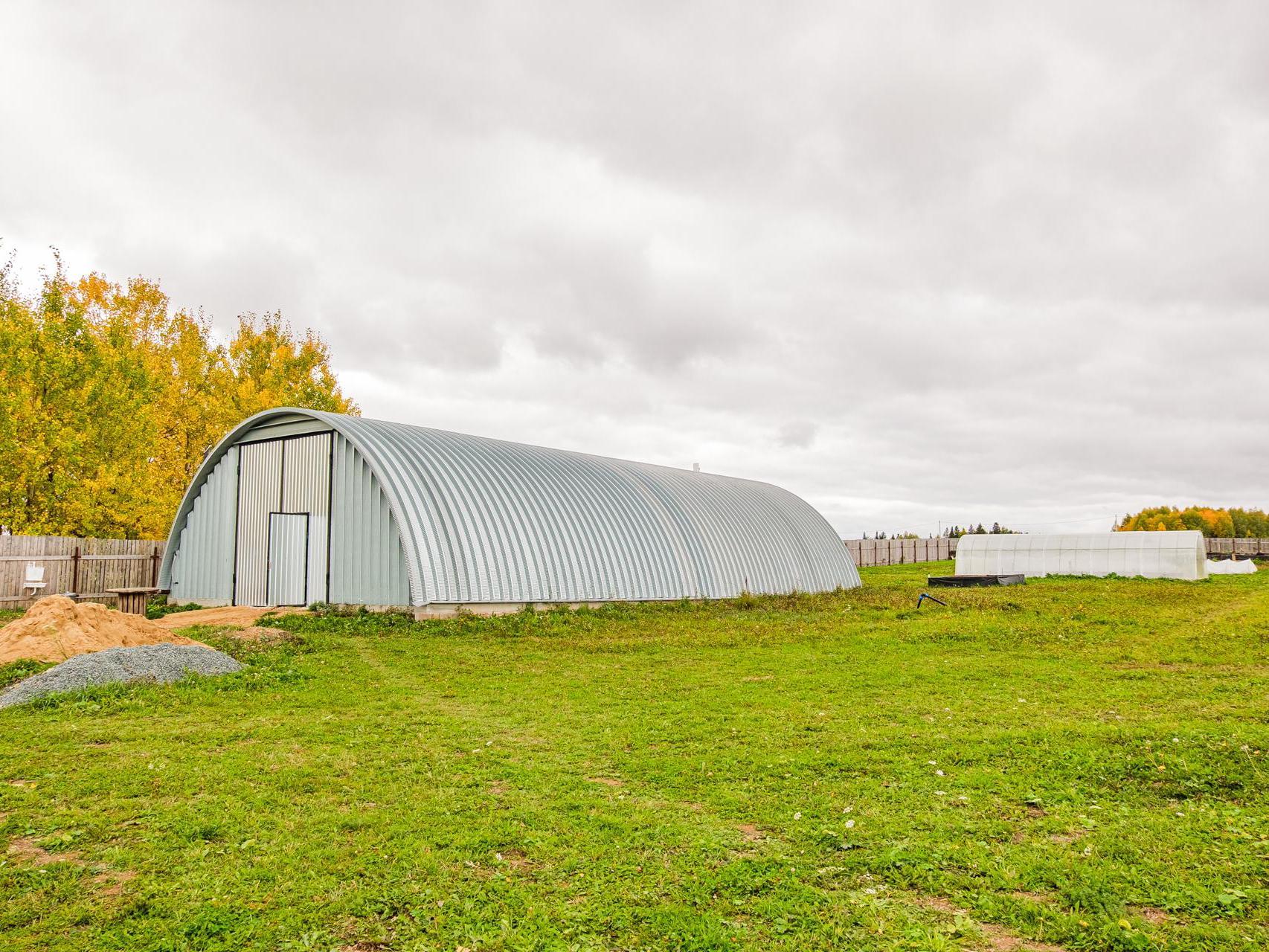
This greenhouse housed the snail hatchlings during May before transfer to outdoor enclosures.
This year in early May the entrepreneurs planted the juveniles in a greenhouse. By 15 June the individuals were moved into enclosures — that is, onto special wooden plates. A special type of feed grows in the enclosure plot — a hybrid of napa cabbage and radish. It is a high-protein grass with a large, very dense leaf — the ideal feed for snails.
— Last year we bought this grass little by little across Russia — 800 grams from some, 300 from others. So this year we bought more at once to last for several years, — Natalya shares.
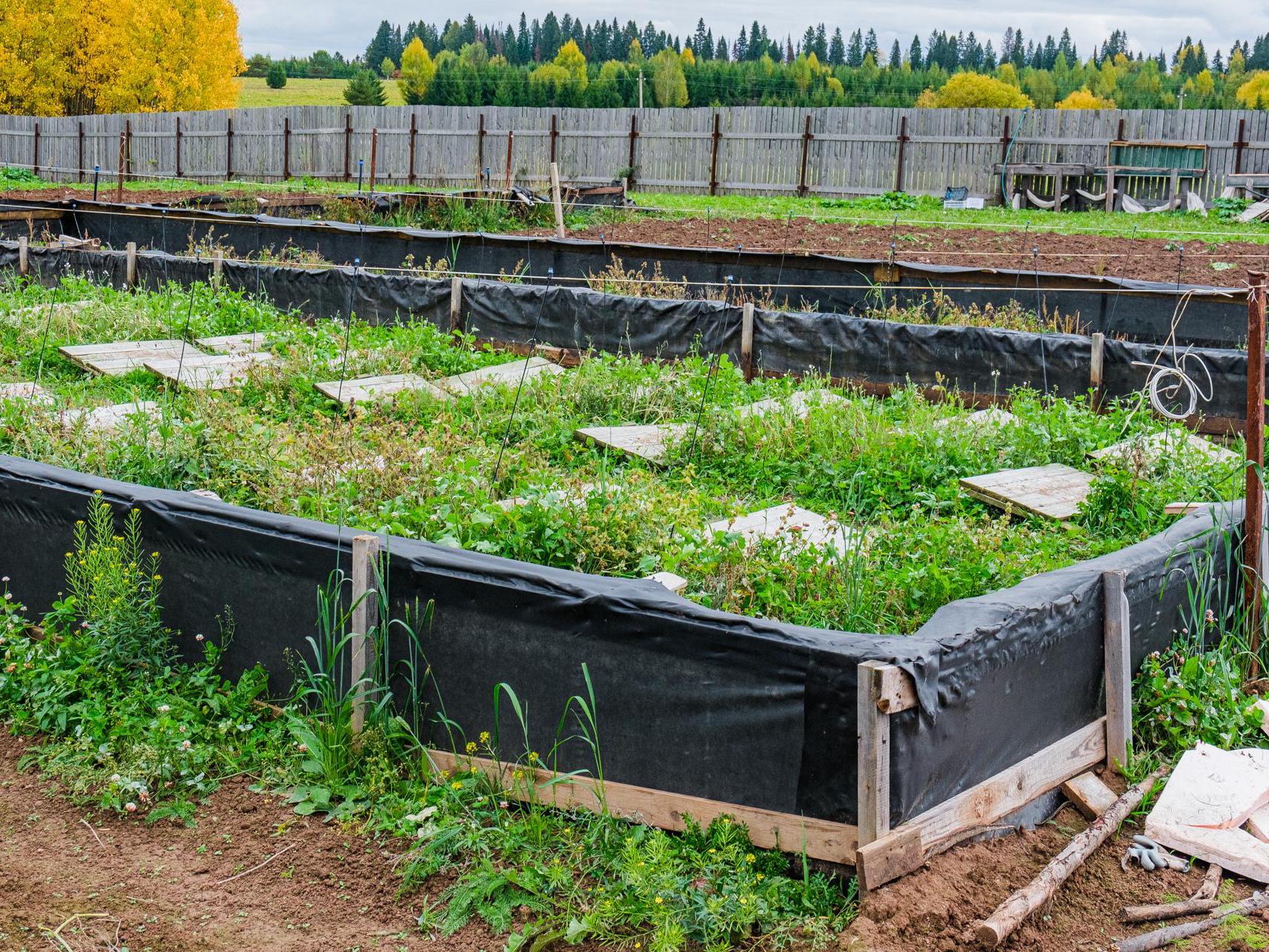
Special high-protein greens grow in the pens, providing the main feed for snails.
In September, when the outside temperature reaches +7 degrees (45°F), it’s time to put the snails into wintering. They move the snails into the same rooms equipped for egg laying. There, at specific temperatures, the snails enter anabiosis. These rooms were set up in Perm so they’re easy to reach — the temperature there needs constant monitoring.
— God forbid the power goes out — it has to be regulated. Either hook up the generator fast or do something else. Because a drop of 1–2 degrees — and the snail will die, — Natalya explains.
How much do snails cost?
Snails raised with great effort are sold in season at a price of ₽1,800 per kilogram (USD at current rates). Later, after clearing them from the farm, they cost more. In a kilogram of small Myuller snails there are about 110–120 pieces; Maxima — 50–60. Mostly they sell them live, but buyers should be ready for them to actively crawl and not at all want to end up in a pot of boiling water. So the farm also makes semi-finished products with frozen snails.
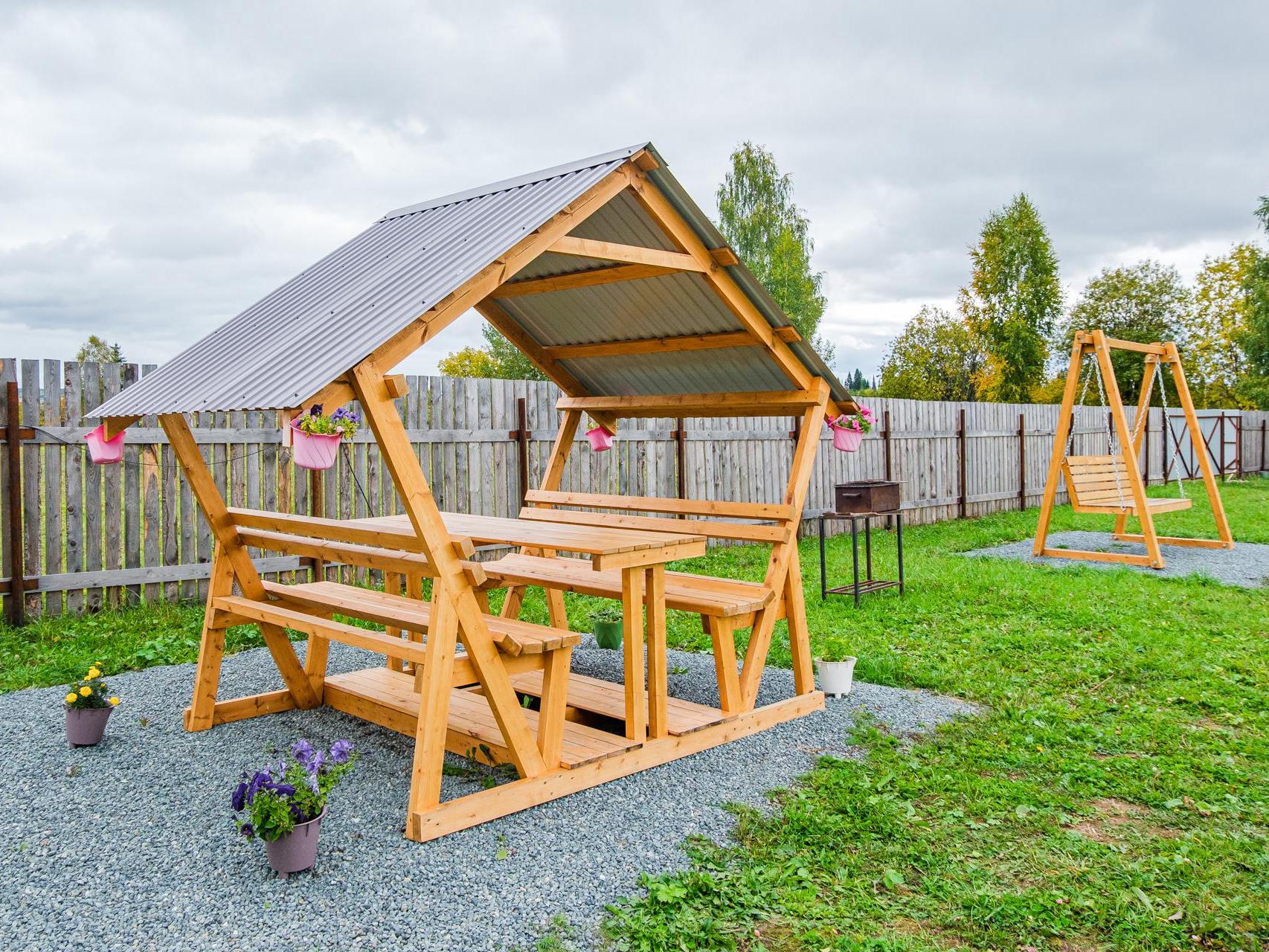
A wooden gazebo hosts tastings where visitors sample different sauces with cooked snails.
Because snails are farm animals, their meat — like beef or chicken — is checked by a veterinary lab. At least once a year, snails are tested for radionuclides, heavy metals, microbiology, and parasite content.
— Understandably, snails have no parasites. Heavy metals are 100 times below the norm, microbiology is within the norm, chemical indicators — zero, — the entrepreneurs say.
All documents for snails are issued through the information system «Merkuriy (Mercury)». It is an automated system for electronic certification and state veterinary oversight in production.
— Interestingly, the snail is the only animal protein today that contains no antibiotics. It simply doesn’t ingest them, — says Natalya. — If, say, a cow, goat, or chicken is fed antibiotics during rearing, you physically can’t feed a snail antibiotics — there are too many of them. And given that it eats in high humidity, any antibiotic would just flush into the water. In foreign practice, no one gives snails medicines either.
The season at the snail farm is already ending; the snails are being put into wintering. In summer, they regularly held tours with tastings. They cook the snails with different sauces and serve them on a special plate. The reporters also sampled snails with a cheese-and-nut sauce and a garlic-and-parsley one. Unexpectedly, hot snails resemble chicken, while cold they taste and feel like mushrooms. The entrepreneurs agreed that this is indeed how their taste is usually described: «Something between chicken and mushrooms».
Earlier we wrote that a Bavarian-village-style glamping opened in Khokhlovka — with themed cabins and a tame raccoon dog.