Brace yourselves: Top 5 districts in Yakutia for alcohol sales and drinking
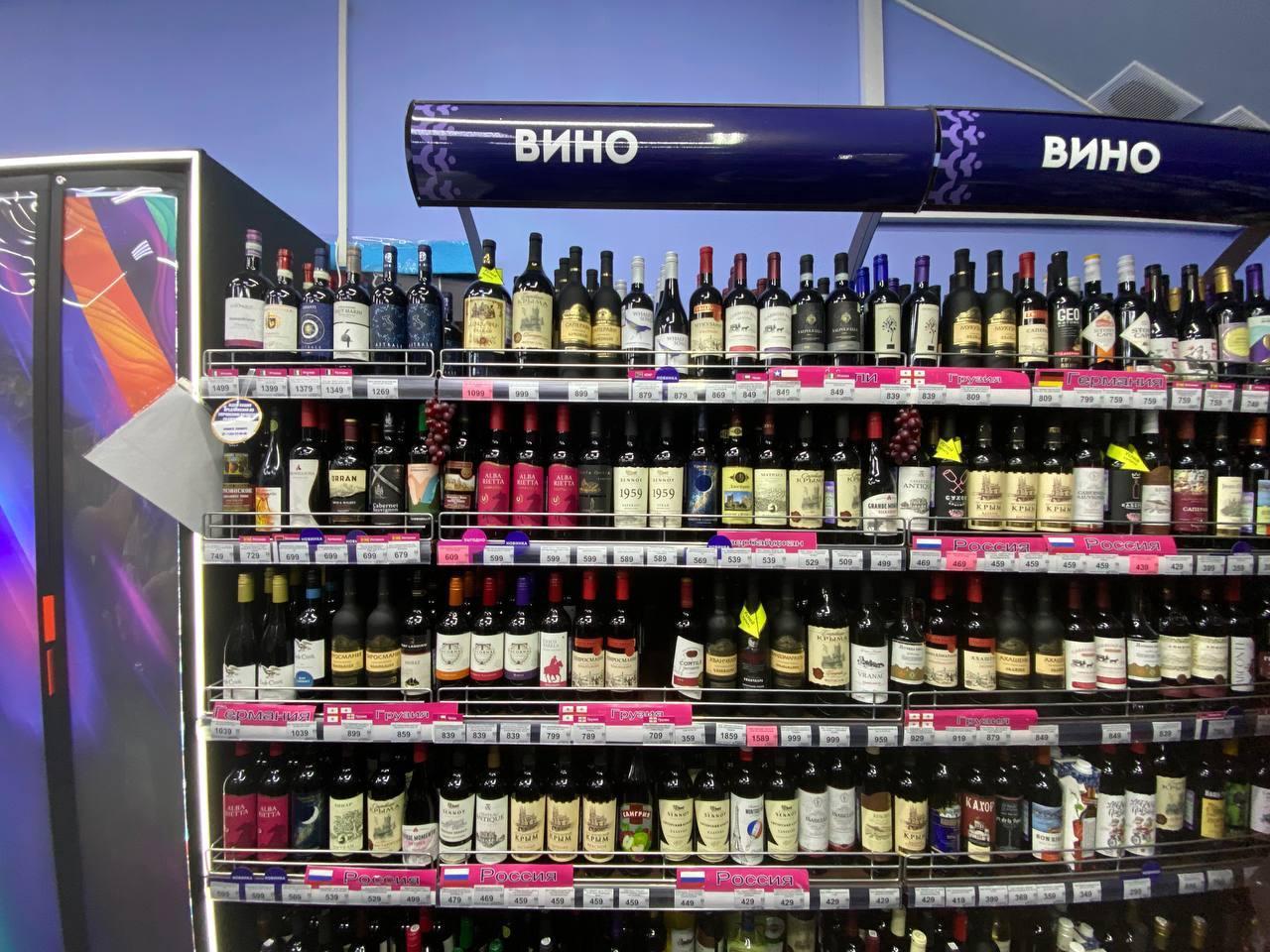

Alcohol outlets in Yakutia can be found even in the most remote areas. However, Yakutsk, despite the abundance of bars, did not make it into the top five for consumption. The most «drinking» districts are northern and industrial: there, per resident, almost 6 liters of pure alcohol are consumed in just 9 months. We have compiled a top-5 list of municipalities where people drink like there«s no tomorrow and where alcohol concentration is highest.
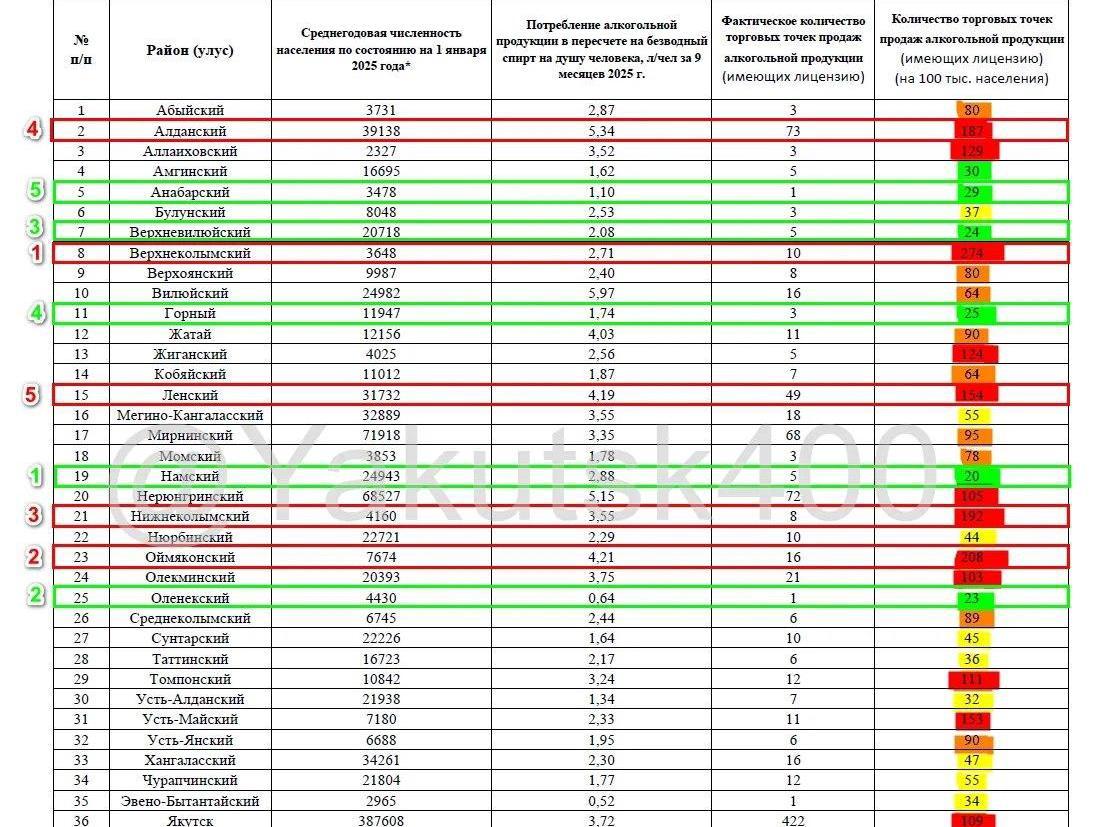
Data is taken from the official statistics of SakhaStat for the third quarter of 2025.
Where the most retail outlets selling alcohol are located
The most shops, stalls, and bars where alcohol can be purchased are in Yakutsk. In the republic«s capital, 422 retail outlets with licenses to sell alcohol are officially registered.
In second place is the Mirny district with 68 outlets. Here is the city of Mirny, a major industrial center of the diamond mining industry, where a significant part of the republic«s working population is concentrated.
Third place is held by the Lensky district with 49 outlets. It is followed by the Neryungrinsky district (35 outlets) and the Olyokminsky district (21 outlets). All these territories are either large cities or districts with developed extractive industries, where the density of the working-age population is high.
Where alcohol is most accessible
If we look not at the total number of outlets, but at their accessibility for residents, the picture changes dramatically. Here, completely different places lead — sparsely populated, and in the north of Yakutia, which are «saturated» with alcohol outlets.
The highest density is in the Verkhnekolymsky district: there are 274 outlets per 100,000 people. However, the district«s population is only 3,648 people, and there are 10 outlets. That is, practically every settlement has at least one point where alcohol can be purchased.
In second place is the Nizhnekolymsky district (192 outlets per 100,000 population, 8 outlets for 4,160 residents), and in third — the Oymyakonsky district (208 outlets per 100,000, 16 outlets for 7,674 residents).
Fourth and fifth places are held by the Aldansky district (187 outlets per 100,000, 73 outlets for 39,138 residents) and the Lensky district (154 outlets per 100,000, 49 outlets for 31,732 residents).
And although Yakutsk has 422 alcohol shops, which is more than anywhere else, the capital does not make it into the top five, ranking only 10th. This is because nearly 388,000 people live here, and there is just over one shop per thousand residents. In the Verkhnekolymsky district, there are only 10 shops for 3,600 residents.
Where the most drinking occurs
When it comes to actual consumption, the leader is the Vilyuisky district, with a population of 30,142 people. However, the district has only 15 registered alcohol sales points, but consumption remains one of the highest in the republic — in the first 9 months of 2025, each resident consumed 5.97 liters of anhydrous alcohol. For comparison: this is equivalent to approximately 15 liters of vodka.
In second place is the Aldansky district: 5.34 liters per capita with a population of 39,138 people. Third place is held by the Neryungrinsky district (5.15 liters, 65,884 residents). Fourth was taken by the Oymyakonsky district (4.21 liters, 7,624 residents), and fifth — the Lensky district (4.19 liters, 31,732 residents).
Yakutsk is not in this top either: here, per capita consumption is only 3.72 liters of anhydrous alcohol — below the republic«s average.
According to the press service of the city hall, as of the end of 2025, the city has not 422, but 416 license holders: 270 alcohol shops and 146 restaurants. Over the past five years, the number of alcohol shops in the capital has decreased from 337 to 270, or by 20%.
Overall, for Yakutia, based on official SakhaStat data on population (1,000,007 people) and the number of license holders (933), there are 93 alcohol shops and restaurants per 100,000 residents. But it should be remembered that SakhaStat, noting in its data «per capita,» takes into account the average value for the entire population, including children and the elderly. Without them, all these figures would be much higher.