Auto Dealers Expose Fee and Tax Burden on Chinese Vehicles

The Russian Association of Automobile Dealers (ROAD) has published details on how the retail price of a car is formed in Russia when imported from China. The calculation was made for 2026, taking into account new rates for the disposal fee and VAT.
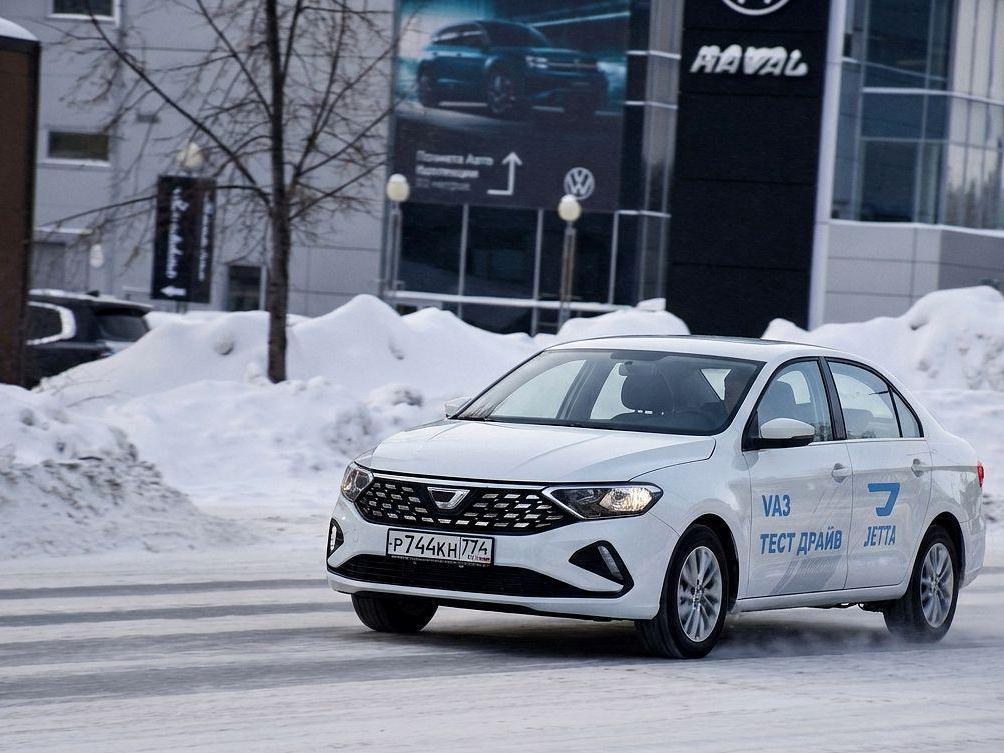
As an example, analysts took the Jetta VA3 sedan — a car technically similar to the Volkswagen Polo Sedan, which is produced in China by the FAW Group in partnership with the German brand. The model is officially supplied to Russia, although it is not in high demand.
One reason for the lukewarm reception is its price of 2.71 million rubles (approximately $30,100 at current rates). According to ROAD, the amount is made up of the following components:
- Cost of the car in China — 900 thousand rubles (approximately $10,000 at current rates, converted from yuan)
- Disposal fee — 801 thousand rubles (approximately $8,900 at current rates, after the increase in January 2026)
- Customs duty — 135 thousand rubles (approximately $1,500 at current rates)
- Excise tax — 10 thousand rubles (approximately $110 at current rates)
- Customs fee — 5 thousand rubles (approximately $56 at current rates)
- VAT — 230 thousand rubles (approximately $2,600 at current rates)
- Delivery — 350 thousand rubles (approximately $3,900 at current rates)
- Distributor margin — 150 thousand rubles (approximately $1,700 at current rates)
- Dealer margin — 130 thousand rubles (approximately $1,400 at current rates)
As a result, customs payments total 1.181 million rubles (approximately $13,100 at current rates), which exceeds the cost of the car in China. This explains why brands from China are reluctant to bring low-cost segment cars to Russia, which could have been an alternative to Ladas. The specific markup turns out to be so high that the car loses competitiveness.
From January 1, 2026, the increase in disposal fee and VAT added about 150 thousand rubles (approximately $1,700 at current rates, +6%) to the cost of the considered Jetta VA3.
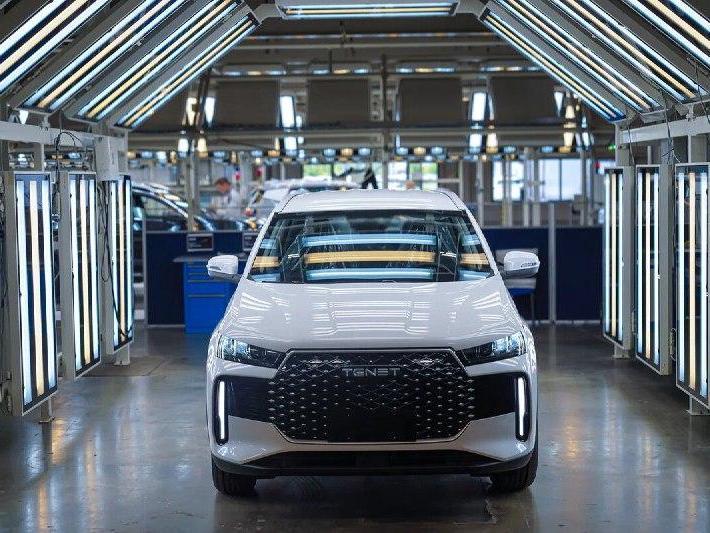
As before the start of the special military operation, Russia adheres to a course of local assembly of foreign cars, for which the disposal fee is compensated partially or fully from the budget: the exact amount of subsidies is not disclosed and depends on fulfilling the terms of a special investment contract (SPIK), which manufacturers sign with the Ministry of Industry and Trade. According to last year«s results, half of the cars sold in Russia were of Russian assembly, including the successfully launched Tenet project.
But this strategy does not bring benefits to car owners themselves: the cost of locally assembled cars hardly differs from the price of imported models. For example, the price of the Tenet T4 produced in Kaluga starts from 2.039 million rubles (approximately $22,700 at current rates), just like the identical Chery Tiggo 4. In China, a similar model is called the Chery Tiggo 5x and costs from 66 thousand yuan (726 thousand rubles, approximately $8,100 at current rates). In Russia, a more modern iteration of the crossover is presented after another restyling, but even considering this, the price difference is more than twofold. Unlike the situation before 2022, localization does not provide significant advantages for the car market itself.
In addition to the VA3 sedan, Russia also offers the Jetta VS5 and VS7 — crossovers similar to the Volkswagen Tiguan and Skoda Kodiaq.