What Remains of Yankelevich's Home in Omsk
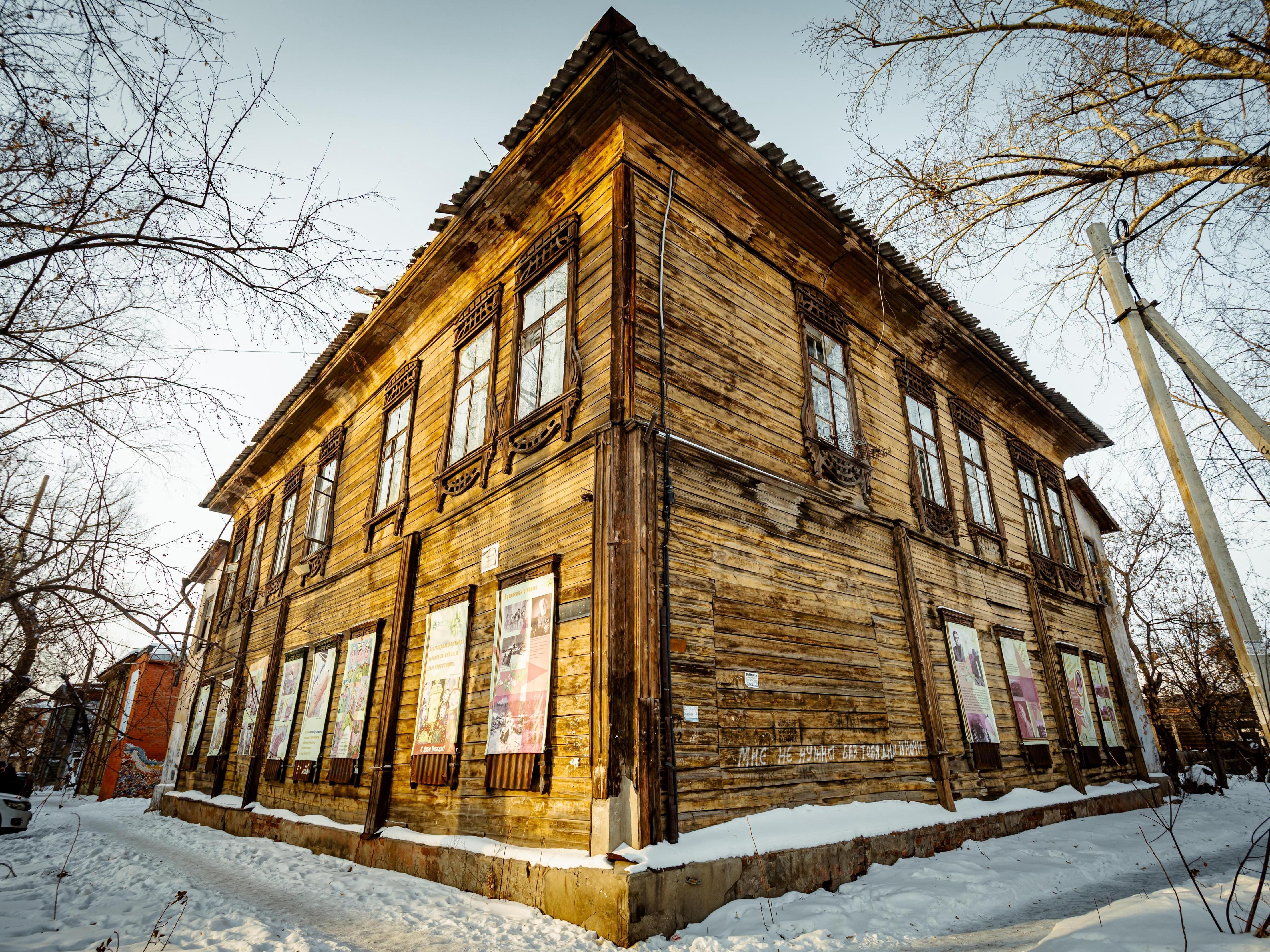

Windows on the first floor are boarded up, on the second they are smashed
On Pochtovaya Street in the historic center of Omsk, two two-story houses stand opposite each other — No. 35 and No. 37. Both are silent witnesses to the pre-revolutionary era and are linked to prominent Jewish families, but their modern fates are strikingly different.
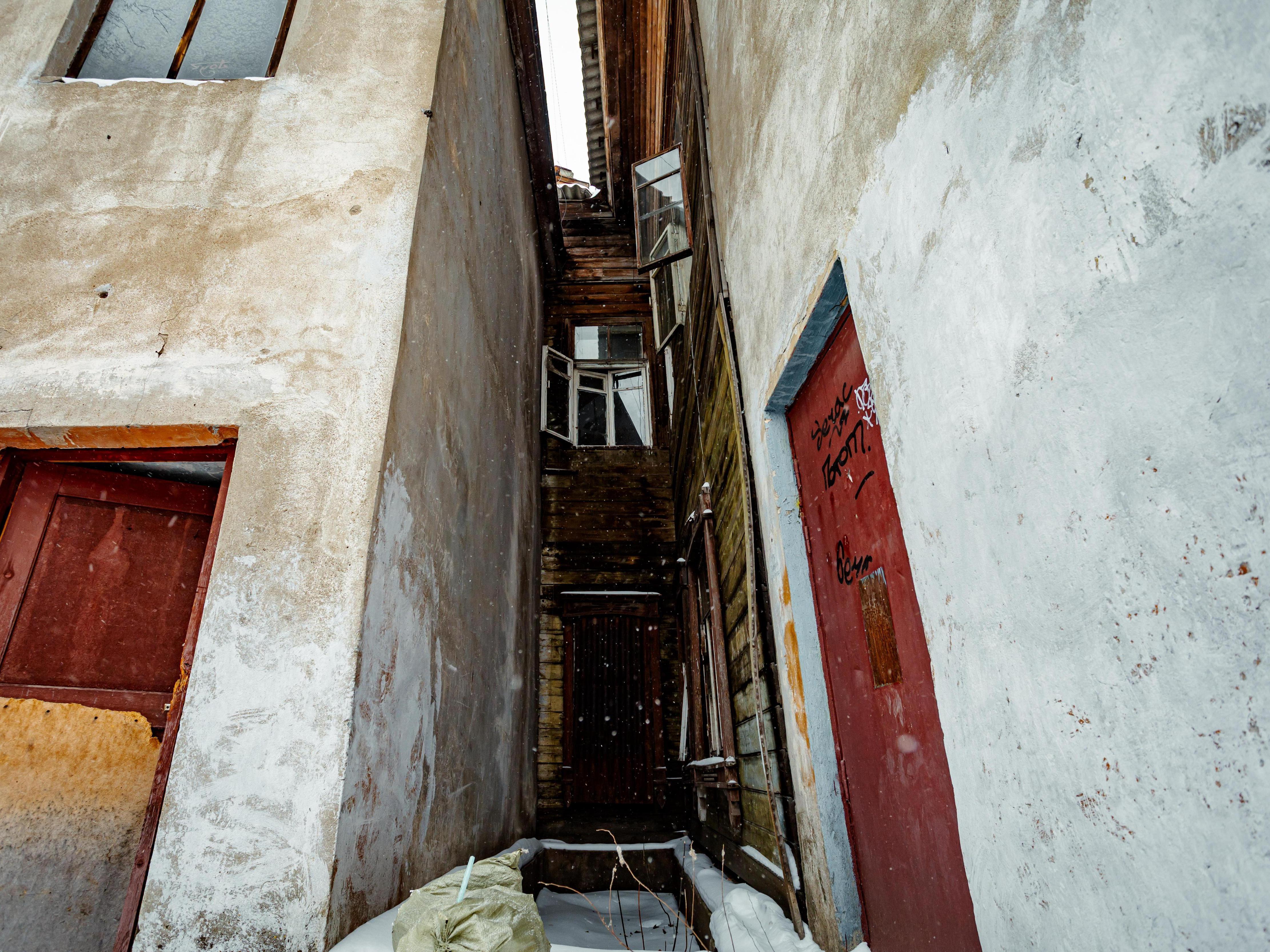
A small «well» is hidden between the two halves of the house
Together with historian Kirill Demyanov, NGS55.RU correspondent Anastasia Vlasova and photographer Kirill Bashinsky will show and tell what lies behind the doors of the buildings in the «Abandoned Omsk» series.
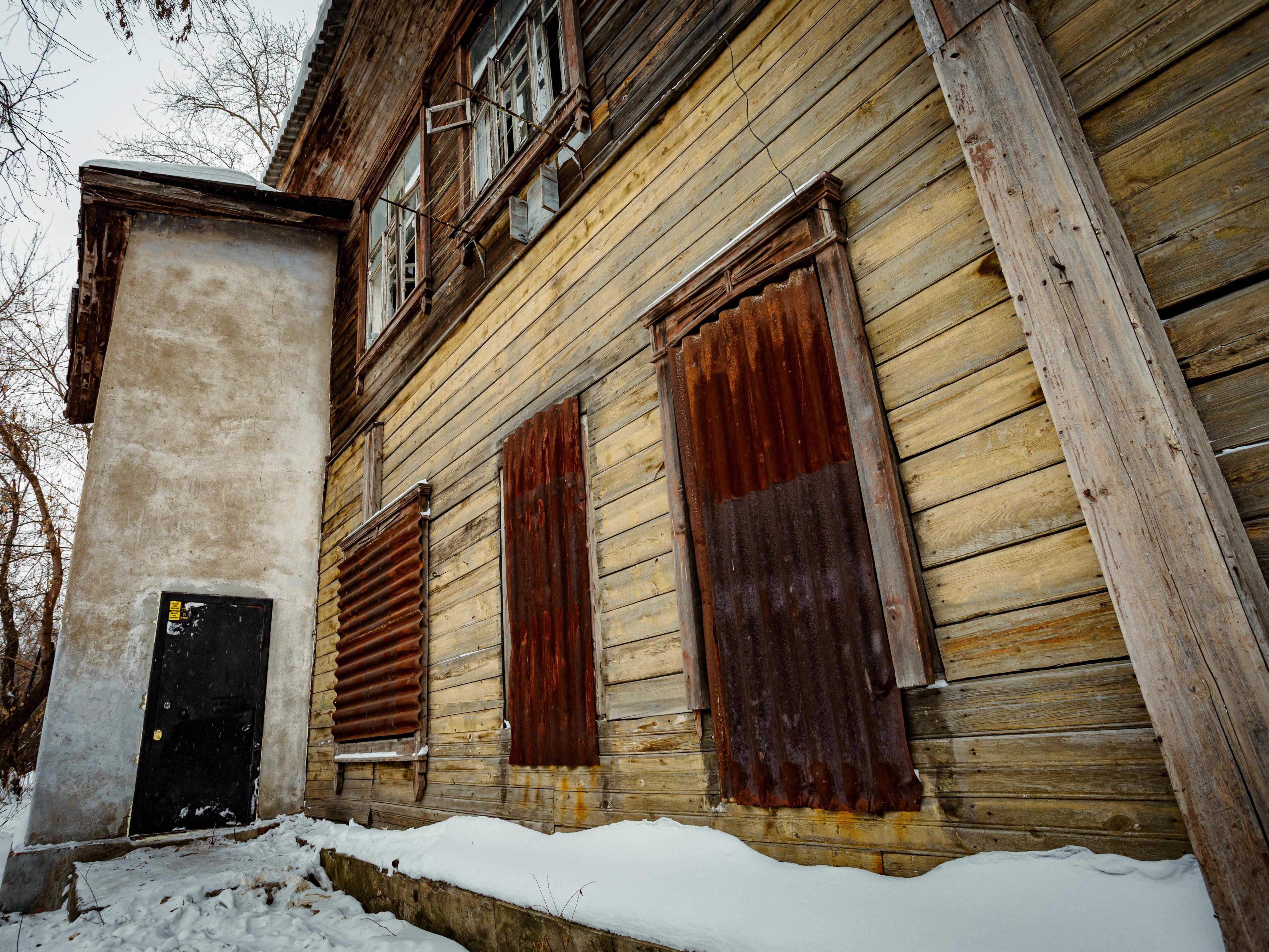
Part of the window frame did not survive
Forgotten in Two Floors
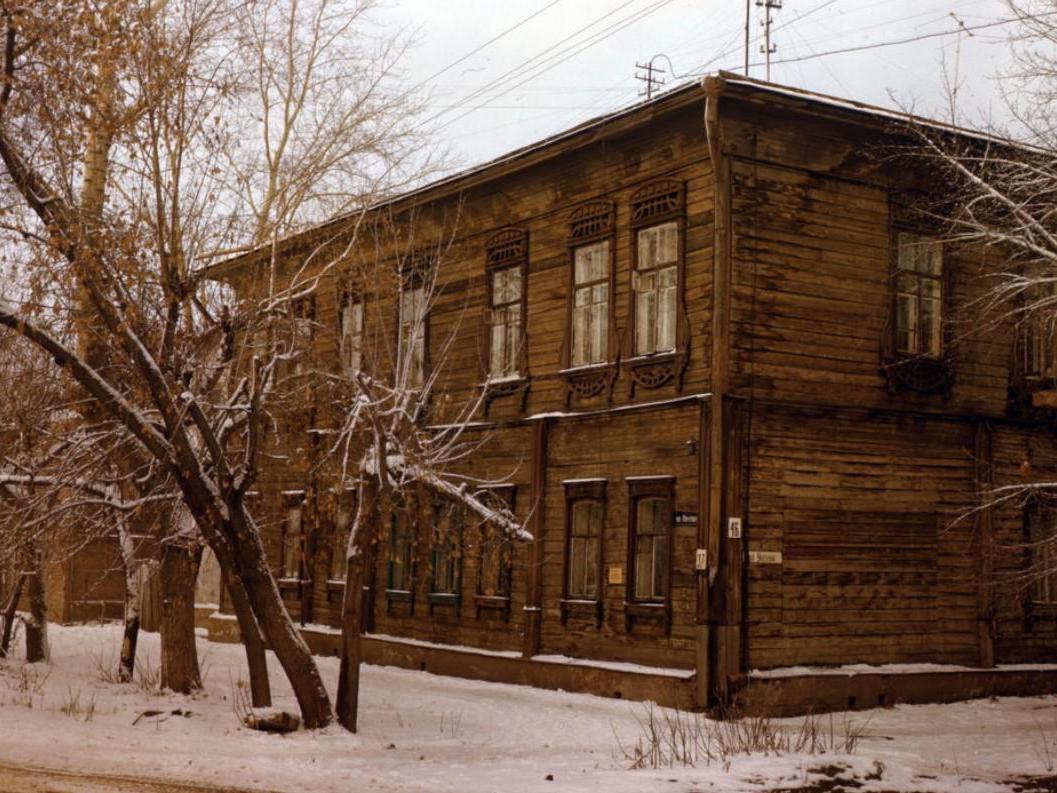
The house as it looked in 1992, with no inscriptions and intact windows
The two-story house at Pochtovaya, 37 is not just old — it is sick. The windows are broken, the wood of the facade has blackened and cracked, and the once-beautiful carved window frames with a barely perceptible solar symbol seem not like decoration but a last plea for help.
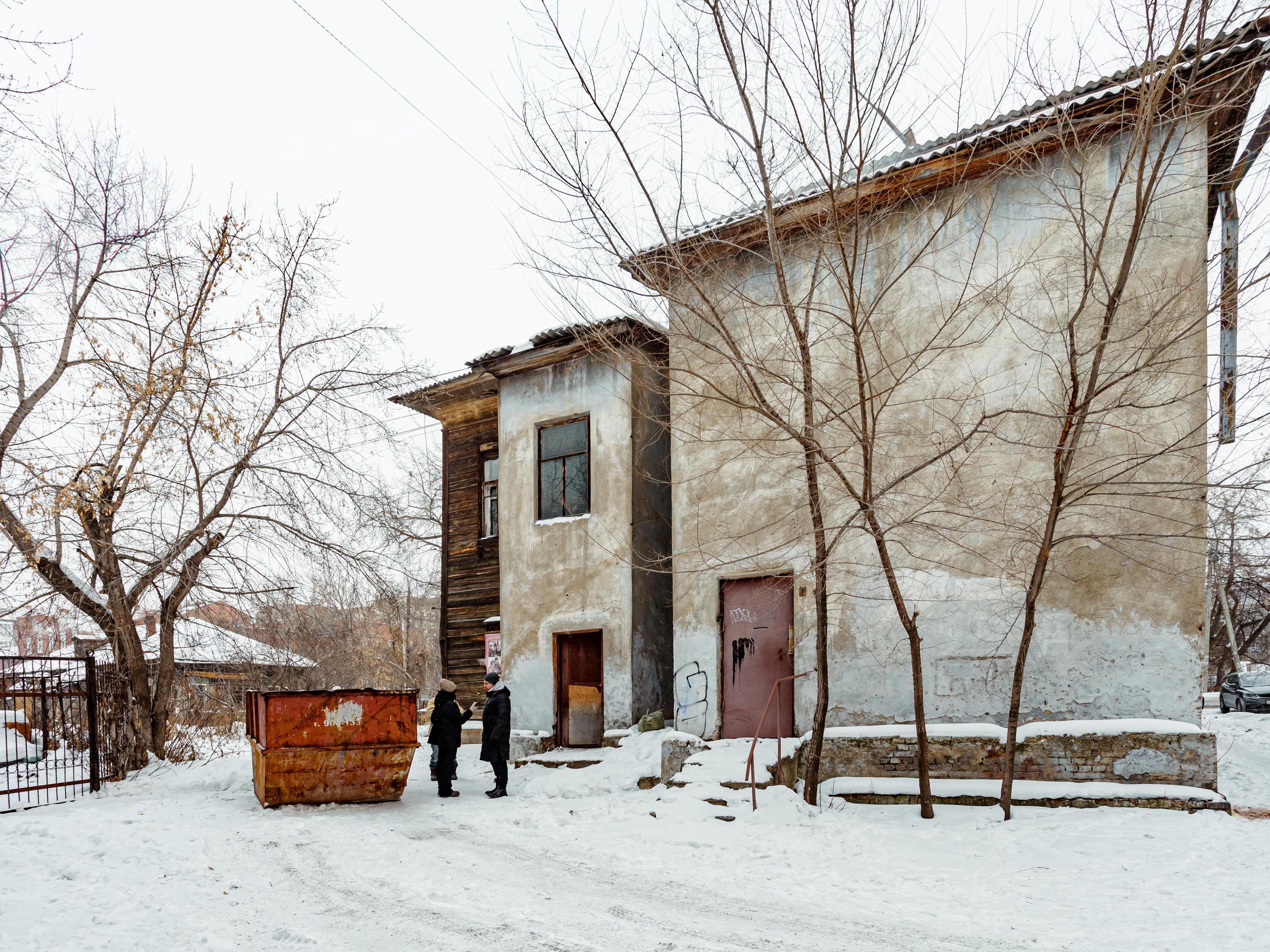
Even on the exterior walls of the building, drawings are visible
«This is a unique example for Omsk of an early tenement building. It was built in the late 19th century for renting out apartments. Notice the different carvings on the first and second floors: the lower part is simpler, »grounded,« while the upper part already leans toward Art Nouveau. And these wooden columns separating the apartments are a great rarity. It is an attempt to reproduce elements of stone ceremonial architecture in a modest wooden building,» the historian says as he walks around the house.
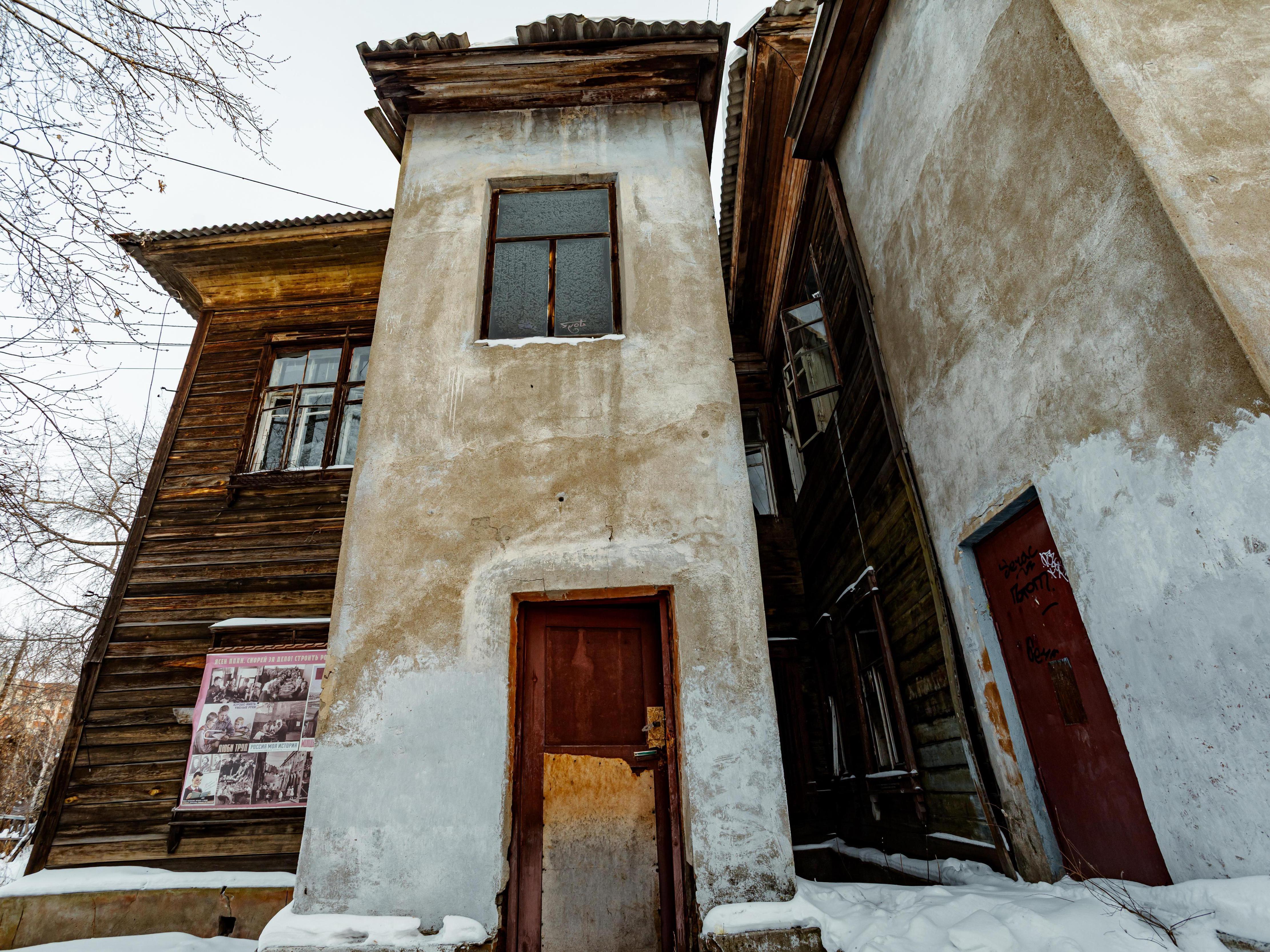
The building will get a new lease on life
The first and second floors differ in height and decor. This is no accident. Initially, the house was one story; the second floor and side extensions appeared later, in the late 19th century.
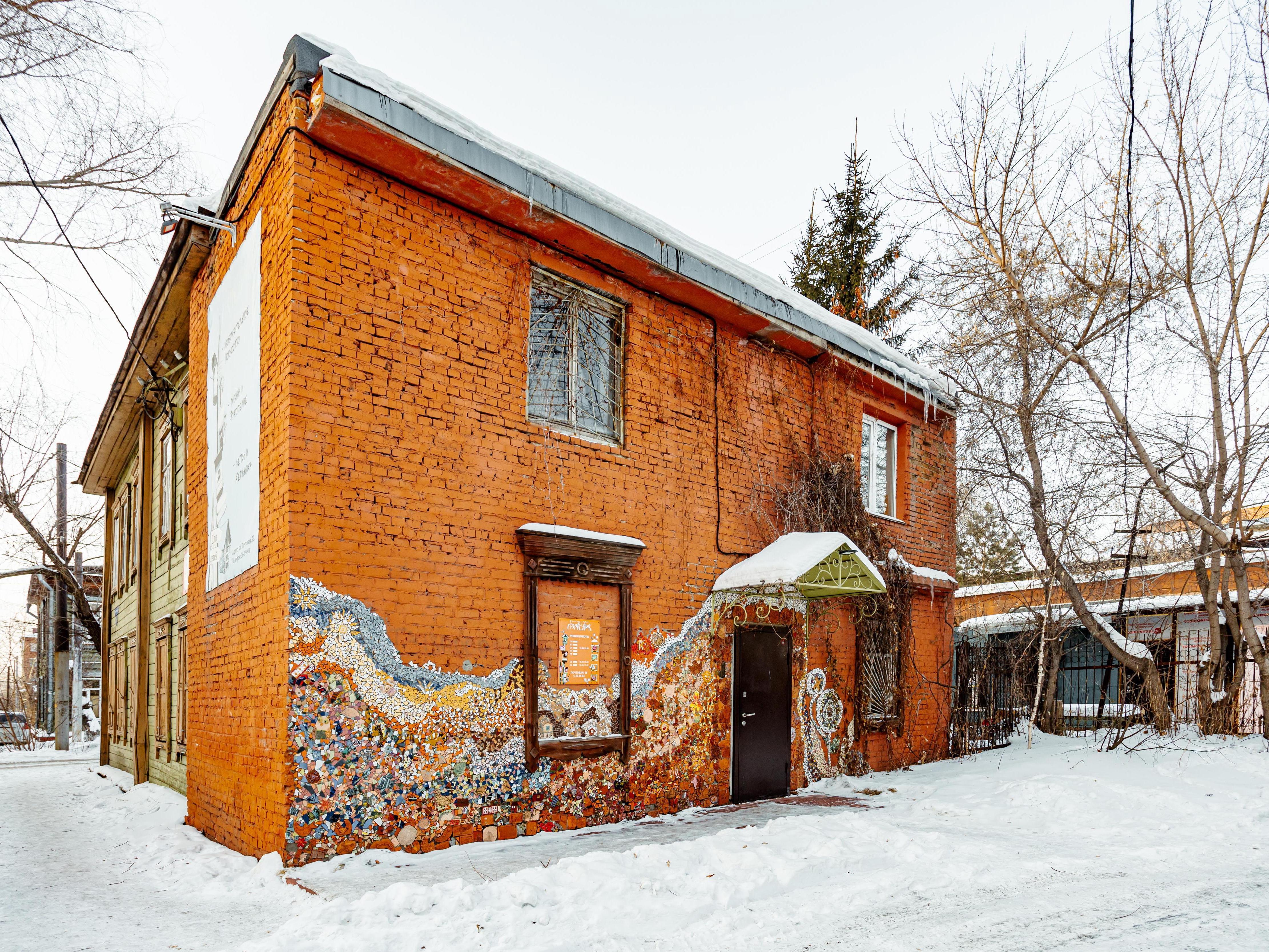
From a distance, it is clear that creative people live in this house
Who Owned the House in the Past?
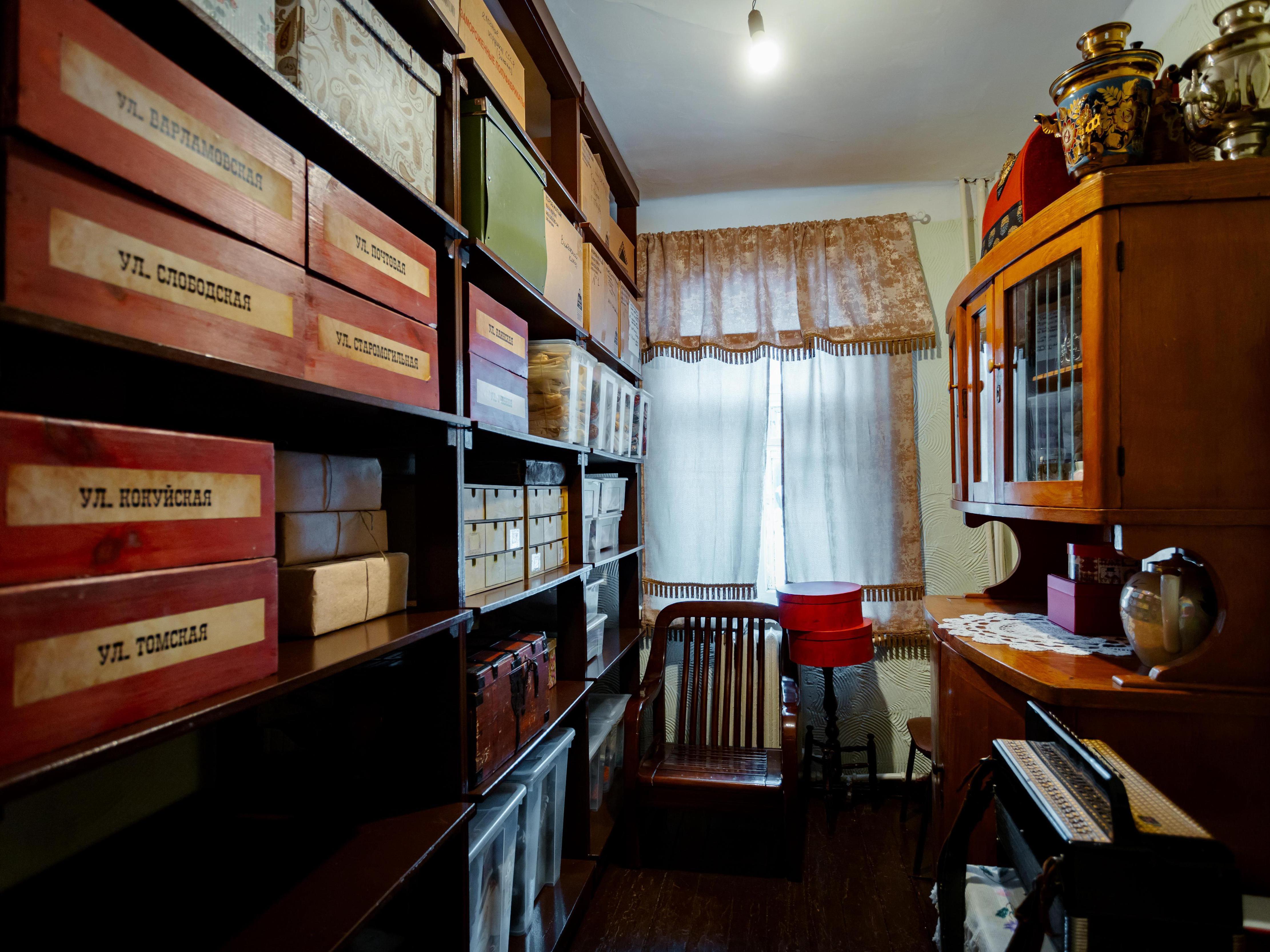
Each room is furnished, but renovations continue
The outwardly unremarkable building is famous for its residents. It is the parental home of the renowned violinist Yuri Yankelevich. His parents, Isai and Sima, received the apartment as a wedding gift from the bride«s father, Judah Kadysh.
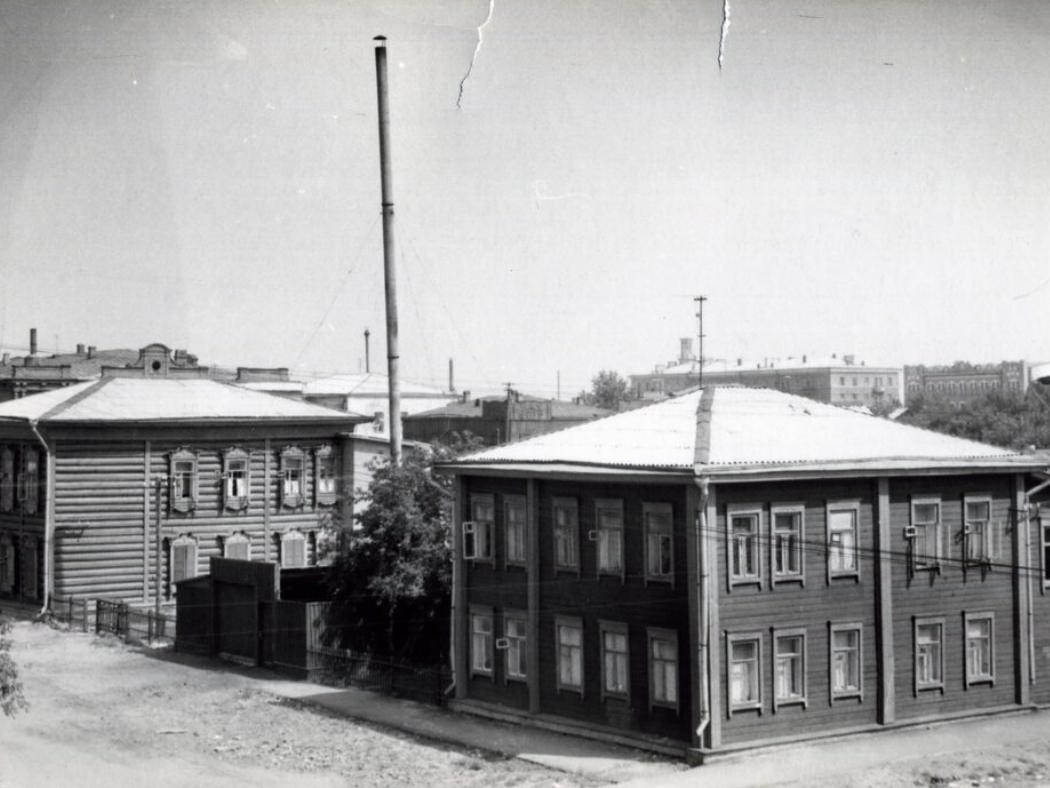
The house in 1960–1966
Yuri himself was born in Switzerland, but as an infant he was brought to Omsk, where he lived from 1910 to 1924.
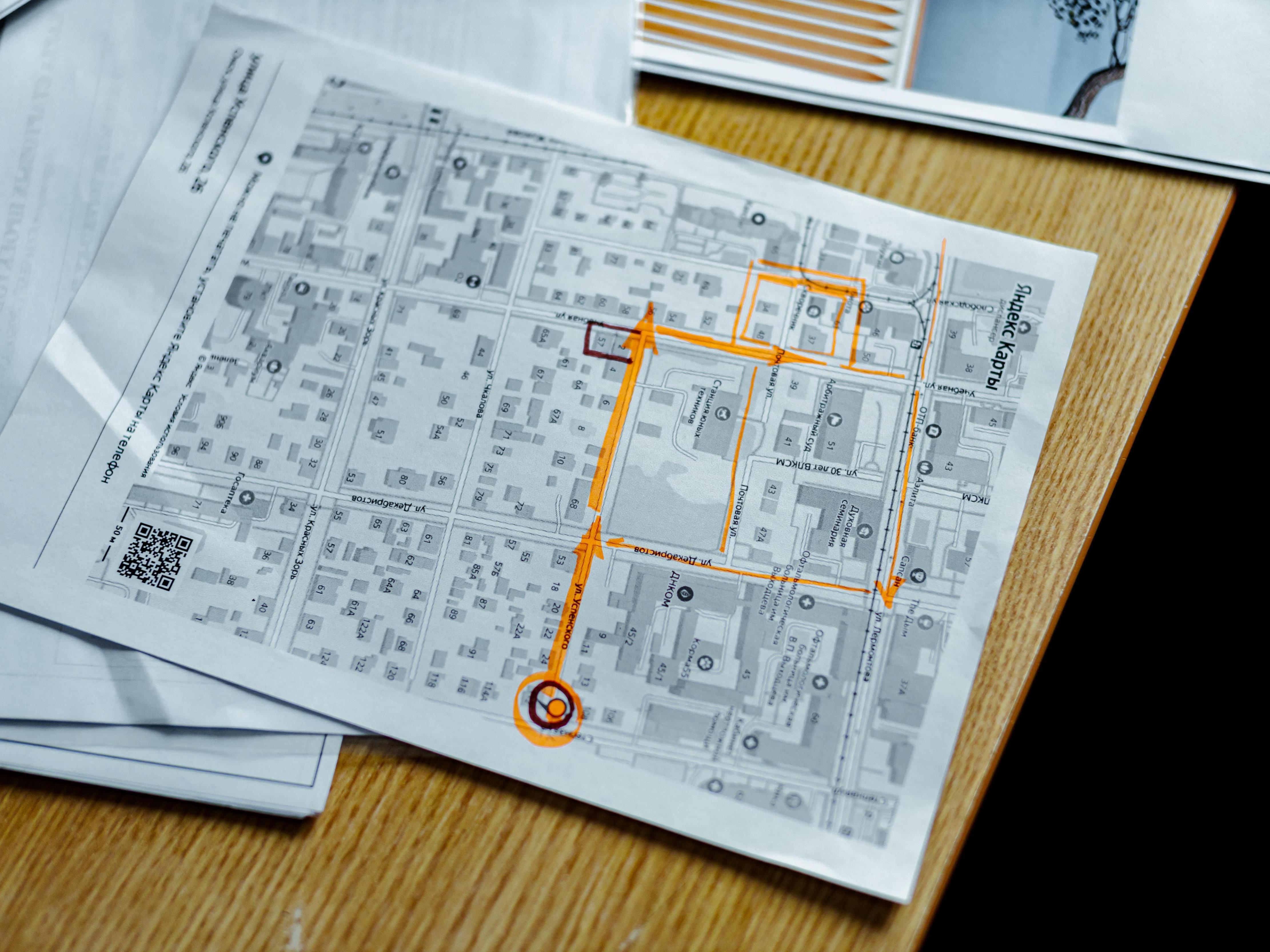
A diagram showing the houses slated for restoration
It was in these rooms that the boy first heard serious music. His father made music, and artists touring Siberia gathered in the house. Here Yuri began his first violin lessons with teacher Anisim Berlin. The walls of the house remember the sounds of his first scales and etudes. From here he would leave for Moscow to become a world-famous teacher, mentor to Vladimir Spivakov, Vladimir Tretyakov, and Pavel Kogan.
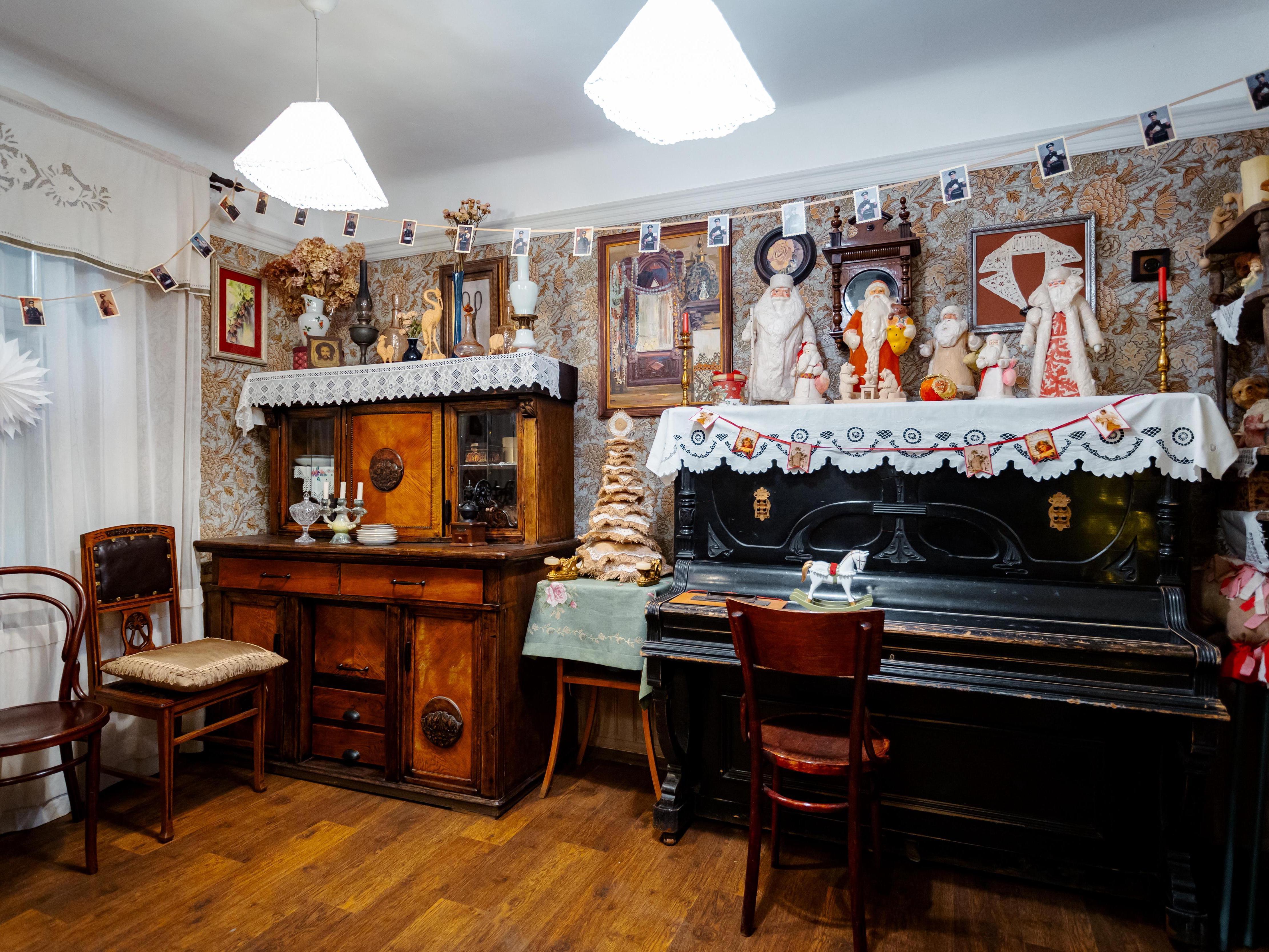
History in this house is around every corner
From 1925, the house became a «medical» one: famous doctors lived here — pediatrician Olga Sokolova-Ponomareva, surgeon Alexei Ponomarev, and pathophysiologist Israel Pentman.
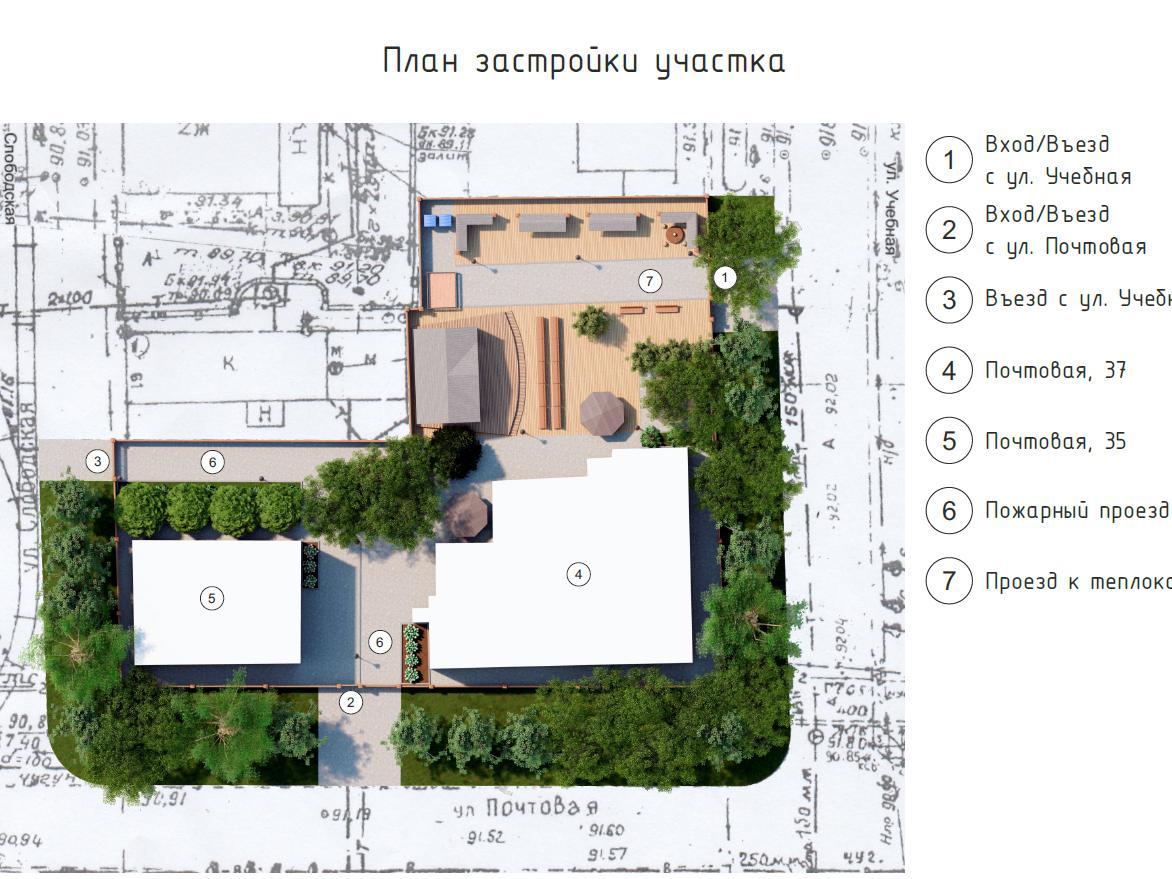
The development plan
What Happened to the House Now?
Now the walls hear only the howl of the wind. And if outside the house looks merely battered, inside it is dead. Crossing the threshold, one gets chills, but not from the majestic view. Uninvited guests are met by semi-darkness and thick air with sharp notes of mustiness, mold, and acrid dust.
All senses work at maximum because you do not feel safe in this building. Every step breaks the echoing silence: underfoot lie broken glass, crumbling plaster, and dried-out wood.
The gaze snatches from the dimness bare walls covered with obscene graffiti, holes in the ceilings, and beams sticking out like ribs. The bathroom is a surreal installation of a broken toilet and peeling tiles. Climbing the stairs, you realize that only a skeleton remains of the former comfort.
A Ray of Hope
The house was vacated around 2019, and since then it has been rapidly deteriorating, but there is a ray of hope. The building has acquired an investor who plans to bring music back to the walls where it was once born.
As NGS55.RU was told by a representative of the investors, lawyer Mark Maslov, the idea of purchasing the building arose after conversations with the head of the neighboring studio «Skvorechnik» (Birdhouse), Irina Zinkevich, who dreams of reviving the quarter historically considered Jewish.
The condition of the building at Pochtovaya, 37 is deplorable: years of neglect, a fire, disconnected utilities. Currently, debris is being cleared, and seven years of work lie ahead: the first two years will be spent on developing a project for repair and restoration work to preserve the cultural heritage site.
«Of course, part of the premises will go to historical compositions. This house is associated with famous names, so the main goal is restoration. We will try to preserve it as much as possible in its original state. But we also understand that some of the premises must work for modern realities.»
After some time, a Yuri Yankelevich music lounge, cozy cafes, or other modern spaces could appear here.
House No. 35: A Story That Continues
Now let«s take three steps to the left, to house No. 35, which looks different. Also two-story, wooden, but more monolithic and solid. You can tell the houses are connected by the identical window frames. The main difference is that someone is looking after it. The windows are clean, the roof is in order, no trash at the entrance. And that»s indeed the case: the house houses the children«s art studio »Skvorechnik« (Birdhouse).
This house belonged to the Kadysh family. Judah Kadysh, a retired cantonist soldier, bought it in the 1870s. He became one of Omsk«s first photographers, his studio on Tomskaya Street being a progressive business of the time. Here grew up his granddaughter, Olga Kadysh, a pianist who accompanied her cousin Yuri Yankelevich from the neighboring house. In the early 20th century, houses No. 35 and 37 were two halves of one cultural nest, bound by kinship and music.
A Place Where Creativity Lives
We go inside. Instead of the smell of dampness, there is the smell of wood, paint, and paper. Instead of silence, there is a muffled hum of creativity: knocking, creaking, fragments of conversation. The walls are decorated with window frames from other houses in the quarter that could not be saved from demolition. In one of the rooms, the atmosphere of an old-fashioned living room has been recreated, where themed classes are held.
After municipalization in 1923, the house became a communal apartment. And in 2013, the children«s art studio »Skvorechnik« moved into it, half-abandoned. Its head, Irina Zinkevich, single-handedly wrested the building from destruction.
«When we came, it was ruins: floors rotted, utilities in terrible condition. We just started slowly repairing it.»
Thanks to Irina, in the old house you feel not like an uninvited guest, but a welcome visitor. It is not empty, but lives, breathes, creates. Memory is preserved not as a burden, but as inspiration. The space speaks to you: «Look, what beauty there was, it exists now, and can continue.» After the cold and emptiness of house No. 37, you want to slow down, exhale, touch history that has not ended but found the strength for a new turn.
Irina shows old doors with original hardware that were preserved and talks about the «Slobodskie Domiki» (Sloboda Houses) project. Her dream is not to save one house, but to create an entire cultural cluster. Plans include uniting several historic buildings in the Cossack Sloboda — a historic area that includes the Jewish quarter. Together with like-minded people, she developed a full plan to create the historical and cultural cluster «Slobodskie Domiki.»
According to the plan, the Yankelevich house, the Kadysh house, and neighboring vacated landmarks will become a single space. There are plans for small museums, such as a toy museum or a pharmacy museum in the neighboring former pharmacy building, vintage buffets with historic menus, summer concert venues in the courtyards, and art residencies.
«Imagine, here, two steps from the center, quiet courtyards with a summer stage, a small toy museum in the next building, a buffet with historical recipes. People would come here not to sigh over ruins, but to live, create, drink coffee, listen to music. Children would have workshops, and tourists would come for the unique atmosphere, like in Kolomna or Tomsk. We have already taken the first step — we did not let this house die. Now we need to go further.»
The goal is not to preserve the past, but to revive it, making the area attractive for life, creativity, and tourism.
«We are now an Atlantis sinking underwater. But if we do nothing, we will lose the last islets. We need to create at least one square where you can feel the history of the city, its authentic atmosphere.»
Earlier, NGS55.RU reported on the fate of an old Jewish estate.