Which Frogs Can Fly?
Flying frogs are real amphibians that have mastered gliding flight. They were discovered in the tropics of Asia and Madagascar back in the 19th century, but they still amaze biologists with their unique adaptations.
Apr 24, 2026 0
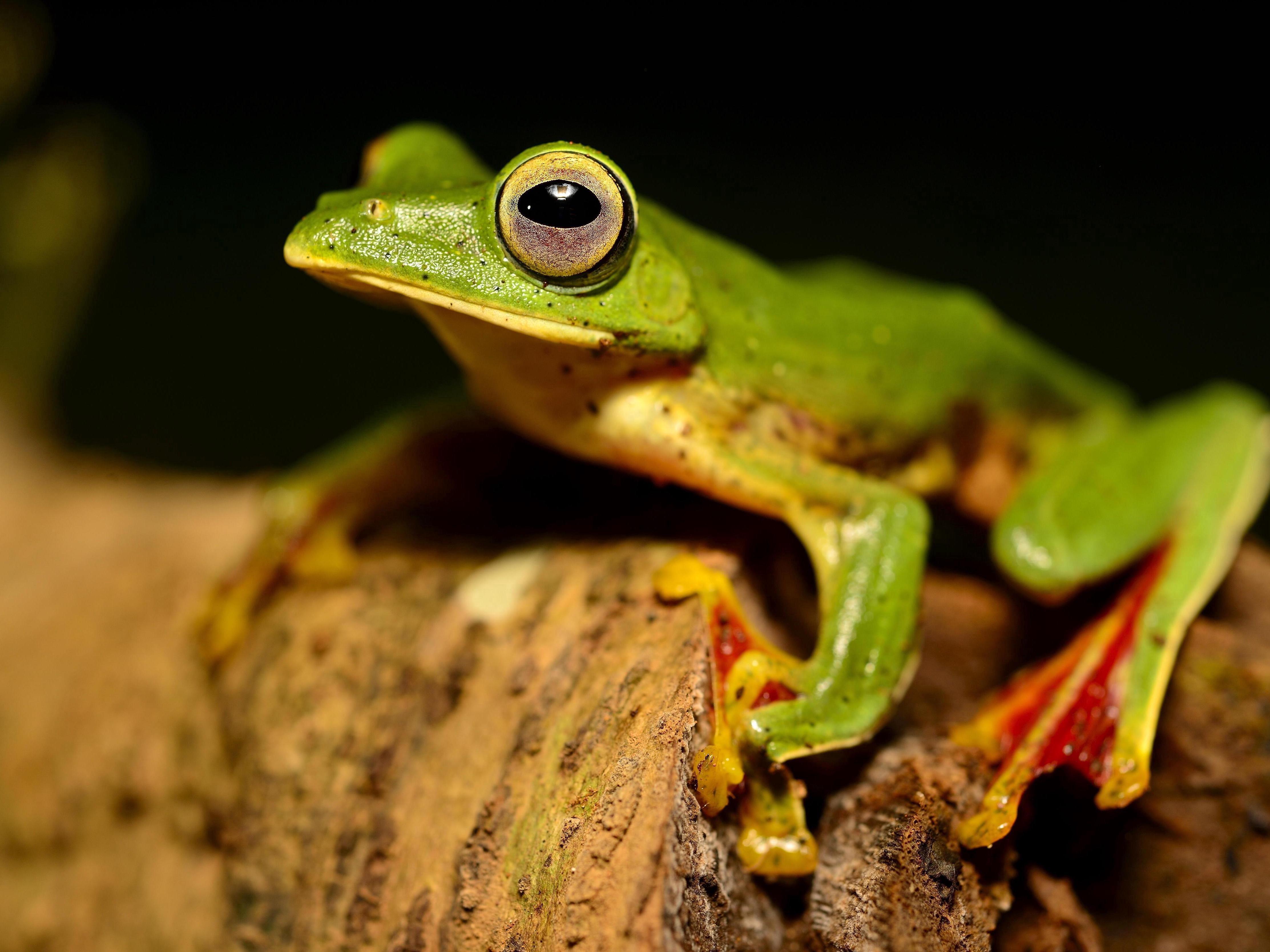

A flying frog with extended webbed feet gliding between trees in a tropical forest.
Source:
In the dense tropical forests of Southeast Asia and on the island of Madagascar, there live amazing frogs that don«t just jump — they glide through the air. They are considered the first amphibians to master this mode of locomotion — in essence, they «jump off» from trees, turning a fall into controlled flight.
The first European to describe these creatures in detail was the naturalist Alfred Russel Wallace. In the mid-19th century, during an expedition in Malaysia, he was told about a large tree frog that had supposedly «swum» through the air from a tall tree. Wallace obtained the animal for study and was struck by its anatomy.
On the frog«s front and hind legs, he found extensive webbed skin. When the animal spread its toes, the area of these webs significantly exceeded its body area. In addition, the frog could inflate itself like a little balloon, which probably improved its aerodynamic properties. Like other arboreal species, it had suction pads on its fingertips to help it grip branches.
Wallace suggested that such unusual anatomy allowed the frog to glide when leaping from tree to tree. Subsequent observations by travelers and scientists confirmed this hunch: flying frogs can cover distances of over 10 meters (33 feet) through the air. For an animal measuring only up to 20 centimeters (8 inches), this is a real achievement.
All flying frogs belong to the family Rhacophoridae. They are typical inhabitants of tropical forests, most of which spend their entire lives in the trees and almost never come down to the ground. Even reproduction in many species occurs in the canopy: females build nests from mucus whipped into thick foam, where eggs and tadpoles develop. Some related species of this family live in water and use their wide webs as oars for swimming.
Modern biologists continue to study flying frogs, examining the mechanics of their gliding, evolution, and behavior. These animals are a vivid example of how nature finds unexpected solutions for survival in specific conditions. However, their existence is now threatened by tropical deforestation, making the conservation of these unique amphibians particularly urgent.
Read more