Sewage Spills Plague Residents of Two Novosibirsk Complexes
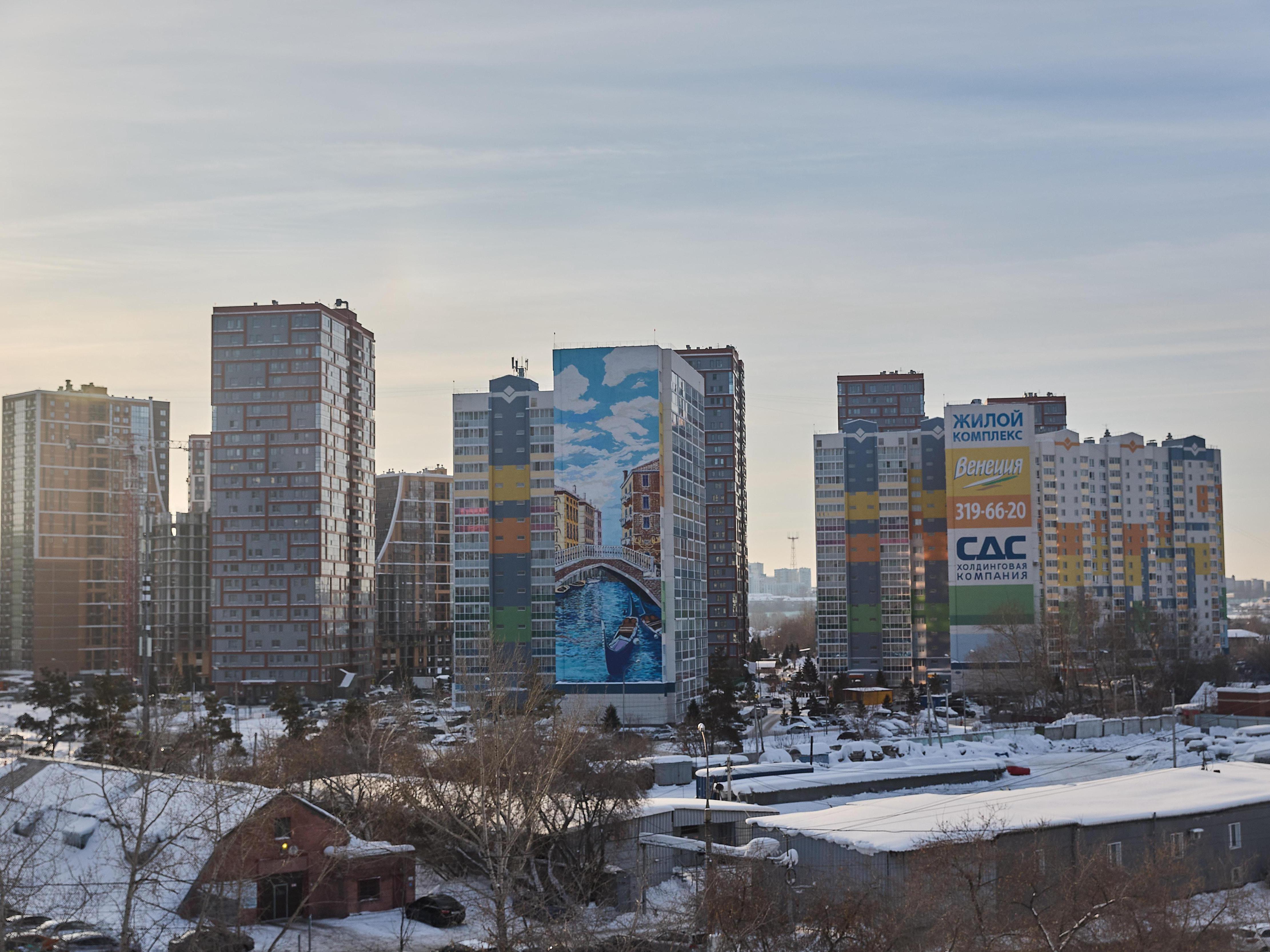

The territory of the Venice residential complex near the Dimitrovsky Bridge has been flooded more than once due to sewer problems. In December last year, a utility accident affected the exit from the neighborhood on Yasny Bereg Street — car wheels literally sank. It turned out that the city administration had never taken the sewer system onto its balance, and the lighting along the street had no owner for a long time. NGS learned how this happened and what the developer plans to do.
«It Is Difficult to Fix the Problem»
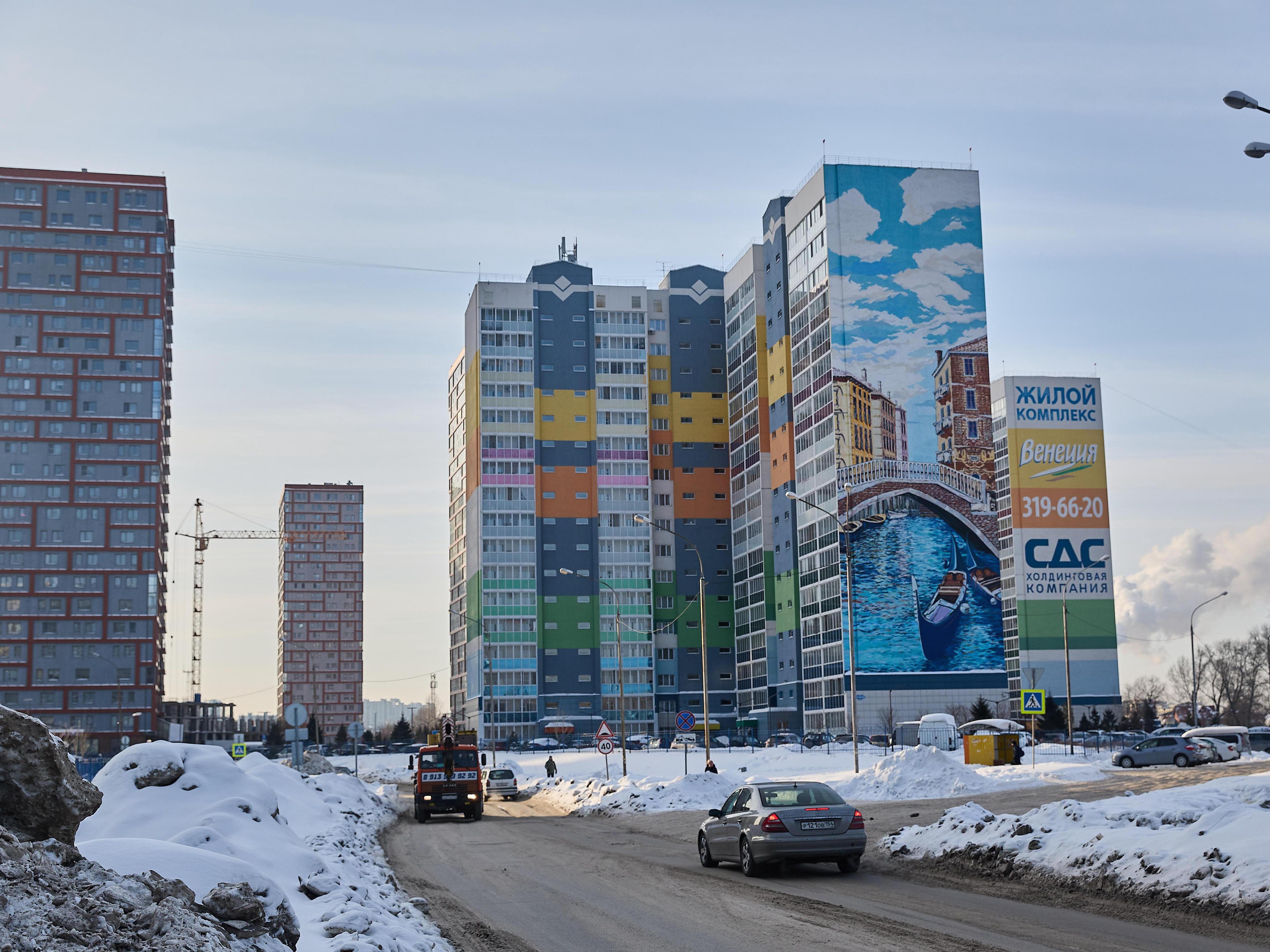
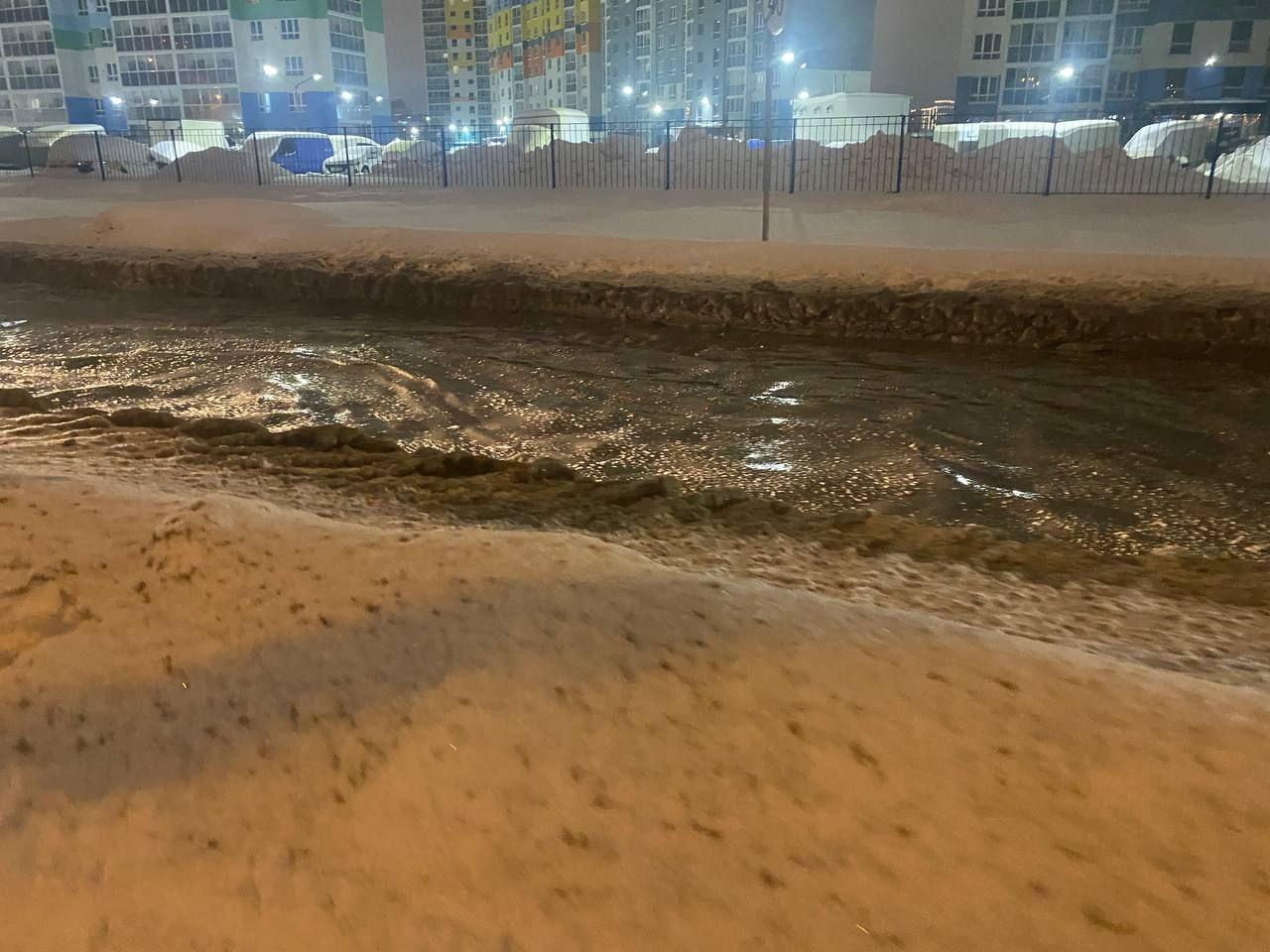
Sewage spills near the house at 4 Yasny Bereg Street, according to local residents, occur regularly. Usually, when a small amount of liquid appears on the street, the sewer is quickly cleaned. But in late December, one of the largest utility accidents in the neighborhood occurred: due to a defect in the network, the main street connecting the Yasny Bereg and Venice complexes with the Dimitrovsky Bridge was flooded.
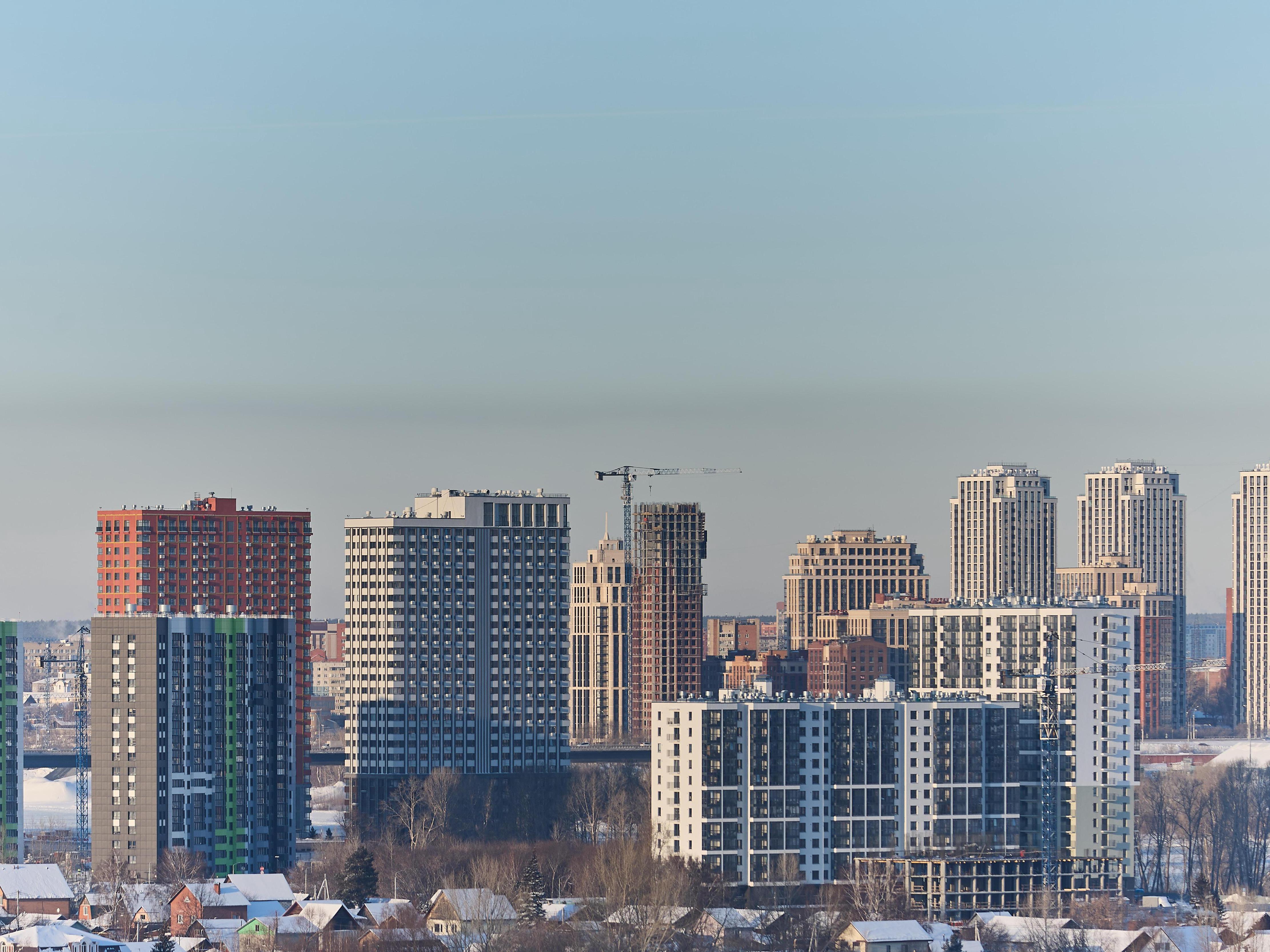
The sewage began to rise around December 23, and two days later it spilled onto the road, causing car wheels to literally sink in the sewer river.
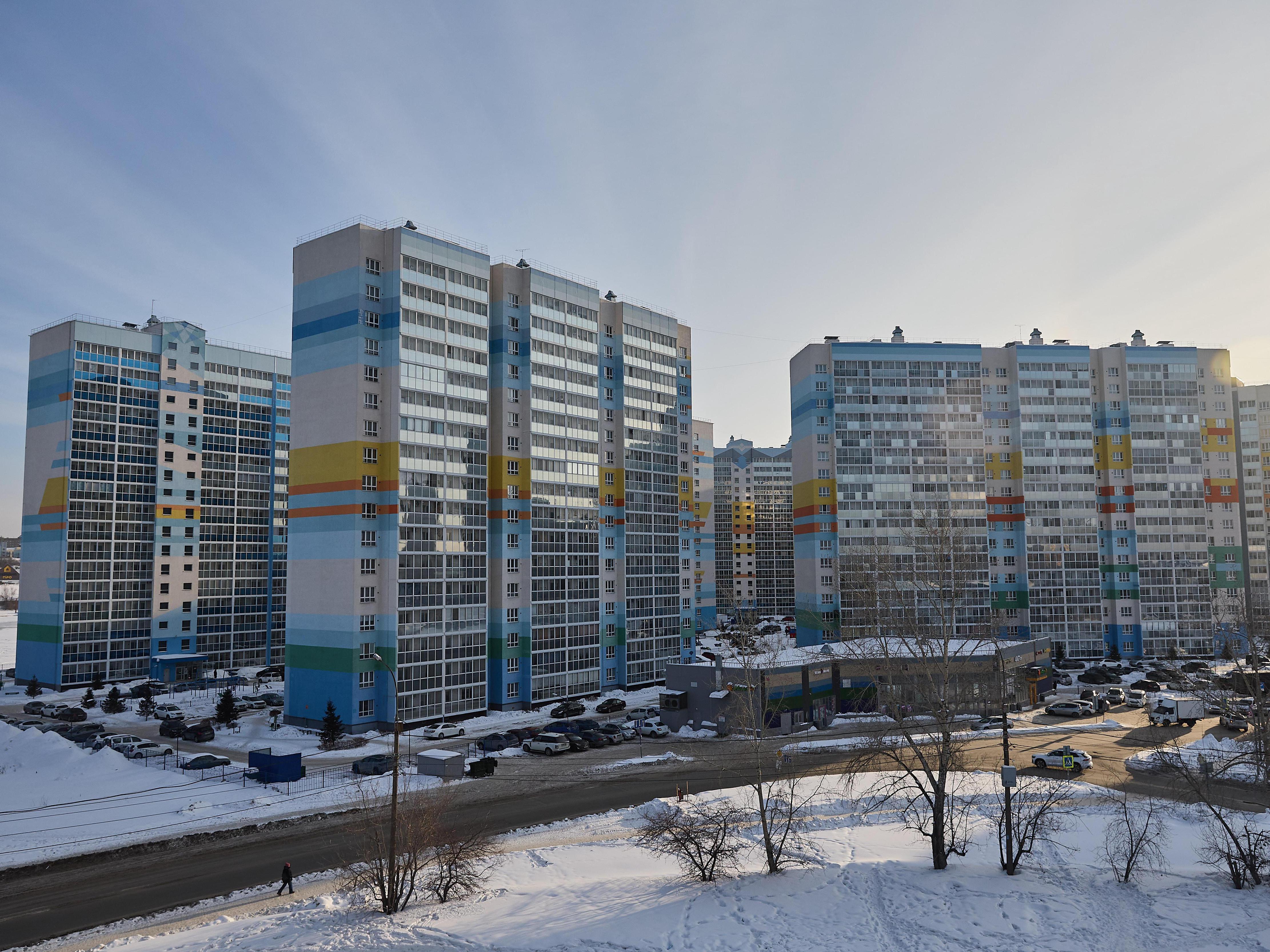
«For several days the area smelled of sewage, I didn’t pay attention to it. In the morning the road turned into a river, cars drove very slowly. There was a slush on the road: liquid mixed with snow,» NGS reader Valentina said.
Through the «Solve Together» portal, residents left dozens of complaints, noting that blockages in the sewer network occur regularly. This was confirmed by NGS and a representative of the TSN «Venice-1», which services the house at 4 Yasny Bereg Street. According to Alexander Zakharov, the defect causing the spill was already present at the time of the house’s construction.
«Everything was inspected long ago, the solution is one: we need to replace a section of the network about three to four meters long. The management company «Novy Gorod» cleaned it, Gorvodokanal cleaned it, we cleaned it last year because our basement was flooding,» Alexander Zakharov explained.
It turned out that the developer of the Venice residential complex — the company SDS-Stroy — could not transfer the networks to the municipality after putting the house into operation: the city did not accept them onto its balance due to a technical error.
According to Kontur Focus LLC, SDS-Stroy was founded in 2006 in the city of Kemerovo. The general director is Rodion Gerasimov, the ultimate owner is Svetlana Rybalchenko. At the end of 2024, the company’s revenue amounted to 31.8 billion rubles (approximately $353,300,000 at current rates), net profit — 45.8 million rubles (about $508,900 at current rates).
The company is engaged in large projects in Novosibirsk and the Kemerovo region, particularly in Sheregesh. Among them are buildings of social institutions, residential complexes (in Novosibirsk, besides Venice, this includes Legendary Northern on the territory of the Severny Airport).
Evgeny Ponomarev, general director of the management company Novy Gorod, which services the other houses of Venice, explained to NGS that the management company is spending money on sewer repairs. He noted that specialists suggested the developer cover the costs, but he refused.
In 2025, the management company went to court. From the ruling of the Kemerovo Arbitration Court, it follows that Novy Gorod is demanding 214,600 rubles (about $2,400 at current rates) from the developer for improper maintenance of the sewer system. The developer responded that the management company voluntarily spent money on its upkeep. The next hearing is scheduled for February 4 of this year.
The December accident could not be resolved quickly. Then the company SDS-Stroy was helped by the management company of the neighboring Yasny Bereg complex, whose residents also suffered from the sewage spill.
According to Galina Panarina, director of service at the Meta group, the management company Akva acted as a liaison: specialists talked with SDS-Stroy and other responsible parties, and the management company brought in its own emergency team that works on sewers.
«We provided the team to the developer, he paid for the pumping on the site himself. We also showed the place where the defect might be and discussed options for solving the problem. The networks are not ours, but when the water spilled onto the road, we decided to help,» Galina Panarina explained. «It is difficult to fix the problem because there are internet cables nearby — you can’t just dig in, you might tear the cable.»
According to Galina Panarina, there is a defect in the pipe that causes the sewer to clog during periods of high load on the network: on holidays and pre-holiday days. If the neighboring developer quickly cleans the network, such a spill does not occur, but if there is delay, the sewage overflows.
«Why the Networks Were Not Accepted»
The press center of the Novosibirsk mayor’s office told NGS that the wastewater networks of three houses in the Venice residential complex at 1st Chulymskaya Street, 112/4, and Yasny Bereg Street, 4 and 6, had not been transferred to the city by SDS-Stroy. A month after the major accident, officials convened a commission, which decided that the municipality is ready to take over the sewer management, but first the developer must correct a number of deficiencies.
«In particular, it is necessary to mark and tie the wells to hard objects on the ground, hydrodynamic flushing of the line, cleaning of wells, installation of ladders, and replacement of hatches,» the city administration explained.
According to the mayor’s office, the developer is correcting the defects with its own efforts. The work is being supervised by the MUP Gorvodokanal.
The press service of SDS-Stroy noted that after building the networks of the Venice residential complex, the developer sent a request to the city administration to accept the networks onto the city’s balance sheet.
«We were refused for a technical reason: there is no technological connection between the networks we built and the existing city sewer system. Then it was necessary to inspect the network for subsequent transfer from the city administration to MUP Gorvodokanal for operation,» the company’s press service reported.
According to the developer, in October 2025, an accident occurred on the sewer network section, and Gorvodokanal specialists inspected the pipe and found a hole. The defect appeared due to the laying of an internet provider line, which the company did not coordinate with the developer. SDS-Stroy, the company said, helped in eliminating the consequences: organized access to the site, provided project documentation, and involved contractors to localize the damage before the facility was transferred to the management of MUP Gorvodokanal. Repair work is currently underway.
«The main obstacle to the transfer of the networks is the presence of damage caused by the unauthorized laying of an internet network by the provider without agreement with SDS-Stroy,» the developer emphasized.
The developer plans to transfer the domestic sewer networks to the municipality’s balance. A repeat application will be sent after all deficiencies are corrected.
«Sometimes at the Expense of Residents»
One participant in the construction market told NGS that transferring sewer networks is a long bureaucratic procedure. It begins even before construction, with obtaining technical specifications from Gorvodokanal, which specify where the network can be connected, permissible loads, pipe diameter, and other parameters. Based on these requirements, a project is developed and undergoes expert review.
During construction, a large number of documents are processed: hidden work reports, tightness tests, geodetic surveys. Without these, the municipality will not accept the networks. The connection itself to the city system also goes through the resource supply organization: the tie-in is coordinated and formalized with a separate act.
«After completion of construction, a package of documents is transferred. Then Gorvodokanal specialists inspect the networks on site: they check wells, pipe condition, compliance with the project. If there are violations or defects, they are sent for revision at the developer’s expense,» the NGS source noted.
After the deficiencies are corrected and re-inspection, the specialists sign an act determining which section of the network belongs to the municipality and which belongs to the management company. If the networks have not been transferred, their full maintenance falls on the management company or the developer. This usually leads to additional costs, sometimes at the expense of residents.
You can find out whether your developer has transferred the networks to the city from your management company or from Gorvodokanal.
«Nobody’s Streetlights»
Another problem for residents of houses near the Dimitrovsky Bridge is non-working lighting on Yasny Bereg Street near the Venice residential complex. In 2023, the mayor’s office reported that the line was presumably built by SDS-Stroy — then the lighting was at the stage of being transferred to the municipality. But in response to an NGS request, the developer said that it did not design or build outdoor lighting lines on that section.
The press center of the mayor’s office commented that the lighting is already owned by the municipality: the line was taken onto the balance as ownerless. MBU GTSODD received technical specifications and a connection contract, and the institution’s specialists are processing documents for the development and approval of a project with all owners of nearby communications. After this, the lighting line will be transferred to AO Novosibirskenergosbyt, which will supply voltage. All work is planned to be completed in 2026.
Recently, NGS wrote that residents of a house in the center of Novosibirsk lived without hot water for several months. It turned out that the pipe supplying water to their house is ownerless.