Horimono: How Tattoos Became a Symbol of Rebellion

The word «tattoo» comes to us from Polynesian languages. Some researchers believe it derives from the words «ta» (picture) and «atu» (spirit), while others associate it with the god Tiki, who taught people to decorate their bodies. However, the history of body painting began much earlier: in Hungary, archaeologists found Neolithic figurines over seven thousand years old, whose chests and buttocks are covered with ritual ornamentation. Although tattooing did not originate in Asia, it reached incredible artistic heights there, and the Japanese tradition of horimono is the best proof.
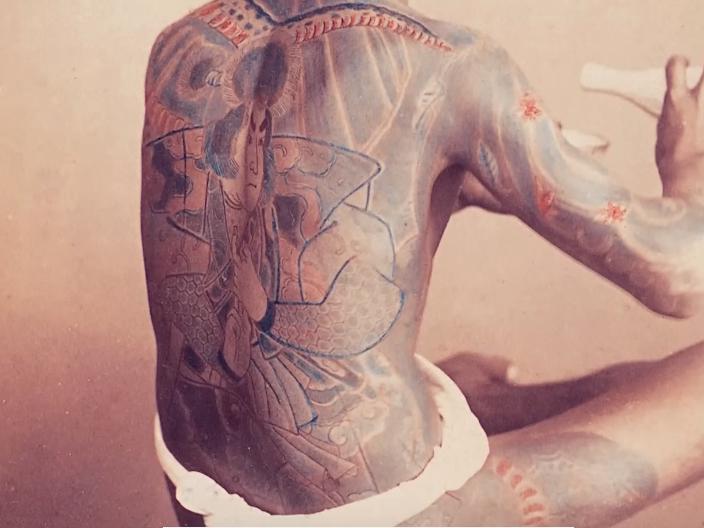
As early as the 6th century in Japan, criminals were branded with indelible marks — this practice was called «nesaku». From such marks, one could read a person«s entire criminal biography. Over time, body designs evolved, and by the 18th century they had become a genuine art form, which received the name horimono.
The heyday of horimono came during the Edo period, when the authorities sought to regulate all aspects of life with strict Confucian norms. Townspeople, unable to openly express dissent, found their way of resistance — through aesthetics. In the cities, the culture of «ukiyo» («floating world») arose, which prioritized not duty to the state, but personal experiences, emotions, and dramas of ordinary people. It was embodied by kabuki theater, erotic ukiyo-e prints, and, of course, tattoos.
Horimono masters gladly «poked» onto clients« bodies the heroes of folk legends and scenes from urban folklore. Such a tattoo became a silent manifesto: the bearer of the design declared that he lives as he wants, not as prescribed by the rulebook. The depiction of a mythical character was a sign of cultural opposition, a kind of rebellion of the plebs against samurai morality.
Some traditional images in tattoos were deliberately reinterpreted. For example, the carp, symbolizing perseverance in the Far East, became an emblem for those who did not wish to honor the military aristocracy. Common townspeople were forbidden to display weapons and armor on Children«s Day, so they hung paper carp — as a challenge to knightly attributes.
The image of Kintaro — the Golden Boy, a popular hero of Japanese folklore — also transformed. In legends, he appears as a mighty warrior, but in tattoos he was more often depicted as a child raised in the forest by his mother and befriending wild animals. The emphasis shifted from samurai valor to natural courage, connection to the earth, and simple human values.
Of course, most horimono themes remained within the bounds of traditional folklore, but the very practice of wearing large, artistic tattoos was a challenge. Even today, when Japanese tattoos have become part of global culture, in Japan itself they retain a shade of marginality, reminding of their rebellious origins.
14 Symbols Encoded in Horimono Tattoos
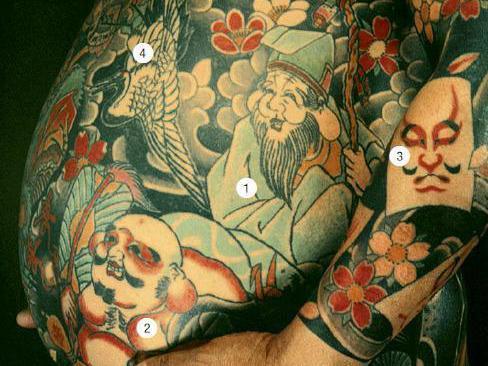
- 1. Jurojin — god of longevity and wisdom. His shaku staff is adorned with a scroll containing secret knowledge about all living beings and recipes for immortality. Jurojin is easily recognized by his scholar«s hat.
- 2. Hotei — deity of compassion and happiness. His large belly symbolizes the boundless generosity of the soul and the ability to contain the world»s joys.
- 3. Mask — often a mask of a demon or a Noh theater hero. Symbolizes a challenge to samurai authority, representing the image of a bold and fearless townsman.
- 4. Crane — classic symbol of long life, constant companion of Jurojin. It was believed that cranes carry on their wings to heaven those who have attained enlightenment.
- 5. Kintaro (Golden Boy) — helper in overcoming life«s difficulties. Born in the mountains and possessing extraordinary strength, he befriended animals from childhood and understood their language, embodying unity with nature.
- 6. Haramaki — a special bandage covering the abdomen. In Japan, the abdomen (hara) is considered the center of life force and the soul»s dwelling. A tattooed haramaki served as a talisman against evil influences.
- 7. Peony — a flower that wards off evil spirits. Being more of a Chinese symbol, it was sometimes seen as an alternative to the chrysanthemum — emblem of the imperial house.
- 8. Characters — the master«s signature (horishi). Tattoo artists in Japan were respected artists, and many placed their unique mark on their work.
- 9. Dragon — embodiment of strength, wisdom, and luck. Unlike European monsters, the eastern dragon is a divine patron, bestowing water, fertility, and wealth. Its scales often resemble those of a carp.
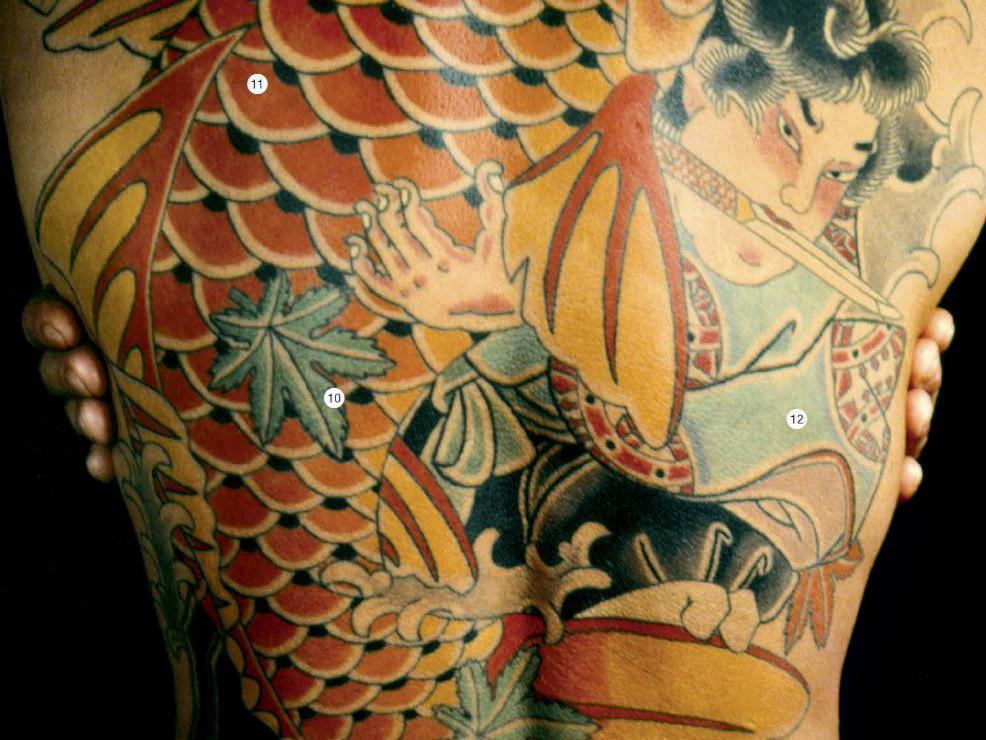
- 10. Maple leaves — symbol of longevity, as a maple can live for several centuries. However, in art they also remind of autumn, the transience of time, and the wisdom of old age.
- 11. Carp — personification of perseverance, endurance, and masculine energy. Its incredible vitality made the carp a sacred fish for many deities. A carp tattoo was supposed to bring health, longevity, and many children.
- 12. Adult Kintaro — a rare depiction of the Golden Boy as a mature warrior in samurai armor. A popular subject is Kintaro fighting a giant carp, highlighting his extraordinary strength.
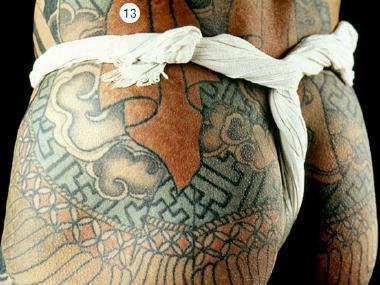
- 13. Red color — symbolizes life, happiness, and protection from disease. In the Edo period, not everyone could wear red clothing, but the ban did not apply to tattoos, allowing strict rules to be bypassed.
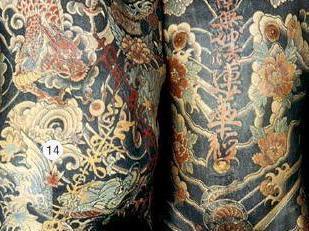
- 14. Chrysanthemum — symbol of perfection and one of the main national emblems of Japan. Its depiction speaks of the pursuit of ideal and beauty that does not fade with years.