Married at 10, father at 14: Romani man's dual life in Yekaterinburg


Maxim lives in a Romani camp but, as he says, leads a «Russian life».
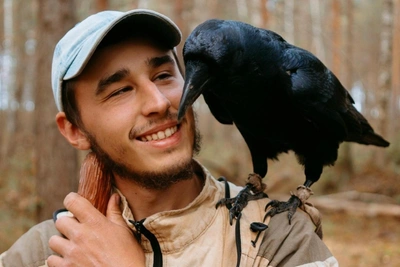
Maxim Ditsa is a Romani man who breaks stereotypes. He worked as a model and later changed careers to become a successful restaurateur, co-owner of two bars: the already well-known «Negyodyai» and the brand new «House of Culture». He doesn«t steal horses or children, doesn»t adorn himself with gold chains, and doesn«t tell fortunes. Recently, he started a blog where he laughs at myths about the »mysterious« life of the camp.

Maxim has been in the restaurant business since 2022.
At the same time, Maxim was born and raised in a settlement in the VIZ neighborhood (in Yekaterinburg), so he couldn«t avoid Romani traditions. As a teenager, he married, dropped out of school early, and by age 29 became a grandfather. In an interview with E1.RU, the entrepreneur told how the customs of his people are preserved in the modern world.
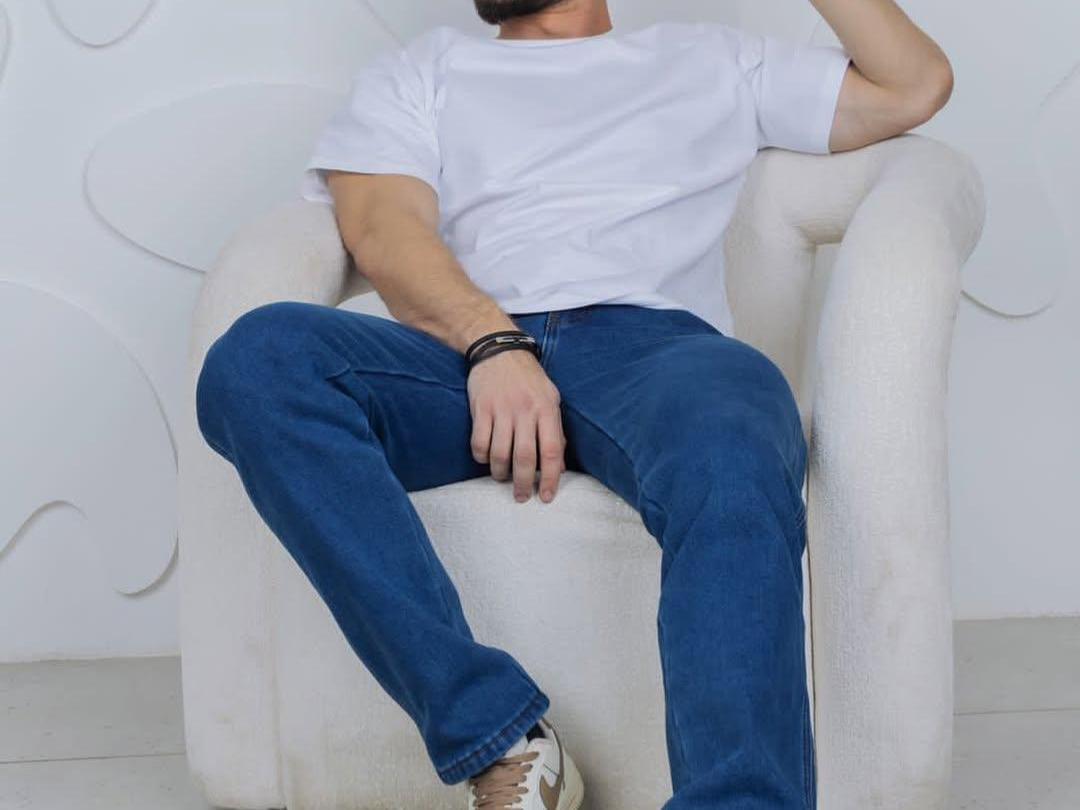
Maxim worked as a model for shopping centers and magazines.
“People are shocked that I became a grandfather at 29”

Maxim humorously talks about Romani life and thus disarms haters.
— You started a blog with the prompt «Hello, I»m a Romani from Yekaterinburg,« and the videos immediately became popular. They get hundreds of thousands, even over a million views. Why did you decide to lead with nationality?
Watch Maxim Ditsa«s story in this video.
— It grabs people«s attention. Many are interested in the traditions of other peoples. And with Romani people, there are also many stereotypes—drugs, fur coats, horses, all that kind of thing.
Maxim«s video about becoming a grandfather at 29 got over 1.2 million views.
— And gold…
This video marked the start of his blog.
— By the way, I had two gold teeth as a child. It was fashionable then, I was about ten, I ran to my parents and said I wanted gold teeth too. They put two gold crowns on my canines, but I only had them for about a year. I«m a fair-skinned Romani, and it all looked extremely tacky.
See how Romani people celebrate Christmas.
— You really don«t look much like a Romani outwardly.
— Yes, I hear that constantly. All my acquaintances are surprised. Even more people are shocked when I say I became a grandfather at 29.
— Wow! When did you get married?
— Well, I was married twice. The first time, I was married off as a complete child, at ten years old, and I had no choice then. The bride was four years older, and we weren«t suited for each other at all. After three years, I divorced, primarily due to the age difference. It didn»t work out—we weren«t compatible.
I divorced at 13, and a few months later, I was married off again. But this time, I had a say, I chose the bride. It was a girl from Saint Petersburg, we met. And the bride herself was also involved.
By age 14, I became a father; now I have three daughters. I married off the eldest a year and a half ago; she was 14 at the time. And four months ago, I became a grandfather. I have a granddaughter.
— What«s it like being such a young father?
— I guess it«s cool. When the girls were born, my parents took care of the upbringing, so sleepless nights and diapers were still their concern. And now the children are already grown: the eldest is 15, the middle one is 12, and the youngest is almost 8. So it»s convenient that I«m young, and they»re already teenagers.
— Now do you help with the granddaughter?
— Of course, I come to babysit, but my daughter got married and lives with her husband«s family. So we visit each other. To say I feel like a grandfather—probably not. For me, it»s a bit strange, I«m slowly getting used to the idea.
— Weren«t you afraid to give your child to another family?
— I found good families for my daughters, and all the grooms live nearby. I chose the families, and I know they«re families with average means, not rich, not poor, but the girls won»t want for anything. The eldest lives three houses away from us, all neighbors. Considering the settlement«s relocation, even after moving, they»ll still be near me.
— You have three girls, they«ll all get married in the coming years. Aren»t you afraid the house will empty out?
— No, I just need to have a boy. That«s in the plans.
“Only studied through fifth grade”
— When you had a family, you probably didn«t continue studying? As far as I know, among Romani in the camp, there are no people with higher education.
— Yes, I only studied through fifth grade.
— Do you feel a lack of education?
— When I left school, I thought: «Why do I need education? The main thing is I can count.» That«s what all Romani think, by the way. But as I got older, of course, I realized I should have at least gotten a secondary education. It would have been easier for me. Over time, you can adapt to everything, learn, but many things are harder for me.
So for my daughters, I decided they«ll at least study through ninth grade. If I have a son—he»ll definitely get a higher education.
— The traditional Romani line of work is metal rolling and construction. How did you end up in the food service industry?
— From age 16, I worked as a sales consultant in a fast-food chain, then became a mentor-manager after four years. I moved into the classic Romani business, helped my parents, but started dealing with non-liquid products. Tried it, worked, realized it wasn«t for me.
And then I went into construction. To this day, alongside the two bars, I«m involved in construction. In the season—in summer—I fully dive into construction.
The food service industry was close to me from youth; in my younger years, I became a regular at «Negyodyai» (originally the bar was opened by a different team). And I always dreamed that someday I«d buy this bar. I just had a hunch. And once again in March 2022, I wanted to smoke a hookah—and »Negyodyai« was closed. A few days later, I saw an ad that the bar was for sale.
I immediately decided it was a sign, fate. Right then, I wrote to a friend, suggested buying it, and in three days we became the owners of «Negyodyai».
Are bar guests getting poorer
— In Yekaterinburg, the food service sector is highly competitive. There are many establishments, and not all survive in the battle for customers. How do your bars differ from many others?
— «Negyodyai» has a cocktail bar concept, with a large drink menu and fusion cuisine. And most importantly, all the dishes are tried and tasty.
With «House of Culture,» which opened in December 2025, it«s different. Where can you go dancing in Yekaterinburg? Nowhere, really. There were no night bars with such a large space in principle. When we opened, we immediately emphasized that there would be dancing, shows, and the ability to host banquets.
We did analysis and took feedback from guests before opening, asking what was missing in the market. Most often, they answer that there«s a lack of a cultural bar where you can come and relax, dance, without risks or hookups.
Our target audience is women (even for «Negyodyai,» we see that 70% of guests are girls). Mainly guests from 27 to 40 years old. So these are women who work and know what they want.
— What business development do you see in the future?
— At «House of Culture,» by summer we plan many changes. On the basement floor, karaoke will appear, and outside we«ll build a two-story summer terrace.
— Sounds ambitious. But will there be such demand? Many restaurateurs say clients are getting poorer. Allegedly in recent years, many are giving up entertainment in favor of saving, tightening their belts, visiting establishments less often.
— The number of guests remains the same, but we«ve noticed that the average guest check has indeed dropped significantly. If before the average check per person was 3500 rubles (approx. $35 at current rates), now it»s about 2500–2300 rubles (approx. $25–$23). So, roughly, before cocktails were drunk in one go, now they stretch out the pleasure more.
People still want to have fun, but they do it more modestly.
On modeling work and hate
— Before business, you did photoshoots for magazines, worked as a model. That«s a very atypical choice. How did you end up on the catwalk?
— I had that experience. A friend who has her own modeling agency suggested trying it, orders came up. I shot for shopping centers, magazines, stores.
— How did close ones react to this?
— I didn«t tell anyone. Even on social media, I had two accounts then—a Romani one and a Russian one. But in the end, women from the camp were once at the registry office, flipping through a wedding magazine and saw me there. Did they condemn it? Most likely, yes. Many people have a tendency to discuss everyone behind their backs.
— And did your parents support you?
— My mom took it calmly, but my aunt, for example, was absolutely thrilled. She told everyone I was a model.
I«ve always gone my own way, my choices aren»t always approved, and for a long time I fought, rebelled. I have a nickname in the settlement among Romani—«Russian.» Everything about me is Russian: I live like a Russian, dress like a Russian, and befriend Russians. Fortunately, in the last five years or so, my family has just come to accept it.
— In the blog, have you already encountered hate?
— I expected there«d be a lot of hate, but it turned out most react positively. I started with self-irony right away: where are the horses, where are the teeth? With that, I disarmed the commenters: they seem to have nothing to say.
But I think on E1.RU, hate will appear. It doesn«t upset me, everyone has their own opinion. Want to vent your bile? Well, God, go ahead. Will I become worse from it? No. Better yet, haters, come to our bar, I»ll pour you a shot!
Rights of Romani women
— How is Romani daily life arranged? Do you live with your parents?
— No, I«m the eldest. The youngest son—yes, should stay in the parents» house.
— Is it difficult to build a family when several generations are under one roof?
— It all depends on the parents. I adore my parents, especially my mom. When I come home from work, I call her right away, we meet for dinner or to drink tea. I«m nowhere without my mom, even though I»m 30.
— And what life do Romani women have? Do they have the right to work?
— Mostly women are involved in trade—buying and reselling vases, fabrics, dishes, but again among Romani. For a woman to go work for someone else—we don«t have that. It»s considered shameful: it means the man can«t earn on his own.
But a woman can participate in the family business. For instance, four years ago I opened an atelier for my mom: rented an office, equipped it with sewing machines, fabrics, found employees. My mom worked in this field for a year and a half, I helped her. But it«s such a hard business because seamstresses are creative people, it»s difficult with them, they«re kind of on their own wavelength.
— Romani women still dress in traditional long skirts. Why?
— When you«re unmarried, you can wear whatever, but after entering marriage, you»re obliged to wear these long skirts for the rest of your life.
I try to teach my girls to be stylish, on holidays we always buy them evening dresses, they get makeup and hairstyles done. I try to spoil them and gradually instill in them what they need to be.
— And for men, there are also clothing restrictions. Guys can«t wear shorts. Why?
— It«s disrespectful to elders. A Romani woman gets married, becomes a woman, and from that moment, everything below the waist is considered »unclean.« For her boy, it»s exactly the same. I can«t show my legs, as it would be disrespectful to Romani society. To appear in shorts in the presence of elders—means to show disrespect.
But at the same time, when we guys went abroad, in the company there were those 10–12 years older than me. I immediately approached, apologized in Romani, and everyone understood. You«re not going to walk in jeans in the heat. The main thing is not to be insolent.
But if I showed up in shorts in the settlement, I«d obviously get hit on the head right away.
On stereotypes and love for lavish celebrations
— What about the stereotype that Romani are always involved in crime?
— There are no bad nationalities, there are bad people, and among Romani, of course, there are those who break the law. But I never took anything extra from anyone—didn«t steal, didn»t deceive. I believe in the boomerang effect.
— And they don«t steal children anymore either?
— That was used to scare children before. Romani were like the boogeyman or Baba Yaga. Even my friends, when they come to visit with children, say: if you behave badly, I«ll give you to Maxim. I joke: »Oh, a boy! I need a boy, I«ll take you.»
— And do lavish, extravagant celebrations still exist?
— Yes. The nationality «Romani»—it«s also big: there are Moldovan, Serbian, Russian Romani. We are Kotlyar Romani. This is a very religious people, we are Orthodox, and the main holidays are Christmas and Easter.
On these days, we set huge tables. While the New Year holidays are on, everyone visits each other, and when it«s several hundred people—celebrating, of course, ends up expensive. For the New Year holidays, for example, I spent about half a million rubles (approx. $5000 at current rates).
Fearing judgment, that they«ll start saying: »Oh, a pauper, couldn«t set a proper table,» many go into debt to do it «as it should be,» no worse than everyone else.
— Only weddings are probably more expensive than traditional holidays?
— At weddings, the table should groan with expensive treats: crabs, lobster, caviar. Moreover, for many years there was a tradition: weddings must always be celebrated at home, supposedly you take the bride from house to house. But the current generation of Romani—Russified, more and more often celebrate in venues too. And this merging of cultures will manifest more and more over time, I think.
Earlier we reported that Romani living in the VIZ neighborhood plan to move from the settlement. They will split up and settle on several plots in the suburbs.
Watch a report from a Romani settlement condemned for demolition, where local residents told about their traditions. We reported how Romani began building houses in the VIZ neighborhood back in the late 1950s—under legal conditions.
* This social network is banned in the Russian Federation.