Why Women Kill: Five Real Ryazan Court Cases
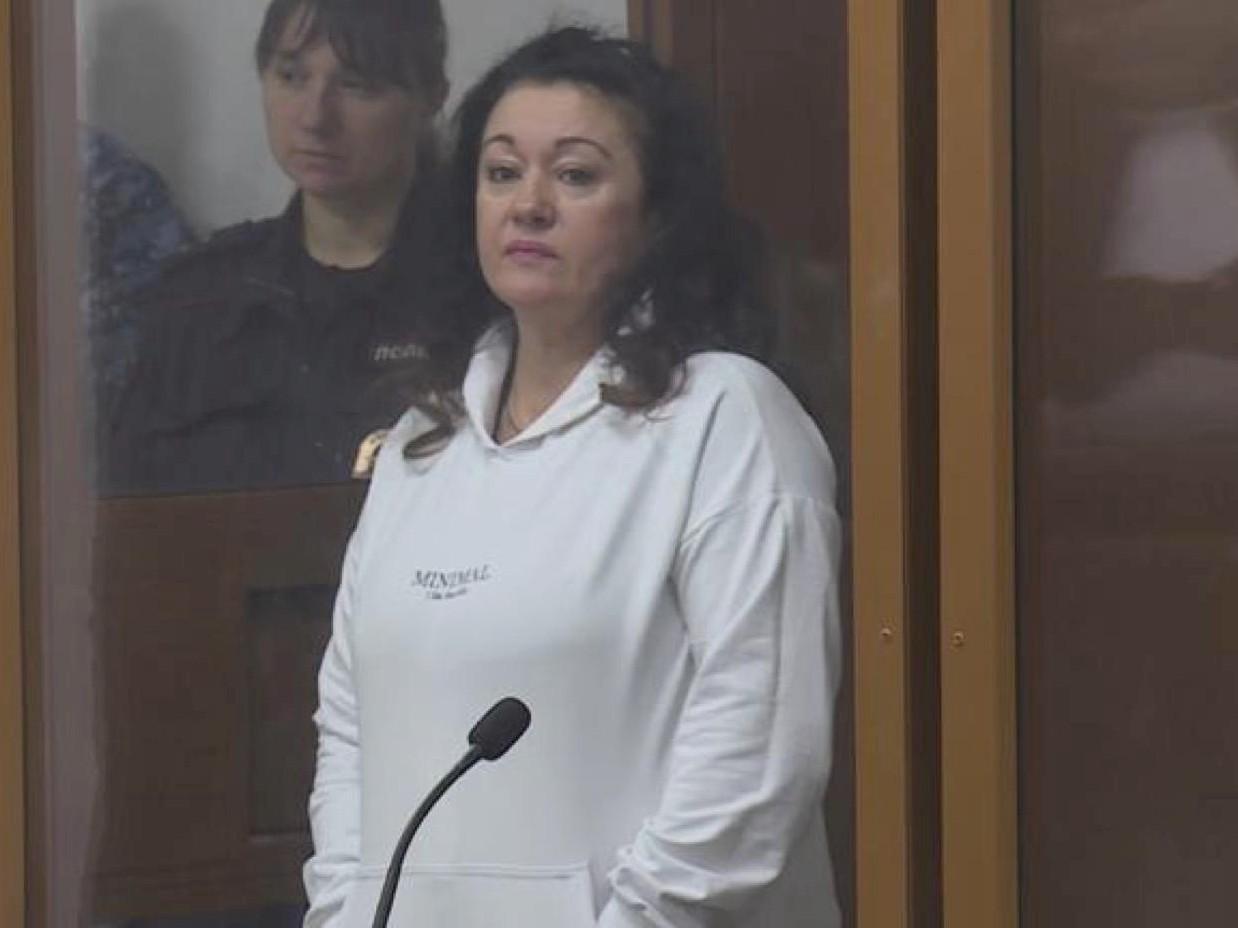

The case of Svetlana Tarnagrodskaya became one of the most high-profile domestic crimes in recent years.
Women rarely kill — and almost never for no reason. Such cases are not driven by criminal careers, lust for power, or cold calculation. More often, it is a cramped kitchen, a sleepless night, alcohol, fear, and the feeling that there is no way out.
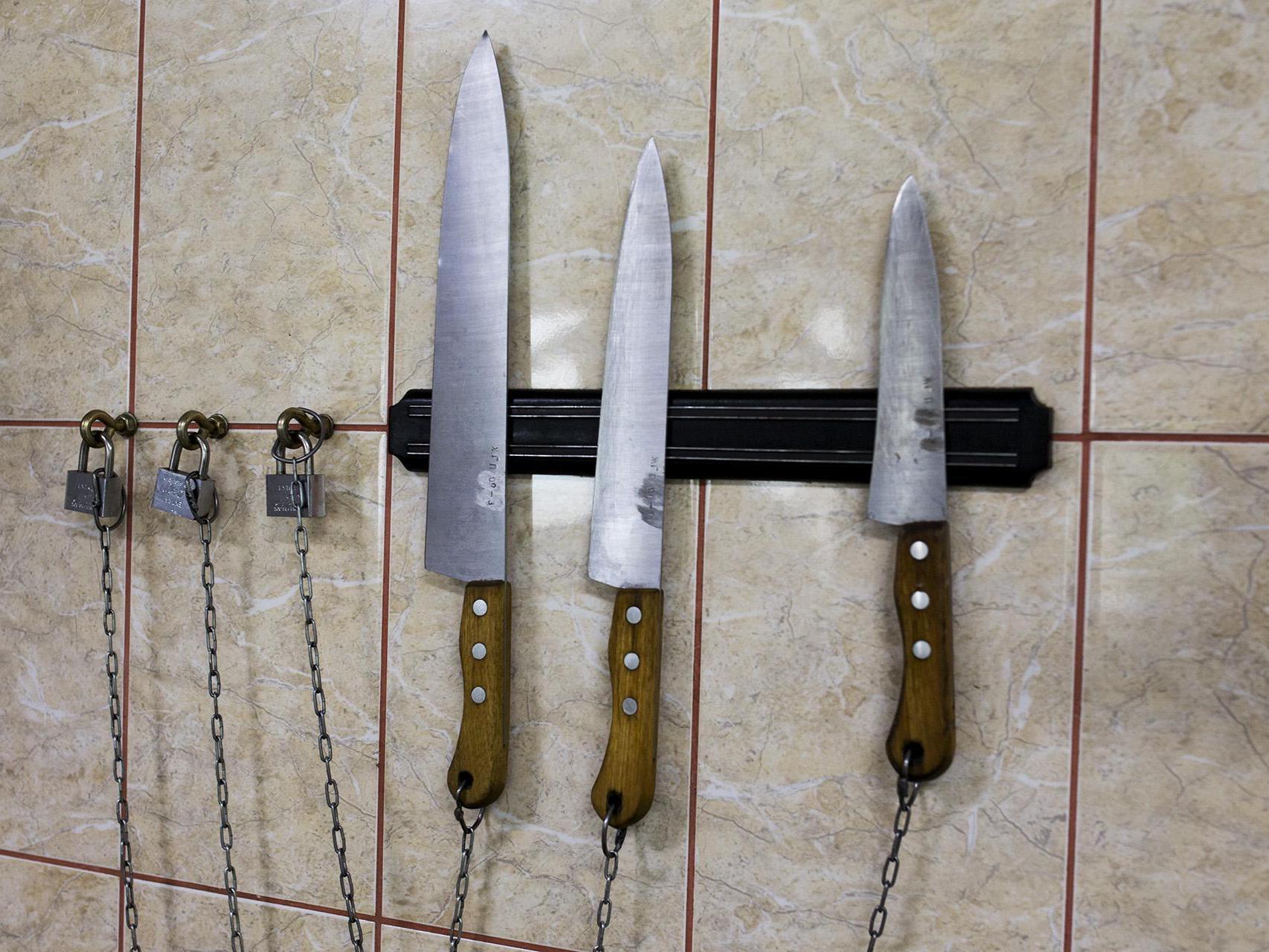
A kitchen knife is one of the most common murder weapons.
Every female murder shatters the usual picture of violence. Society does not expect a blow from someone it is used to seeing as a victim, a mother, a «keeper of the hearth.» But the court sees behind this image not a myth, but a person — with a limit of patience, with a wrong choice, and with responsibility for the final step.

The psychologist believes that murder for a woman is an extreme measure they rarely resort to.
This article is not an attempt to justify, but an attempt to understand the moment when fear, anger, and hopelessness outweigh the prohibition «Thou shalt not kill.»
The article uses materials from court verdicts of the Ryazan region over several years.
1. Not to Be Left Without a Land Cruiser
This case attracted the attention of many Ryazan journalists; the regional court heard it for a long time and carefully. Behind the dry volumes of materials emerged a story of marriage, money, and fear of losing control. In early October 2024, a jury returned a verdict: Muscovite Svetlana Tarnagrodskaya was guilty of murdering her husband for mercenary motives.
Once their union seemed stable. The man was in business, earning money and providing for his family. Tarnagrodskaya lived on his funds and had no permanent income. But behind the external well-being, tension accumulated. One day, Tarnagrodskaya, without telling her husband, spent common money — at least 30 million rubles (approximately $333,300 at current rates). Where these funds went turned out not to be the main point for the court. The main thing was that they disappeared.
The husband found out about the disappearance and demanded an explanation. He insisted on the return of the money. Tarnagrodskaya denied everything. She did not admit to having disposed of the funds nor to the obligation to return them. Conversations quickly turned into conflicts, conflicts into estrangement. Soon the man said directly: he intended to dissolve the marriage.
For Tarnagrodskaya, this meant the loss of her usual way of life and — most importantly — loss of control over property: an apartment in Moscow, a non-residential premises, and a Toyota Land Cruiser Prado. Divorce would deprive her of the ability to manage both jointly acquired property and her husband«s personal property. It was at that moment, as the jury established, that she made the decision that became fatal. She decided to kill.
During the day, on the bank of the Oka River in Shilovo, away from prying eyes, Tarnagrodskaya attacked her husband. She took a hard blunt object and struck at least three blows to the head. The blows landed on a vital area. The skull could not withstand: a fracture of the occipital bone extended to the parietal bone. The man died on the spot. But that was not the end.
Tarnagrodskaya acted cold-bloodedly. She put a plastic bag over the deceased«s head, tied it around his neck with sticky tape, and dragged the body to an abandoned concrete tank. The water hid the corpse. The crime scene emptied.
Later, the court analyzed these actions in detail. It indicated: the method of murder, the choice of blows to the head, the subsequent concealment of the body — all of this points to direct intent. Tarnagrodskaya understood what she was doing. She foresaw death and desired it.
The court directly named the motive — mercenary. The murder opened the way to inheritance: an apartment, a non-residential premises, and a car. The desire to gain rights to property was the reason for the death of a person.
The defense tried to destroy this picture. Lawyers spoke of questionable examinations, physical inconsistencies, the defendant«s income, and trusting family relationships. They pointed to possible gaps in the investigation and that Tarnagrodskaya supposedly could not physically have committed the murder. The court heard these arguments — and rejected them.
The jury had already answered the key questions: the death was violent, the defendant struck the blows, and those blows caused the man«s death, and the motive was the desire to take possession of property. The law did not allow these findings to be reconsidered.
Psychiatrists also left no room for doubt. The examination showed: Tarnagrodskaya was fully aware of her actions, retained the ability to control them, and did not need compulsory treatment. The court found her sane.
When imposing punishment, the court considered everything: the severity of the crime, the personality of the defendant, the absence of previous convictions, and her state of health. But the main thing outweighed everything else — the intentional deprivation of a human life. The jury refused Tarnagrodskaya leniency.
The sentence was clear: 14 years of imprisonment in a general-regime penal colony and an additional year of restricted freedom after release.
Separately, the court considered the civil lawsuit filed by the deceased«s daughter. The loss of her father, the court emphasized, caused her deep moral suffering. The court partially granted compensation for moral damages. Claims for reimbursement of medication expenses and possible reburial were rejected — documents and actual costs were absent.
Thus ended the case in which money, fear of loss, and cold calculation proved stronger than marriage and human life.
2. Two Knives in One Dormitory
The dormitory had long lived in a state of constant tension. Quarrels did not flare up here — they smoldered. Galina Vorobieva shared the corridor, walls, and air with a neighbor and his girlfriend. People met every evening in one narrow space — and every evening they parted with a new dose of mutual hatred.
Insults were not new. They hit not only her — they hit her children. That evening, around half past seven, the man crossed the line again: shouts, threats, an attempt to strike. His girlfriend chimed in — coldly, angrily, without hesitation. Then the door of their room slammed shut. Vorobieva was left in the corridor.
She did not scream. She did not call anyone. She went to her room — calmly, almost measuredly. She took a kitchen knife. Two minutes later, she was opening the door of room No. 19.
The neighbor was lying on the couch. He did not have time to get up. Two blows — to the chest, precisely, with force. The blade went deep, pierced the pleural cavity, and damaged the aorta and lung. Blood gushed immediately. He died quickly — from blood loss that could not be replenished.
The girlfriend was sitting nearby. She jumped up and tried to cover herself with her hand. Vorobieva struck her four times — in the chest and stomach. The woman remained alive. For now.
Vorobieva went into the corridor. But there she heard a voice. The neighbor was calling an ambulance. Asking for help. Vorobieva returned.
This time, she opened the table, took out another knife. She sat down opposite. And struck again — twice, in the chest. Six wounds in total. Lung, diaphragm, stomach, liver, pancreas. Defensive cuts on the hand — an attempt to stop the inevitable. Blood filled everything. The woman died there.
The court would later say: the deaths were minutes apart.
Experts would confirm: both victims died from massive blood loss. Wound channels — over twenty centimeters deep. The blows were penetrating, directed at vital organs. These are not inflicted accidentally. They are inflicted when you want to kill.
The court carefully examined how Vorobieva acted. Two knives. Two stages. Returning to the room after an attempt to call for help. All of this formed a clear picture of direct intent. She killed two people.
The backstory also mattered. Long-standing conflicts. Constant humiliation. Insults — directed at her and at her children. Animosity grew, accumulated, and turned into resolve. In the evening, it became action.
Psychiatrists gave different formulations but a single conclusion. Dissocial traits. Emotional instability. Alcohol. Reduced self-control. But — sanity. She understood what she was doing. She could have stopped. She did not stop. Ultimately, the court found: her mental state limited her control but did not eliminate responsibility. Vorobieva is subject to punishment — and needs psychiatric supervision.
When the court moved to sentencing, it considered everything. Previous convictions. Character references from residence. Three minor children. Confession. Remorse. And — the immoral behavior of one of the victims, which became the trigger for the tragedy.
The jury considered her deserving of leniency. The law allowed a reduced sentence but did not change the essence: this was the murder of two people. The sentence was delivered without pathos: twelve years of imprisonment. A general-regime colony and one year of restricted freedom after release, plus mandatory outpatient psychiatric treatment.
Separately, the court considered the civil lawsuit of the victim«s daughter. The loss of a mother is a wound that does not heal. The court assessed it at 600,000 rubles ($6,700 at current rates).
When the presiding judge, Lyudmila Zaitseva, read the last line, the story that began with shouts in the dormitory corridor turned into a sentence sealed with the state«s stamp.
Thus ended the lives of two people and began the long term of one woman.
3. An Unhappy New Year
The Zheleznodorozhny District Court of Ryazan heard the case of Anna Peregudova — a woman whose name forever remained in the morning protocol of January 1. The presiding judge, Alexander Batmanov, conducted the process calmly and precisely, as if laying out someone else«s life on shelves. Next to him — state prosecutors, lawyers, victims, witnesses. They are studying one night stretched out over years.
The court established the following: Peregudova and her friend had known each other for a long time; they got together and separated, made up and fought again. They did not live together but lived with each other — heavily, conflictually, on the edge. Alcohol only accelerated the inevitable.
On the night of January 1, 2021, they gathered at the man«s apartment — to celebrate the New Year. They drank, ate, laughed. Everything seemed ordinary. By six in the morning, the guests left. Two remained.
Anna wanted to sleep, the man wanted to continue. She knew: when drunk, he became aggressive and decided to leave. He did not allow it: he grabbed her phone, threw it, and broke it.
She went out to the staircase. Near the elevator, she realized: the phone was dead. No taxi, no call. She returned. In the hallway, they clashed again. Words became sharper. Insults louder. And then Peregudova took a knife.
She struck three times. In the thigh — precisely, with force. In the chest. In the shoulder. The femoral artery burst. Blood started immediately.
The man was still able to leave the apartment. He reached the neighbor«s door. Asked to call an ambulance, sat down on the floor, and died a few minutes later — from blood loss that could not be stopped.
Experts would later say: the blows were struck by one person. The knife was found. The blood, too. The causal connection was beyond doubt. Peregudova did not admit guilt. She spoke of fear. Of being pushed into a wall. Of pain in her leg. That she was defending herself. That she did not want death. The court listened — and checked.
Neighbors heard differently. First she screamed, then he did. Then he ran out shouting for help. In his hand, he held a glass. The glass was found next to the body. That meant one thing: at the moment of the knife blow, he was not attacking.
The court compared height, distances, body positions. Checked the version about Peregudova«s injury. Cross-referenced testimonies, examinations, genetics, the investigative experiment. The picture formed rigidly and without gaps.
The man did not hold a knife. He did not threaten. He did not attack. He was drunk, yes. Aggressive — possibly. But at the moment of the blow — unarmed.
Peregudova acted out of hostility and deliberately. She wanted to cause harm. She chose a knife and understood the danger. But the court did not see the main thing — intent to kill.
Death occurred from a blow to the leg. For a person without medical knowledge, this does not appear fatal. Peregudova did not pursue the man, did not finish him off, did not prevent him from leaving for help. She remained on the spot. That mattered.
As a result, the court reclassified the charge. Not murder. Causing grievous bodily harm dangerous to life, resulting in death by negligence. That is what the law called what happened in the hallway.
The court rejected the version of self-defense. It did not find an attack. It did not see a threat equal to the knife, did not accept explanations contradicting the facts.
Psychiatrists confirmed: Peregudova is sane. There was no affect. There was alcohol. There were emotions. Loss of control — no. The court examined everything. From blood on the coat to the crack in the phone. From the call to 112 to the last scream in the stairwell. And found her guilt proven.
The sentence was the outcome. Not revenge, not justification, not an emotional tragedy, but a cold period.
4. «He Didn»t Go to the Police«
The Moskovsky District Court heard this case openly. The presiding judge, Anna Dyurimanova — calmly, without pressure, as if she knew in advance: in this process, there would be no surprises or justifications. The state prosecution took their places. The defendant, too. Tatyana Prosikova sat silently, next to her lawyer, and did not take her eyes off the floor.
The court was considering a murder. Tatyana Prosikova lived an ordinary life: she worked, raised two small children, and had no prior criminal record. A widow — that is what she would be called after that night.
In the evening, in the apartment, she was drinking with her husband. Music was playing loudly, alcohol flowed freely, walls heard everything. Neighbors knocked, then the police came. They turned down the music and each went to their own room.
But the night did not defuse the tension. Towards morning, they met again in the kitchen. Prosikova said she would go to her parents. She was gathering food bought with her own money. Her husband came closer. He grabbed her by the hair — sharply, painfully. She did not fall, but she remembered the pain.
At that moment, something broke inside her. Prosikova took a knife. An ordinary kitchen knife with a black handle — not a symbol, not a metaphor, but an object that was at hand. She knew what she was holding. She understood where she would strike and struck in the chest — on the left. The metal went where the heart beats.
The husband released her hair and only managed to say:
— Tanya, are you crazy?..
He fell to the kitchen floor. Blood came immediately. His body was still moving. He was alive for a few minutes — long enough to understand what had happened, and not enough to survive.
Prosikova did not run. She tried to bring her husband back to his senses. She dragged the body into the room. She dressed him — as if wanting to restore order, erase what had happened. She wiped blood, washed floors, rinsed the knife and put it back in the stand, as if the object could become just a kitchen utensil again.
Then she called an ambulance. When the doctors arrived, the man was already dead. The heart had stopped, blood had filled the pericardium. The medics pronounced biological death and called the police.
Thus the case began. Prosikova did not deny the blow; she confessed immediately and wrote a statement of surrender. During the investigation, she recounted in detail how it all happened. At the crime scene, she showed where she stood, how she held the knife, where she struck. The mannequin repeated the movement — precisely, without trembling.
Neighbors spoke of shouts, quarrels, loud music, endless night scandals. They heard the woman screaming more often, and the man — quieter, more restrained. A child was crying.
Relatives of the deceased said otherwise: that he was kind, non-confrontational, patient, but they also admitted — the family constantly quarreled.
Colleagues of the deceased recalled how he complained about his wife. He said she took his money, kicked him out, raised her hand. He did not go to the police — he was ashamed. The court did not choose whom to believe more; it assembled a picture.
Experts said the main thing: death resulted from a penetrating stab wound to the chest cavity with damage to the heart. The wound was in a direct causal connection with death. Alcohol in the victim«s blood reached a severe degree of intoxication. After the blow, he could have lived for a few more minutes — and did.
Psychiatrists excluded affect, psychosis, and insanity. Prosikova understood what she was doing.
The court compared testimonies, cross-checked examinations, discarded the superfluous, and concluded: Prosikova acted with direct intent. She knew a knife blow to the chest is fatal. She desired it — if only for a brief moment, but she desired it. Her words that she did not want her husband«s death were not accepted by the court. The knife, the force of the blow, and the location of the wound spoke clearer than any explanations.
Yes, he grabbed her by the hair, yes, caused pain. The court recognized this as a mitigating circumstance, but it did not justify the murder. Neither fear, nor alcohol, nor years of family quarrels gave her the right to decide whether a person should live or die.
The court took into account the admission of guilt, the statement of surrender, assistance to the investigation, sincere remorse, and so on, but it also took into account the main thing: Tatyana deprived a person of life.
Tatyana Prosikova was found guilty of murder — intentional causing of death of another person. The court sentenced her to eight years of imprisonment in a general-regime penal colony.
Thus the court put an end to a case where a domestic quarrel crossed the line. Where a hand holding a knife changed the lives of several people and where no words could undo one precise blow.
5. Could Have, But Didn«t Stop
This is the only story out of five that ended almost happily. The Moskovsky District Court of Ryazan heard this case without fuss. The presiding judge, Yuri Khabarov, conducted the process calmly, as if sorting out not a burst of domestic rage, but an precise mechanism — step by step, without emotions. In the courtroom sat the prosecutor, a lawyer, the victim, and the defendant — Yelena Leshchina. The couple was bound by one apartment, one drinking session, and one knife blow that changed everyone«s life forever.
The court reconstructed the events. During the day, in the apartment, Leshchina and her friend were drinking. Alcohol blurred boundaries but did not erase grievances. She talked about money. About how only she worked. About how the house was held together by her salary. He listened — and got angry.
Words quickly ended, and the man struck first. Fists hit the head — not once or twice. Leshchina felt pain and anger. She went to the kitchen, came back with a rolling pin and hit him on the head — several times, not hiding her intention to show she could stand up for herself. Then she left again. Then she came back.
This was not the end, but only the beginning. The man got up from the couch and hit her in the back. Yelena fell. He continued — to the ribs, to the body. Leshchina lay on the floor and understood: he was stronger, drunk, aggressive, and would not stop. When he stopped, Yelena got up and went to the kitchen again. There, on the table, lay a knife.
The woman took it in her hand and warned: one more step — and she would strike. The friend stepped and hit her on the head. Then, around half past three in the afternoon, Leshchina delivered one blow — to the left side of the chest, where the heart beats.
She immediately dropped the knife, the man stopped hitting her, blood started flowing. Leshchina got scared. She did not run away, did not try to cover up what happened. She called an ambulance. The doctors took the man to the hospital, and there they managed to help him in time.
The court listened to both. Leshchina did not deny the blow; she denied intent to kill. She spoke of fear, pain, defense. She admitted: she knew she could have defended herself differently. She knew — and still struck with the knife. She repented. Apologized. She made peace with the man and intended to live with him further. He confirmed her words. He admitted: he started the conflict, he struck first, he was drunk and angry. The knife was a response — excessive, but a response to his actions.
The court checked every detail: blood on clothing, through-and-through damage to the T-shirt, the household kitchen knife, expert conclusions, on-site testimony, medical documents. Psychiatry found no illness that could remove responsibility.
The picture was clear: Leshchina was defending herself; she had the right to defense, but she chose a means that clearly exceeded the danger of the attack. Fist blows caused her pain. The knife blow hit a vital area.
Thus the law drew a line: this was not an attempted murder, but exceeding the limits of necessary self-defense.
The state prosecutor changed the charge — and the court agreed. The evidence did not confirm intent to kill. It confirmed something else: the conscious infliction of grievous harm in a situation where it was possible to stop earlier.
The court called a spade a spade: Leshchina is guilty, but the court also saw something else — she admitted guilt, assisted the investigation, called doctors, and repented. Alcohol was a catalyst — and that aggravated responsibility.
The court weighed everything and decided: isolating her from society is not necessary. The sentence was delivered calmly, without pressure: Eight months of imprisonment — suspended. Yelena Leshchina was released from custody in the courtroom.
Thus the story ended almost happily, although we no longer know how the lives of its participants continued.
Family psychologist and cognitive-behavioral therapist Yekaterina Chekryshova:
— The causes of female aggression and murder from a psychological point of view, firstly, have a global socio-psychological context. A woman is more often a victim of domestic violence, and murder can be an act of desperate self-defense in situations where other means of protection are unavailable or ineffective. Alcohol in this case acts as a catalyst, reducing control and provoking aggression in men, and in women — the threshold of tolerance.
There are gender differences: women, due to biological and social factors, are less prone to physical aggression than men. Murder for a woman is often a last resort, when other ways of resolving a conflict are exhausted or seem impossible. Psychological states, prolonged violence, fear, helplessness can lead to a state of affect, when a woman loses control over her actions. It is also important to consider possible mental disorders or traumas that can affect behavior.
From the point of view of public perception, a female murderer is perceived more negatively by society than a male murderer, which may be related to gender stereotypes and expectations. The difference in the number of murderers, 10 to 1, is explained by a combination of these factors. It is important to understand that each case is unique and requires more detailed analysis.