Krasnodar's stalling dedicated bus lanes: expert explains

Traffic jams in Krasnodar have long been a part of daily life. The city continues to grow, its population increasing faster than in almost any other million-plus city in the country, while the road network remains narrow and congested. Against this backdrop, the pace of introducing dedicated lanes for public transport looks modest — and regularly sparks debate.
Why is this happening, is Krasnodar really lagging behind other cities, and does it have a real chance to catch up — 93.RU discussed with Pavel Zyuzin, director of the Center for Transport Planning at the Institute of Transport of the Higher School of Economics (HSE).
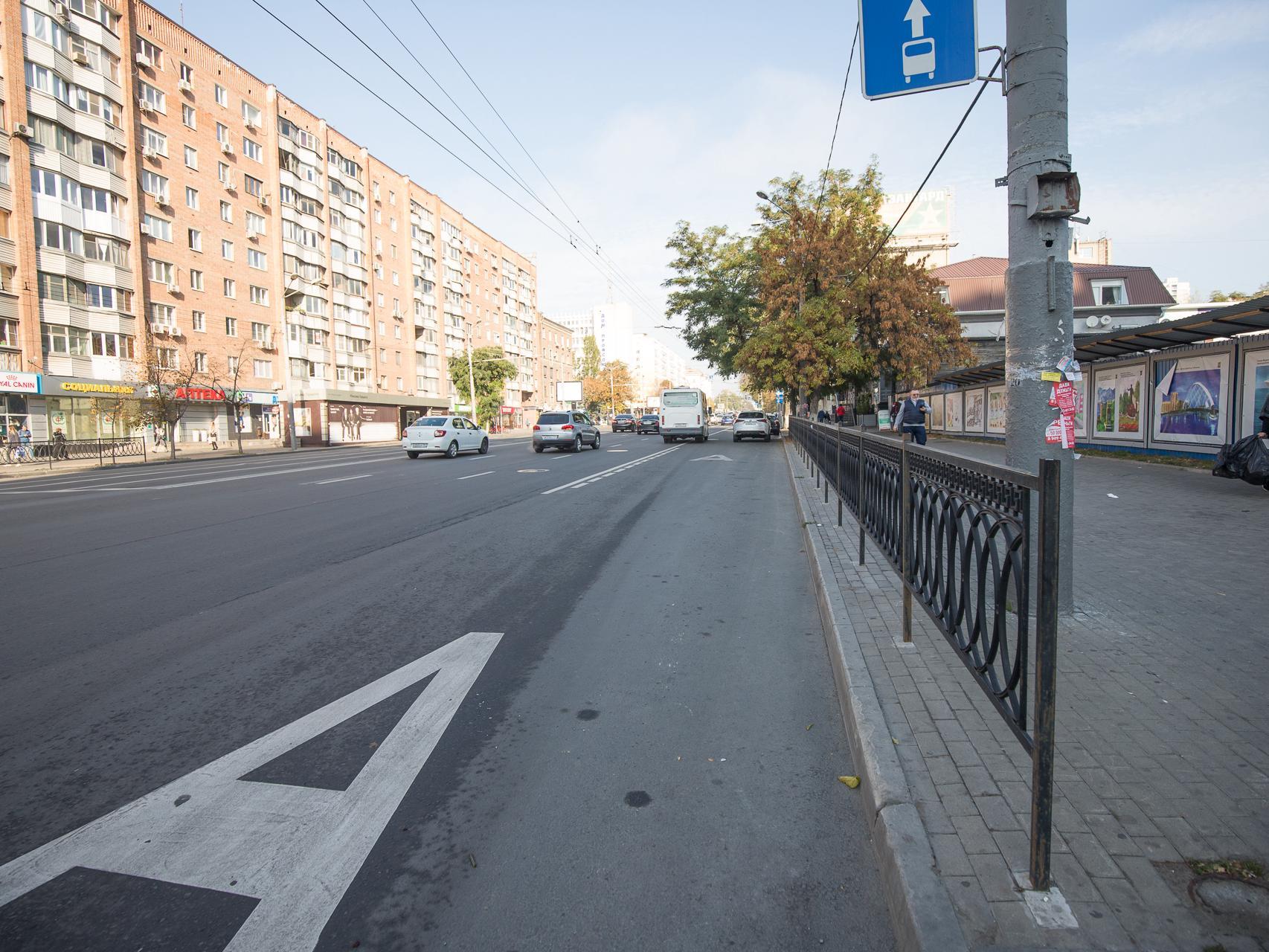
As of today, Krasnodar has 26 kilometers of dedicated lanes for public transport. The dedicated lanes operate on certain sections of central and main streets. But overall, there is no single network that would allow travel from one end of the city to the other on a separate lane.
In the first half of 2026, authorities plan to determine which sections of the street network will get new dedicated lanes and from what funding sources. New lanes are planned, in particular, on Krasnaya, Krasnykh Partizan, Turgeneva, Selezneva, Dzerzhinskogo, Yaltinskaya, Stavropolskaya, 40-letiya Pobedy, Kolkhoznaya, and Ofitserskaya streets.
Why a dedicated lane is not just a line of paint
As the expert explains, dedicated lanes cannot be introduced «at will» or just for show. Several conditions must be met simultaneously.
First, the city must have corridors with high traffic intensity — where public transport runs frequently and carries a large number of passengers. Second, the street itself must allow such a solution from a planning perspective.
According to Pavel Zyuzin, this is where Krasnodar«s systemic difficulties begin. Most of the street network consists of narrow streets with minimal capacity.
«In Krasnodar, the street network is mainly represented by streets with low capacity. You don«t have such »four plus four lanes« throughout the city, like in Volgograd.»
This feature is related to the city«s history and development: a high share of the private sector and the absence of wide avenues typical of other million-plus cities.
Why comparing Krasnodar with other cities is difficult
According to Ivan Petrov, chairman of the Kuban Transport Workers Union, the share of dedicated lanes in the entire road network in Krasnodar is only about 1.4%, while in Moscow it is over 10%.
However, the expert is skeptical about such indicators without a clear methodology.
«I don«t understand how they were calculated and what they mean. If the same calculation were done for Rostov, Volgograd, or Tyumen, then conclusions could be drawn.»
According to him, it makes sense to measure the length of dedicated lanes not across the entire city, but only along those routes where there is actually high demand for public transport.
Krasnodar is growing — and without public transport it won«t cope
Despite all the difficulties, the need for priority for public transport in Krasnodar is objectively one of the highest in the country, according to Pavel Zyuzin.
«Krasnodar and Tyumen are the two fastest-growing cities in the country by population. Only public transport will be able to handle the load in the long run.»
The key parameter here is speed. If a bus or trolleybus is stuck in the same traffic jams as private cars, it ceases to be competitive.
«The key quality of public transport is travel speed. And travel speed depends solely on dedicated lanes.»
What can be done in conditions of narrow streets
Expanding roads in the city center is practically impossible, so Zyuzin believes that one of the real paths for Krasnodar is the development of one-way traffic schemes.
This refers to pairs of one-way streets in opposite directions, where it becomes possible to allocate one lane for public transport.
At the same time, the expert emphasizes: in Krasnodar, such solutions will require strict administration — due to exits from private yards, garages, and constant conflicts with private transport.
Contra-flow dedicated lanes — unconventional but effective
One of the most radical but effective options is dedicated lanes in the opposite direction on one-way streets.
A contra-flow dedicated lane is a lane for route public transport, organized in the direction opposite to the main traffic flow.
«If it«s a contra-flow dedicated lane, drivers won»t dare to drive on it. It will work more effectively.»
According to the expert, this approach has already been successfully applied in Kursk and Saratov.
How many dedicated lanes does Krasnodar really need
Earlier, the Higher School of Economics (HSE) university developed comprehensive traffic management schemes. According to these proposals, by 2034 the length of sections with priority for public transport in Krasnodar could grow to 45 kilometers.
Speaking about these figures, Pavel Zyuzin emphasizes: it is important how exactly the kilometers are counted. If we are talking about 45 kilometers of dedicated lanes in both directions, that is a serious amount.
«That is really a lot. It would be enough to create two–three corridors from the north of the city to the center.»
With proper implementation, such lanes could significantly improve bus route operations and become a real alternative to driving a personal car, the expert believes.
The issue is not money, but determination
According to Zyuzin, creating dedicated lanes is not the most expensive transport project.
«Compared to building a tram line, it«s pennies. It»s not a question of money, but of will.»
The main task of the urban transport system, he emphasizes, is to move people, not to ensure unimpeded passage for private cars.
Why the process is slow
But even with political will, dedicated lanes do not appear instantly. This is a complex and lengthy process: traffic management projects, sign installation, relocation of stops, traffic light adjustments, construction of pull-in bays.
«It«s not just painting lines. The preparation process can take a year.»
Nevertheless, the expert is confident: technically, this task is absolutely feasible for Krasnodar.
«This isn«t building a metro. Anything is possible.»
Earlier, 93.RU spoke with Krasnodar transport operators, who discussed the prospects for public transport and fare increases.