Scientists Propose Breeding Fish from Cryosperm in Azov Sea

SSC RAS has patented new cryotechnologies for fish reproduction.
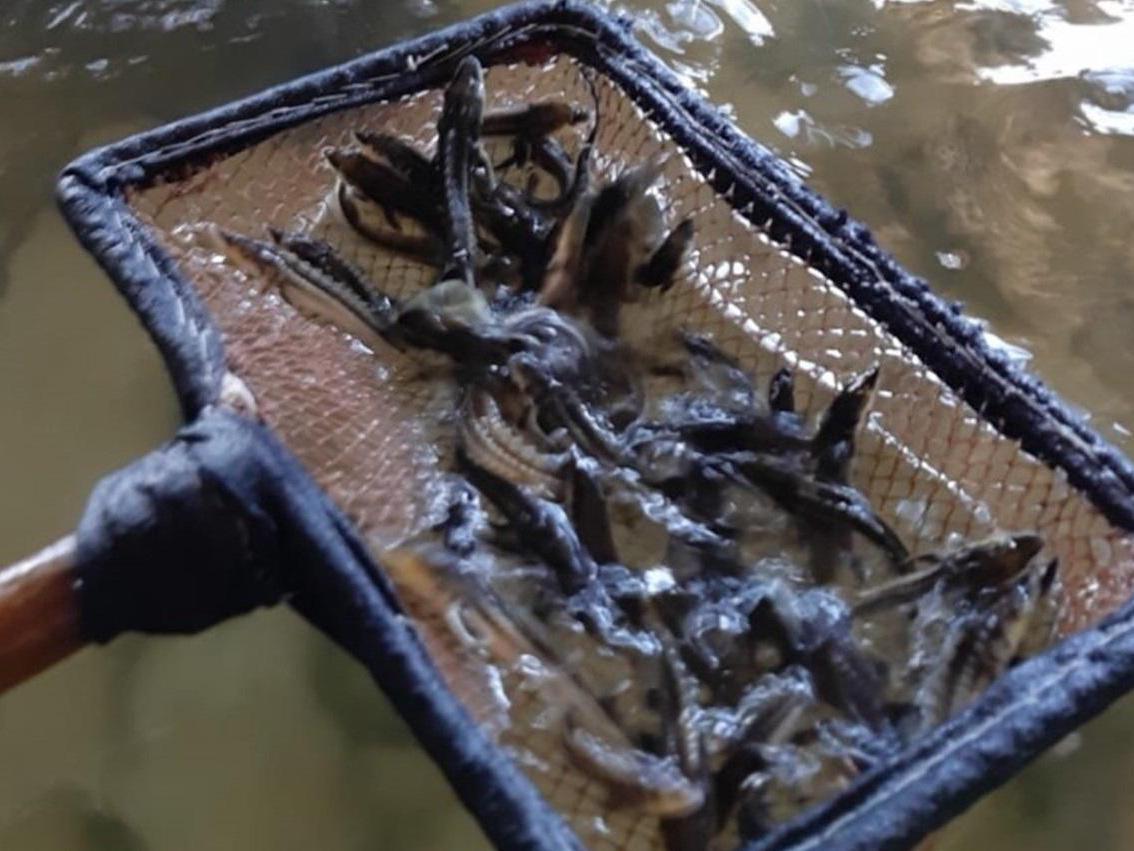
Scientists propose to use for fish reproduction in Rostov Region fingerlings obtained with cryotechnologies, specifically cryopreservation of sperm. This was announced at the Legislative Assembly by the head of the Department of Aquatic Biological Resources of the Southern Seas Basins of the SSC RAS, Doctor of Biological Sciences, Professor Elena Ponomareva. Such fingerlings are much more viable.
According to Ponomareva, the SSC RAS has its own cryobank. Scientists have developed several methods for cryo-freezing of sperm of rare and endangered fish species. One of them involves the use of piezoceramics, which allows obtaining hardy fish fingerlings for further release into water bodies and reproduction.
«This is our patented method. What does it consist of? Cells undergo double temperature shock. The first is when we throw them into liquid nitrogen. They are frozen and stored. Our other method prevents cell destruction during deep freezing. Then we thaw them — this is the second temperature shock. At this stage we also protect the cells. And ultimately, selection takes place; we end up with adapted, hardy sperm capable of fertilization and producing hardy fingerlings,» says Ponomareva.
According to her, most fish fingerlings die when transitioning to active feeding. Some of the regular fry die at this stage, while cryo-fry «perfectly adapt and feed well». And they can make a great contribution to the reproduction of various fish species in the Azov Sea basin.
Scientists from the SSC RAS, continues Ponomareva, would also like to obtain the right to collect sperm from elite broodstock available in fish farms of the Rostov Region and to place this material in their cryobank.
«With the help of cryotechnology and genetic technologies, which we also have, we could obtain elite material and create high-productivity broodstock. Not only sturgeons, but also cyprinids and other species. We could then provide it free of charge to farms to avoid inbreeding,» said Parkhomova.
According to her, the main problem of Russian aquaculture is that the introduction of advanced world technologies is happening very slowly. They all exist, but «for some time they lie on the shelf».
«And when we take them out, world aquaculture has already moved ahead. Although we have all the possibilities. And if more prompt decisions are made for aquaculture in the Rostov Region, the region could become a leader. Our Azov Sea has great prospects for this, because it has the best food base for fish development,» says Ponomareva.
As wrote 161.RU, commercial fishing for Russian sturgeon may be allowed in the Azov Sea in the foreseeable future. This species nearly went extinct in the 1990s but began to recover thanks to regular releases of fingerlings.