Cryopreserved Sperm Aims to Boost Azov Sea Fish
Scientists from the Southern Scientific Center of the Russian Academy of Sciences (SSC RAS) propose using cryopreserved sperm to produce hardier fish juveniles in the Rostov region. The method involves double temperature shock during freezing and thawing.
Apr 28, 2026 0
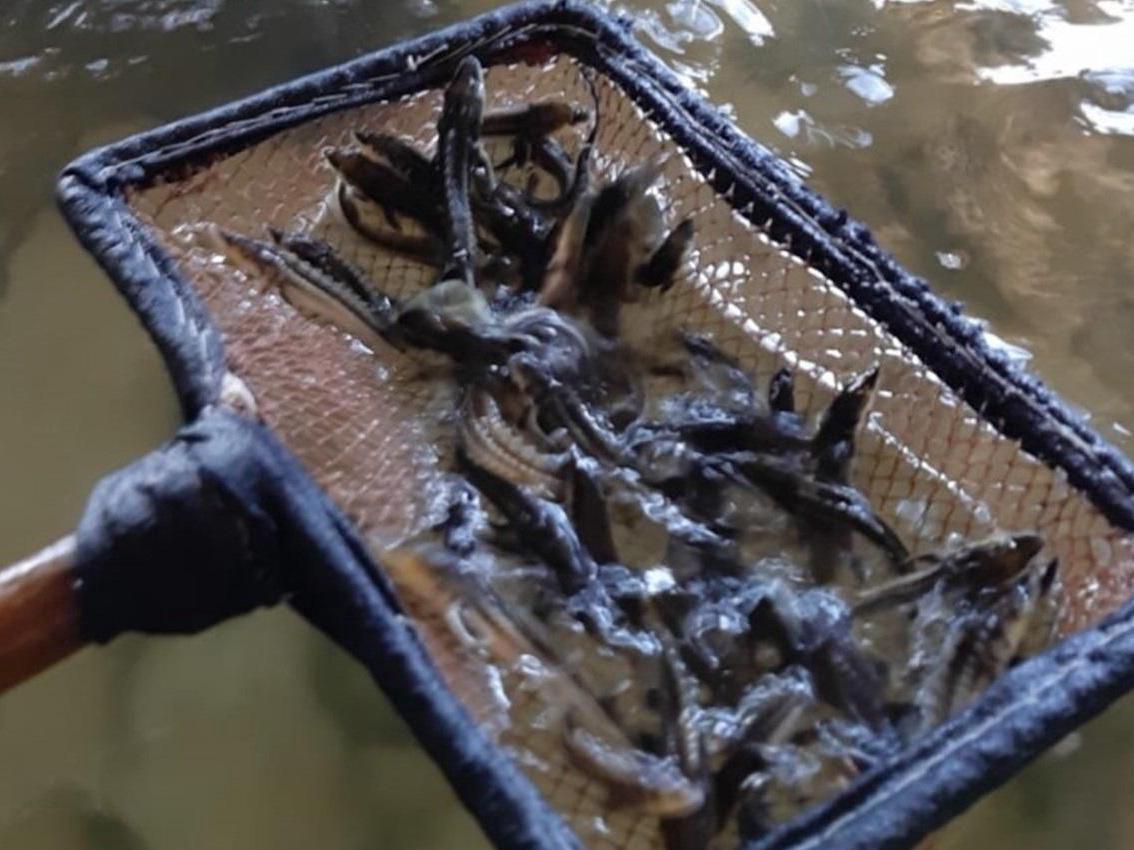

Scientists at the Southern Scientific Center of the Russian Academy of Sciences have patented innovative methods for cryopreserving fish sperm.
Source:
At the Legislative Assembly of the Rostov Region, Elena Ponomareva, head of the department of aquatic biological resources of the southern sea basins at the SSC RAS and a professor, reported on a proposal to use cryotechnologies for fish reproduction.
The SSC RAS operates its own cryobank, where several methods for cryopreserving the sperm of rare and endangered fish species have been developed. One patented method involves the use of piezoceramics, which produces hardier juveniles for release into water bodies.
«This is our patented method. What does it consist of? Cells undergo double temperature shock. The first is when we plunge them into liquid nitrogen. They are frozen and stored. Our other method prevents cell destruction during deep freezing. Then we thaw them, that»s the second temperature shock. At this stage, we also protect the cells. And finally, selection takes place, and we get adapted, hardy spermatozoa capable of fertilization and producing hardier juveniles,« Ponomareva explained.
According to her, the highest mortality of fish juveniles occurs during the transition to active feeding. While some ordinary fry die at this stage, juveniles obtained using cryotechnologies demonstrate excellent adaptation and active feed intake, which could significantly increase reproduction efficiency in the Sea of Azov basin.
Scientists at the SSC RAS also seek the right to collect sperm from elite breeders from fish farms in the region to deposit material in the cryobank. This would allow creating highly productive broodstocks of various fish species.
«With cryotechnology and genetic technologies, which we also have, we could obtain elite material and create highly productive broodstocks. Not only sturgeon, but also carp and other species. We could then provide it free of charge to farms to avoid inbreeding,» Ponomareva added.
She noted that the main problem of aquaculture in Russia remains the extremely slow adoption of advanced global technologies, which are often not used in a timely manner.
«If more prompt decisions are made for aquaculture in the Rostov region, the region could become a leader. Our Sea of Azov has great prospects for this because it has the best feed base for fish development,» the professor believes.
In the foreseeable future, fishing for Russian sturgeon may be allowed in the Sea of Azov. This species, which nearly disappeared in the 1990s, has begun to recover thanks to regular juvenile releases.
Read more