Cancer Took My Life's Work: Filmmaker on Diagnosis

4 February — World Cancer Day. MSK1.RU shares the story of documentary filmmaker Svetlana. She has been living with an oncological diagnosis — breast cancer — for eight years. Despite the disease metastasizing, she continues to believe in remission and dreams of the day she will pick up her camera again.
Breast cancer is a malignant tumor that develops from breast tissue cells and can over time grow into surrounding tissues as well as metastasize to lymph nodes and other organs.
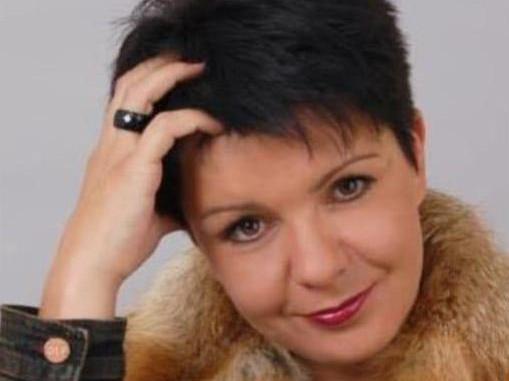
Svetlana Popova (last name changed at the heroine«s request. — Editor»s note) is 53 years old. For the ninth year she has been living with an oncological diagnosis and stubbornly seeks not a reason to give up, but an opportunity to keep on living. The “nasty thing,” as Svetlana calls the disease, was first discovered in 2017.
At the time, Svetlana was actively filming documentaries in Moscow. Her work touched on social, political, and historical themes. In between shooting days, she traveled to her homeland, Belarus, where she still had an apartment and her father«s house.
“You know, I was so prolific! I was churning out films like hotcakes. People would say, ‘That film just moved me to tears, it was simply wonderful!’ You see? That«s why I»m proud of my work,” Svetlana recalls.
During one of her trips home, she decided to get a checkup. That«s when the doctors detected the disease, presenting her with the facts: “Breast cancer.”
Doctors began therapy and assured her that the situation was serious but manageable. Every month Svetlana flew from Moscow to Minsk for chemotherapy, completely adjusting her life to the treatment schedule.
Her plans were disrupted by the COVID-19 pandemic, and flights between the countries stopped. So Svetlana was left alone with her illness in the capital. She had to turn to a local hospital, where she was dissatisfied with the treatment, as she had not yet managed to beat the cancer.
“I had surgery, I went through a million rounds of chemotherapy. I went through that procedure every month. If I weren«t the most resilient person, I would probably have died,” she said.
According to Svetlana, the Moscow doctors did not prescribe her a specific medication that, in her opinion, was necessary. She fought to get it prescribed through the prosecutor«s office and later through the courts. She even had to sell her apartment in Minsk to use part of the proceeds to buy the needed drug. Nevertheless, the outcome is the same: Svetlana has now been transferred to palliative care.
“Fortunately, the therapy worked — the tumor shrank by 2 cm. But how many people don«t live to see that moment simply because they can»t afford treatment or the system doesn«t manage to help them in time?” the woman wonders.
At times, the conversation was interrupted — Svetlana needed to catch her breath and cough. She says the cancer has metastasized to her lungs. But she does not despair and insists her test results remain good.
“Cancer Took My Profession”
One of the greatest losses brought by the disease is journalism. When the treatment sapped her strength, Svetlana stopped filming: all her time went to recovering her health.
“Cancer took the work of my life, but I will get it all back. Maybe I won«t go back to television, but I will return — to a school or an institute,” she shared. “I believe that journalism is the best profession in the world. When I worked as a journalist, I was happy. Happy because I made films, interacted with people every month, and won prizes at festivals.”
She is so in love with her work that she infected her son with that love. He is now 23 years old, and Svetlana is proud that he followed in her footsteps and became a cameraman.
“I ran a school TV studio. He did it there, chose this profession — and he doesn«t regret it, between you and me,” Svetlana said with a smile.
“I Will Heal and Say, ‘Well, Hello’ — And Start All Over”
Over the years of her illness, Svetlana has not been able to open up to her family. She couldn«t bring herself to tell them directly what she was going through. Her relatives, of course, suspect, but according to the heroine, no one has dared to ask outright.
“They know there is a problem, but its size and significance — no,” Svetlana says bitterly. “You know, I tried not to tell my relatives anything. I just walked into the darkness alone. You see, it«s all unpleasant. I tried to shield them from worry. I believe I will win. I don»t even entertain the thought that I«ve lost. I think I will heal and say, ‘Well, hello.’ And start everything from scratch.”
Breast cancer — the most common type of cancer in women, noted oncologist, Candidate of Medical Sciences, and chief physician of Ledin Clinic, Yevgeny Ledin. This type of cancer does not make itself known in the early stages; it progresses quietly and asymptomatically.
“Patients don«t feel it in the early stages, until the tumor mass becomes noticeable. Therefore, all symptoms related to breast cancer growth can be palpated on the body — either by yourself or by a partner,” the doctor explained.
There are always many myths and half-truths surrounding the topic of cancer. One of them is the idea that cancer is a hereditary disease. As Yevgeny Ledin explained, the diagnosis is not always linked to heredity. Nevertheless, if a relative has faced this disease, it is worth paying more attention to one«s own health.
“The vast majority of breast tumors are random. According to statistics, no more than ten percent of breast cancer cases are related to heredity,” the expert believes. “But it is worth paying attention to malignant tumors in first- and second-generation relatives. When younger relatives have a malignant tumor, then it is worth making this question a priority for yourself.”
Another common myth is that cancer can arise from hormonal contraceptives.
“In general, there is data that hormonal contraceptives increase the relative risk of developing cancer. But the key word here is ‘relative risk.’ In other words, the risk is very minimal. Any pill a person takes has a downside — side effects.”
Yevgeny Ledin considers obesity to be a real factor in cancer development. Cancer is increasingly affecting young people. The doctor is convinced that the disease has begun to strike generations due to unhealthy lifestyles.
Yevgeny Ledin also spoke about one of the modern methods of treating cancerous tumors.
“Indeed, in the last couple of years, so-called conjugate molecules have emerged. These are targeted drugs that contain a cytostatic — a toxic molecule and an antibody that delivers it to the target cell. Thus the toxic component ends up inside the tumor cell, causing it to die. Some conjugates have a ‘bystander killing’ effect. If other tumor cells are nearby, they may also die,” the doctor explained.
Today in Russia there are a large number of targeted drugs that are most effective because they act more precisely, as confirmed by the results of international randomized studies.
For patients with inoperable forms of cancer, the criterion for treatment effectiveness is prolonging life while maintaining its quality. An oncological diagnosis turns from a death sentence into a chronic disease with which one can live long and happily.
“Now I«m Just Going to Take Care of Myself”
Now Svetlana lives by faith — faith in her own recovery. She clings to the thought that even after years of struggle, she still has a chance for remission. She wants to go to her dacha in her homeland and at least for a while forget how much strength, health, and time the disease has taken. Svetlana shared her plans with us.
I have enormous plans! First, I need to tidy up the village. When you come to visit me, we«ll eat ratatouille, because we»re on a diet. Then we«ll steam in the bathhouse and roll in the snow. And in the morning you»ll wake up — your skin will be smooth and clean! And you«ll smile and say, ‘Now a new day has come for me.’ I»ll take care of myself a little now, and then we«ll go…
Earlier, MSK1.RU reported on how Muscovites can undergo free genetic tests. Young couples with health problems now have a chance to have a healthy child.