Mongolian Wanderer Finds Home at 77 After Tragic Life


In January, Nizhny Novgorod media and social media were abuzz with the amazing story of a homeless man named Kambek. The 77-year-old wanderer from Mongolia spent his entire conscious life wandering, surviving on the streets of Sochi and Uzbekistan, trying to cross the border with Poland, and even attempting to escape from a prison in Komi. For the last couple of years, he «drifted» in Nizhny Novgorod until he met compassionate people who took him to a shelter. Now the man has documents, work, and a roof over his head, and he recalls his difficult past with a smile. NN.RU spoke with the vagabond about his life path, and here it is — the real story of Kambek.

The wanderer from Mongolia gained fame not only due to the amazing twists of his life but also his unusual name. Just last fall, the series «Kambek» (18+) starring Alexander Petrov, who plays a homeless man surviving on the streets of Nizhny Novgorod, aired. It seems like what Oscar Wilde meant when he wrote that life imitates art. However, the real man«s story turned out to be much darker and more tragic than the fictional plot of the series.
“Lawless” Orphanage and the First Theft
Kambek was born in Mongolia, but as a child he moved with his mother to Russia — to the Urals. Until age sixteen, he stayed in an orphanage that, according to him, was “lawless,” he studied poorly and received only two grades of education. After that, the teenager was sent to work on a collective farm: “live as you want — eat as you want,” and then he left for Orenburg.
— When I was young, I got a job as a stoker. Once, out of joy, I threw too much coal into the furnace, and half my bread burned. They kicked me out immediately, — the future nomad recalls his first failures.
With nothing to do, he went to work as a mechanic at a feed mill — cleaning pipes. The work was not bad, but he couldn«t stay there either: he was fired for being late.
— And that was it, I started wandering around the train station hungry, and I stole a suitcase. It«s even funny to say: there were glass jars with lids inside. There were a lot of them, it was a pain to carry. I barely managed to get them from Orenburg to Samara, and there I sold them for pennies, — the man says.
“My Wife and Child Suffocated”
In the Volga city, Kambek found work at a pier and met a woman — life began to improve. They lived together for a year and a half, raising her child from a previous marriage and expecting their own, but a terrible accident shattered all plans and dreams.
That night, Kambek went to work, and his wife stoked the stove in the house. When the man returned in the early morning, no one opened the door for him.
— I broke the glass, and carbon monoxide came out. My wife and child suffocated. After that, I waved it all off and left for Kazakhstan.
And then began a series of endless wanderings through cities, streets, and prisons. In Kazakhstan, Kambek served two years for drugs: in the Chuy Valley, he gathered a kilogram of cannabis and was caught in the city. He talks about the crime and punishment calmly — “they gave me a normal sentence,” he says.
— Nowadays, for one cigarette they might give you too much. But I had a kilogram of cannabis — and only two years. They took pity on the orphanage kid, gave it fairly, — the wanderer reflects.
“I Kept Stealing and Selling — Until I Was Caught”
When there was very little time left until release, the man was sent to “chemistry” — to work on a public construction site. Prison was replaced with a dormitory, he was given work, provided a bit more freedom. He needed to spend eight months in this regime, but Kambek couldn«t stand it and escaped.
From Kazakhstan, he went to Uzbekistan, where he got a job as a loader at a fiber plant. They paid little there, and money was needed, so the man started stealing synthetic colored threads and selling them at a market in Kyrgyzstan.
— A spool cost a lot, 50 rubles (about $0.50 at current rates). In those times, that was real money, — the vagabond recalls. — Well, I kept stealing and selling — until I was caught. Again, they took pity that I was an orphan, just fired me from that factory. And that was it, I was a free man. I started drifting again. And in Fergana (a city in Uzbekistan) it«s good: warm, lots of food, easy to get drunk.
Life on the street pushed Kambek to a new crime: threatening two girls with a knife, he stole their bag. The man even recalls this episode with a smile — laughs at what a comical situation it was.
— The girls went to the police, there was a raid. Good thing I managed to throw the knife away in the yard while running. And I also had an axe with me in a case. The police caught me, the victims say I attacked with a knife, but the knife was already gone. Well, whatever, they gave me three years — served them in the Bukhara region. There«s heat and plague, problems with water, lice everywhere. Once a month they take you to the bath, give you a basin of water and make sure you don»t take extra. Wash as you want, wash your socks as you want.
“I’ve Served a Lot, Can’t Steal Properly”
After being released, Kambek went to Tashkent, and then began wandering through Russia — seems he«s been everywhere except the Far East. He also went to Belarus: lived briefly with an acquaintance in Minsk. Soon, “eating for free” became inconvenient for the vagabond, and he decided to try his luck in Poland: he got on the “Moscow — Berlin” train and set off for a new life, hiding on the luggage rack.
— I traveled two hours from Minsk to Brest, and there passengers are disembarked to change the train«s wheels. Then customs officers come in — to check the carriage. Well, they found me in that luggage compartment, arrested me for attempting to cross the border. Sent me back to Kazakhstan and put me in prison.
In prison, over his entire life, the man has spent a lot of time, how much exactly — he can«t even count himself. “I’ve served a lot, can’t steal properly,” — he explains the reason for his misfortunes. Kambek also had to serve time among the snowy forests in Komi — in 50-degree below zero frost (-58°F) and under the howl of wolves.
— There, they were felling trees, and I cleared snow around them. Hungry wolves walk around. Soldiers guard us — Asians. Everyone is crying, shouting, singing — freezing, not used to such frosts, — the wanderer says. — I tried to escape. In the forest, why not escape? But where to go? Snow all around, wolves. I lasted a day on crackers and tea, then returned. They beat me, put me in a bur (enhanced regime barrack), but didn«t add to the sentence.
In Sochi, the vagabond himself became a victim of robbery: a drinking buddy hit him on the head with a stone and stole a bag stuffed with watches (they, however, were also stolen). The man tells this case with resentment. Says he woke up already without things and stripped down to his underwear.
— I went to the market to get clothes, wanted to steal tracksuits. I see, some guy is standing and filming me with a camera. Then he comes up, says: “Pay up.” I say: “How pay? Communism is here.” And it turned out to be a plainclothes policeman. And he took me to the station. For those tracksuits for 180 rubles (about $2 at current rates), they gave me five years.
“There«s No Happiness in Life”
In Vladimir, Kambek served another three months for stealing a briefcase from a policeman, and then went to Nizhny Novgorod. On the city streets, the vagabond spent a year and a half: slept outdoors, and from severe frosts took shelter in the metro.
One day, the man was found by a compassionate woman named Yekaterina, who helped him restore his passport and arrange SNILS (Russian pension insurance number) and OMS (compulsory medical insurance). Then the Nizhny Novgorod ombudsman Oksana Kislitsyna got involved, and soon Kambek moved to the “Solution for You” social support center.
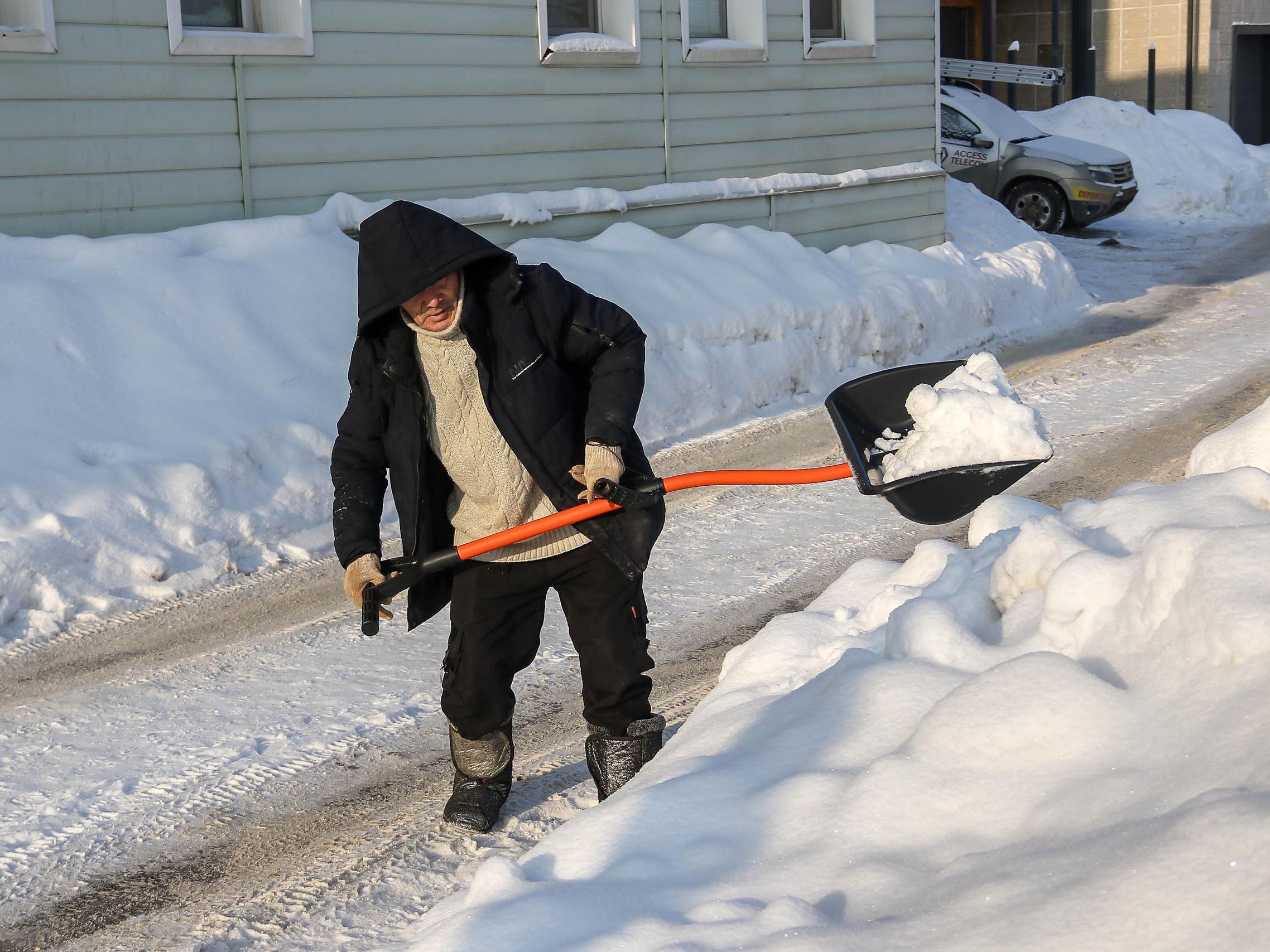
Now, in this elder — shorn, washed, and dressed — it«s hard to recognize the eternal nomad. He manages things at the shelter, shovels snow at the entrances, and slowly settles into his corner in the room. How long this idyll will last, the man himself doesn»t know. He plans to wait out the winter in warmth, and what will happen next, he still has to decide.
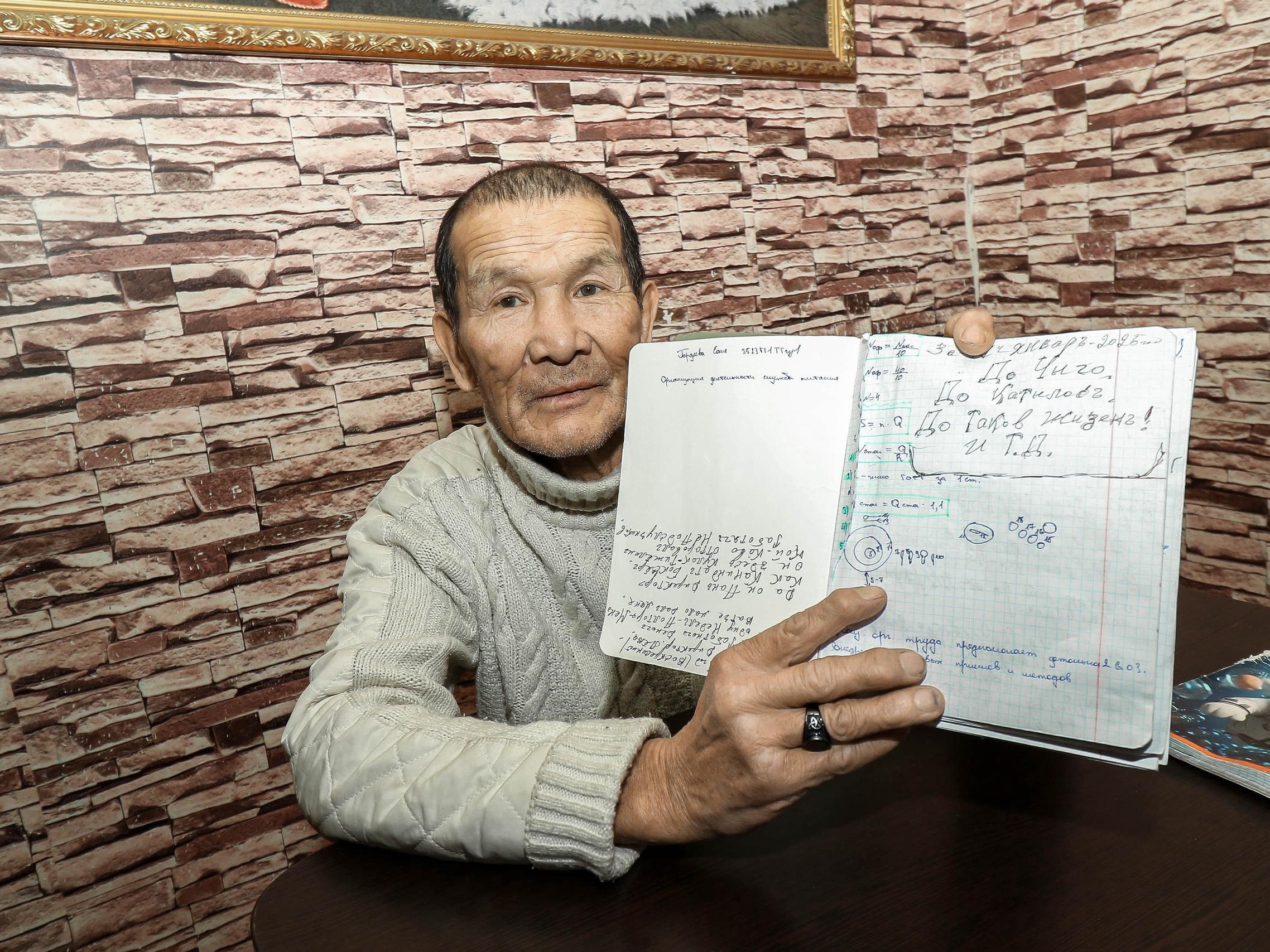
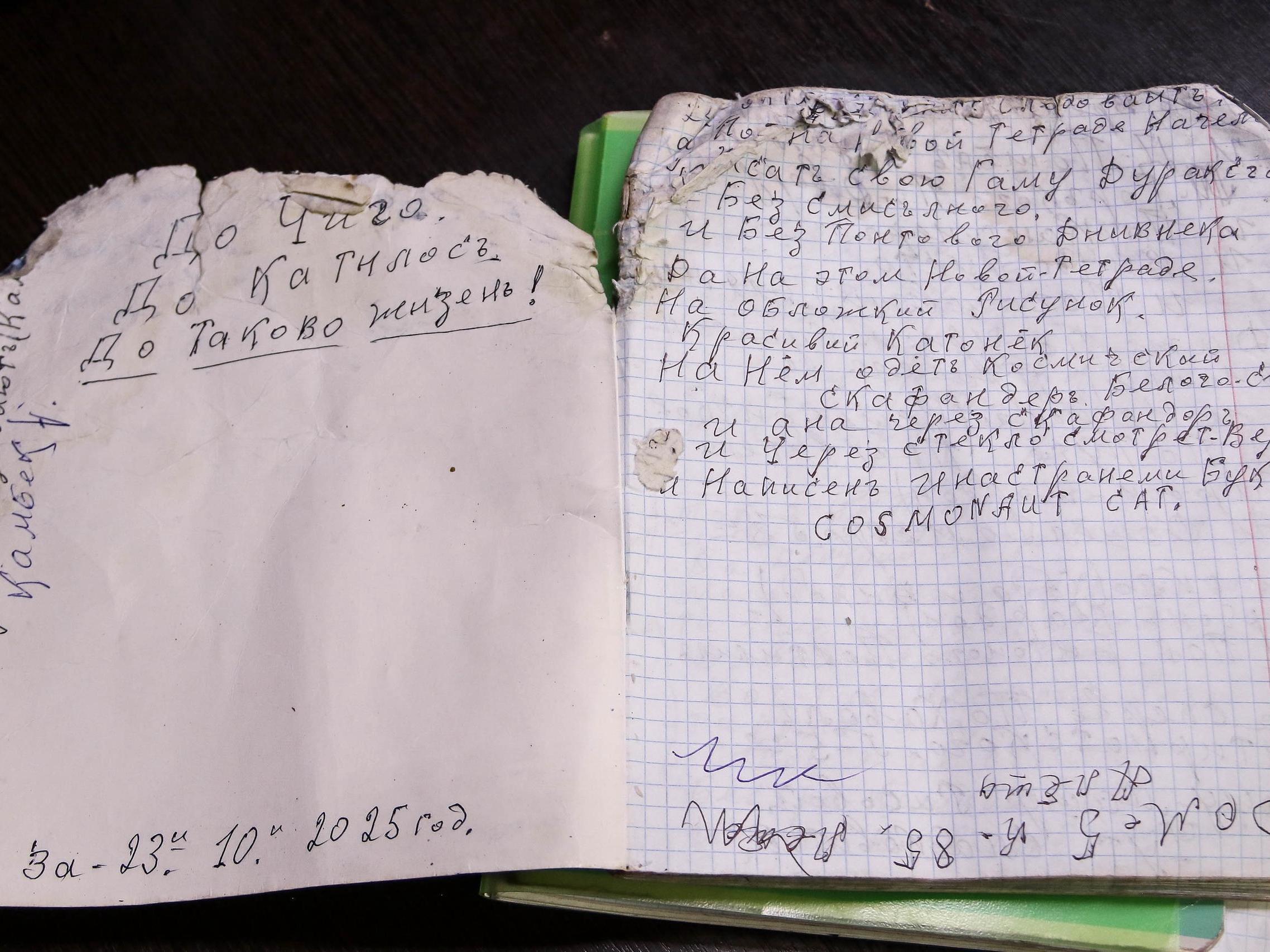
Kambek keeps a chronicle of his life in diaries — most of them are hidden in cities where he once was. In the shelter, the vagabond doesn«t change his habit and every day writes in a notebook everything that happened to him.
— I«m really illiterate, but whoever needs to, will figure it out. I write a lot in diaries, pass time that way, because I don»t really communicate with anyone. Others are talkative, they like to tell stories, but I have nothing to tell. What should I tell about? How I stole, or what? No one needs that, — the man laments.
On the first page of one of his diaries, a large inscription shines: “To what has life come to this!” On Kambek«s hand — prison tattoos: “orphan” and “There»s no happiness in life.”
— I think that indeed there«s no happiness in life. Just unlucky. For seventy-eight years I»ve been dreaming of a home. Well, as they say, a fool gets rich with thoughts, — he concluded melancholically.
When we arranged the interview with Kambek, only his series of movements across Russia and diary entries were known. It seemed like here it is — “The Secret Life of Walter Mitty,” here«s an interesting person whom fate noticed and saved by a compassionate Nizhny Novgorod woman. But life is far from always a sweet fairy tale. Sometimes, the stories of people among us are just like that.