Togliatti yearly food prices: cucumbers cheaper, beef costlier
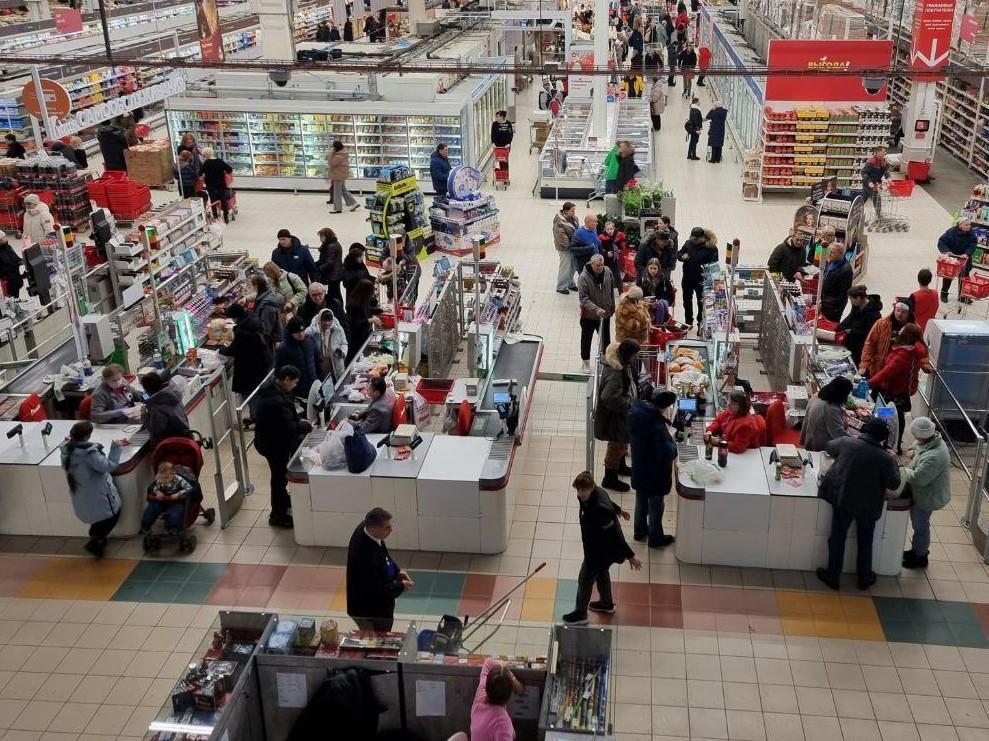

Everything has gotten so expensive! How many times have you said that this year, especially while shopping for food? But not everything has gone up. We compared Samarastat data from early 2025 and early 2026 — and identified the products with the biggest yearly price jumps and drops. Plus, we got a forecast for the coming months.
Meat prices soar: what went up most
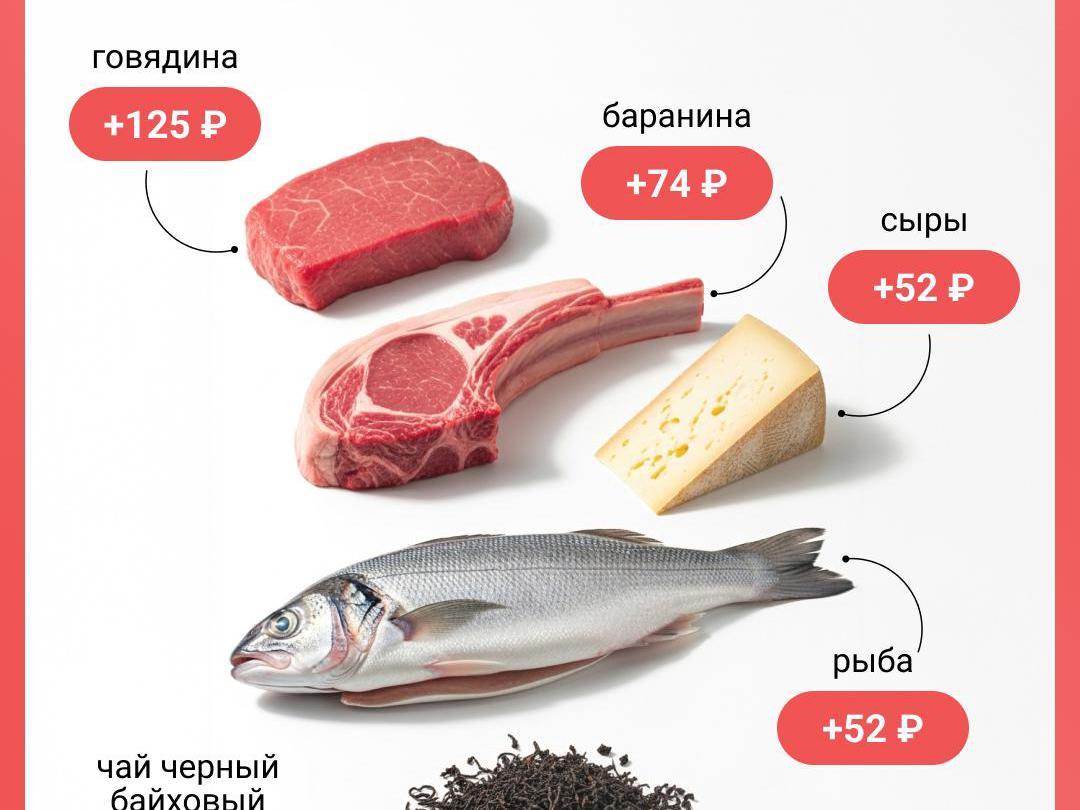
The biggest price increase over 12 months was for beef. A kilogram of beef became 125 rubles more expensive: from 563.09 rubles ($6) to 688.99 rubles ($8). Lamb (excluding boneless) also rose by 74.4 rubles: from 778.35 rubles ($9) to 852.84 rubles ($9). Black leaf tea became 70 rubles more expensive: from 1,075 rubles ($12) to 1,141 rubles ($13) per kg. Frozen ungutted fish rose by 52 rubles: from 239.72 rubles ($3) to 291.85 rubles ($3). Cheese also went up by a similar amount: from 788.74 rubles ($9) to 841.01 rubles ($9).
Sour cream was among the top ten most expensive products. According to Samarastat, its price increased by 41 rubles: from 308.74 rubles ($3) to 349.73 rubles ($4) per kg. Cottage cheese rose by 38 rubles: from 405.31 rubles ($5) to 443.31 rubles ($5). Sausage went up by nearly the same amount: from 608.50 rubles ($7) to 646.41 rubles ($7). Hot dogs and sausages rose by 32 rubles: from 493.09 rubles ($5) to 525.14 rubles ($6). Margarine rose by 29 rubles: from 232.72 rubles ($3) to 263.85 rubles ($3).
The infographic shows the five products that rose the most from early January 2025 to early January 2026.
Cabbage and porridge: what got cheaper
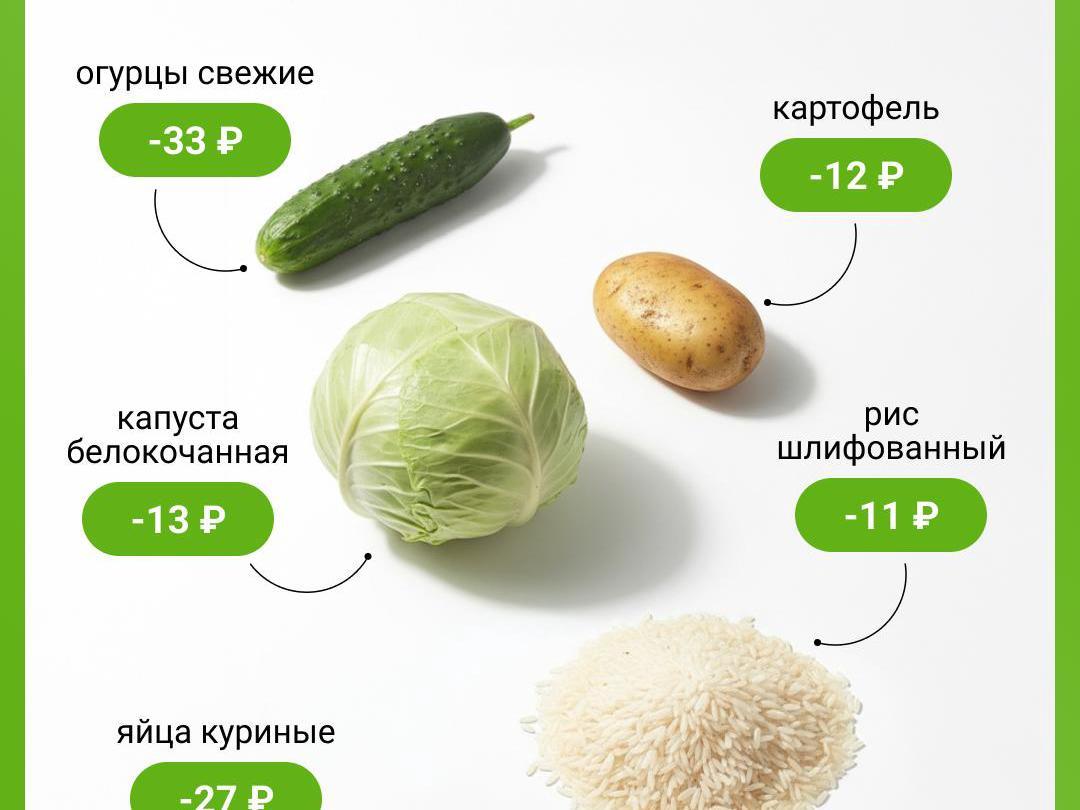
But not everything is bad. Some products have become cheaper over the year, according to Samarastat. Fresh cucumbers top the list: per kg price dropped by 33 rubles: from 270.17 rubles ($3) to 237.49 rubles ($3). Chicken eggs fell by 27 rubles: from 100.03 rubles ($1) to 73.21 rubles ($1). Cabbage fans can rejoice: white cabbage now costs 13 rubles less: from 43.82 rubles ($0) to 30.17 rubles ($0). Potatoes — down 12 rubles: from 49.55 rubles ($1) to 37.19 rubles ($0). Polished rice fell by 11 rubles: from 112.36 rubles ($1) to 101.09 rubles ($1). Onions are 9 rubles cheaper: from 45.48 rubles ($1) to 36.81 rubles ($0). Sugar fell by 8 rubles: from 70.62 rubles ($1) to 62.97 rubles ($1). Beets — down 6 rubles: from 40.69 rubles ($0) to 34.14 rubles ($0). Fresh tomatoes — also down 6 rubles: from 227.98 rubles ($3) to 221.49 rubles ($2).
The infographic shows the five products that fell the most over the year.
What will prices do in the first half of 2026?
We contacted the investment company Finam and asked for a forecast for Samara region over the next six months. Here is the comment from Finam«s Director of Strategy Yaroslav Kabakov:
«In the first half of 2026, we expect prices in the Samara region to continue rising close to the Bank of Russia»s targets. The main factors pushing up prices: the VAT increase to 22% from the start of the year, rising logistics and production costs, and seasonal fluctuations in fruit, vegetable, and dairy prices. Items likely to see above-target increases include milk, bread, apples, and cottage cheese; moderate increases are expected for butter, sour cream, sugar, chicken, and buckwheat; while pasta and eggs may grow below target. This dynamic is due to a combination of federal inflationary factors, tax changes, and regional supply and demand conditions. The overall inflation trend in the region should gradually slow by mid-year.«