Experts Explain Lake Ladoga's Water Level Drop
In July 2026, the water level in Lake Ladoga was 90 cm below normal due to a short, warm winter with little snow and spring melt.
Jul 29, 2026 0
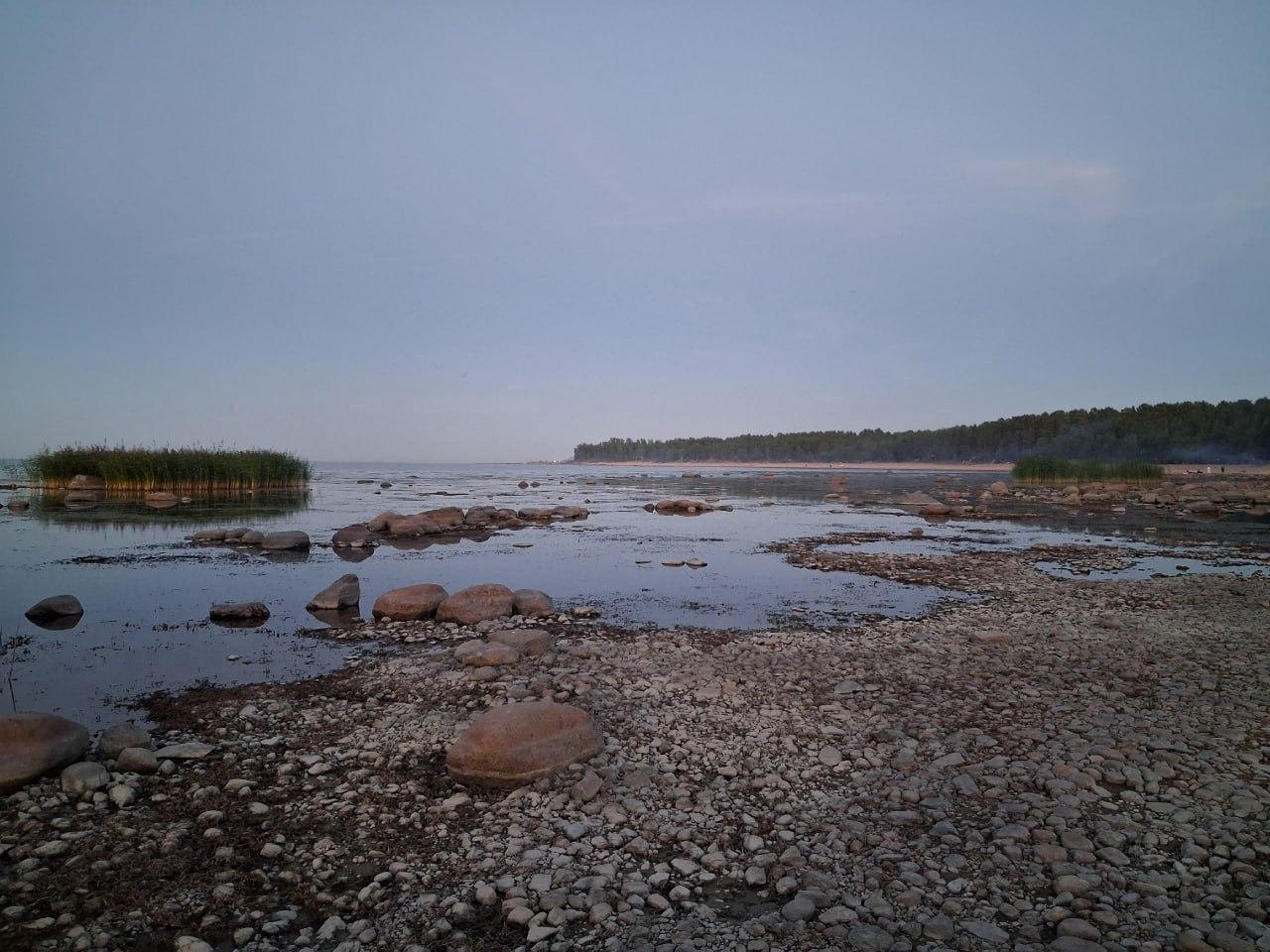

A year ago, these stones were hidden underwater.
Source:
In the summer of 2026, Lake Ladoga is surprising holidaymakers with its abnormally low water level. Rocks and bottom sediments that were previously hidden underwater have now surfaced. Boat owners have to take into account that the depth has noticeably decreased.
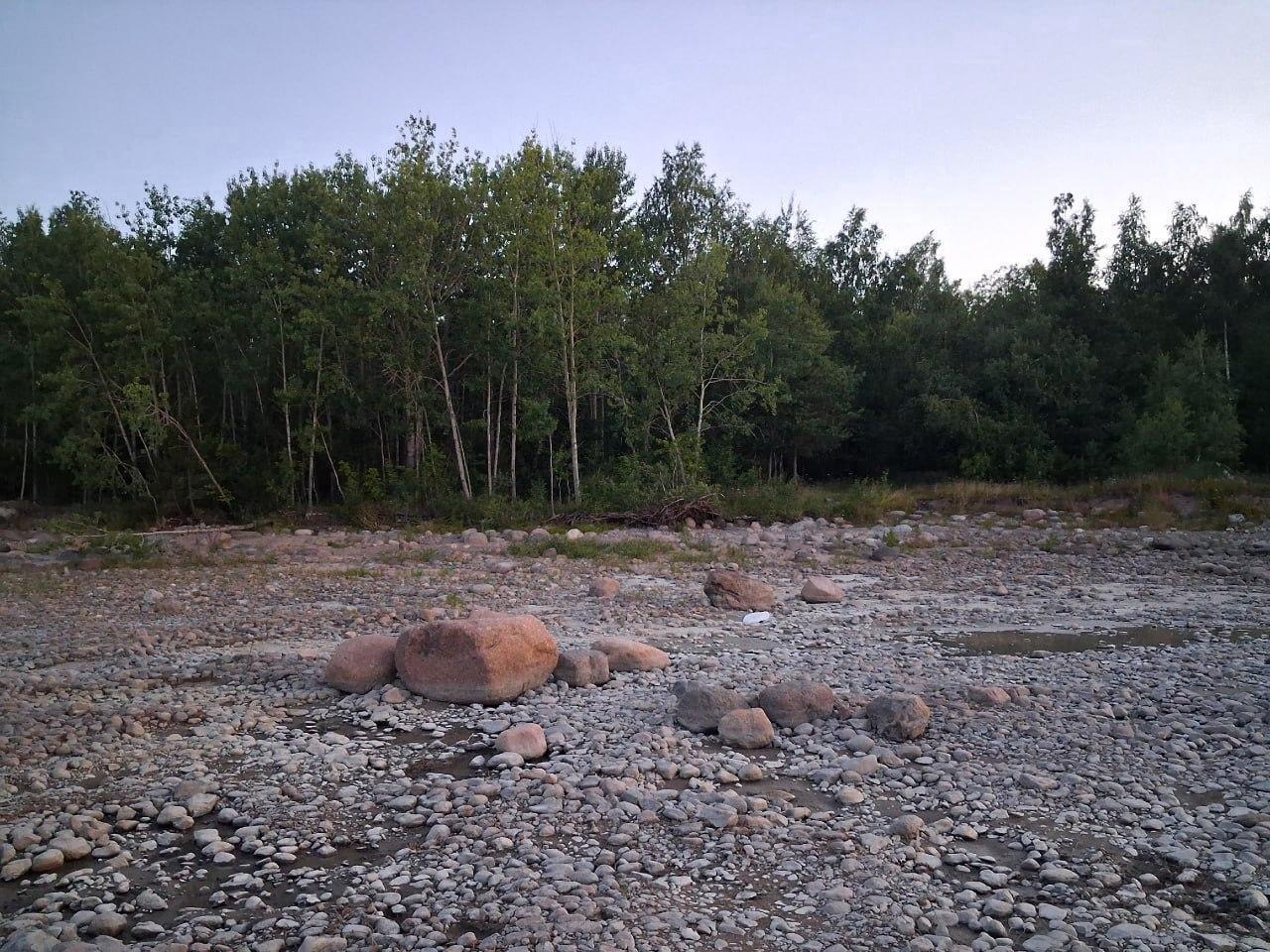
The water has noticeably receded from the shores.
Source:
Specialists of the North-West Department of Roshydromet confirm that as of July the water level is 90 cm below normal. In the coming months, it will continue to decline, posing risks to navigation.
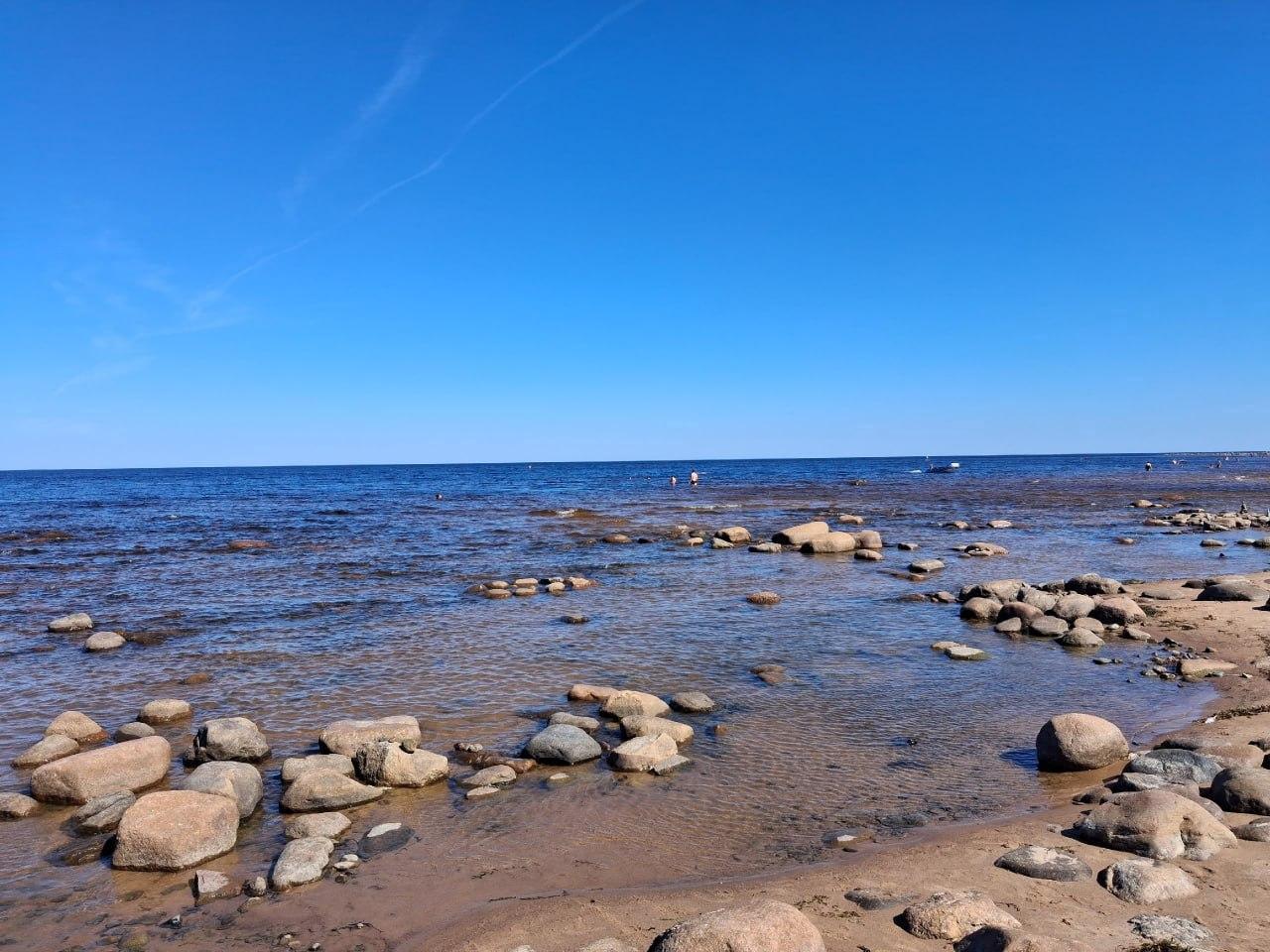
The lake still welcomes swimmers — gently and cautiously.
Source:
«We are still far from the historical minimum,» said Marina Bogdan, head of the Department of Hydrological and Marine Forecasts of the Hydrometeorological Center of St. Petersburg. «But problems for navigation may soon begin, because our Petrakrepost Bay is very shallow. Vessels with a large draft will not be able to pass. People involved in shipping are already very worried because Ladoga is still dropping. Possibly, in the near future they will not be able to pass through Petrakrepost Bay.»
In 2024–2025, the level of Ladoga, on the contrary, exceeded the norm. Significant shallowing was observed in 2015 (when representatives of the Valaam Monastery and the Russian Geographical Society drew attention to it) and in 2003–2004, when the most significant decline in 25 years was recorded. A small drop in the level was also noted in 2022.
«Lake Ladoga will continue to lower until the onset of ice phenomena,» explained Marina Bogdan. «Recently this has been happening in December. Then there will be ice jam phenomena, which reduce the carrying capacity, and the lake begins to rise little by little, literally by one to two centimeters. For Lake Ladoga, this is a lot, on a large scale. Further the level will depend on the spring filling.»
The reason for the low level in 2026 was a lack of water in the lake«s tributaries. The short and warm winter led to a small snow cover, and there was almost no precipitation in spring. «Yes, this is related to climate change. There is not enough snow cover accumulated to provide us with a normal spring flood,» Bogdan noted.
Due to the shallowing, access to some islands, for example Karedzhi, has become difficult: boats had to navigate using an echo sounder, constantly monitoring the depth. The low water level is already being felt by employees of water intakes in the upper reaches of the Neva River and by fishermen.
Leading researcher at the Arctic and Antarctic Research Institute (AARI) Dmitry Bolshiyanov considers fluctuations in the water level of Lake Ladoga to be a natural process. «The last peak rise was in 2018. An even greater drop — more than a meter — occurred in 2004. Since this is a periodic process with an interval of 5–10 years, the next rise in the level of Ladoga is expected in 2027–2028,» he said.
Modern fluctuations in the level reach four meters and are associated not only with surface runoff but also with the influx of water from the Earth«s crust. This is characteristic of many water bodies in the world, for example, the Caspian and Aral Seas.
«Since water level fluctuations are a natural and periodic process, the lake«s ecosystem is quite adapted to them, and catastrophic consequences for flora and fauna are not expected,» emphasized Bolshiyanov. He also noted that in the long term, there is no shallowing: the average depth of the lake is 47 meters, and the maximum is 242 meters.
Every person individually cannot influence global processes, but caring for the environment, in particular refraining from littering water bodies, remains important. In 2025, the AARI published the book «Sea Level Changes in the Polar Regions of the Earth in Recent Hundreds and Thousands of Years», which examines the causes and dynamics of fluctuations in the level of Lake Ladoga.
Read more