Korean-Canadian Finds Love and Life in Tolyatti
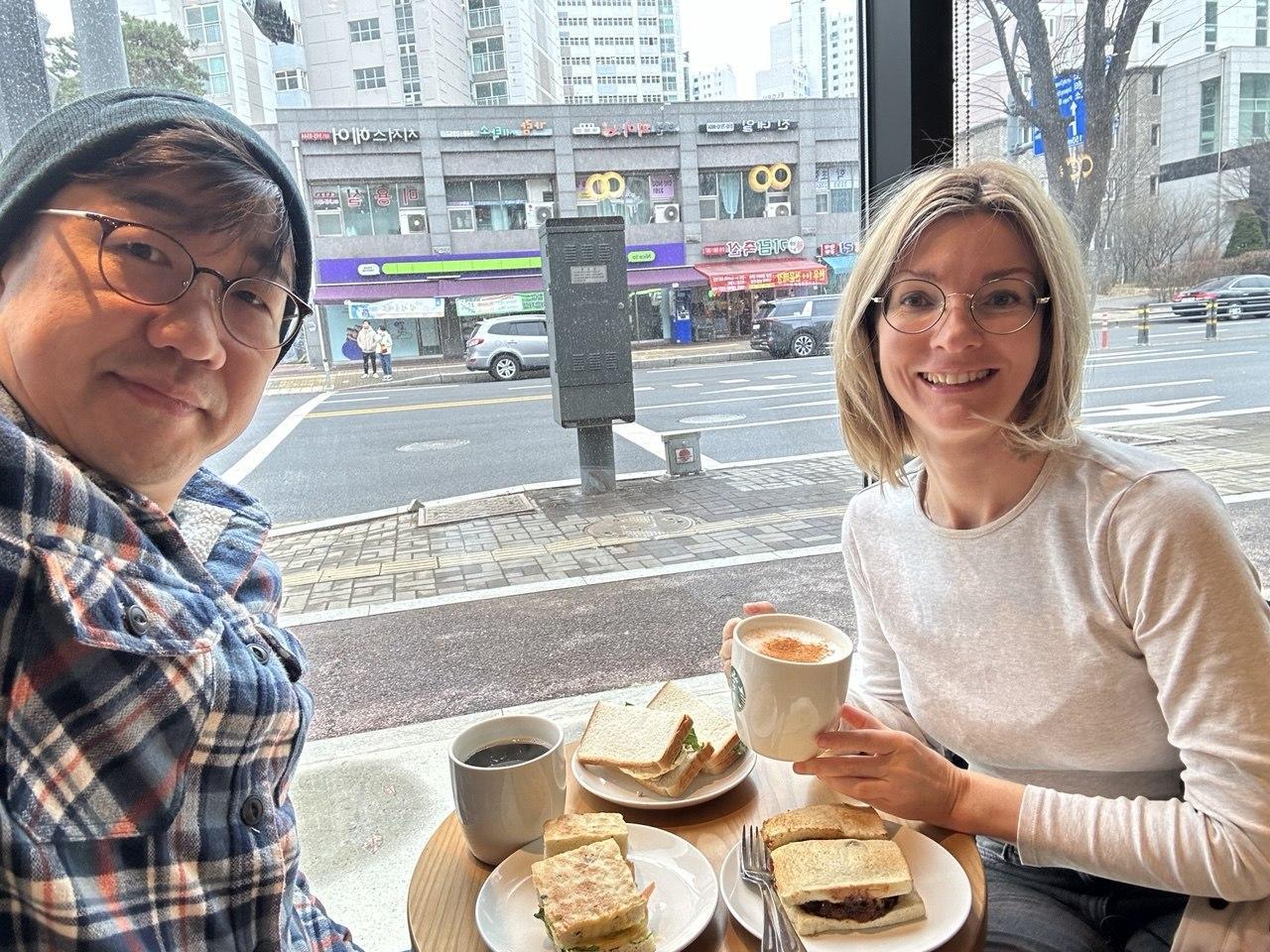

Justin Song is a Seoul native, a Canadian citizen, and now a resident of Tolyatti. He has traveled halfway around the world and worked for major Korean, American, Canadian, and Japanese corporations such as Samsung, LG, and Xerox before moving to Russia«s automotive capital because his wife, Natalya, was born and lives there.
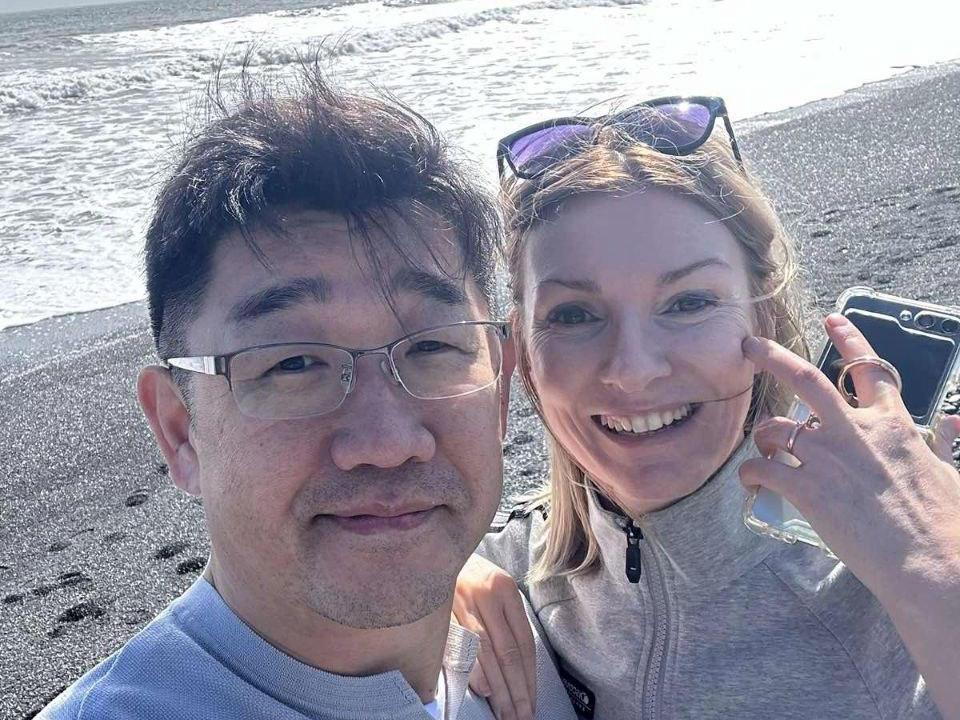
True love knows no borders on the world map
The Songs told a TOLYATTY.ru correspondent how their cross-cultural union was built and what challenges a foreigner faces in Russia.
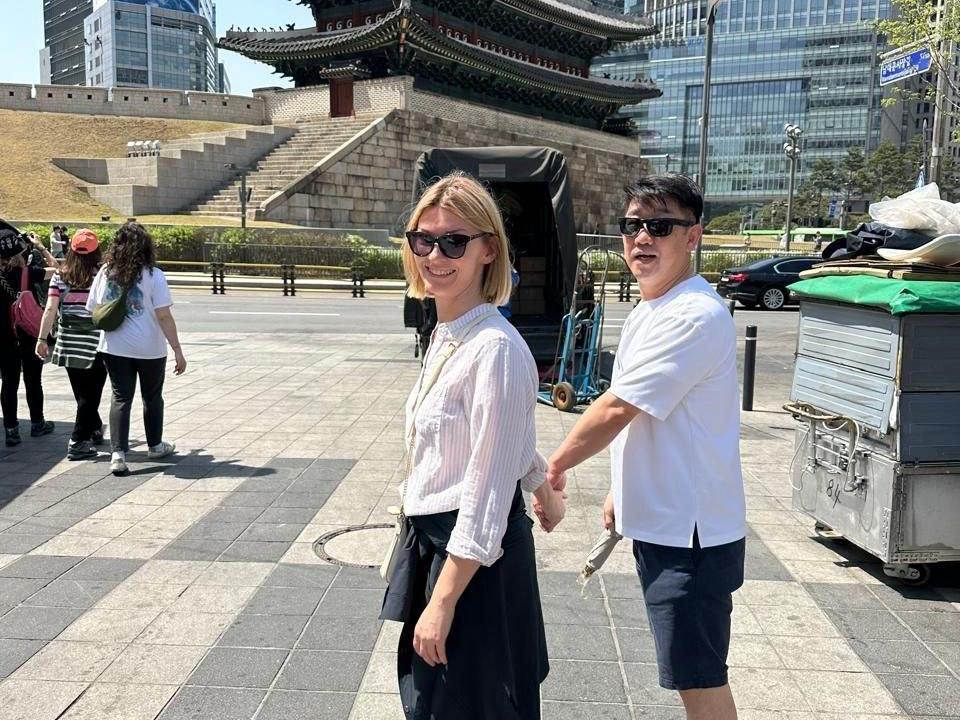
Natalya is 48, her husband is 56. But both, it seemed to us, look noticeably younger than their age
Falling in love through online English courses, moving to South Korea, and eventually returning to a small Russian city—that is the complex trajectory of Justin and Natalya Song«s family.

Natalya and Justin love to travel. Niagara Falls is behind them
We met at a cafe in Tolyatti and spoke in either Russian or English. According to the couple, at home they communicate exclusively in English: Justin«s Russian is still quite modest, as is Natalya»s Korean.

The couple have seen many unusual places on the planet
— I enrolled in courses and studied English remotely, and Justin was one of the native speakers on the other side of the screen. One day we were put in the same group, and Justin was assigned as my mentor. My English was almost zero at the time, but partly thanks to him I soon improved, and we began communicating more and more, growing closer, and then switched to personal messages, feeling a strong attraction to each other,— Natalya recalls.
Justin told Natalya about his life, which before meeting the Tolyatti woman had been rich in events and travel.
— Justin was born in South Korea but is a Canadian citizen. In 1999 he went there alone, found a job, and obtained citizenship. Then he moved to the USA, to New York. Later he returned to Korea at Samsung«s invitation, but soon left for the States again, and then went back to Korea. After that came Canada and the USA again—he shuttled between continents. In 2010 he finally returned to Korea and stayed there,— Natalya says.
Natalya and Justin decided to meet. Their first date happened in 2018—Natalya flew to visit her correspondent in South Korea.
— We were both single, each with a marriage and children behind us, and both ready for a new relationship. We really liked each other, and then decided to get married,— Natalya recalls.
The couple held their wedding in Russia—registering the marriage in South Korea turned out to be impossible. Justin explained that they couldn«t do it because both are foreigners: he is a Canadian citizen, she is a Russian citizen. When obtaining his Canadian passport, he had to renounce his Korean citizenship, as Korea does not recognize dual citizenship. According to him, he can regain his Korean passport no earlier than age 65.
The ceremony took place at a registry office in Samara. As Natalya said, registering a marriage with a foreigner in Samara Oblast is possible only in the regional center and necessarily with an interpreter present. The celebration itself was organized at a restaurant on the Samara embankment. Soon after the wedding, the couple returned to South Korea.
— Initially we planned to settle in Canada: we couldn«t move my mother to Korea—the immigration policy there is very strict. Leaving her alone in Tolyatti was also impossible—she has no one but me. So Canada seemed the only reasonable compromise. But then the pandemic hit, and we got »stuck« in Korea,— Natalya admitted.
As soon as the opportunity arose, the couple moved back to Tolyatti—again for the sake of Natalya«s mother. In the automotive city they settled in the Avtozavodsky district and set up their household from scratch, getting used to each other»s work schedules.
— Justin works remotely, I go to work every day (Natalya works as an accountant.— Ed.). Because of our different schedules, we had to adapt to each other,— Natalya explains.
The Korean had to get used to local products and Russian cuisine. However, Justin quickly became the main cook—according to Natalya, he cooks almost always and prefers international dishes.
— Our menu includes Vietnamese pho, Italian pasta, burritos, and of course Korean kimchi, which my husband makes himself. We bring spices for it from Korea: he finds it not spicy enough. In his homeland, spicy food not only stimulates appetite but also relieves stress—roughly like sweets for many Russians. As for our cuisine, Justin loves pancakes and shashlik most. He«s also delighted with our dairy products, especially yogurts. Meat, by the way, is tasty both here and in Korea—the main thing is to know how to choose. We buy groceries in regular supermarkets, and my husband is already recognized there, greeted,— Natalya laughs.
She adds that for Koreans, food occupies a huge—perhaps central—part of life.
— The first thing Koreans ask when they meet is: «Pap mo-go-ssо-yo?», which means: «Have you eaten?» For them it«s the equivalent of our »How are you?« The tradition goes back to the 1950s, when people starved after the war. The meaning is simple: if you»ve eaten, you«re alive and well,— Natalya explains.
The couple were truly shocked when they saw prices in Tolyatti stores. According to them, the cost of a grocery basket in the automotive city and in Seoul is almost the same—even though incomes are incomparable.
— Prices are almost like in Korea… Compared to our salary, we«re simply in shock: how do people even survive here? In Korea, the minimum wage is 120,000 rubles (about $1,300) in our money, and that»s the very minimum. Here the minimum wage is 27,000 rubles (about $300). We constantly wonder: «Lord, how do people live?»— Natalya and Justin shared.
Another thing the Korean found hard to get used to in Russia is the lack of a culture of separate waste collection. In Korea there is a strict system: food waste goes into special bags, while plastic, paper, and glass are collected separately.
— South Korea is a very small country, there«s simply no room for garbage, so people long ago learned to sort waste and gave up plastic bags—Koreans go shopping with string bags. But Justin still feels awkward walking with a string bag in Tolyatti stores—people give him odd looks,— Natalya admitted.
At the same time, Tolyatti itself, in the Korean«s opinion, is quite convenient for living—especially in everyday terms and for relaxation after work.
— There«s beautiful nature, many shops, wide roads, a wonderful embankment where we love to walk. But the city clearly lacks creativity and modern public spaces. I think we need to involve young people more often, give them the opportunity to express themselves and create something new. It would be great if more young people stayed here after school—as far as I know, many leave Tolyatti. After all, the city would be transformed if they stayed,— our interlocutor believes.
Another thing the Korean had to get used to is the local climate. Damp periods of the off-season, frost and wind in winter, and scorching sun in summer. According to Natalya, when the sun becomes active, her husband doesn«t leave the house without a substantial layer of SPF 50 sunscreen—the highest level of protection.
— In Korea everyone carries sun umbrellas, wears special arm sleeves, and during the most active sun they try to stay indoors. Koreans are generally very careful about youth and beauty, many get double eyelid surgery. The government even wants to include hair transplants in medical insurance, that is, it«s ready to pay for the procedure—all because young people have started having hair problems: it falls out early,— Justin shares.
Natalya adds that despite the cult of beauty, which has become almost a national tradition, her husband is an opponent of aggressive cosmetology.
— He«s cool toward pumped-up lips and botoxed faces—he says it»s not respected in Korea and is considered bad taste. As for my self-care, he advises not to interfere with natural processes and to stick to light care. But overall, my Justin is a dream man. Kind, caring, neat, and most importantly—he never leaves his socks lying around the house,— Natalya laughs.