School Is Not the End of the World

How to prepare mentally for the first of September — advice for parents
1 September is not just pretty bows, bouquets and songs about school — it is also worry and anxiety for those who were still very small not long ago. Because of the abrupt change of events, the Day of Knowledge often turns into stress for both parents and children. But this can be avoided!
First-graders need a special approach
76.RU asked Yaroslavl family psychologist Irina Utochkina how to be calmer about a child«s transition to school and what to do so that the celebration leaves only pleasant memories. The advice suits both first-graders and more experienced pupils.

A child may encounter difficulties at school
The developmental features of a first-grader

A guide for parents on minimizing stress from a child«s move from kindergarten to school
To understand how to prepare a child for school, you need to take into account the features of their age. Children usually start first grade at the age of 6–8. According to the psychologist, at this stage a pupil may face a crisis.
Sometimes a child may not be ready for school
At this age, the child«s psyche is still fragile. The teacher becomes the main authority for a first-grader, as study begins to take up the main part of their life.

How to prepare a child for school — a psychologist«s advice
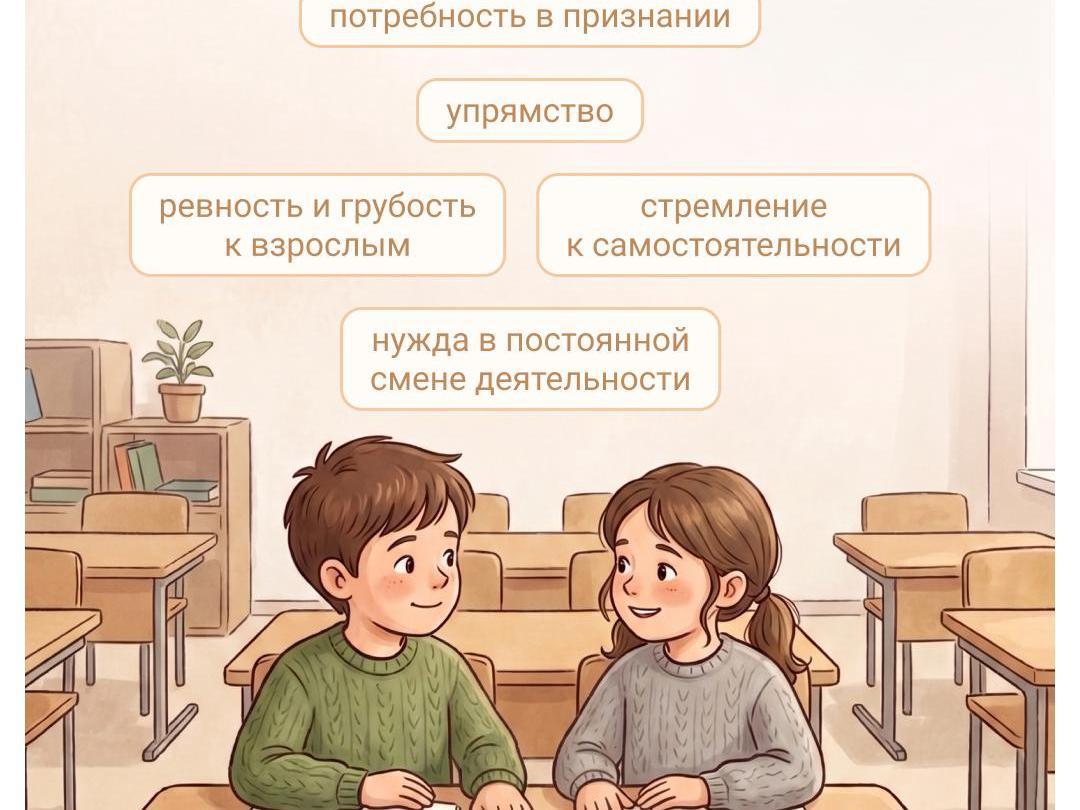
— The child has a pronounced need for recognition and support from an adult, while wanting independence but not always being ready for responsibility. During this period, behaviour shows a lot of negativity, stubbornness, wilfulness, jealousy and rudeness towards adults, the psychologist explained.
The psychologist named the «red flags» in communicating with a pupil
Those who were considered an active chatterbox, bully and fighter in kindergarten may withdraw into themselves and become quiet during the crisis. At 6–7 years old, a child develops a need to successfully master a new social role.
The psychologist explained how to prepare a first-grader mentally for school
— A crisis is a temporary phenomenon; it simply has to be lived through. Remember yourself when you are settling into new duties or a new team. It is hard for you, you worry.
What difficulties may lie in wait
The hardest thing about a child«s transition to school is how strongly it differs from kindergarten. Play activities, a gentle routine and physical closeness give way to a clear structure. At school you have to sit still, find your way around a new space, and build relationships with the teacher and peers.
— At 6–7 years old, a child is able to hold attention for only 15–20 minutes, after which they need a break and a change of activity. Teachers and parents should take this feature into account, Irina Utochkina said.
The psychologist listed what other difficulties a first-grader may encounter.
Emotional overload and anxiety: the child may be afraid of failing, of being reprimanded, or of not being liked by the teacher;
fatigue: in the first months of school, children tire quickly, so they become tearful and may complain of headaches or stomach aches — a psychosomatic reaction to stress;
difficulty with self-regulation: the child is only just learning to keep track of their schedule, pack their schoolbag and hold their attention, among other things;
adaptation to the group: at school a first-grader needs to build their status anew and find friends;
a conflict of expectations: parents and teachers may unconsciously convey inflated demands, which increases the child«s inner tension.
— During this period, a child may demonstrate success at school by making an effort, yet often cry at home, show aggression or, on the contrary, become withdrawn. It is important not to dismiss these experiences but to see them as real difficulties of adaptation, Irina Utochkina explained.
How a parent should behave
Parents need to show patience during their child«s transition period. According to the psychologist, the adaptation process depends on how preschool childhood went. The atmosphere in the family has a great influence on many things.
Parents« anxiety during this period, the psychologist says, is a normal reaction to change, but it is easily transmitted to the child. Children subtly read adults» emotional state through verbal and non-verbal signals: a tense posture, a raised tone, frequent questions that betray severe stress.
— If a parent conveys anxiety, the child perceives school as a potentially dangerous place, the specialist explained.
Exaggerated worries and stress can negatively affect a first-grader«s condition. The following consequences are possible:
an increase in the child«s own anxiety;
fear of mistakes and avoidance of difficult tasks;
somatic reactions (headaches, nausea before school);
dependence on the parent«s presence (the child cannot stay in the classroom without their mother).
To reduce stress, the psychologist advises parents to share responsibility: the school is responsible for education, while they are responsible for support and emotions. There are several ways to feel better:
Plan the daily routine, rest and meals in advance.
Set aside time for yourself (a walk, a cup of tea in silence and so on).
Talk to other parents and exchange experience.
If stress becomes unbearable and you cannot cope with it, you should see a psychologist.
How to tell that a child is not ready for school
Sometimes a child may be psychologically unprepared for school. According to the psychologist, this depends not only on knowledge but also on the child«s ability to cope with emotions, follow rules and ask for help.
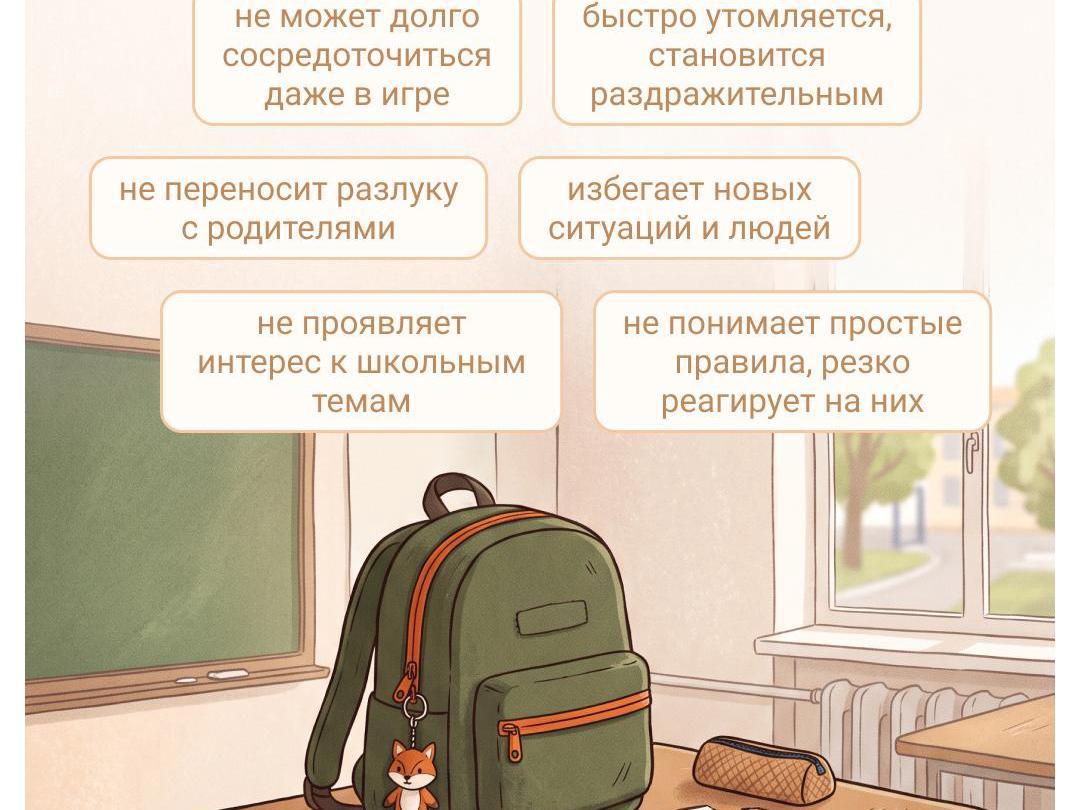
Insufficient readiness for school is revealed by the following behavioural signs:
the child cannot hold attention for more than 10–15 minutes even in play;
they become very anxious when separated from their parents (crying, unable to calm down for a long time);
they do not understand simple rules (reacting sharply to remarks, withdrawing into themselves);
they tire quickly and become irritable;
they avoid new situations and people and show no interest in school topics.
Techniques for preparing for school
According to the psychologist, a child should be prepared for school in advance: play teacher and pupil, swap roles, act out difficult situations. In this way a parent will help free the pupil from the fear of the unknown.
A few days before 1 September, the specialist advises walking the entire route to school and getting to know the grounds. Optimism and a playful tone will help preserve trust between the child and the parent.
— In my practice I often use the «School Map» technique: together with the child we draw a plan of the school and mark «safe places» (the teacher«s office, the medical room, the toilet) and »people you can turn to«. This reduces uncertainty and gives a sense of control, the psychologist advised.
As the expert explains, parents can also teach the child in advance to regulate their stress with the simple techniques of «5 deep breaths» and a «calm box» (into which you can put things together that help the child calm down, such as a pebble, a drawing or a toy).
— It is important not to create illusions about school; you need to tell the truth, but in a supportive form, for example: «There are difficult moments at school, but there is a lot of interesting things there,» Irina Utochkina added.
So that the celebration of 1 September goes joyfully, parents can create positive associations with this day for a first-grader:
the «little joys» ritual: do something nice for the child (prepare their favourite breakfast or buy a new pen, a sticker for their schoolbag);
a story about a «school superpower»: explain that at school they learn new skills and become a superhero, and every lesson is a training session for that superpower;
a focus on interest: explain that at school the child will meet new friends and learn about unusual things.
What must never be done
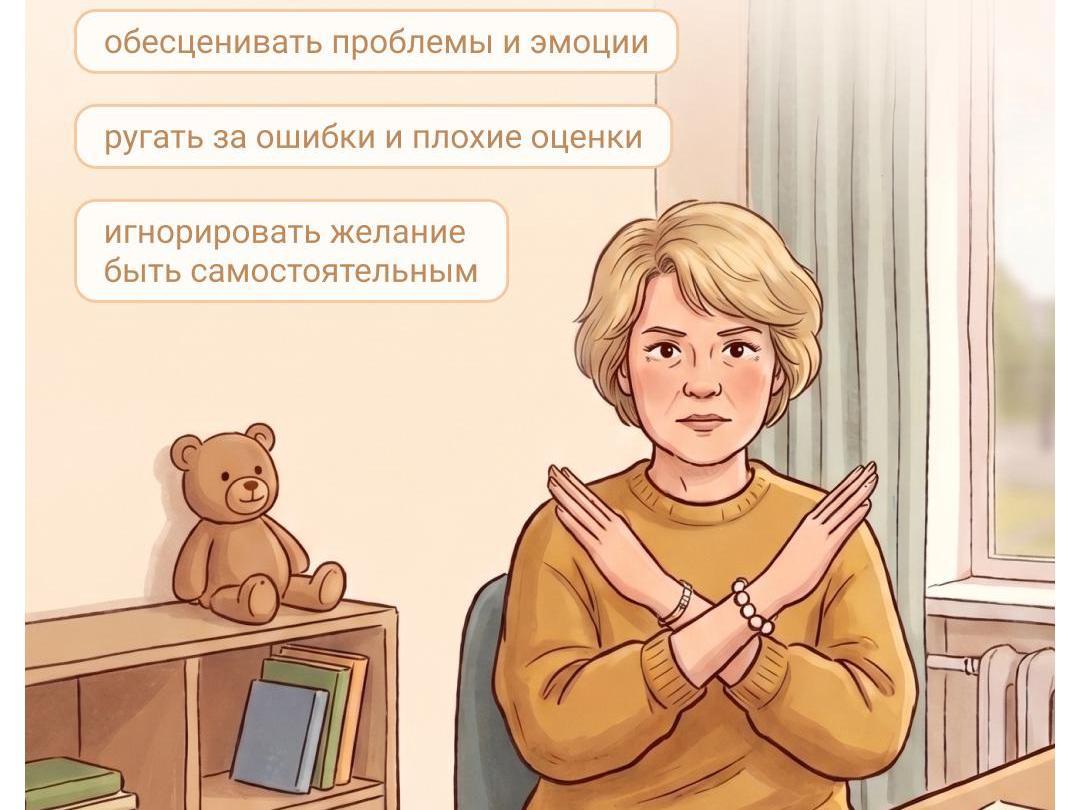
According to the specialist, there are several things that can make a child afraid of school. These «red flags» in communicating with first-graders should always be kept in mind.
You must never compare a child with other children; phrases like «but Masha can already read» can do harm and lead to negative consequences. Nor should you dismiss the child«s problems and emotions, even if they seem trivial to an adult.
The psychologist urges against scolding for mistakes, slip-ups and bad marks. It must be remembered that a child needs time to recover.
— Remember that first grade is about adaptation, not achievement. A child needs to be praised for effort and attention focused on what they are good at, the specialist recommended.
A pupil needs help structuring their day, leaving time for play and rest. The choice should also remain with the child: for example, what to wear or which lesson to study first.
By the way, gift sets are provided for first-graders in Yaroslavl Oblast; we published an overview of them in this article.