Testing the Snowdrift Ice Cream Trend: Taste and Feasibility
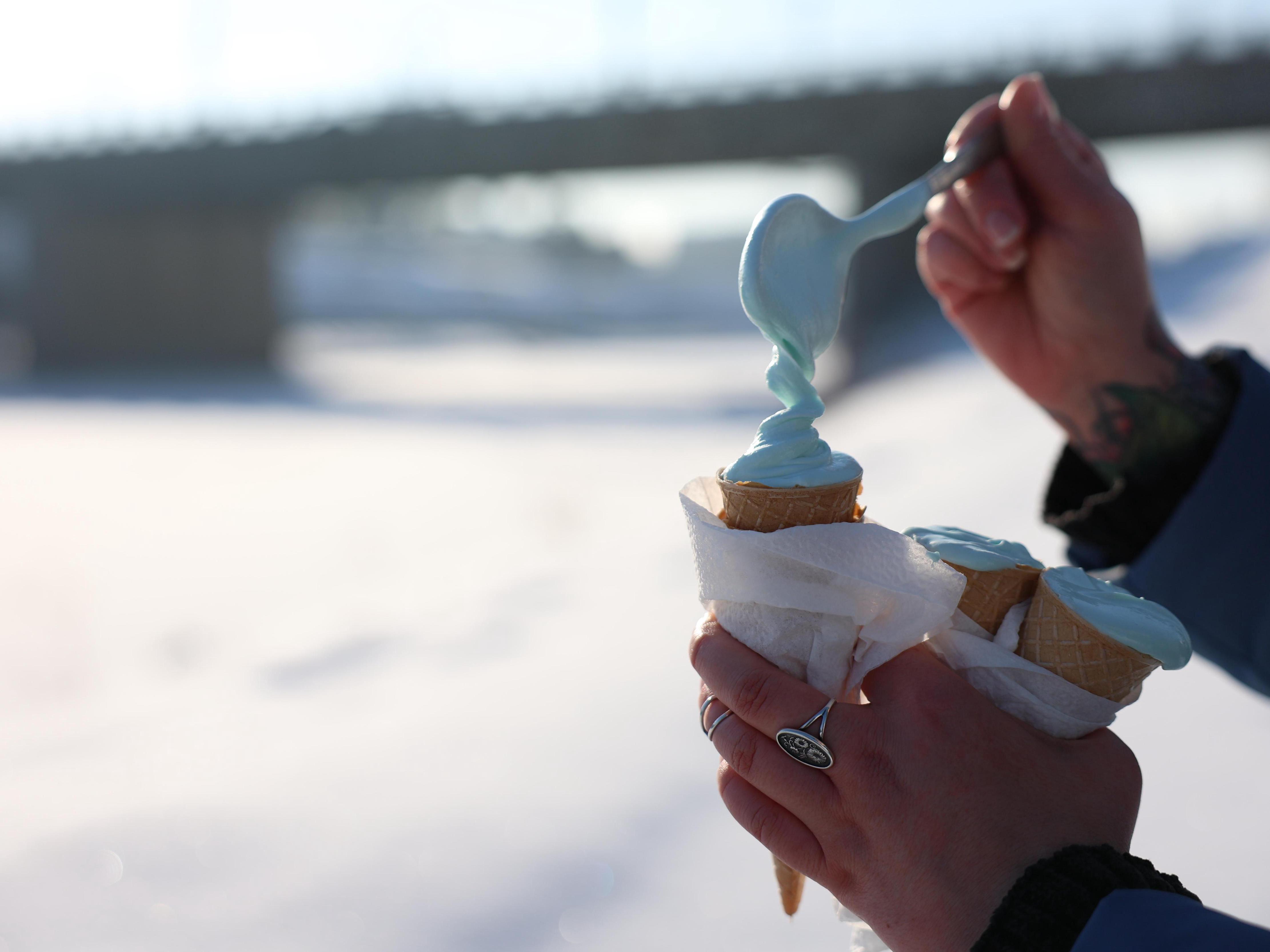

A video with a recipe for making ice cream in a snowdrift has gone viral on social media. The ingredients are minimal: heavy cream, powdered sugar, and vanilla sugar. All this goodness is mixed in a pot placed in a hole in the snow, then freezes into a thick mass that can be scooped into waffle cones and enjoyed. We decided to check if it«s really as simple as shown in the video and how the trendy ice cream tastes. How it went — read in the report by Tamara Bashayeva and Yevgeny Sofiychuk.
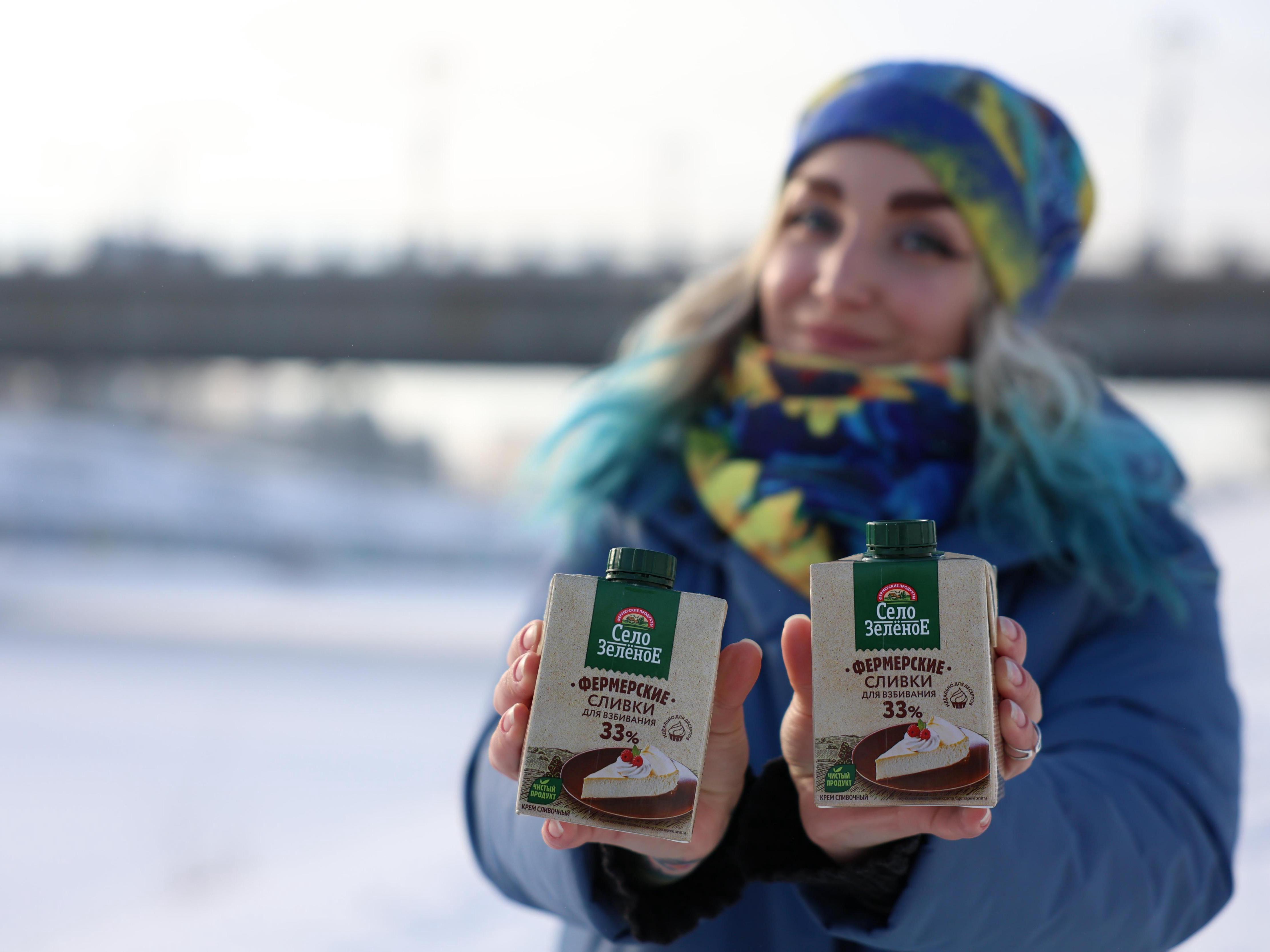
A sunny January day. The thermometer shows -20°C (-4°F). We have everything we need: a pot, a whisk, salt (to lower the temperature of the snow), two packs of powdered sugar, 250 grams each, two boxes of cream, 500 ml each with 33% fat, a pack of vanilla sugar for flavor, a little blue curaçao syrup for color, and waffle cones.

We head out to the bank of the Om River (in Siberia, Russia), where at this time of year there is untouched snow and scenic views. We immediately decided that we need to act quickly, or else the cream might start freezing right in the tetra pak. We made a depression in the snow, poured in a kilo of salt, mixed it, and the mass immediately began to melt. After all, physics is a great science.

We set up the pot, poured in the powdered sugar and added half a liter of cream. Remembered the vanilla sugar. Sprinkled it in too. Mixed. It seemed a bit thick. Added another 250 ml of cream. At some point, we had to fight the urge to add flour — the process very much resembled making pancakes or fritters.
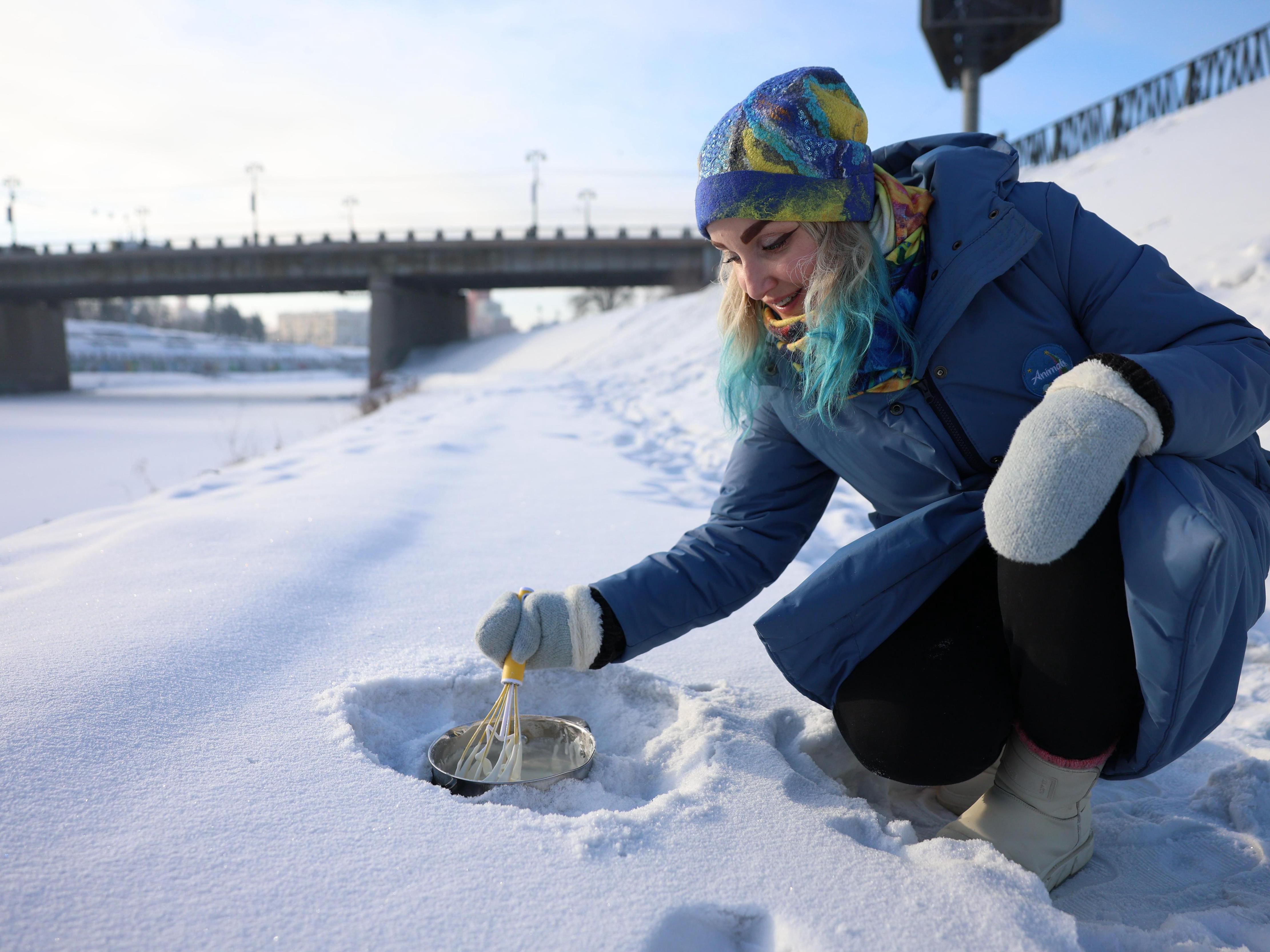
The whisk quickly dissolved the powdered sugar in the cream, the mass became homogeneous, there was no particular need to whip it further, so we added the blue syrup and started waiting. The idea of giving the dessert a tint turned out to be very successful — against the white snow, the soft turquoise shade looks effective and ideologically combines with the January frosts. Moreover, the syrup has a pleasant citrus taste.
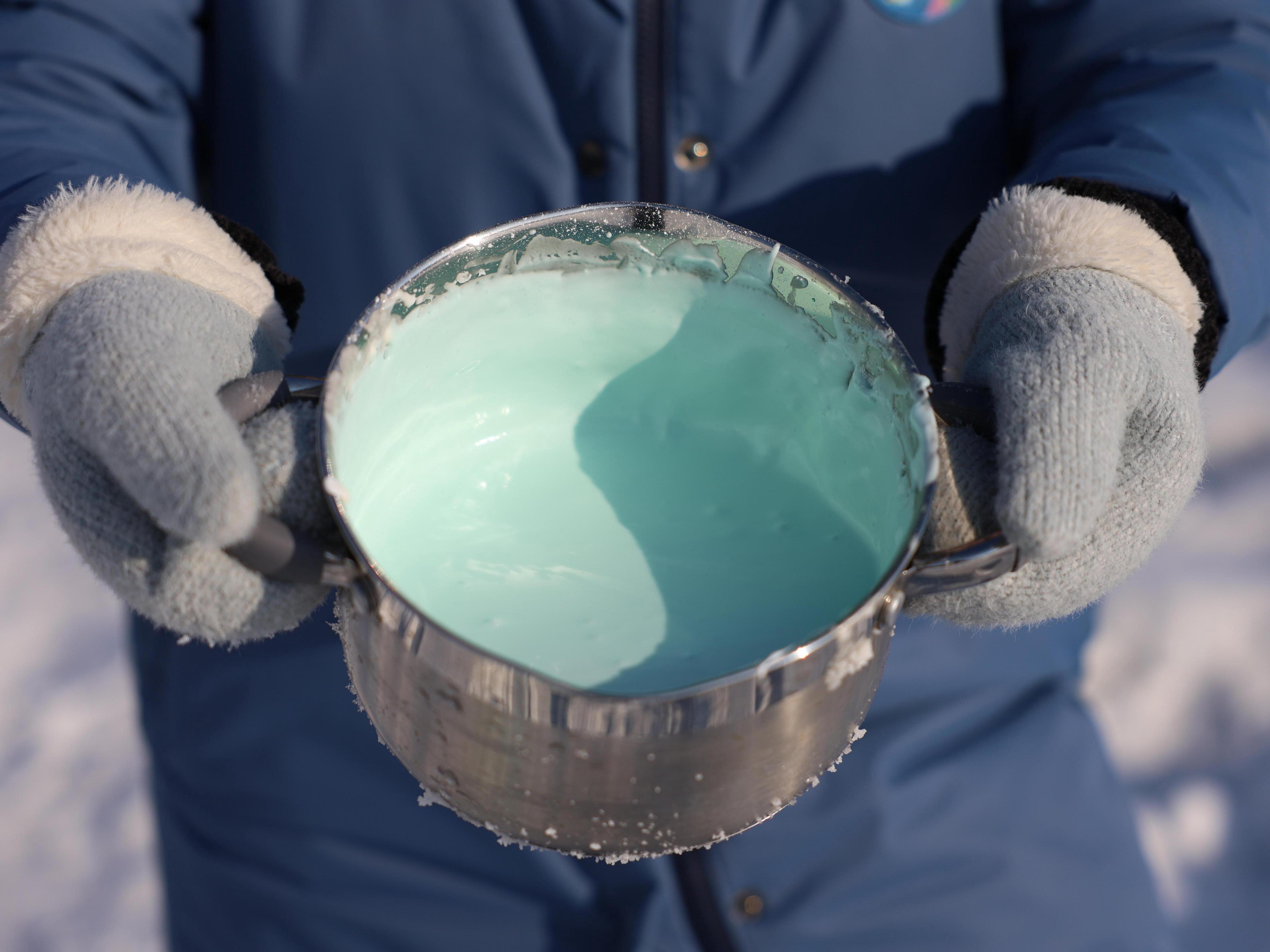
It seemed that in such cold, the contents would freeze instantly, but not so. We circled around the pot for 10, 15, 20 minutes, stirred the mass with a whisk, but it was still liquid and resembled batter for charlotte, which is poured into a mold for further baking. Well, now we could only find out the cooking time through practical means, relying on the Siberian cold.
After a while, the ice cream began to freeze. First, it thickened on the walls of the pot, then on the whisk. With a spoon, we scraped off for a taste what already resembled the finished product.

The habit of creating problems doesn«t go away with the years. I realized this when I touched my lips to the metal spoon. At -20°C (-4°F). Well, it»ll heal. And the ice cream turned out to be very tender, creamy, with a homogeneous consistency, without ice crystals or watery aftertaste, as happens in cheap cups.
Meanwhile, the mass continued to thicken. But it was too early to rejoice — the process was dragging on, and the cold crept up to our hands and feet.

The most reasonable solution seemed to be to leave the pot alone and let it freeze without stirring or moving it. We started wandering along the embankment, like tigers in a cage, waiting for a hearty meal. The frost made the wait tedious, and the sun made our eyes water. Generally, it«s a strange feeling — waiting for the contents of a pot standing in a snowdrift in the middle of the city to be ready. It won»t boil, it won«t smell delicious, and how do you know when it»s time?
After some time, it became clear that the ice cream was in no hurry to freeze and ignored our generous decision to leave it alone. And here, motivated by the threat of hypothermia, we turned to physics again — when stirring, the mass cools faster because the temperature evens out throughout the volume — from the walls to the center.
Working with the whisk became impossible, every movement required effort, and we replaced it with a regular spoon. Ideally, it would be to make ice cream near a warm room, for example, in the yard near the house. Do all the necessary manipulations and go inside to warmth. And after three or four hours, remember the pot, in which by that time everything would guaranteed «set.» But we couldn«t leave it all alone on the embankment in the city center, so with the last of our strength, we waited for the process to end.
Stirring the ice cream, holding a metal spoon with a bare hand in such cold — an indescribable feeling, and the mittens kept slipping off the thin handle and threatening to get dirty in the sticky mass. So we took turns warming our hands in mittens and stirring, warming and stirring, stirring and warming. After two hours, it became clear — we would settle for any result, as long as the contents didn«t leak out of the waffle cone. It was time to put an end to all this.
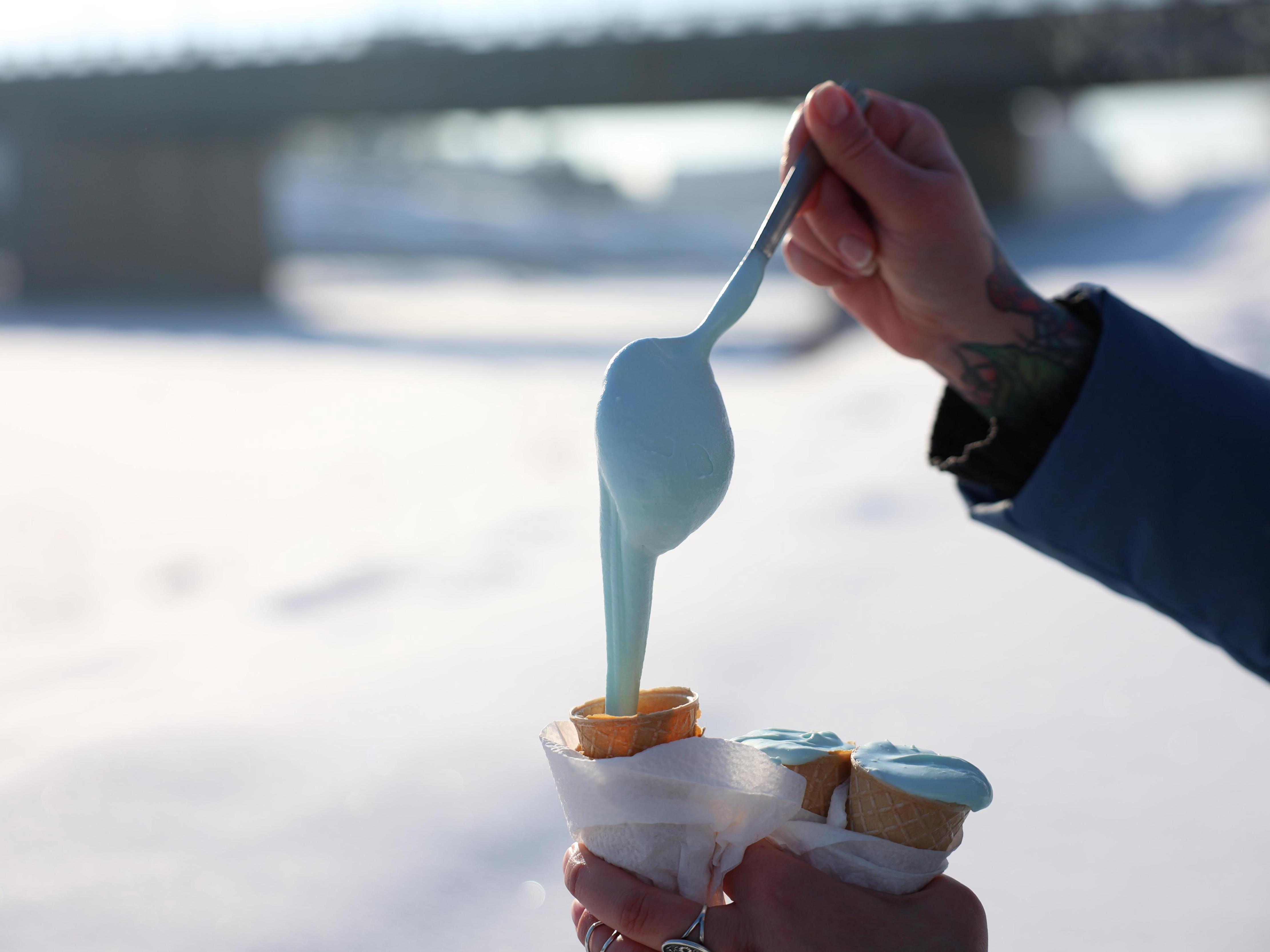
Filling the waffle cone with ice cream was pleasant. At that moment, we felt limitless power — to put as much as we wanted, properly filling all the voids. From the spoon, the mass slowly descended into the cone and took a beautiful shape on the open upper edge.
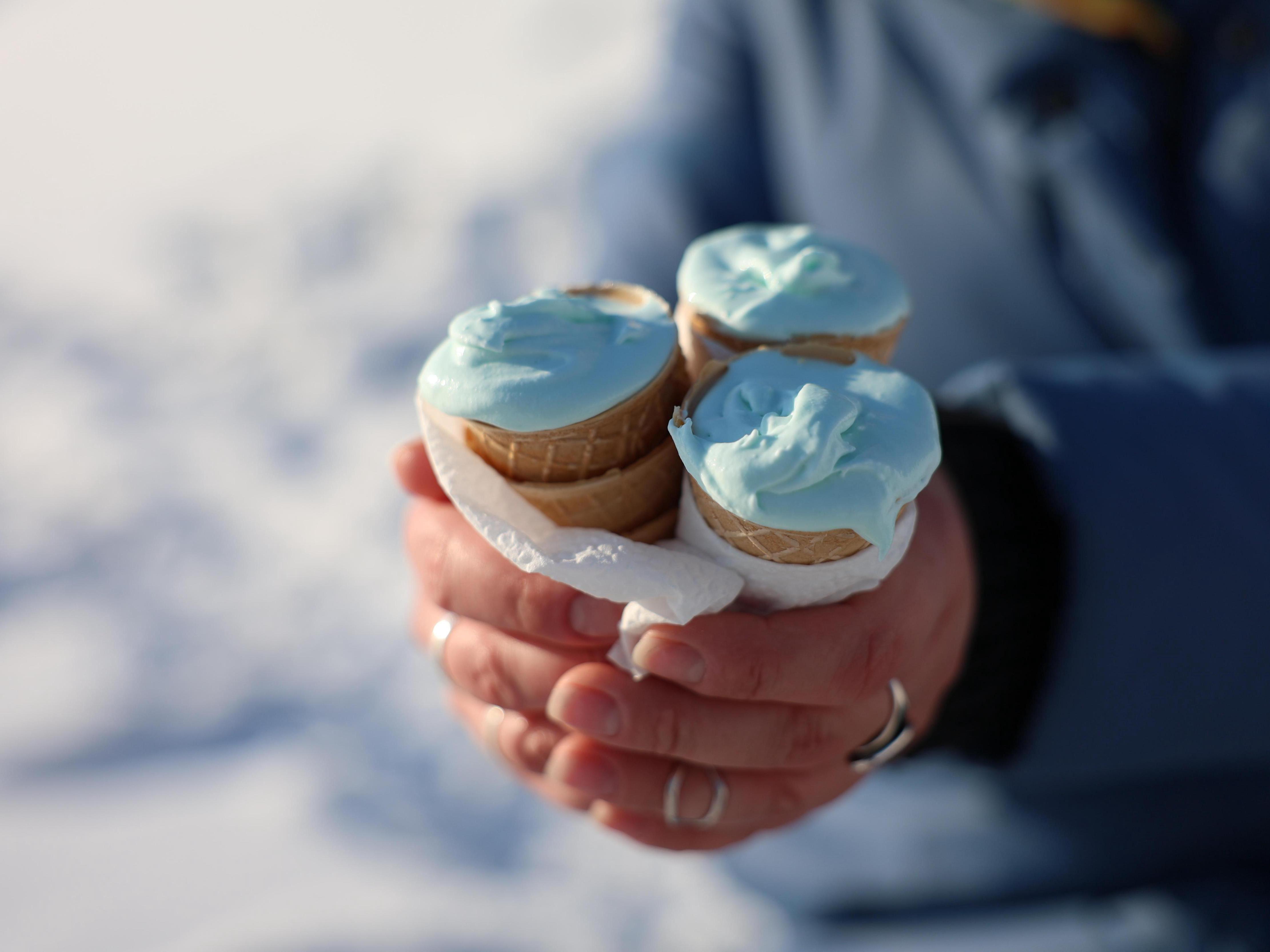
Not for long. Behaving treacherously like a non-Newtonian fluid, the ice cream began to spread immediately after being left alone. The count went by minutes. We quickly filled a few more cones and went to the editorial office to treat colleagues.
The ice cream from the pot did not yield in taste to factory-made product and even surpassed it in some ways. Maybe because we knew that only natural ingredients were in the composition, or because everything was made by hand. Rich creamy aroma, notes of vanilla, citrus (thanks to the blue curaçao), crispy fresh cone — simply a fairy tale!
The main thing is that the recipe turned out to be workable, in a snowdrift it«s quite possible to make gorgeous ice cream: soft, tender, and hearty. A bit later, when the pot stood in the freezer, it became clear that the contents in principle don»t freeze «into a stone,» and in warmth, it quickly thaws.
All ingredients cost about 1000 rubles (approximately $11 at current rates), of which more than half the cost is cream, and the lion«s share of the remaining amount is waffle cones. The volume of the finished mass was about 1600 ml, one cone holds a little over 60. From one pot, you get about 20–25 servings. Thus, the cost of one cone with ice cream was 40–50 rubles (about $0.44–$0.55). In comparison to store prices, the difference is quite noticeable, but this won»t be an argument to now always prepare dessert in such a «prehistoric» way.