How parental criticism shapes lives: Five personal stories

A casually thrown phrase can have a serious impact on a child.
«Where are you dressed up like that for?» «Just like your father – unsociable.» «Drop this nonsense.» Fleeting remarks from the closest people rarely remain just words. Under the mask of care or «best intentions,» parental criticism often becomes a seed from which complexes grow for years. Do we ever consider that every such word about a child«s appearance, character, or hobbies is a brick in the foundation of their self-esteem? An NGS correspondent collected stories of those who faced maternal shaming and asked for a psychologist»s comment – the expert explained what the consequences of maternal remarks can be.
Yekaterina, 35, light industry technologist
«From about the age of ten, I regularly heard from my mother that my ears weren«t right: they stuck out too much, I needed to cover them with my hair, there was even talk of an operation. My legs were also crooked, I wasn»t a looker – let«s say, an acquired taste. In my teens, this really hit my self-esteem, and I was already very shy and uptight.
It only started to let go in my student years, when I moved out from my parents. My self-esteem began to rise, partly due to my studies: I was an excellent student. My perception of my own appearance changed in general. Due to my profession, I encountered life drawing, analysis of body types and such, my eyes were opened to my far from bad looks. I started to notice looks from the opposite sex.
I can only guess why mom criticized my appearance. As it happened, my brother was mom«s favorite, while I was dad»s favorite. Relatives also liked me more because I was calm and balanced. Most likely, mom was driven by subconscious jealousy: her remarks weren«t aggressive, but they were constant.
To my own children, a son and daughters, I always say they are beautiful. And it«s true. There are no ugly people, we are all different, everyone has their own beautiful unique trait, it»s not a flaw but, on the contrary, an advantage.»
Rovshan, 26, fitness trainer
«In my teens, I wore tight and torn jeans, and my family would make remarks, hinting that boys should wear normal pants. I heard this more often from my older brother. A bit later, I started wearing pink and lavender shades, to which there was also a reaction along the lines of: «Are you sure you»re into girls?« I wanted to dye my hair ash blonde – my parents didn»t appreciate it. Mom asked: «Are you even normal?», and my brother sang the same tune.
Parental criticism didn«t form any complexes because I»m stubborn and stand my ground, no matter what anyone tells me. I grew up to be a person who can dress as I wish and not pay attention to others« opinions.
Why did my parents criticize me? I«ve thought about the reasons. I hold the opinion that they grew up in different conditions, they think differently and act the way their parents acted with them. So it»s all fine, I don«t blame them.»
Svetlana, 44, copywriter
«I had the best grandmother, she loved me very much, there was no doubt about that. But I somehow completely didn«t meet her beauty standards.
Once, while talking about some smart and pretty friend of mine, she said that I, of course, wasn«t as lucky with my looks, so I»d have to try especially hard in my studies. I«m sure granny definitely didn»t want to harm me, back then there were just different approaches to upbringing. And focusing on studies really did turn out to be useful.
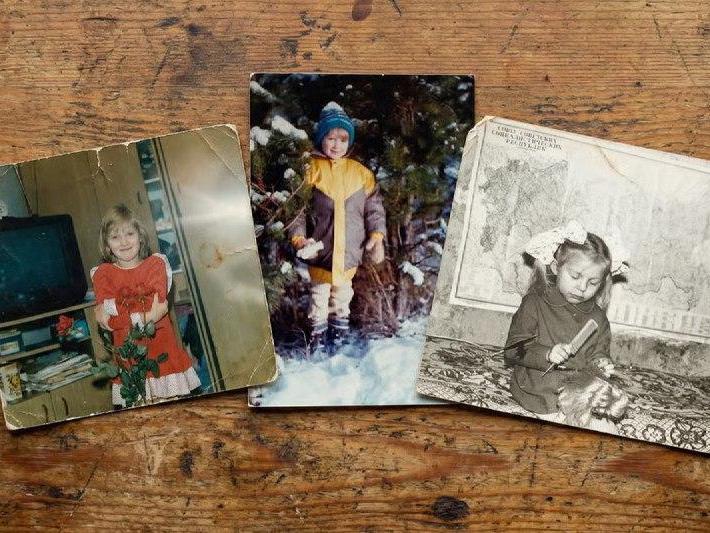
In order to believe that I wasn«t a crocodile, I had to wait for Angelina Jolie»s popularity. Suddenly, my naturally rather large lips became an object of envy, not ridicule. Looking at my childhood photos, I seem like a quite cute child to myself, but I probably have different beauty standards.»
Maxim, 32, 3D animator, blogger
«From the age of ten, my world was comics and anime. I adored these universes, tried to draw my own heroes, came up with whole stories for them in notebooks. But for my mother, who taught classical painting, this wasn«t art but a personal insult. »Anime is ugliness, draw like normal people. Here, Repin, Shishkin – that«s art, and your big-eyed characters – nobody needs that nonsense,» – that«s what my mother told me. Once she simply tore up my sketchbook.
Mom enrolled me in art school, where my «bad taste» and «weird style» were gently reprimanded by the teachers. I started hiding my drawings, and then – the interest itself. I buried this hobby and stopped drawing altogether. It seemed mom was right: it really was worthless nonsense.
And then chance intervened. Around age twenty, a friend dragged me to a comic convention. I was stunned. I saw a whole world of people who spoke my language, for whom this wasn«t ugliness. It was like a gasp of air after long suffocation. I got inspired, delved deeper, started studying 3D graphics, animation.
Now I work as a 3D animator, create characters and run a blog about indie comics, and it even has its own audience. It was hard for me to pick up drawing again: mom«s words would periodically surface. But it»s okay, I managed to overcome it, became a successful specialist. True, mom still isn«t interested in my work.»
Anna, 34, interface researcher
«When I was six, my mom and I went to a flea market to buy winter boots. It was cold, late autumn or early winter. She, a woman of short stature, decided to put me on a high counter to try on shoes, I don«t know why she decided to do that. She lifted me – and I was already tall for my age – and said: »Ugh, how heavy you are.« For some reason, those words etched themselves into my hearing. I thought: so I am heavy, fat, the thought settled in me that I was somehow »burdensome,« »oversized.«
In fact, looking at childhood photos, I understand: I wasn«t a chubby child. I was never teased at school, with my height (172 cm / 5 ft 8 in) I always looked slender. But somewhere deep inside, that childhood reproach took root. At the same time, I didn»t have eating disorders, I didn«t exhaust myself with diets – I just sometimes catch myself thinking that I»m «a bit fat» because I have a small belly. Although intellectually I perfectly understand: I am absolutely normal and don«t look fat or large. But I still dream of a flat stomach, although in general I accept my body.
This is especially evident in choosing clothes: I look for swimsuits and underwear that don«t emphasize the stomach but show off the chest favorably. I love dresses and jeans that aren»t too tight, although sometimes I allow myself form-fitting things if I feel I look beautiful overall.
Sometimes I«m still shy about my body on the beach, but in intimacy with a man – no. There I feel confident. I go to workouts to stay toned, and in general I treat myself carefully. This is part of me – the story about the counter, about the »heavy« girl and the woman who is still searching for a balance between what she sees in the mirror and what she hears inside.
As for mom… We didn«t communicate for many years, but for other reasons. A few years ago I decided to talk to her. I said I love her, but it»s important for me that she considers my feelings. We didn«t discuss that specific incident at the market, but I learned to ask her not to give unsolicited assessments, and she is learning to hear me. Now I think she simply found it hard to lift me – physically. She spoke without thinking how it might affect a six-year-old girl. That can happen to anyone.»
What the psychologist says
Psychoanalyst and clinical psychologist Yulia Derevyaga explains: criticism rarely comes from malice – more often it«s a mixture of anxiety, helplessness, and projection. A parent, fixating on a child»s «imperfection» (appearance, behavior), is often unconsciously battling their own internal conflicts: with their own insecurity, unlived youth, fear of societal judgment.
«By criticizing a «heavy» six-year-old, the mother might have been projecting her own unaccepted bodily experiences or fear that her daughter would repeat her difficulties onto the child. This is not love or hate – it«s unregulated parental anxiety finding an outlet in controlling the child»s body and image. It«s a peculiar way of saying: »I«m afraid you will suffer as I suffered. I am afraid and I»m trying to «fix» you to make it safe,«» – commented the psychologist on Anna»s story.
The story with Svetlana«s grandmother, according to her, – is a vivid example of how the psyche can use trauma for »recovery.« The remark was painful, but it, being made in adolescence when the personality is already more stable, and being formulated as a strategy (»focus on your studies«), could have been introjected, that is, assimilated as a challenge.
«Rovshan«s story – is a wonderful example of resourcefulness and a supportive environment outside the family. His resilience suggests that, probably, in early childhood he formed a basic trust in the world and a sense of his own worth (perhaps thanks to other significant adults), – suggested Yulia Derevyaga. – His stubbornness – is healthy aggression in defense of his boundaries, which the family failed to break. The fact that relatives voiced doubts about his orientation aloud – is a classic reaction to anxiety before otherness, which violates their picture of the world and the environment in which they exist. His resistance helped preserve the integrity of his personality.»
The specialist explained that parental criticism, especially regarding fundamental things (body, essence), – is most often an uncontrolled manifestation of the parent«s own fears and internal prohibitions. For a child, it can become either poison, forming a chronic sense of shame and inferiority, or (less often) fuel for overcompensation.
«The destructive effect depends not on one word, but on the emotional climate in the family: if there is less love and unconditional acceptance than evaluation and conditionality, criticism becomes a brick in the wall between the child and their sense of self-worth. The adults in these stories – are living testaments to how the child«s psyche seeks paths of survival: through painful acceptance of an imposed image, through escape into achievements, or through healthy rebellion for the right to be oneself,» – concluded the expert.
What else to read
«I«m living through the worst moment»: how an 18-year-old Siberian girl managed to escape from her parents abroad and why.
«I said as a teenager that the younger ones wouldn«t live in this hell»: a 19-year-old student took custody of three brothers and a sister.
All named with the same letter: how a family with six children lives.