Winter Viruses: Differences and Treatment
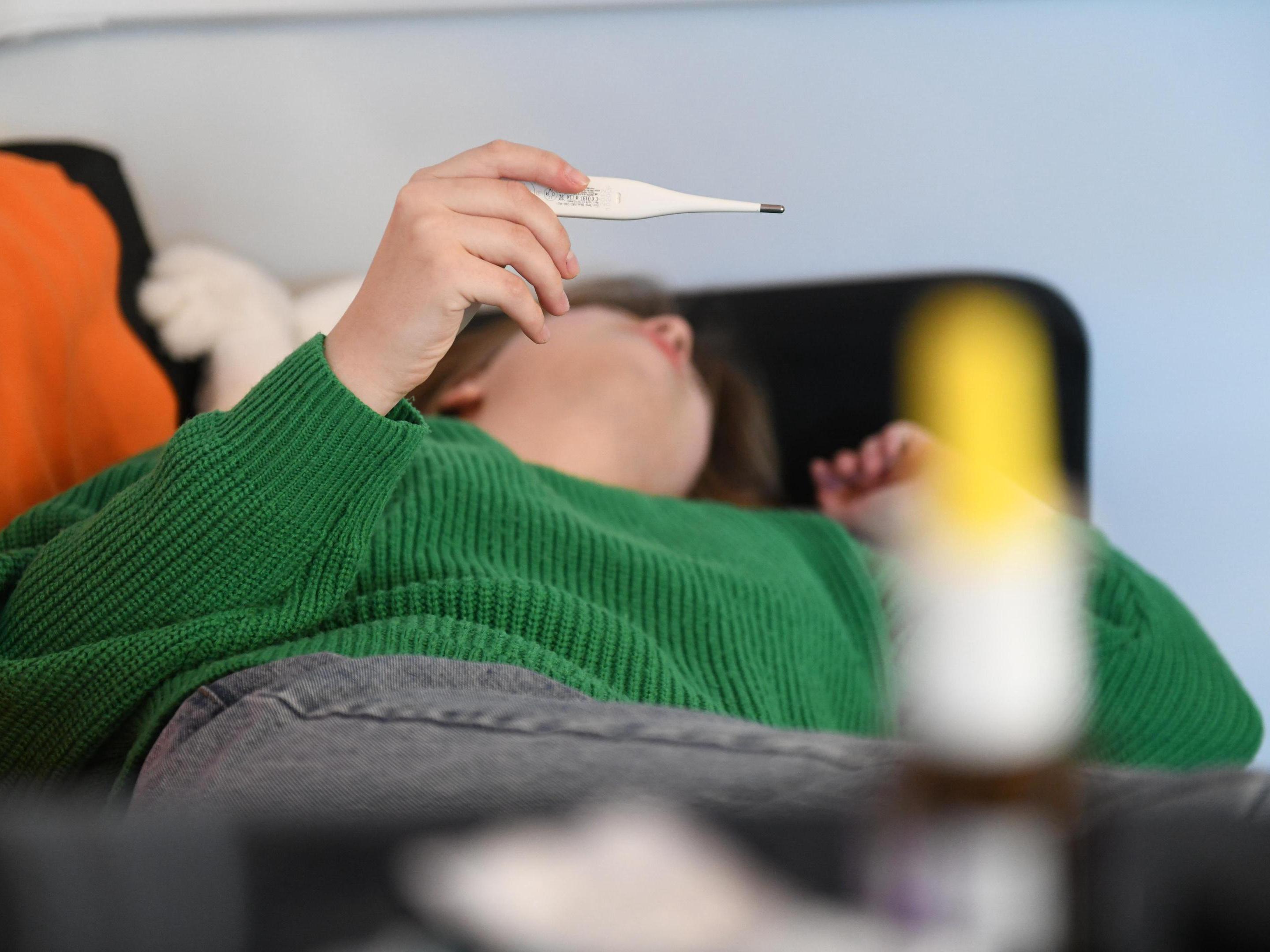

With pronounced ARVI symptoms, it«s better to rest at home rather than rush to work.
Every week in winter, Rospotrebnadzor reports which ARVI (acute respiratory viral infections) Russians have fallen ill with. The same infection names appear in the reports time after time. Our colleagues at 63.RU decided to figure out how all these viruses are similar and different. They also wanted to find out whether superinfections actually occur or are just scary stories, and whether we should expect a second flu epidemic.

A runny nose is the leading symptom of rhinoviruses.
63.RU got answers to these and other questions from Yekaterina Kindalova, the chief freelance infectious disease specialist for Samara, head of the infectious diseases department No. 2 at the Clinics of Samara State Medical University (SamGMU).

It«s better not to self-prescribe pills for ARVI.
Without a Swab, It«s Hard to Tell

A person can catch two viruses at once.
— Rospotrebnadzor reports that currently Russians most often contract parainfluenza, adenovirus, RSV, metapneumovirus, rhinovirus, and COVID-19. I«d like to examine the features of each of these viruses. How do they differ and how are they similar?
Winter is the time when respiratory viruses run rampant.
— The Rospotrebnadzor reports are not surprising. Autumn, winter, and early spring are the traditional times when the incidence of respiratory viruses increases. There are more than two hundred different ones, and you listed those that are most common here.
There«s probably little point for the average person to distinguish between them because they are similar. Sometimes even a primary care (outpatient) doctor cannot say exactly without laboratory confirmation which virus you have. All these viruses are characterized by fever, signs of intoxication (i.e., weakness, malaise, muscle pain), and may involve some damage to the respiratory system.
For some viruses, the name makes their main manifestations clear. For example, rhinoviruses. «Rhinos» means nose; these are the most common viral infections, accounting for up to 40% of all pathologies. The leading symptom is rhinitis, a runny nose.
Parainfluenza affects the larynx, manifesting as laryngitis with a rough, dry, barking cough. In children more often than in adults, laryngitis is complicated by laryngeal stenosis, which is also one of the main reasons why children are taken to hospitals, pediatric or infectious disease units.
Adenovirus affects glandular tissue, meaning lymph nodes enlarge, eyes are affected, and conjunctivitis, sore throat, and tonsillitis occur.
Respiratory syncytial virus affects mostly the lower respiratory tract. In children, it often manifests as bronchiolitis.
Metapneumovirus. Children are more likely to get it, and clinically the disease resembles influenza. So I repeat that without laboratory confirmation, i.e., without a swab from the nose or throat, we cannot always clearly say, “Yes, you have that particular virus.”
How to Treat
— Are these viruses treated differently? Or are the drugs for their treatment similar?
— Specific therapy exists only for the influenza virus (I mean drugs with direct action on the virus). For all other viruses, no specific treatment has been developed, and treatment is symptomatic. For example, bed rest during high fever, plenty of fluids. Or nasal rinsing, vasoconstrictor nasal drops, throat treatment if there is pain.
— Regarding antiviral drugs, for which symptoms should they not be used, and for which are they necessary?
— All antiviral drugs are most effective when taken early, within the first 48, and preferably 24, hours of symptom onset. After that, they lose the effectiveness we would like. And of course, these drugs should only be used as prescribed by a doctor.
What we can do without a doctor«s prescription is take an antipyretic, use vasoconstrictor nasal drops if there is a feeling of congestion, and monitor our condition. Also monitor any underlying diseases if present. For example, patients with diabetes should carefully monitor their blood glucose levels, and those with blood pressure issues should monitor that.
Every patient can do this at home, but should under no circumstances prescribe themselves any antiviral drugs, because these medications have both indications and contraindications.
— Can you name a few of the most typical mistakes that people make repeatedly when trying to self-treat, despite all the recommendations?
— First, continue going to work or school with clinical symptoms like cough, runny nose, fever. Not only is the person sick themselves, but they also infect those around them. Therefore, during periods of pronounced clinical manifestations, you should stay home.
Second, of course, is self-prescription of antibacterial drugs (antibiotics). For viral infections, they are absolutely ineffective and useless because the pathogen is not a bacterium but a virus. And in some cases, they can even be harmful because they affect a person«s own microflora, which is present in both the respiratory tract and the intestines.
I would also mention the overuse of antipyretics and nonsteroidal anti-inflammatory drugs. When recommended dosages are exceeded, this can lead to a number of rather unfavorable consequences.
‘Just Because We Got Our Feet Wet, We Won’t Get Sick’
— Can a person figure out for themselves: did they catch a virus or just catch a cold? For example, they have a sore throat, and the day before they got their feet wet.
— Just because we got our feet wet, we won«t get sick. We get sick when some pathogen enters our body. Or if a person has chronic problems, such as chronic tonsillitis or long-standing tonsil issues. The fact of hypothermia can activate the flora that was already present in the person, pathogenic, but they were controlling it. So then we need to figure out what the cause is and what the pathogen is.
— Is it possible to catch several types of ARVI at the same time? I mean that superinfection that people have been talking about lately.
— Yes, that is possible. For example, during the pandemic, we saw patients who were simultaneously infected with both influenza and COVID-19. So it is quite possible to catch several viruses at the same time, since they circulate simultaneously.
— What will the clinical picture look like then? Will one virus still dominate and its symptoms be more pronounced? Or will the person immediately, so to speak, be hit with fever, sore throat, runny nose, and nausea?
— It depends on how much pathogenic agent entered the body. The clinical picture of one respiratory disease may come to the forefront. Or it may be completely unclear what the person has, with completely different manifestations from different organs and systems. Here again, laboratory diagnostic methods come to our aid.
But as a rule, these are more severely ill patients, and they more often require hospitalization, sometimes even intensive care measures.
— Have superinfections become more common recently? Or has diagnosis improved?
— After encountering the coronavirus infection, when approaches to organization and filters were revised, isolation boxes were set up, we have more diagnostic capabilities, and there are rapid tests for different viruses. We have started to detect and diagnose more.
— What is the current situation with COVID-19 incidence?
— COVID-19 is not as common now as it was in 2020–2021, but COVID has also changed; we now very rarely, fortunately, see patients with severe cases or extensive lung damage. There are quite a lot of adenovirus infections, and we see a lot of parainfluenza.
— A question about the supervirus. Doctors are now talking about the possibility of an epidemic of some supervirus — a mix of monkeypox, rubella, bird flu, and Oropouche fever. Does an epidemic of such a supervirus threaten Russians?
— ‘Supervirus’ is more of a non-medical term. In medicine, epidemiologists and infectious disease specialists have a concept called ‘Agent X’ — some unknown agent that could potentially emerge.
Potentially, the risk of a new pathogen emerging certainly exists. All systems and all emerging outbreaks are carefully monitored. So I think that in the near future we will not face anything that serious in Russia.
— In winter, respiratory viruses circulate most often, and in spring?
— In summer, late spring, and early autumn, it is intestinal infections, enterovirus infections, norovirus, rotavirus infections. Although they also occur throughout the year now, the incidence is certainly higher during warmer periods.
‘The Influenza Virus Does Not Like Dry and Frosty Weather’
— And what is that connected with? With the fact that respiratory viruses spread better indoors, in cold weather, in dry air?
— Each virus has different conditions in which it feels comfortable, different temperature and humidity. In winter and autumn, we are in crowded groups when everyone returns to work, school, and kindergartens after vacations. And of course the weather plays a role, although the influenza virus, for example, does not really like very cold, dry weather. It multiplies more actively when it is more humid and the temperature is -10 to -15 °C (14 to 5 °F). That is better for it than dry, frosty weather.
— There is information that in February we will face another epidemic — this time of influenza B. Do such forecasts actually exist?
— As a rule, influenza B does not cause such large outbreaks, so there are no forecasts of a total epidemic. Currently, influenza A H3N2 is actively circulating. Influenza B was included and still is included in the vaccines that the population received in the fall. And I still hope that there will be no big outbreak.
— If a person has had influenza A, could they potentially get influenza B?
— Of course.
— What preventive measures are there? It«s clear that if someone wants to get a flu shot now, it»s too late. How can you protect yourself from the flu or other ARVI here and now?
— Maintain social distance, which we all learned during the coronavirus pandemic, wear masks in crowded places, do not touch your face, do not rub your eyes, use hand sanitizers. If someone is already sick, it is better for them to stay home. Also recommended is a healthy lifestyle, which includes adequate sleep, stress reduction, walks in the fresh air, exercise, and a balanced diet.
I would like to say that vaccination at present, particularly against the flu, is the most effective, safe, and fortunately accessible way for our population to prevent this disease, to avoid future global problems — severe course, complications, and death. Therefore, we should not forget about vaccinations. And it is better to get them in September–October, because after any vaccination, the body needs time to produce antibodies and form protection.