Volgograd Snow Slide Bans Photos and Complaints After Child's Head Injury
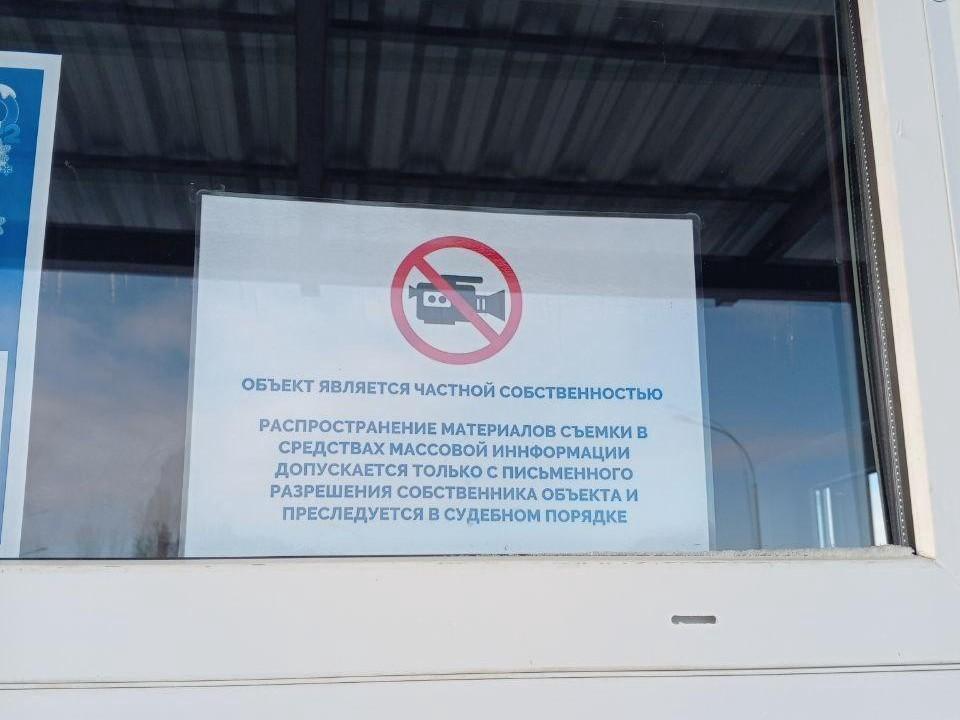

An unusual sign has appeared at the entrance to a winter recreation center in the Kirovsky district of Volgograd, whose tubing run has gained notoriety for a series of children«s injuries. It threatens with a lawsuit anyone who sends photos or videos from the snow slide to journalists without permission. We asked a lawyer how legal this is.
Recall that the paid snow slide has fallen out of favor with local residents at least twice. The first time was due to a pre-New Year«s incident on December 27. That evening, at least two parents contacted the V1.RU editorial office. According to medical documents, one child suffered a concussion and another had a split head sewn up.
The second time was due to the noise from snow cannons, which, according to residents of large residential complexes nearby, operate around the clock.
The tubing run has already drawn the attention of Rospotrebnadzor (the Federal Service for Surveillance on Consumer Rights Protection and Human Wellbeing) and Alexander Bastrykin, but the outcome remains unclear. There has been no response to the official request the V1.RU editorial office sent to the recreation center on December 29, 2025.
However, during this time the aforementioned notice appeared at the center«s entrance. According to Roman Grebennikov, head of the Spartak law firm, one should not expect a real legal threat from the owner over photos posted online.
«This threat has no legal force, as it contradicts fundamental norms of Russian law and legally protected public interests,» Grebennikov explained. «Restrictions on access to information can only be established by federal laws (Part 3, Article 55 of the Constitution of the Russian Federation).»
«The rights and freedoms of a person and citizen may be restricted by federal law only to the extent necessary to protect the foundations of the constitutional order, morality, health, rights and lawful interests of others, and to ensure the country»s defense and state security.
Even if an object is private property, this does not cancel citizens« right to collect and disseminate information about it in the public interest (Article 29 of the Constitution of the Russian Federation).
Everyone has the right to freely seek, receive, transmit, produce and disseminate information by any lawful means. The list of information constituting a state secret is determined by federal law.
Banning filming and publishing materials is possible only in exceptional cases, for example, if it concerns a state secret, violates the private life of specific individuals (e.g., filming children without parental consent for commercial use) or is a commercial secret (which must be properly documented).«