Rostov circus history: from booths to a tank
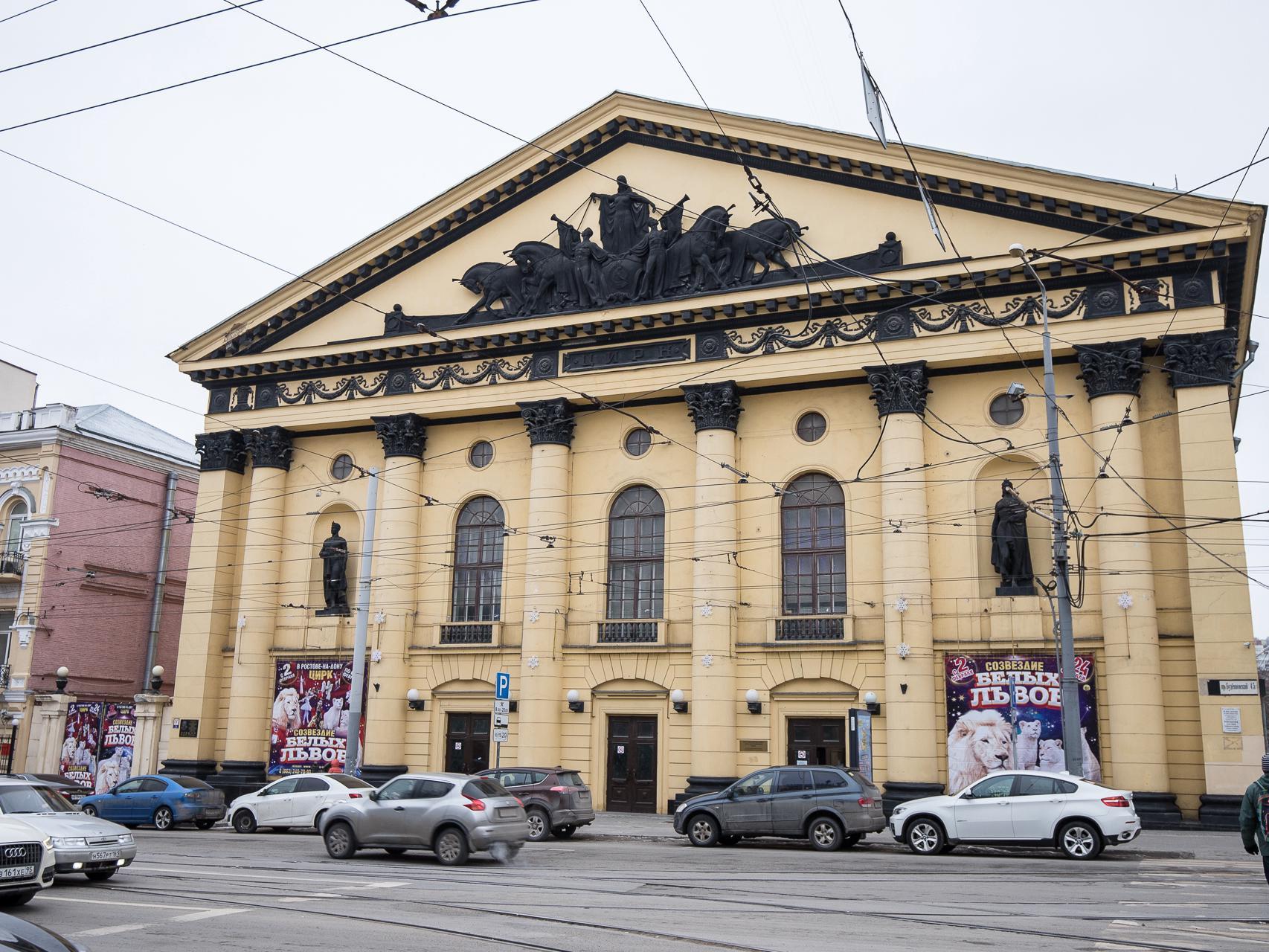

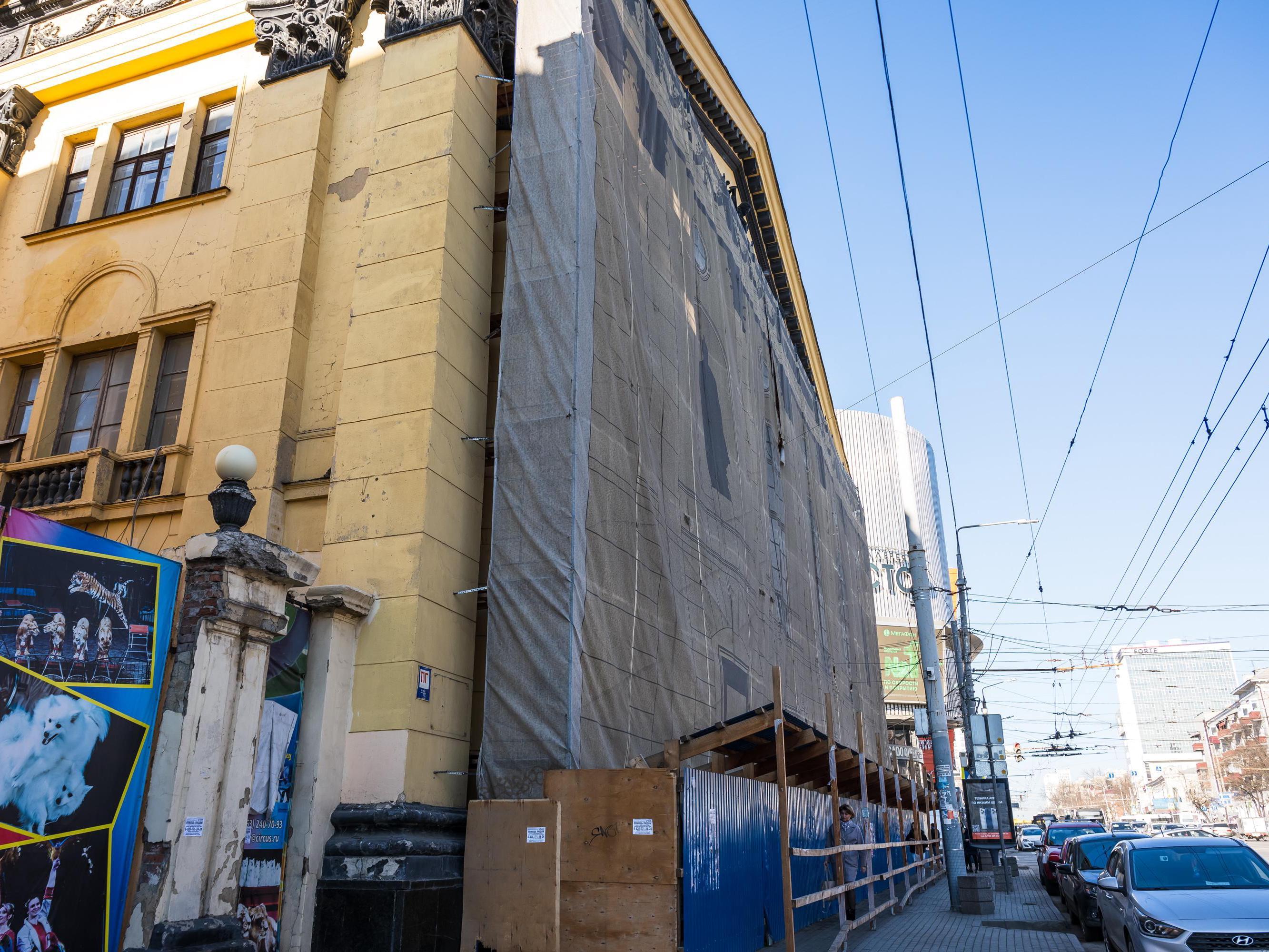
Every Rostovite knows what is in the light-yellow building with a colonnade on Budennovsky Avenue — it«s the circus. Now its antique beauty is hidden behind a banner — the long-awaited (and first) major renovation is underway.
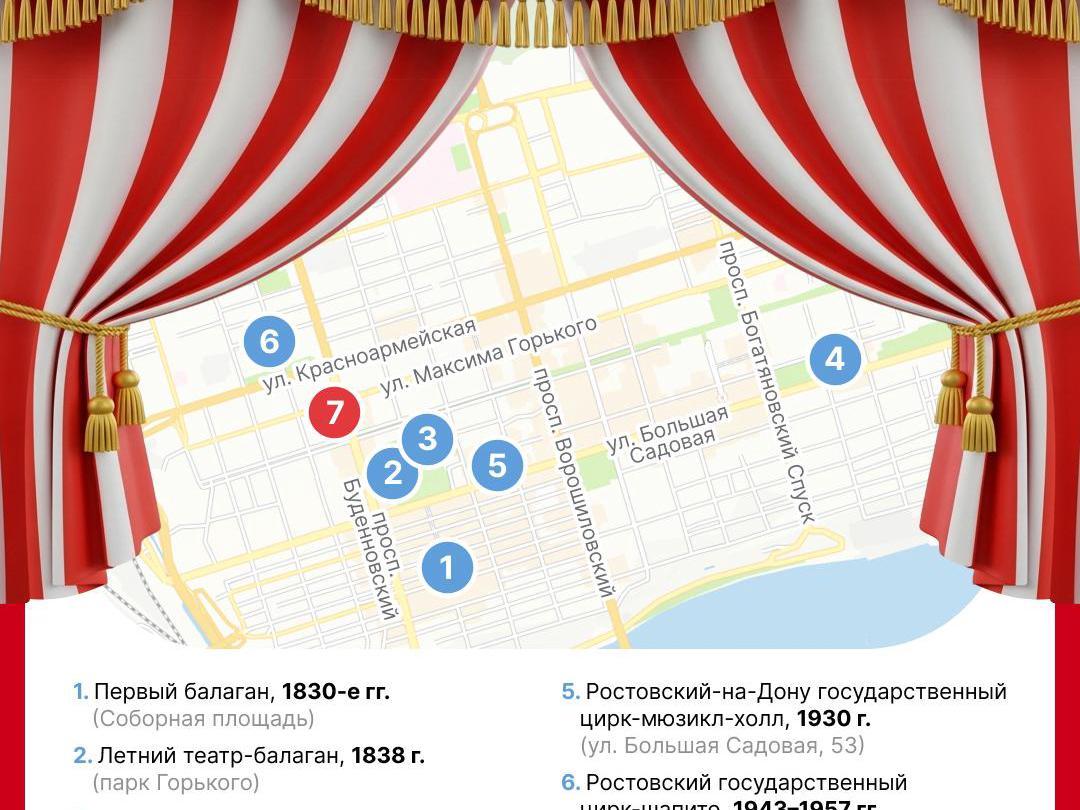
We tell the history of the Rostov Circus, as well as its predecessors.
The material uses data from 161.RU, information from the website of the Rostov State Circus, as well as from the article «Old Circus Rostov» by Dmitry Artemyev — a representative of a circus dynasty, a local historian, head of the «A. A. Durov Museum» and the «House of P. E. Chekhov» museum in Taganrog.
Circuses of the Empire and the USSR
Rostovites became acquainted with circus art in the early 1830s, when a fairground booth for traveling performers appeared in front of the Church of the Nativity of the Most Holy Theotokos on Sobornaya Square. Every year during fairs, a troupe from Taganrog performed there.
In 1838, in Gorky Park, which was then called the City Garden, the mayor and merchant Alexander Sadomtsev opened a summer theater-booth with an exit onto what is now Pushkinskaya Street. It was then called Kuznetskaya. This theater had 12 boxes, up to 70 armchairs, a parterre, and a gallery. In 1859, the theater collapsed, although it had been repeatedly repaired.
In 1880, on the same site, the first wooden circus, the «Round Theater,» was built — now a stationary, not a traveling one. It opened with a program by the «French Circus of the Brothers Gothfrau» (in other sources, «Circus of the Brothers Gottfried»). This troupe came to Rostov in the 1860s and was very popular with Rostovites, giving performances periodically.
In 1883, a terrible fire occurred in Berdichev, which was also covered by Rostov newspapers. There, the wooden «Ferroni» circus burned down and 268 people died (according to other sources, 340). A week after this, the Rostov City Duma decided to demolish the wooden circus in the City Garden. Since then, all theaters, circuses, and booths had to obtain a site and construction permit from the city duma.
In the summer of 1897, the circus-menagerie of Hugo Winkler came on tour to Rostov. A Rostovite, the founder of the Filatov dynasty of animal trainers, Ivan Lazarevich, began his career there. The clown-animal trainer and satirist Vladimir Leonidovich Durov also started with Winkler.
And in 1909, the famous impresario, director, and founder of several stationary circuses, including the Moscow Circus on Tsvetnoy Boulevard and the Riga Circus, Albert Vilhelmovich Salamonsky, came for the first time with a circus program. Rostov was delighted! After that, Salamonsky set up a big top every summer near Novy Bazar Square — now it is Soviets Square.
Often, the famous clown-satirist and animal trainer Anatoly Durov performed in his programs, who grew so fond of our region that he later settled in Taganrog. There he bought an estate where he set up a huge menagerie with several thousand animals. Taganrog preserves the memory of Durov in a museum dedicated to him.
Returning to Salamonsky — the level of entertainment he offered made his circus a serious competitor to theatrical art. The newspaper «Donskaya Pchela» wrote that Salamonsky had «100 horses, 52 ladies, 4 trained dogs, and there»s even talk that 7 bulls and a learned pig will arrive soon... That«s the end for any theater: why watch some drama or comedy when for the same money you can see a learned pig!»
But he wasn«t the only one who attracted the attention of the Rostov public — foreign stars of those times often performed in the city: the Italian comic Giacomino, the clown Eugene, the clown-animal trainer Mikhail Zollo, the family of Italian artists Bezano, the Ferroni — Tanti dynasty.
The revolution passed, and the state took the circuses for itself.
In 1922, the first state circus opened in Rostov — the building was constructed by the wrestler Klimenty Bul at the site where the Don Plaza hotel (formerly the Intourist) now stands. However, it didn«t operate in the cold, so seven years later a new one opened — at 53 Bolshaya Sadovaya (the street was then named after Friedrich Engels). This was the Rostov-on-Don State Circus-Music Hall, where the director was the actor and humorist Mikhail Garkavy. He was a master of ceremonies famous throughout the USSR and played the role of Father Frost at the first all-Union children»s New Year«s party in 1936 at the House of the Unions.
In 1939–1941, the circus was located behind the Marins Park Hotel (formerly the Rostov Hotel). In this circus in 1940, director Volny founded the equestrian sports attraction «Ensemble of Don Cossacks,» whose participants impressed with their high level of trick riding on horses.
During the Great Patriotic War, the Rostov Circus was evacuated to Tbilisi. And after the Battle of Stalingrad, the artists moved to Stalingrad.
But the circus also toured in its native Rostov. As a result, in 1943, behind the current building of the Palace of Children«s Creativity on Bolshaya Sadovaya, the artists set up a new big top — with 1300 seats. In summer, circus performances were given here, and in winter, a menagerie was arranged.
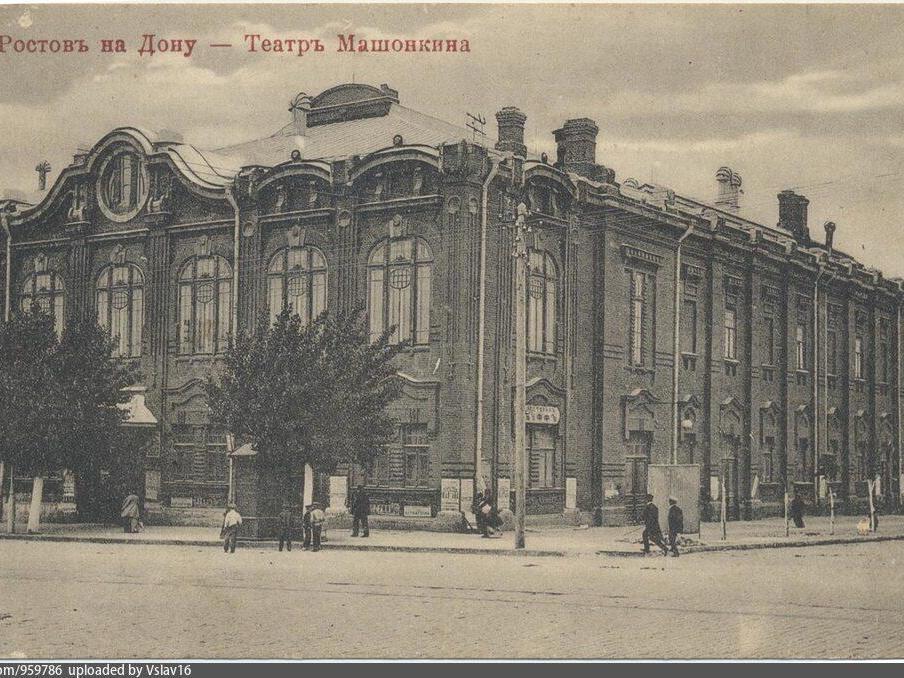
Since the late 19th century, there was another building in Rostov — the theater-circus of the merchants Mashonkin. They had land within the boundaries of the current Budennovsky, Gorky, and Ostrovsky streets, where the merchants built a wooden circus-theater, a summer theater, and a café-chantant «Buff.» In 1906, the theater was demolished and a stone one for 1500 spectators was built in its place. Over time, this became the main theater of Rostov.
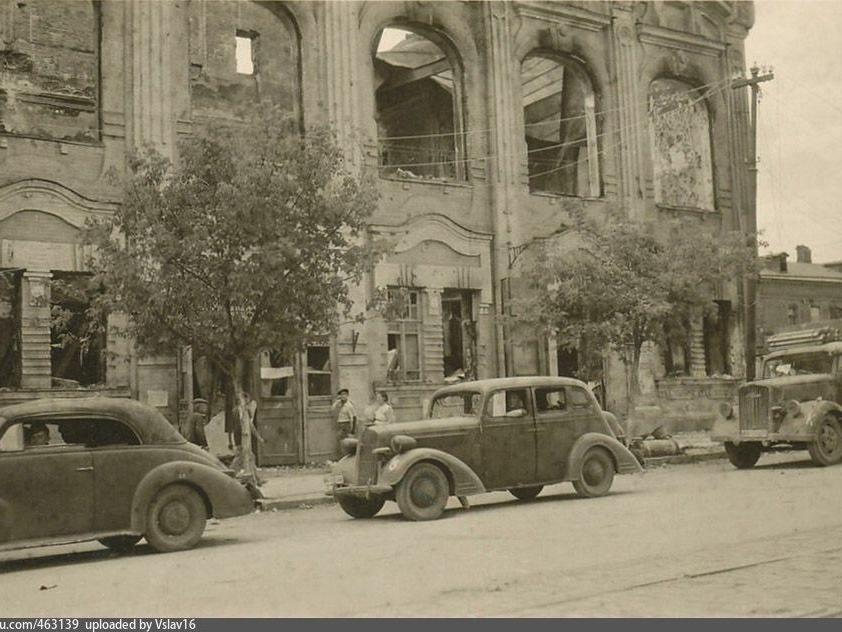
But during the war years, the building burned down, leaving only the external walls. In the 1950s, the building was reconstructed, turning the theater into the Rostov State Circus. It opened on August 1, 1957. Here the circus finally settled and never moved again.
The New Building
Columns, niches with statues of artists on the right and left of the facade, and at the top, on the pediment, a quadriga* — «The Horsewoman with Trumpeters.» Such a circus building was seen by Rostovites in 1957. The project was created by architects Georgy Petrov and Alexander Barulin, and for a long time our circus was the largest in Europe.
«The Horsewoman with Trumpeters» was made twice. First, a Kharkiv brigade made it in Rostov, but after just a few years the figure began to crumble. Then a new, stronger sculpture was made in Leningrad. In both cases, the sculptor was Alexander Shneer.
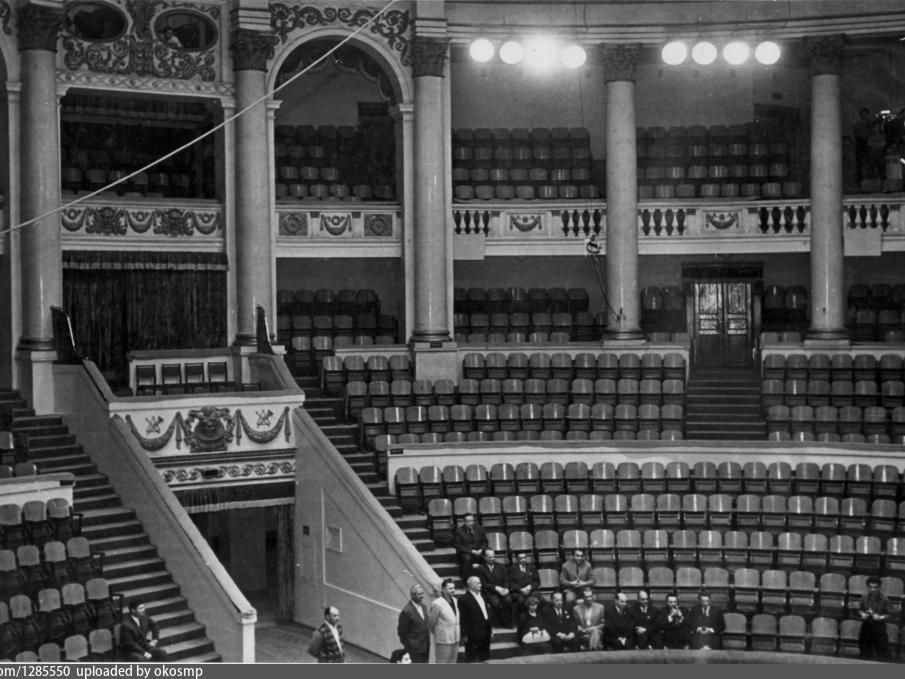
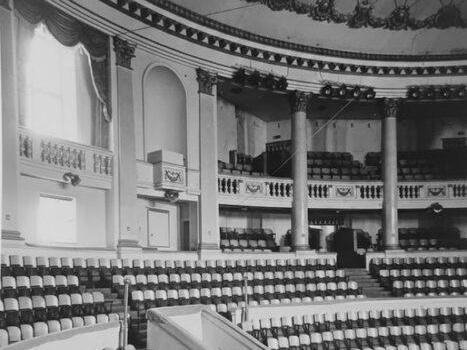
The hall inside accommodated 1490 spectators. There was enough space for performances — 18 meters from the ring to the dome, in the center of which a grille was installed, the first of its kind in the country. It consisted of 152 grids, each of which could withstand a weight of 250 kilograms. The dome itself is lined with special cardboard that absorbs sound, then covered with poplin — this overcame the echo and generally created proper acoustics.
This is the part that spectators see. There is another, backstage part: there are rooms for animals, dressing rooms, a rest room, a medical station, showers, a rehearsal hall, a dining room, an electrical substation, and even a museum.
The first director of the circus was Gavriil Aliev, who previously headed the Chinizelli Circus from Petrograd. He also participated in the creation of the new circus: preparing documentation, traveling to Moscow, coordinating project financing, communicating with architects and artists.
The first season began with a tour by the illusionist Emil Kio. Then came the animal trainer Yuri Durov with elephants and sea lions. Celebrities of the Soviet Union began to come to the Rostov Circus: animal trainer Margarita Nazarova, the star of the film «The Striped Voyage,» performed in Rostov with tigers; also came Yuri Nikulin, Oleg Popov, Karandash (Mikhail Rumyantsev), gymnast Raisa Nemchinskaya, the Zapashny brothers.
Not only artists« performances took place in the circus — in 1958, USSR General Secretary Nikita Khrushchev presented the Order of Lenin to the Rostov Region there.
The Last Tour of the Sunshine Clown
In October 2016, the famous clown, People«s Artist of the USSR Oleg Popov, came to Rostov on tour once again. He gave two performances, and on the evening of November 2, while resting in front of the television, he suddenly passed away. The General Director of Rosgostsirk, Dmitry Ivanov, said at the time that the artist had been feeling well and his death was sudden. The Sunshine Clown was 86 years old.
«He managed to give two performances, 12 more were planned. The artists who were on tour with Popov will conduct the [next] performance and dedicate it to the famous clown,» Rostov Circus director Dmitry Reznichenko told the press.
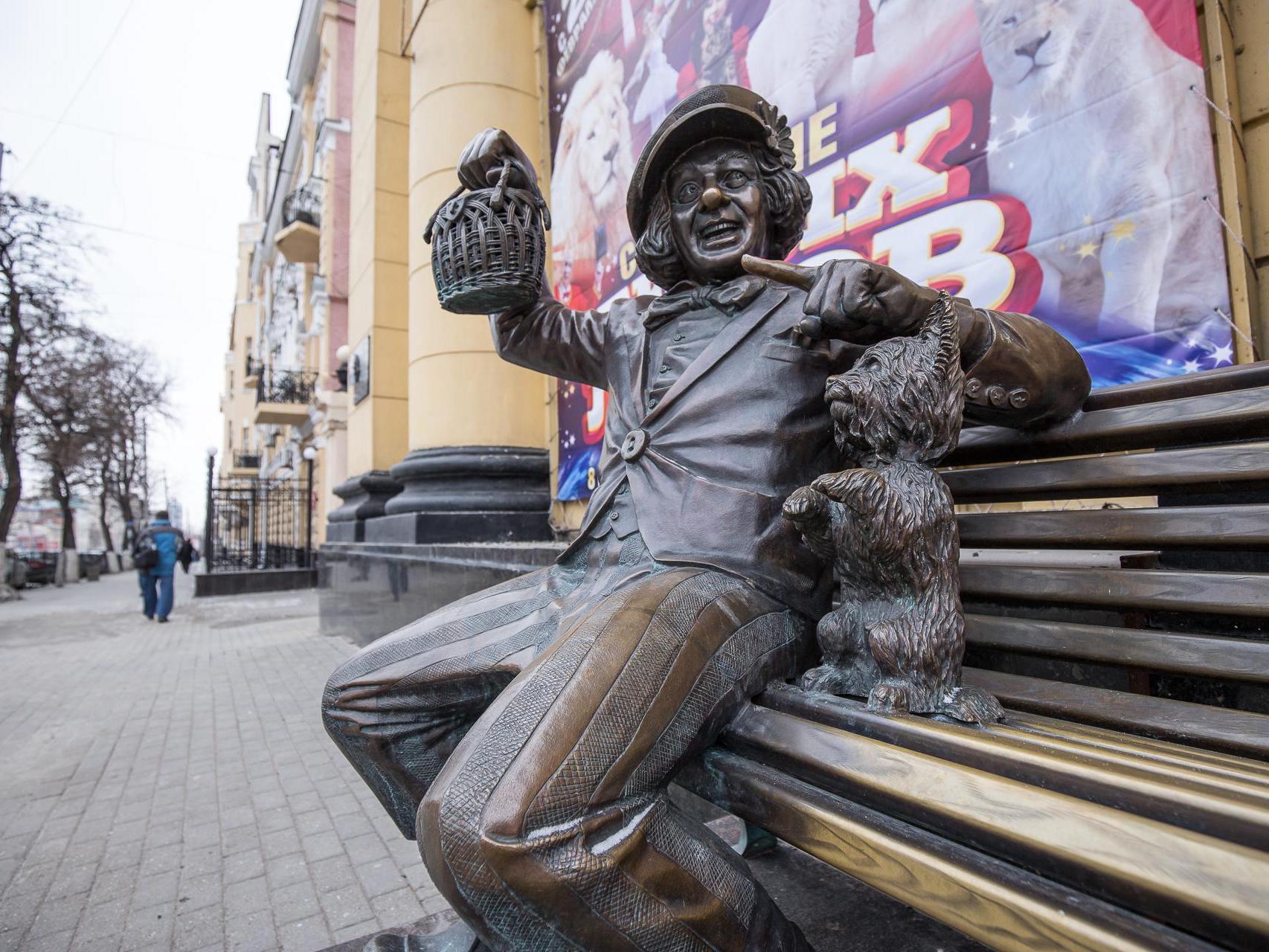
In 2017, a monument to Oleg Popov by Svetlana Bukke was unveiled. The artist is sitting on a bench with his Yorkshire terrier, and in his hands he holds a basket with a sunbeam inside — this is a reference to the clown«s famous routine.
Scandal with the Director
The building at 45 Budennovsky Avenue had not been renovated since its opening. In 2017, the former First Deputy Governor Igor Guskov cautiously announced a major renovation in 2018, but that did not happen.
Something else happened. In February 2018, Rostov Circus director Dmitry Reznichenko told the media that law enforcement officers had taken his work documents for inspection, and this was related to his position regarding the building«s renovation. He said this did not scare him because the circus»s finances were transparent.
Reznichenko believed that the law enforcement agencies came to him because of the circus«s new financial director, Natalya Shulgina, to whom he effectively reported.
«They want to »remove« me this way. The circus and the dormitory are impossible to operate! I insisted that a major renovation was needed. But my position does not suit Rosgostsirk. There are no grounds to fire me, so the management sent Natalya Shulgina to Rostov.»
According to him, she issued an order for an inspection of the financial and economic activities of the Rostov Circus, but Reznichenko assured that such a document contradicted the organization«s charter.
Shulgina told the press that she had no connection with the visit of law enforcement officers to the circus. She believed that Reznichenko could have been involved in financial machinations, which was the reason for the document inspection.
«There are facts that affairs were conducted improperly. Dmitry Anatolyevich was engaged in personal enrichment. And the condition of the circus speaks not of an emergency state, but of the manager»s negligent attitude towards his duties,« Natalya Shulgina told a 161.RU correspondent.
And in October of that year, Reznichenko left the circus. According to him, they failed to fire him, but his position was eliminated. He intended to be reinstated through the court, but it didn«t work out. Natalya Shulgina began to manage the circus, although not for long. In June 2019, the new director (apparently, the position was returned after all) became Igor Baitinger, and Natalya moved to the Kursk Circus.
And in August of the same year, the Kirovsky Court of Rostov ruled as invalid the information about alleged financial violations in the circus«s work. This was achieved by Dmitry Reznichenko.
«The court ruled to recognize as inconsistent with the facts the information discrediting the honor, dignity, and business reputation of Dmitry Anatolyevich Reznichenko that at the time of the publications there were financial violations in the activities of the Rostov Circus, as well as that at the time of publication the leadership of Rosgostsirk suggested Reznichenko resign due to his involvement in financial violations,» the court«s press service explained.
An interesting fact: on the official website of the Rostov Circus, all directors are listed, starting with Gavriil Aliev, but Natalya Shulgina is not on this list.
The circus is now headed by Irina Yurkova. In the spring of 2024, she announced the upcoming three-year reconstruction of the circus building and told how the appearance of this architectural monument would change. The renovation costs 1.9 billion rubles (about $21.1 million at current rates), and it has been long underway.
A Tank at the Gates
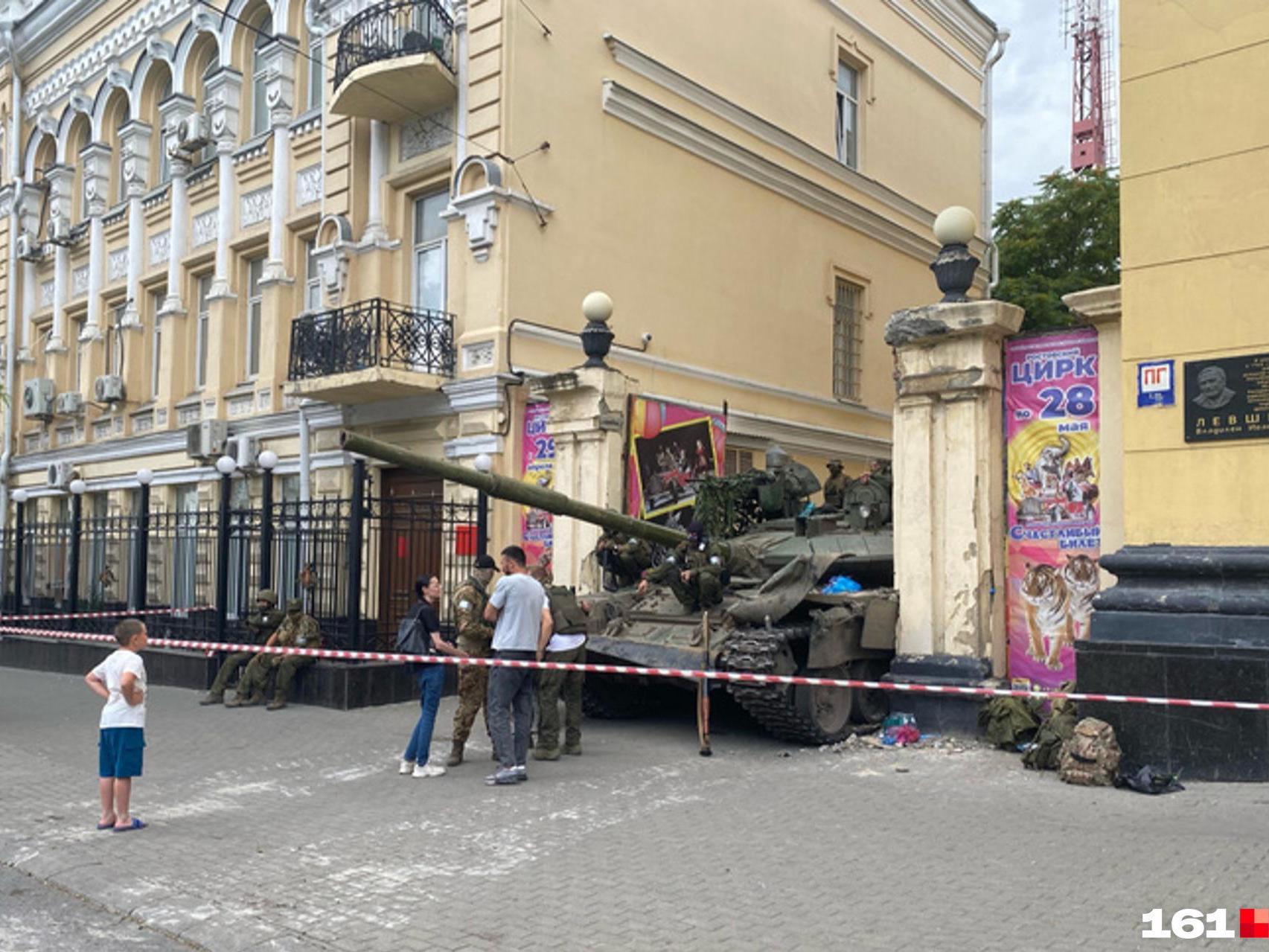
In the summer of 2023, our circus became famous, probably worldwide, thanks to a photograph of a tank standing in its gates facing Budennovsky Avenue. Readers have likely already guessed that we are talking about the mutiny of Yevgeny Prigozhin, when in the early morning of June 24, fighters of the Wagner PMC occupied the center of Rostov.
You can read more about the mutiny in a chronicle article and in this feature.
Now the circus is curtained with a banner and closed until 2027. If everything goes according to plan.
*A quadriga is an ancient two-wheeled chariot drawn by four horses.