How the USSR gave away free apartments and why we won't get them
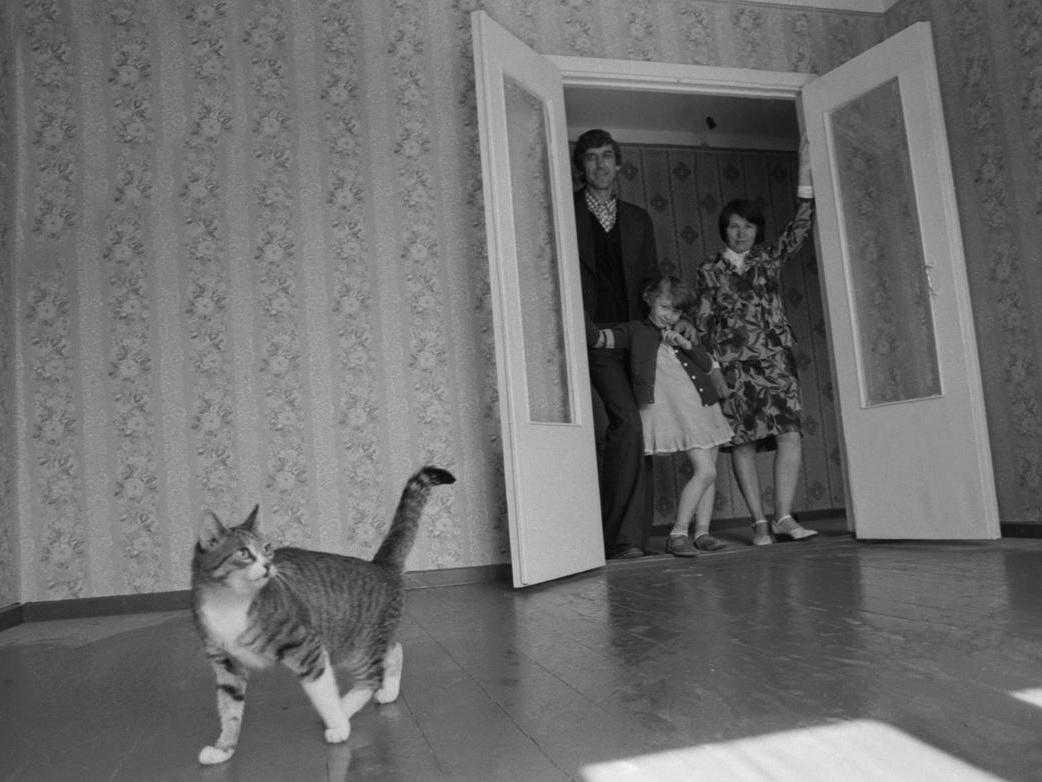

Getting a three-room apartment from the state was once a realistic possibility for many Soviet citizens.
Online, people recall with melancholy the times when apartments were given away for free—generations facing high prices and interest rates don«t know which queue to join to work their way up to owning even a few square meters. The idea of giving away apartments, as in the USSR, has been proposed by both public activists and developers — at least for young or large families. Fontanka asked its readers and their parents to tell how it was. Spoiler: it wasn»t as rosy as young people imagine.
What«s more profitable — giving away apartments or subsidized mortgages?
Earlier, Fontanka calculated — if instead of subsidized mortgages the state simply bought apartments from builders and gave them away, three times as many families with children would have received them. The state fixes the interest rate on such a loan at 6% and compensates the bank for the difference up to the market rate. When families bought apartments for 3–5 million rubles ($33,333–$55,555 at current rates), and the Central Bank rate was around 7.75%, the state had to pay banks just over a million rubles extra. So, from January 2019 to April 2021, the state paid banks about 1.5 trillion rubles ($16.7 billion) — during that period, 2.7 million families celebrated moving into new homes.
With the Central Bank rate increase and housing becoming more expensive, the situation changed — for the buyer, the rate remains 6%, but the state pays the bank a colossal difference. The effective rate, we remind you, reached 24%. Under such conditions, when a family bought an apartment for 7.5 million rubles ($83,333) and paid a down payment of 2.5 million rubles, with an average loan term of 27 years, the buyer paid the bank an extra 5.5 million rubles, and the state — 24 million rubles ($266,666).
From July 2024 to spring 2025, when the family mortgage essentially remained the only mass subsidized mortgage loan, the Russian authorities committed to paying out over 33 trillion rubles ($367 billion) over approximately 27 years. And this managed to provide apartments for only 1.7 million families.
We remind you that from February 1, 2026, the rules for the most popular subsidized mortgage — the family mortgage — are being tightened. Previously, both husband and wife could take out a loan to buy housing in their own names; now they must be co-borrowers, and the program will operate on the principle of «one family — one mortgage.» Fontanka detailed the restrictions here.
“Grandfather and grandmother received three apartments”
Against the backdrop of unaffordable rates and housing prices for ordinary city dwellers, Fontanka asked its readers to indulge in nostalgia and tell how their parents, grandparents, or they themselves received apartments in the USSR. Keep the zoomers away from the screens — the grandfather and grandmother of one of our editorial Telegram channel«s readers received three apartments at once in Tyumen.
“A three-room apartment for my parents. A two-room apartment for the son and his wife. A three-room apartment for himself. They all still live in these apartments; they were new buildings for that time. Grandfather and grandmother were builders, according to them, they didn«t participate in any schemes, they just received them. I don»t know the details, but I believe them. They got the keys immediately upon the building«s completion,” she said. Her mother received housing from the factory, her grandmother worked in construction. Later, these apartments were allowed to be privatized.
Readers also recalled how apartments in St. Petersburg and the Leningrad region were given to ordinary street sweepers — for 15–20 years of work.
Relatives of another reader waited for housing for an average of 10 years, but then the mother got a three-room, the grandmother — a two-room, the husband«s parents — a three-room, his grandmother — another three-room. That»s 11 rooms for the family. “All factory employees, medical workers, police, builders. None of them were in positions of power,” she explained. Readers also recall how factories built entire houses for workers: “To get an apartment, you either had to go to a construction site as a laborer or work at a brick factory for six months. That«s how they got it, it was the late 1950s.”
Not only factory workers were lucky — the parents of a Fontanka reader worked on a state farm in the Leningrad region. “The job came with immediate housing provision. While they were unmarried, they each lived in their own one-room apartment with a friend/buddy. When they became a family, they were given a one-room for the family, and when the second child was born — they got a two-room. She came home from the maternity hospital to a two-room. In general, in the village, there were no problems with housing provision for state farm workers,” she said. Her parents worked on the state farm for ten years each; now the family owns the housing.
Overall, from almost 250 comments, the following statistics emerge: about half of Fontanka«s readers and their families who received apartments from the state were factory workers or engineers, 17% worked in construction, 15% — teachers, researchers, or doctors, 13% — military, the rest — state farm workers.
Other readers tell how they waited for their housing for more than ten years and recall living cramped in dormitories without hot water and with cockroaches. But eventually, they got a three-room apartment. “And my father was also on a waiting list for a car. His turn was supposed to come in 2000, but times changed, and in the 90s he bought one without any queue,” wrote a reader.
They lived in communal apartments even with children — in the comments, one St. Petersburg resident shared how his grandmother and grandfather waited in line for about ten years. She was a housewife, he worked in the pedagogical field and changed jobs several times. Eventually, they got a three-room, which they later exchanged for a two-room and a room — for their son.
According to the memories of St. Petersburg residents, many knew in advance what housing they would get. And those who worked on construction sites immediately did the renovations to their own taste. “My dad did that because he knew the apartment number that would be ours. I helped him as much as I could — hammering nails into the floorboards. Well, now that apartment is privatized, owned by my father,” shared a commenter.
Readers also tell how even the small housing received in the USSR became a profitable investment: “I didn«t get an apartment for free, but a room. Now I live in an apartment, having sold the room I once received for free.”
There is also this opinion — about the nineties: “My parents didn«t work anywhere, but by selling whatever at the market, dad earned 20 thousand dollars in a year — enough for a house with three rooms and a large living room. Total — about 90 square meters.”
What didn«t go well for St. Petersburg and Moscow residents
An important caveat: most readers who boasted about owning square meters were not referring to St. Petersburg or Moscow, but to the regions — about 70% of comments. “Builders, teachers, doctors got them quickly. Mid-80s, the Caucasus,” writes a reader. In Kamchatka, they got housing in five years, in the Stavropol region — in seven.
Those who moved to remote regions for construction or to state farms were especially lucky. A Fontanka reader says his father moved to Buryatia, where he was immediately offered a large new house. “Then he was transferred to Ulan-Ude to build a bridge, where he was immediately given a one-room apartment, and three years later a two-room. Then he was also redirected to build a bridge in Irkutsk, where he got a three-room apartment,” he wrote. The parents of another reader in the North were first allocated rooms in dormitories; with the birth of a child, they were moved to a family dormitory, into a room the size of a modern studio. After another addition, they were given a two-room, and when the third was born — a four-room apartment in a new building constructed specifically for military personnel and large families.
“While working in the North, they joined a housing cooperative on the «mainland.» And bought a three-room apartment with their Northern vacation pay,” shared a reader. In the regions, there was also the opportunity to choose: the father of a Fontanka reader was offered a two-room in a new building in the center of Pyatigorsk or a three-room in an old one. He worked as an electrician, his wife — as a boiler room operator.
So the housing waiting lists, which people stood in for decades, mainly affected capital city residents, commenters believe. For example, the parents of our reader«s mother-in-law, not waiting for housing in St. Petersburg, went to build the Bratsk Hydroelectric Power Station in 1956. With an infant in their arms and into the unknown.
“They lived there in barracks. They built the dam. As the construction progressed and the territory was flooded, they moved higher up the bank and built new barracks to live in. That«s how they built Bratsk. The mother-in-law»s brother stayed there to live with his parents — they were proud they built the city with their own hands, he started a family, built a house. The mother-in-law left to study in another city, met her future husband there, and after job assignments, both moved to Yekaterinburg. They lived in a dorm there. After 10 years, they got their own apartment. And finally had a child — my husband,” she recounts.
They saved up for a room for their son, which after several sales turned into a two-room apartment in St. Petersburg, a resale property near the metro. Now they are already in their 70s — they moved to St. Petersburg following their son. “My mother-in-law has one dress from her youth — she is still just as slim. They don«t buy new clothes or things for the home unnecessarily, but in general, they have everything, a decent safety cushion saved up. In winter, father-in-law goes cross-country skiing, in summer cycling, fishing, and, of course, forest berries and mushrooms. That»s the kind of life. They knew how to live modestly and be happy, not complain, not slack off, save from scratch and hustle, get up early and do everything quickly,” shared the St. Petersburg woman.
Some readers rightly note — there are some benefits for residents of the regions even today. The question is: will people from the capitals go there? And are those who long for the Union ready to work ten or even twenty years in the North for an apartment, even a three-room one? “When we talk about our grandmothers or fathers, they are great and it was a different time, but now there«s no such freebie. Yeah. It»s just hard to imagine yourself somewhere in the North, in a dormitory, with the prospect of getting an apartment in 10–20 years. Just think, you«ll be 40! And until then, with your wife and kids in a dorm. Nowadays, at 25 you already want your own,” writes a reader.
If everyone was given apartments, why were there so many communal apartments?
There are other examples — much less inspiring. Readers also recall standing in lines for more than twenty years, losing their place in line upon dismissal or moving, and not getting housing despite years of service. And to qualify for a free apartment, you had to have the appropriate reputation — a good employee and a reliable citizen.
“There was a living queue, from which you could be thrown out if there were violations in your Komsomol life. For example, you ended up in a sobering-up station. And it wasn«t necessary that you were drunk,” noted a reader.
“In my generation, 60+, no one got anything for free. I personally don«t know such people — except maybe military personnel, police, and employees of large enterprises. Our parents» generation in the 60s only got rooms for free, later — they saved up for corporate apartments,” a St. Petersburg resident wonders. And those very rooms were given not as property, but as social tenancy, city residents confirm. And they conclude — it«s better to pay a mortgage for twenty years, but for your own, not public housing.
There are also questions about the quality of housing — St. Petersburg residents received their square meters either without amenities, or in dilapidated buildings, or in communal apartments without hot water and with one toilet for eleven rooms. “My mother stood in line for more than twenty years, we lived in a dilapidated hut, with a stove and water from a column at the end of the street. When the hut was almost falling apart, they gave us a one-room on the first floor of a Khrushchyovka in a terrible state. A year later, my mother invested in a cooperative apartment, we paid installments for it for another twenty years,” writes a reader.
They also recall how parents lived in different dormitories even after marriage registration, and a shared room after the birth of a child was obtained only with a scandal, so big it almost made the mother«s milk dry up. They lived cramped in the room with two children for another ten years, and to get a slightly larger corner, the mother, a kindergarten teacher, went to work on a construction site as a laborer — carrying bricks and mixing cement.
“No one gave any apartments for marriage or children. You needed to have a good position and be in the Party or [have] relatives and connections. Otherwise, if everyone was given separate apartments, where did so many communal apartments come from that still exist?” one of the readers exclaims.
This opinion is also popular among readers: ten years at an enterprise or construction site without the possibility of quitting — that«s not free housing, but earned with sweat and blood. And it»s better to have a mortgage at the old rates than ruined health and years in communal apartments.
“Only those who didn«t live there or were too young sigh for the Union. I don»t want to go back there,” writes a commenter. And immediately gets a reply.
“An apartment provided FREE OF CHARGE essentially became your property, passed by inheritance (the right to use the apartment was transferred, not the right of ownership. Or the reader meant already privatized apartments, which could subsequently be passed by inheritance. — Ed.), was subject to exchange, even in another region. And the right to the apartment was not lost when changing jobs. Moreover, 99% of free apartments were successfully privatized during the restoration of the capitalism you love so much. Only [someone not distinguished by intelligence], who didn«t live under the Union, could write such a comment.”