Flowers at Yesenin's Tombstone and Modest Graves at Vagankovo Cemetery
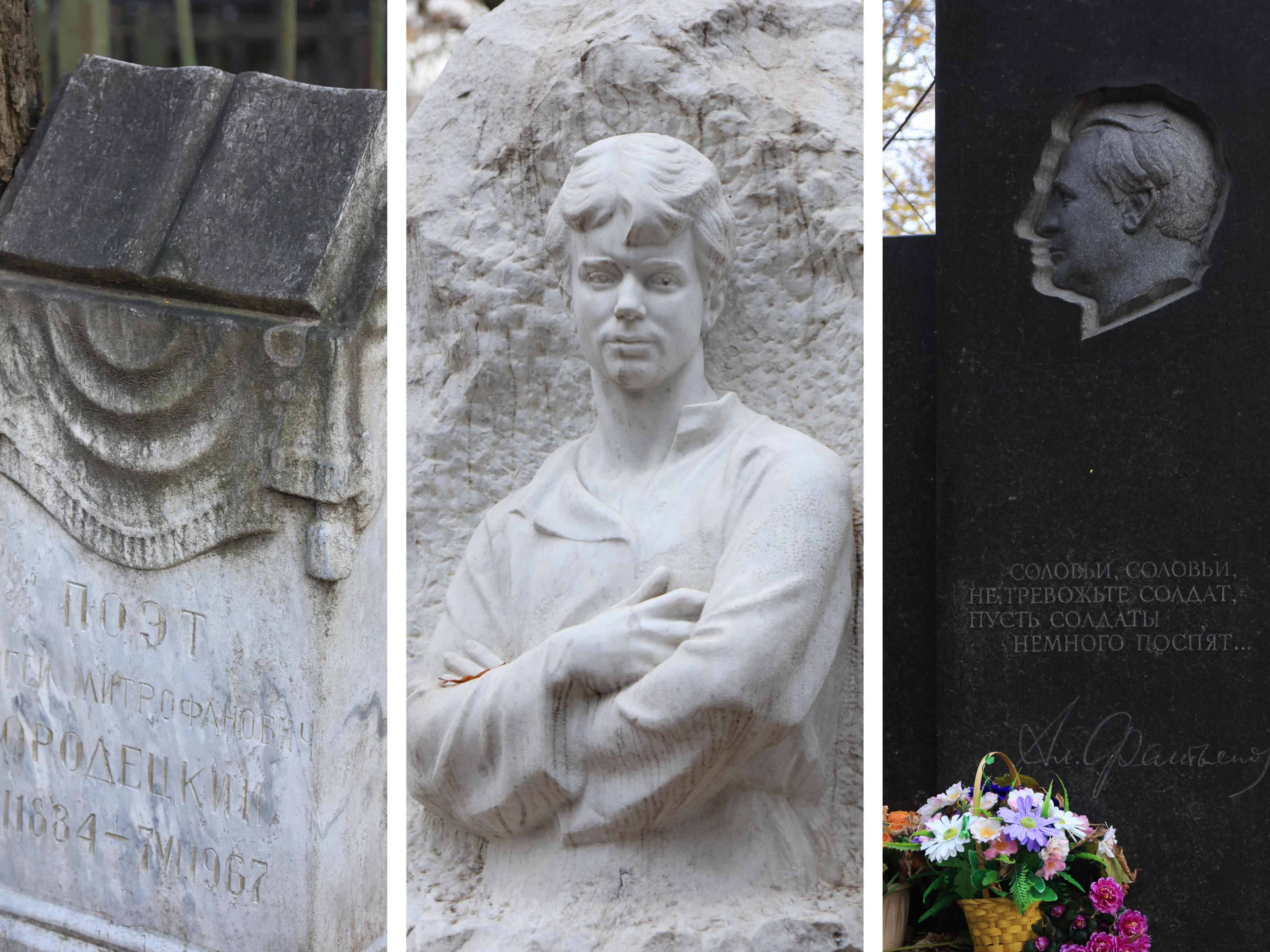

On the tombstones of Moscow«s cemeteries, one often encounters famous names. These are writers, artists, actors, scientists, public figures. We continue our series of articles dedicated to those buried in Moscow»s necropolises. This time, we will talk about the famous Vagankovo Cemetery. Any Russian knows at least a few surnames that can be found here. In today«s issue, we will tell about the fates of three poets.
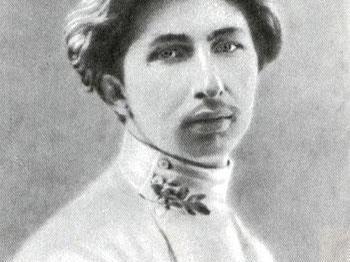
Poet Sergei Gorodetsky
Sergei Gorodetsky was a poet of the Silver Age, one of the founders of the «Guild of Poets» and the Acmeist movement itself. His long creative life spanned an entire era—from Symbolism to Soviet literature.
Gorodetsky was born in 1884 into the family of a writer-ethnographer. After graduating from gymnasium with a gold medal, he enrolled in the history and philology faculty of St. Petersburg University, where he became close with Alexander Blok and entered the circle of Symbolists. Already in 1906–1907, he published his first books of poems—«Yar», «Perun», «Wild Will»—which vividly displayed his interest in Slavic folklore and pagan mythology.
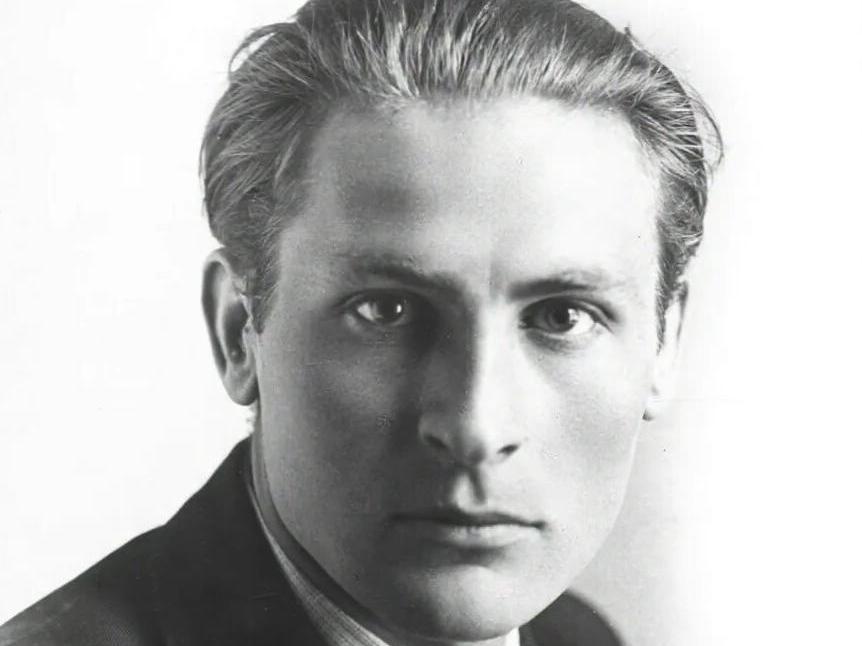
In 1912, Gorodetsky together with Nikolai Gumilyov organized the «Guild of Poets», becoming one of the theorists of Acmeism. He actively supported the so-called «new peasant poets»—Sergei Yesenin, Nikolai Klyuev, Sergei Klychkov.
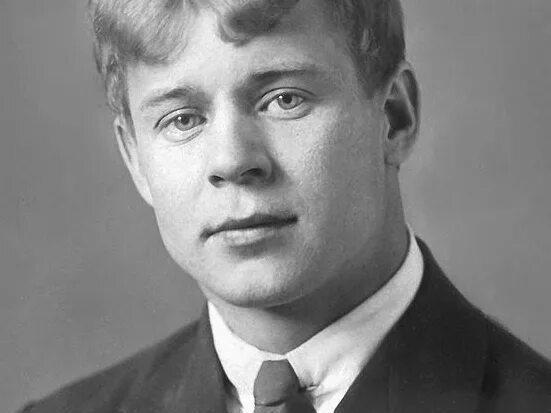
In 1916, the poet went to the Caucasian Front of World War I as a war correspondent, and after the revolution he published the book «Angel of Armenia», dedicated in part to the Armenian genocide. In 1921, Gorodetsky moved to Moscow, where he worked extensively as a translator, literary critic, and editor. In the 1930s, seeking safe literary income, he actively engaged in creating opera librettos. It was he who wrote the new, «non-monarchical» text for Glinka«s opera »A Life for the Tsar«, which since then has been called »Ivan Susanin«.
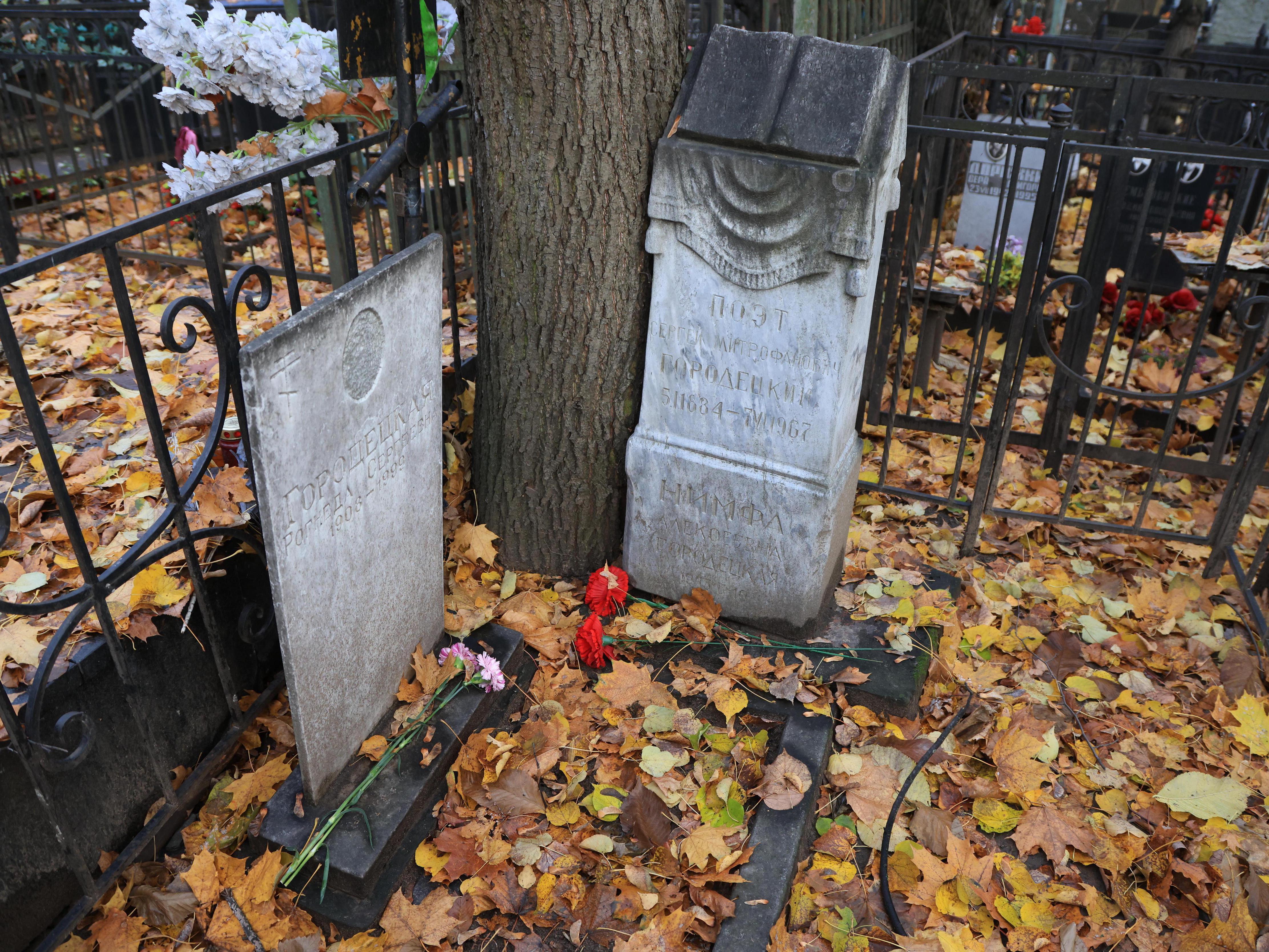
An important part of his life was his strong marriage to Anna Alekseyevna Kozelskaya, a bright and talented woman whom acquaintances called Nymph. Their union, which lasted decades, became a support for Gorodetsky. Anna died in 1945 and was buried at Vagankovo Cemetery.
After the Great Patriotic War, Gorodetsky lived with his daughter near Obninsk, continuing literary work. He survived his wife by 22 years and died in 1967, buried next to his spouse.
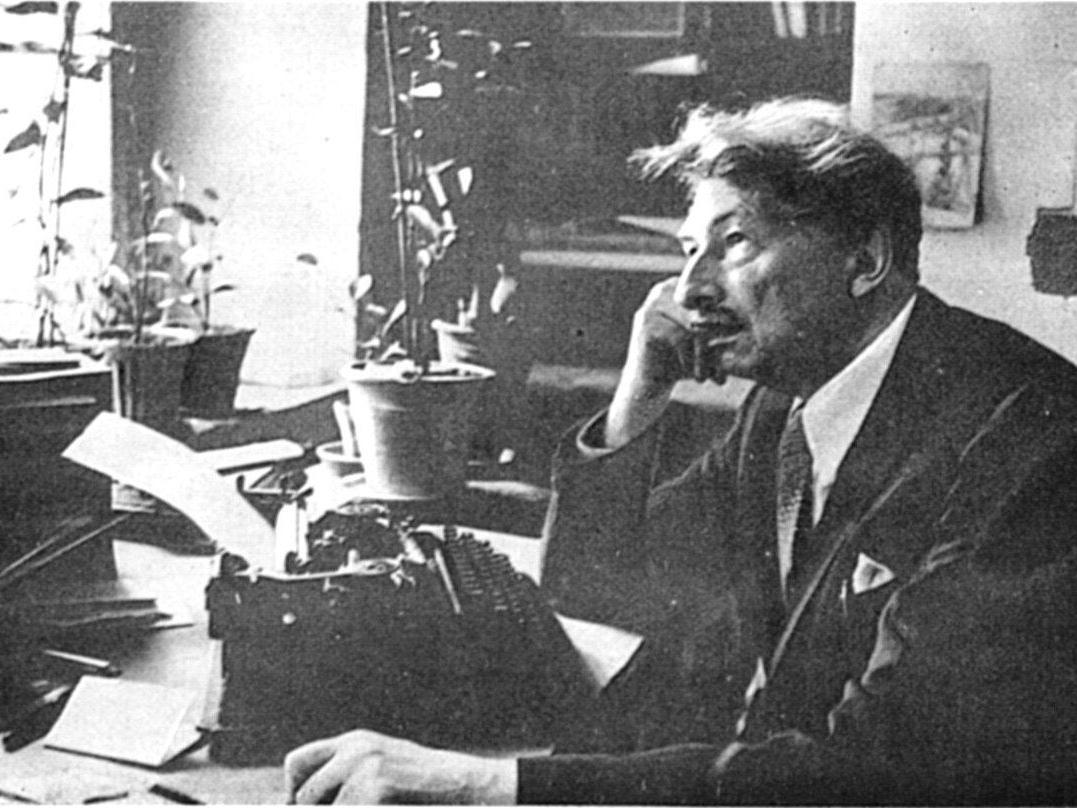
Poet Alexei Fatyanov
Alexei Fatyanov is one of the most popular poet-songwriters of the Soviet era, whose verses set to music were sung by the entire country. «Nightingales», «On the Sunny Meadow», «Where Are You Now, Comrades-in-Arms?»—these and many other of his texts became folk songs.
He was born in 1919 in the village of Maloye Petrino in Vladimir Governorate to a well-off family that lost its property after the revolution. From childhood, he was passionate about literature, theater, and music. In 1937, he entered the theater school at the Central Theater of the Red Army, where his acting talent was revealed.
Fatyanov was conscripted into the army in 1940 and almost immediately became the production director of the song and dance ensemble of the Oryol Military District. From the beginning of the war, he performed concerts at the front, writing poems and songs. A fateful meeting in 1943 with composer Vasily Solovyov-Sedoi led to the creation of the song «On the Sunny Meadow», which became beloved across the Union. Despite his desire to join the active army, Fatyanov was too valuable as an author and emcee. He only reached the front in 1944, was wounded near Budapest, and awarded the medal «For Courage».
True fame came to Fatyanov after the victory. His songs, simple, lyrical, and memorable, were heard daily on radio and in films («The Heavenly Slug», «A Wedding with a Dowry», «Spring on Zarechnaya Street»). But official recognition was ambivalent: composers received Stalin Prizes for music set to his verses, while Fatyanov himself was criticized in the press as a «singer of tavern melancholy», was not published for a long time, and only in 1955 was the collection «The Accordion Sings» released.
The poet«s life, full of grand gestures and generous feasts, was complicated by conflicts with superiors and colleagues in the Writers» Union. He was periodically expelled for «violations of regime» and «disciplinary offenses». Shortly before his death, Fatyanov, feeling a creative crisis and pressure, worked on a long poem «Bread», hoping to break out of the songwriter mold.
Alexei Fatyanov died suddenly in November 1959 at the age of 40 from a ruptured aortic aneurysm. At his funeral at Vagankovo Cemetery, many ordinary people gathered to see off the poet, whose songs continued to live their own life. The manuscript of the poem «Bread» was lost after his death.
Poet Sergei Yesenin
Sergei Yesenin is one of the most famous and beloved Russian poets of the 20th century, whose lyricism became the voice of fading peasant Russia. His poems are permeated with bright sadness and love for the Motherland, so Yesenin is often called the «singer of the Russian soul».
The poet was born in 1895 in the village of Konstantinovo in Ryazan Province to a peasant family. He began writing poems at the age of nine. Contrary to his parents« hopes of him becoming a teacher, in 1912 Yesenin went to Moscow, where he worked in a publishing house and did proofreading, making his way into literature. His first poem—»The Birch«—was published in 1914 under the pseudonym Ariston.
A turning point came in 1915 when Yesenin moved to Petrograd. Meeting Alexander Blok opened doors for him into the capital«s literary circles. With the support of Sergei Gorodetsky, whose fate we wrote about above, he began actively publishing, and in 1916 his first collection »Radunitsa« was released, bringing the poet recognition.
Yesenin enthusiastically greeted the 1917 Revolution but quickly became disillusioned with its consequences for the village. In 1918, he became one of the founders of Imaginism, but soon distanced himself from this movement. His work in the early 1920s was dedicated to the gloomy «Moscow of the Taverns»—he indeed spent much time in drinking establishments. An attempt to find new strength was his foreign travel in 1922–1923 with his wife, dancer Isadora Duncan. But upon returning, the poet wrote: «...but we have a soul, which here has been rented out as unnecessary.»
In the mid-1920s, a period of creative upsurge began. During trips to the Caucasus, he created the cycle «Persian Motifs», the poem «Anna Snegina», and poignant poems about the homeland.
The poet«s personal life was turbulent and unhappy. He was married three times: to Zinaida Reich (mother of his two children), Isadora Duncan, and Leo Tolstoy»s granddaughter Sophia, but no marriage brought him peace.
By 1925, his mental crisis and illness worsened. After treatment in a clinic, Yesenin went to Leningrad at the end of December, where on December 28, 1925, he committed suicide in the Angleterre Hotel. He was 30 years old. Many rumors still circulate around the poet«s death. Some believe it was violent, and the suicide was staged. Be that as it may, fans of the poet from all corners of the country daily come to Yesenin»s grave at Vagankovo Cemetery, laying flowers on the tombstone.
If you are interested in the history and architecture of Moscow, read our series of articles about unusual houses of the capital. We also told about the past and present of Stalin«s skyscrapers and published guides to the cities of the Golden Ring.