Lyubov Vizenkina's 25-Year Fight to Overturn Murder Conviction
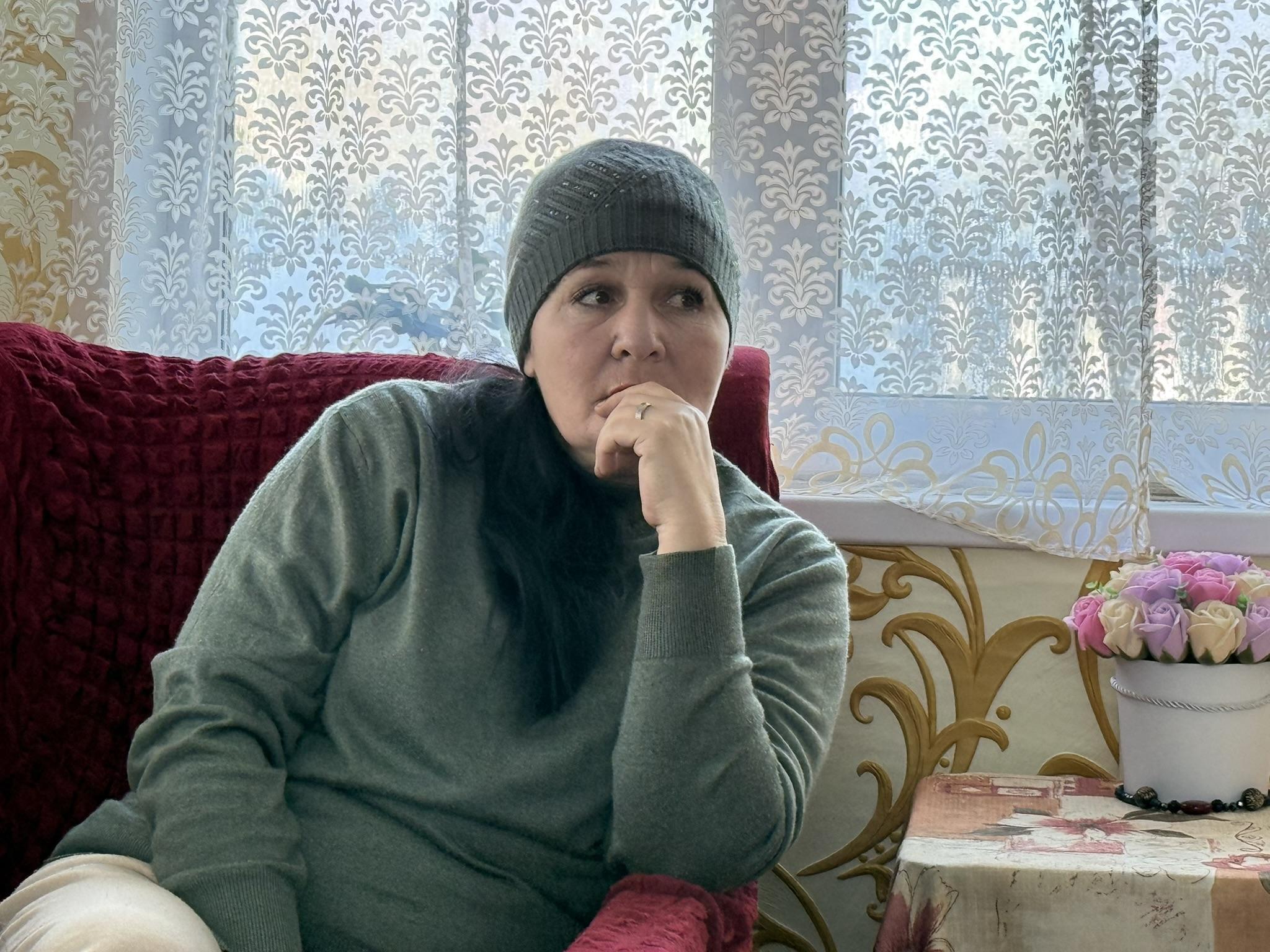

For over 10 years, Lyubov Vizenkina believed her former partner was dead.
On the outskirts of the village of Sekirino in Ryazan Oblast, near a picturesque forest and a church, lives Lyubov Vizenkina. Now an activist, she helps her fellow villagers and leads a measured life. But for over 20 years, she has been seeking justice — she served 7.5 years for a murder that, according to her, could have been committed by her boyfriend Viktor Pchelkin — a possible member of the Slonovskaya gang (a criminal group).

In 2000, Vizenkina was only 24 years old.
The village of Sekirino is located 13 kilometers from Skopin and 110 kilometers from Ryazan.
Once, Lyubov shielded Tatyana with her body, but the girl still suffered an abdominal injury.
Now, Lyubov is trying to get her criminal case reviewed, but only receives formal replies. Journalists from YA62.RU investigated what is happening.
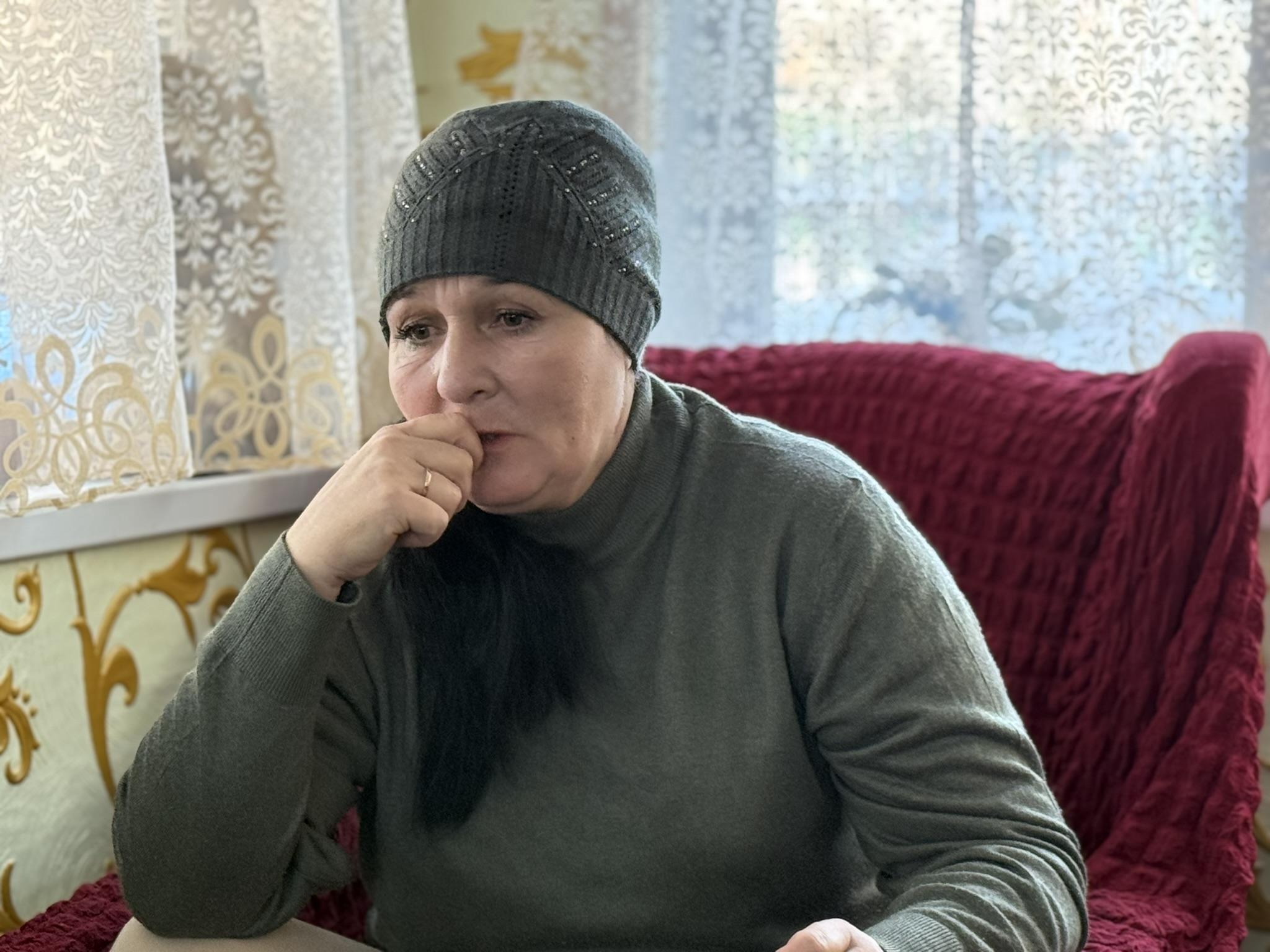
Not communicating with her daughter is hard for Vizenkina, but she says it protects their future.
“The Demon Showed Up”
Lyubov Vizenkina also remembers standing shocked under a streetlamp that still burns today.
Lyubov met Viktor Pchelkin at a young age — when she was 18. She worked as a milkmaid, and he often came to drink milk from the colony-settlement in the neighboring village of Komsomolsky. There, he was serving time for another minor offense.
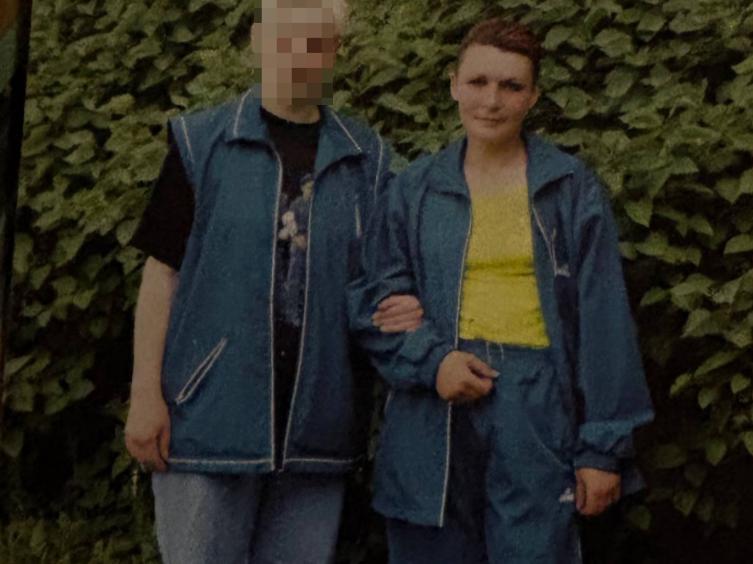
This image shows roughly how Lyubov Vizenkina looked during that period of her life.
Over time, Pchelkin started paying attention to the girl: he brought chocolates or flowers picked by the river. And after his release from the colony, he showed up on Lyubov’s doorstep with a plaid bag.

In the colony in Vladimir Oblast, Vizenkina focused on studying and avoiding sadness.
“We didn’t discuss it. My relatives were against it because he had been in prison, but on the other hand, people end up in colonies for various reasons. When my grandmother saw Viktor, she said: ‘The demon has shown up,’ he was all ‘blue’ — covered in tattoos,” recalls Lyubov Vizenkina.
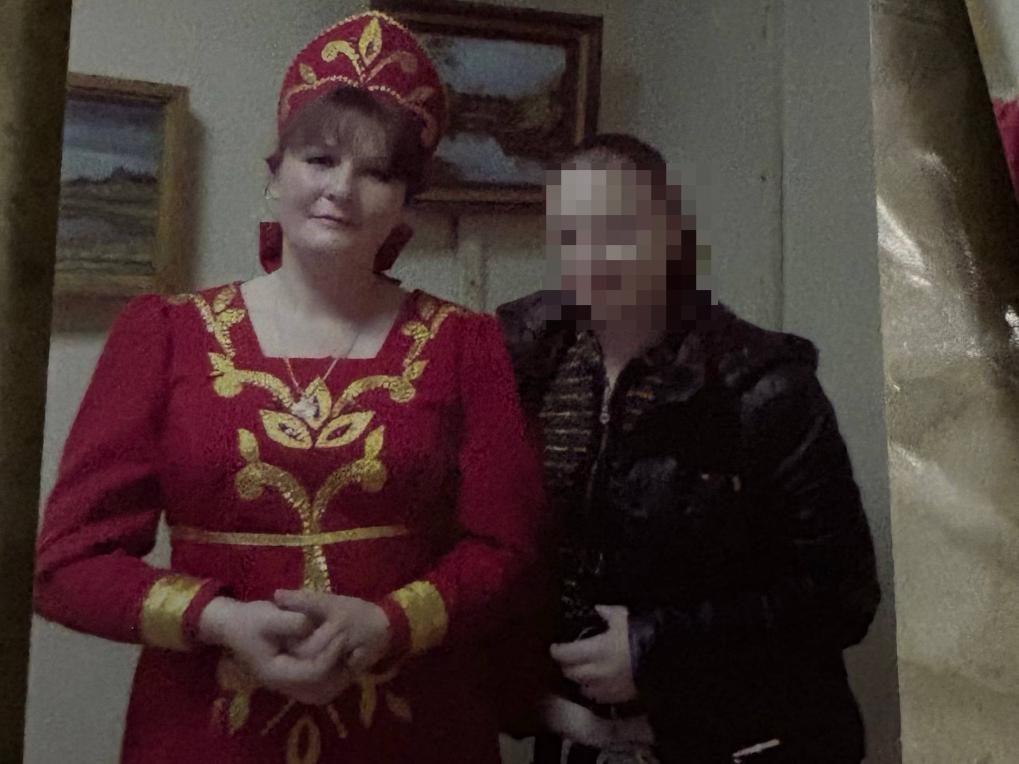
Svetlana, Lyubov«s sister, is with her elder daughter after Lyubov»s release from prison.
At first, life together was not bad, but the rose-colored glasses quickly shattered against reality. Viktor Pchelkin, according to Lyubov, often beat both her and the children.
This spring will mark 26 years since the murder occurred in the village.
“He had a daughter from his first marriage, Tanya; while he was serving his sentence, his mother took guardianship. I said it was wrong and the child should be with her father, visiting her stepmother. We took the girl, she studied here at school, but then we had to urgently take her away; he beat her too,” says Lyubov.
Lyubov«s husband initially did not know how to react to the unexpected news on TV.
Viktor Pchelkin, the woman claims, displayed aggression very often.
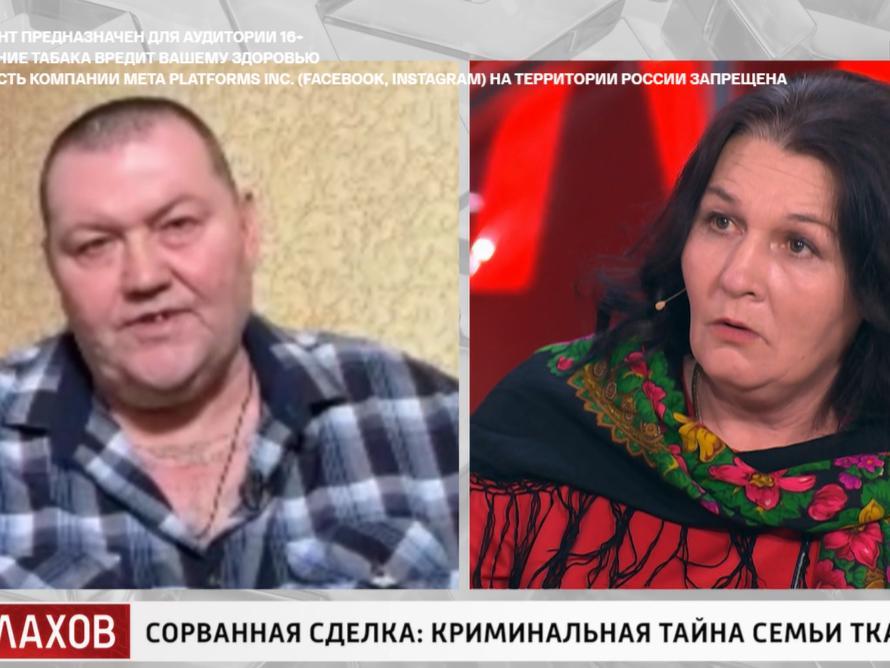
Lyubov Vizenkina finally saw Viktor Pchelkin on television after 25 years.
“Want to see my back? It’s cut up and beaten, I was never without bruises: sometimes my head was busted, sometimes ribs broken. And that’s still nothing,” stated Vizenkina.
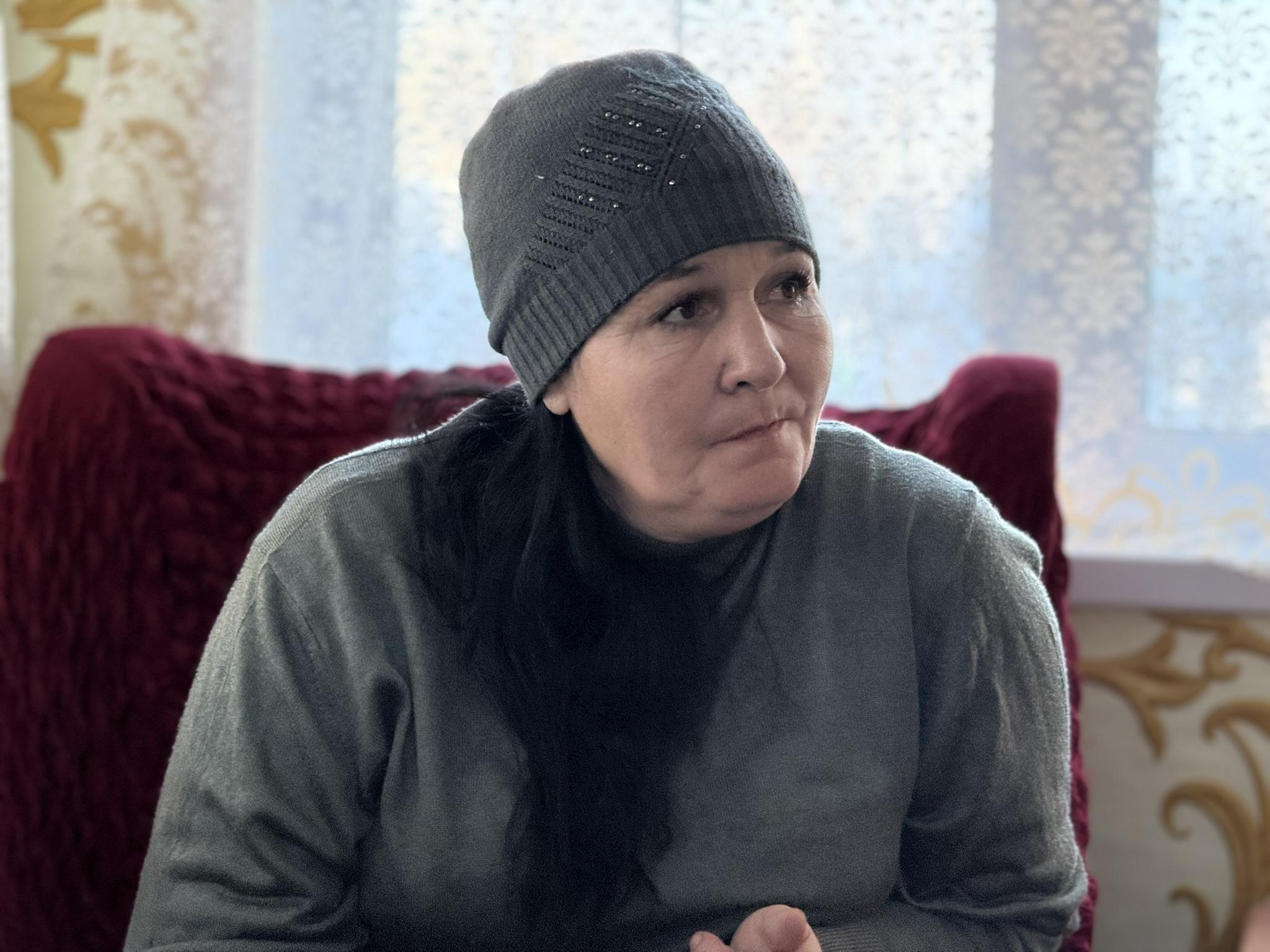
Lyubov Vizenkina believes she will eventually achieve her goal of clearing her name.
“We, all us women, would somehow fend him off together. Otherwise, he’d toss us aside like kittens, and that’s it,” her sister Svetlana immediately adds.
A video presents the complete story of Lyubov Vizenkina«s long struggle for justice.
Life divided into before and after in the spring of 2000, when the murder of their neighbor — Viktor Svetushkin, who was considered a well-off man in the village — occurred. He had his own farm and never skimped on feed for the villagers’ animals.
Officially, Lyubov Vizenkina and Viktor Pchelkin were not married. But they have a common daughter — she is 25 years old. Lyubov voluntarily stopped communicating with her once she completed her education — to ‘not ruin her life.’ The girl works in law enforcement, and her mother’s past could negatively affect her career.
After her release from the colony, Vizenkina worked as a security guard in Moscow. There, she met her second husband — a retired Ministry of Internal Affairs (MVD) employee. This marriage is still full of love, and Lyubov gave birth to a second daughter. She is in the ninth grade.
“In One Hand a Knife, in the Other — Bloody Money”
According to Lyubov’s account, on the morning of the murder, she met Svetushkin on the street. He complained that Pchelkin was allegedly stealing meat from him and taking it to a moonshiner on the other end of Sekirino.
After the unpleasant conversation, Vizenkina went to work, and when she returned a few hours later, she tried to ask her common-law husband why he did such things. But the dialogue was short — Viktor Pchelkin, according to her, went to sort things out with the neighbor.
“He said it wasn’t true and went to deal with Uncle Vitya. I had already peeled potatoes and put them on to boil, milked the goat, but he [Viktor Pchelkin] was still not back. I went to see where he was. When I approached the house [Svetushkin’s], I saw through the window that they were drinking. Okay, I turned around and went back; my little daughter was alone.
I walked home with small steps, it was slippery, and I heard the door slam. I turn around: Pchelkin has in one hand a Finnish knife, and in the other — bloody money. The road home was like a dream, with gaps in memory,” Lyubov Vizenkina recounts her version.
But she remembers how on the way home, Viktor Pchelkin asked her to take the blame. He said that since Lyubov had a newborn daughter, no punishment would threaten her. Vizenkina still refused, and then, according to her, threats began.
“He said: ‘You will [take the blame]. Otherwise, the first one I kill will be your sister; I’ll twist her head off.’ As if in a fog, we reached home, I start undressing, but he stops me, demands I get dressed. I take my daughter in my arms, and we go to my mother,” Lyubov recalls that day.
According to Lyubov, after she gave her daughter to her mother, she returned home with Pchelkin. Immediately, he suggested going to Ryazan; she refused, but he dragged her to the neighboring village of Chulkovo.
“There used to be a store there, run by Arthur: either Armenian or Georgian. I scorched him with my gaze, hoping he would help me, since I couldn’t move anywhere. Most likely, he understood anyway and called the police. But maybe it was because the stolen money had blood on it. Pchelkin paid with it in the store,” recalls Lyubov Vizenkina.
The police arrived only the next day. They found Lyubov at home; she wasn’t hiding, but Viktor Pchelkin, as she tells it, hid in the attic. They couldn’t find him, so only Vizenkina was taken to the station.
“They put me behind bars and then took me for interrogation. The investigator brings me into the office, grabs me by the scruff of the neck like a kitten, and says: ‘Write a confession, you’ll get less time. Otherwise, your daughter will be taken to an orphanage, and you know yourself how it is there [Lyubov’s mother worked in an orphanage], think about your daughter.’ And he grabs me by the scruff and smashes my head against the table — sparks from my eyes!” stated Lyubov.
Thus, as Lyubov Vizenkina claims, she wrote the first confessional statement, which was considered the most weighty. How to behave during the investigative experiment, according to the woman, was shown and explained to her in advance under threats by Viktor Pchelkin.
Lyubov claims she took the blame out of fear for her relatives. No one could protect them, and the neighbors were also allegedly afraid of Pchelkin and didn’t get involved.
“He terrorized the whole village! The old women here are still afraid of him, even when they see him on TV,” asserts Lyubov.
While under arrest, the resident of Ryazan Oblast tried to prove her innocence. But the first confessional statement by Vizenkina and the investigative experiment played a role. So the case went to court.
In court, the case was initially handled by a woman judge: she sent it back for further investigation several times. Later, the judge changed, and Lyubov Vizenkina’s verdict was delivered almost immediately — 10 years in a colony.
On parole, Lyubov Vizenkina was released after seven years and six months.
Incidentally, Viktor Pchelkin was also sentenced in the same case. He served two years for the bloody money he imprudently used to pay in the local store.
“Day After Day I Wrote Requests to the Police”
In prison, Lyubov Vizenkina studied a lot: she completed her full secondary education in the specialties of ‘master of construction and finishing works’ and ‘master repairer of sewing equipment,’ and also finished psychology courses.
While Lyubov was serving her sentence for murder, at home — in the village of Sekirino — her little daughter was waiting. She was under the guardianship of Vizenkina’s mother.
“From childhood, they drilled into her head: ‘Your mother is like that.’ My sister takes her to kindergarten, and a man — a relative — picks up a brick and throws it at them. Svetka shielded the child, but that’s still wrong. Children are not guilty of anything,” noted Lyubov Vizenkina.
And in general, she was very worried about her relatives.
“Day after day I wrote requests to the police to tell me if my relatives were alive. In Sekirino, I had left my mother, daughter, grandmother; I didn’t know what had happened to them after Pchelkin’s threats,” says Vizenkina.
With about the same frequency, the heroine from the colony wrote applications for a review of the case, but received rejections. Only the article about the theft of those bloody money was removed from Vizenkina’s record after she wrote a letter to Vladimir Zhirinovsky.
But the article for “Murder” remained until the very end.
“They Said He Was Dead”
After her release in 2008, Lyubov immediately went to the local MVD department. There, they insisted that Viktor Pchelkin was dead and that reviewing the case wouldn’t work. The woman believed it: after all, it was claimed not by some ‘random’ person but by a law enforcement officer, so she didn’t file additional applications.
But everything changed in the fall of 2024, when the Ryazan woman saw her ex on Andrey Malakhov’s show. Lyubov’s current husband likes TV programs, and on one such evening, she completely by chance saw a familiar face on a federal TV channel.
“I tell my husband: ‘Wait, wait, don’t switch.’ He was already starting to worry. I’m white as a sheet, they said he was dead, but he’s alive [Viktor Pchelkin]! I found Tanya, his biological daughter, online — we hadn’t communicated before — and thanked her for not being afraid to say on air that because of Pchelkin, another person served time — me,” recounts Lyubov Vizenkina.
Almost a year later, Lyubov saw Viktor Pchelkin in person.
“You won’t believe it, my neighbor was in the hospital in Koralino. She fell and broke her leg in three places, and her husband asked me to bring food. I went and was in shock! That two-meter hulk [Viktor Pchelkin] is walking, doing Nordic walking!” says Vizenkina.
In 2025, Lyubov Vizenkina personally appeared on Andrey Malakhov’s show and took a polygraph. Here are the questions asked:
Are you lying when you say that Viktor beat his daughter Tatyana? No.
Are you lying when you say that Viktor beat his daughter Tatyana? No.
Did you make up the fact that Viktor Pchelkin beat you? No.
Were you in the house at the moment of the murder? No.
Did you make up the fact that Viktor asked you to take the blame? No.
Did you make up the fact that Viktor threatened to kill your family? No.
Have you ever killed a person? Not one.
All answers, as announced on the TV program, were truthful. Viktor Pchelkin refused to take the polygraph.
What Is the Status of the Case Now?
When Lyubov Vizenkina confirmed that Viktor Pchelkin was alive, she began writing applications after many years. The first — demanding a review of the ‘stitched-up’ case in light of new circumstances — that her ex is alive. The second — about holding him accountable for threats to kill his daughter Tatyana.
The first appeal has been under consideration since March 2025, but there is no end in sight.
“Organize a check of the arguments presented in the appeal,” states the official response from the Investigative Committee dated 30 July 2025.
The investigator, according to Vizenkina, stopped responding to messages, and in official replies, the case is still under consideration. A check is being conducted.
Hope remains for oversight by the head of the Russian Investigative Committee, Alexander Bastrykin.
At the end of December 2025, he requested a report on the possible illegal criminal prosecution of the Ryazan woman over 20 years ago.
“A segment aired on a federal TV channel’s legal program about how in Ryazan Oblast over 20 years ago, a woman was allegedly illegally prosecuted for a murder that, according to her, was committed by her former cohabitant. Chairman of the Russian Investigative Committee A. I. Bastrykin instructed the head of the Investigative Directorate for Ryazan Oblast O. A. Vasilyev to present a report on the arguments of the segment,” states the official message.
The documents are at the disposal of the YA62.RU editorial office.
In the second case, the criminal case was initially refused due to ‘the impossibility of establishing Pchelkin’s whereabouts,’ although, according to Lyubov, he wasn’t even hiding. And when he was finally found, they refused due to lack of evidence of a crime.
“His daughter started calling him [Pchelkin], writing, provoking and accusing him of all sins. Citizen Pchelkin did not want to communicate with his daughter, asked her over the phone and in SMS to leave him alone and not approach. He did not express any threats to kill his daughter or former cohabitant,” such testimony from Viktor Pchelkin is cited in another refusal.
After almost 26 years, Lyubov Vizenkina wants to achieve justice, not monetary compensation.
“The truth must be the truth. If some money is due, I don’t need it; it’s not even up for discussion. I have every right to defend my honest name, which I am doing. The old me could be broken, but the new one — cannot,” concluded Lyubov Vizenkina.